

A pool deck you can cross barefoot in July
Wet feet, kids running, chlorine splash and a slab sitting in full sun all day. A pool deck coating has to handle all of it, and a slick or scorching one fails at its only job.
22 years in businessResidential5.0 on Google from 36 reviews
What it is
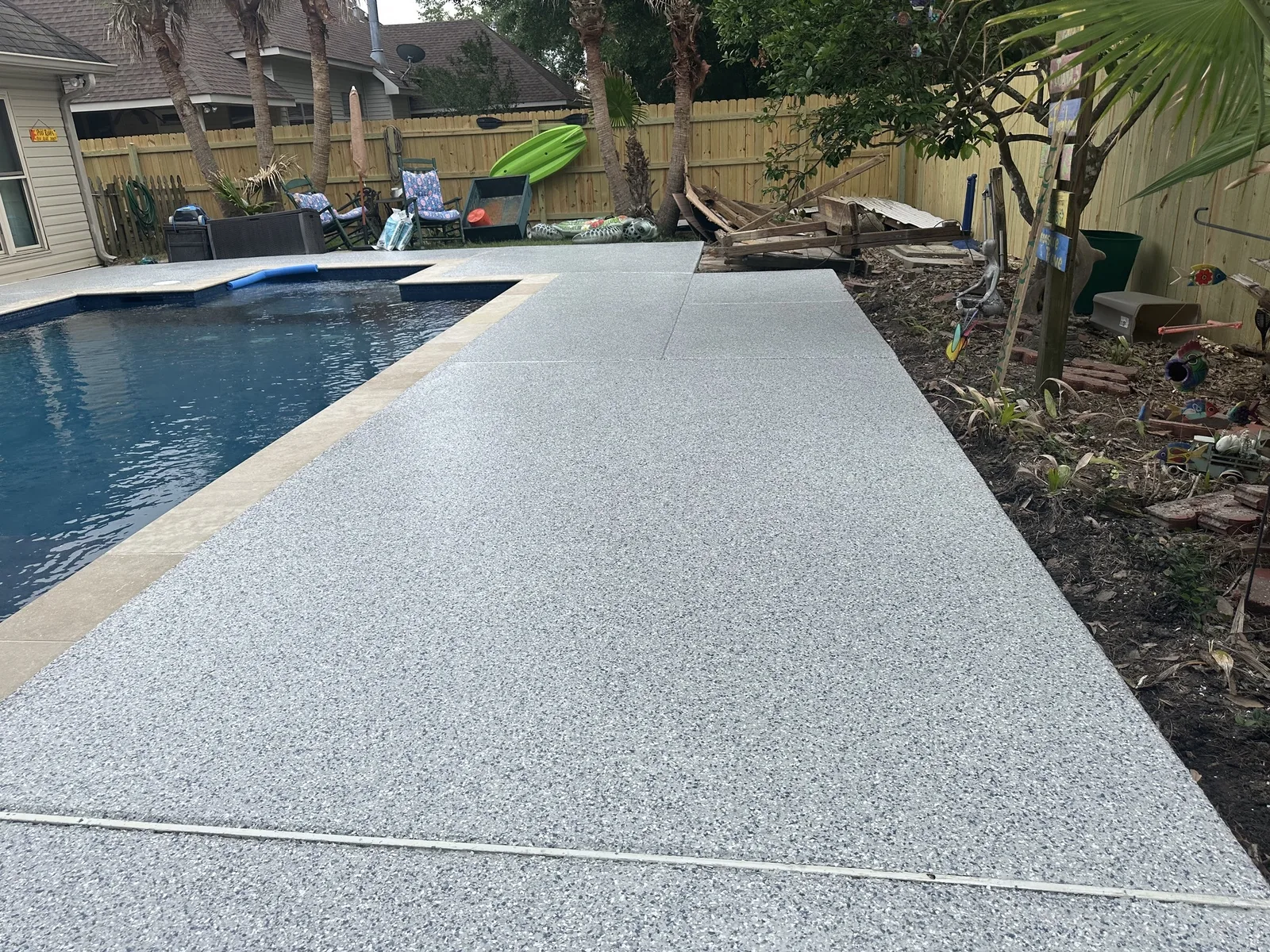
Color is the first decision on a pool deck, and it matters more than the pattern. Dark concrete in a Louisiana July gets hot enough that kids hop across it, so we point people to sand, light gray, tan and off-white. A light textured overlay with a light sealer stays cooler underfoot than a dark finish. It will still be warm in August, and it will be a lot kinder to bare feet.
There are two main builds. A knockdown or spray-textured overlay is the classic pool deck finish: a polymer cement layer sprayed on, knocked down with a trowel into a flat-topped texture, colored and sealed with grit. It hides old cracks and patches and grips well, wet or dry. A flake system is a primer, a body coat with chips broadcast in and a clear topcoat with slip-resistant grit, and it suits a covered cabana floor or a deck where you want more color underfoot. Plain epoxy without a UV-stable topcoat does not belong in open sun.
A patio overlay and a pool deck overlay look alike, but the deck version gets a lighter color, more grit and a sealer chosen for chlorine and salt water. Next to our slip-resistant commercial coatings, this is the residential version: the same idea of grit in the topcoat, sized for bare feet instead of work boots, and detailed at the coping and drains, which a plant floor never has. Coping is usually the first place a tired deck shows its age, so we spend as much time on that edge as on the open deck.
Part of our residential work. See all of it.
Start with the concrete.
What goes down, from the surface you walk on to the slab under it.
No matter how good a glossy sample looks, a pool deck gets grit in the topcoat from us, because somebody is going to run on it.
Slip-resistant topcoat
A UV-stable sealer with grit, the layer under wet feet, made to hold up to pool chemicals and salt water.
Textured overlay or flake
Either the sprayed, knocked-down cement texture or a primer, body coat and broadcast chip, in a light color.
Cracks, joints, drains
Cracks get filled, the coping joint gets a flexible sealant, and drain edges are protected so water still runs off.
Strip and grind
Old paint and failed coatings come off, the surface gets ground, and loose concrete along the coping is cut back to sound material.
Deck as found
Often a broom or exposed aggregate deck with chlorine etching, cracks at the coping joint and a tired old coating.
Where it belongs
Open deck in full sun
A knockdown overlay in sand or off-white with a grit sealer. It is the coolest finish we offer.
Covered pool porch
Flake with a slip-resistant urethane topcoat, since the roof keeps sun off and you can go richer on color.
Saltwater pool
Same systems, with the sealer picked for salt and the coping joint kept sealed so salt water does not get under the overlay.
Pool path and steps
Carried through in the same texture so the whole path from the back door stays grippy.
How the crew runs it
Five steps, in order.
Check the deck
We look at cracks, the coping joint, drains, old coatings and how water sheets off before we recommend anything.
Protect the pool
The pool, coping stones and equipment get covered and taped so grinding dust and overspray stay out of the water.
Prep to sound concrete
Grind, strip old coatings, cut out loose edges and fill cracks until the whole deck is solid.
Texture or broadcast
The overlay is sprayed and knocked down, or the flake goes into the wet body coat, working in sections around the pool.
Seal and reopen
Grit sealer goes on last. Once it cures you can walk it, and we tell you when the loungers can go back out.
For the GC or the facility
- Pool builders: let the new deck cure out fully before we coat it; we check moisture before we start.
- Tell us the plaster or tile schedule so our grinding and spraying happen before the pool interior is finished, or with it fully protected.
- Color and texture samples on request; a light-color sample in the sun tells an owner more than a chip chart.
Gulf South conditions
Sun is the hardest thing on a deck here. UV breaks down sealers and fades color on an open deck, and plain epoxy yellows, which is why every topcoat we put outside is UV-stable. Heat also limits when we can work: a deck in direct afternoon sun can be too hot to take an overlay, so we start at first light and check the slab temperature.
Then there is the water. Chlorine and salt splash out every day, heavy summer rain sheets across it, and near the coast the air itself carries salt. Salt water that gets under a coating at the coping joint will lift it from below, so that joint gets a flexible sealant and regular checks. Hurricane debris and pressure washing after a storm are hard on a deck too; the grit sealer can take a careful wash.
Look at the finish.
“Had Extraordinary Flooring do my garage floor and they killed it. Super easy to work with, showed up when they said they would, and got everything done quickly.”
Trevor Garcia, Google review5.0 on Google from 36 reviews
Living with it
Hose the deck off after heavy pool days so chlorine and salt do not dry on it. Scrub with a soft brush and a mild cleaner, and do not let concentrated chlorine or acid sit on the deck when you are dosing the pool. Watch the coping joint and call us if the sealant opens up. Plan on resealing every few years.
Next to this one
See finished floorsQuestions about pool deck coatings
See finished jobs in the gallery, or send the plans.
Will a coated pool deck be slippery?
Not the way we build it. Every pool deck gets slip-resistant grit in the sealer, and a knockdown texture adds more grip on top of that. Very aggressive grit is hard on bare feet, so we size it for barefoot traffic.
Which colors stay coolest under bare feet?
Light ones: sand, off-white, light gray and pale tan. Dark browns, charcoal and deep reds soak up sun and get hot fast. A light knockdown overlay with a light sealer is the coolest combination we put down.
Does chlorine or salt water damage the coating?
Everyday splash does not, as long as the deck is sealed and rinsed now and then. The real risks are concentrated pool chemicals spilled and left sitting, and salt water getting under the edge at a failed coping joint.
Can you coat over my old cracked pool deck?
If the cracks are stable and the deck has not settled, yes. We fill them and treat the coping joint as its own detail. A deck that has dropped away from the pool or broken into pieces needs concrete repair first.
Do you work around the coping and drains?
Yes, and that is where the care goes. Coping stones get protected, the joint between coping and deck gets a flexible sealant, and the finish is feathered to the deck drains so they keep taking water.
When is the best time to redo a pool deck?
Before or after swim season, when the deck can be closed for a few days and the afternoons are not brutal. Spring and fall both work here. We also time it so dust and overspray never sit on open water.
Let’s look at your floor.
Call with the address and what the floor has to survive. Someone will come look at the slab before anybody talks price.
Bidding a job? Send the plans and the schedule. We price from drawings and walk the slab before we commit to a date.