
Where Bayou Blue floors start: the slab
Bayou Blue sits 40 miles southwest of Harvey, well inside the range our crew works. We grind the slab, deal with the moisture coming up from below and put down a floor built for Gulf weather.
Bayou Blue, Lafourche Parish, Louisiana.
The drive from Harvey
Housing figures from the US Census.
Half the homes in Bayou Blue are older than about 1991 and half are newer, according to the Census. A house slab from this decade may be post-tensioned. Grinding only works the top of the slab, so it stays clear of the tendons.
Before any cut, core or anchor, the cable layout gets found first.
We read those numbers the way we read a slab: they say whether to expect garages, rentals or commercial floors before we drive out.
The work here runs on oilfield service, shipyards, boat builders and seafood, plus the shops, warehouses and offices behind them, from Houma and Thibodaux down toward the coast. Around Lafourche Parish, the floor work is mostly this: shipyard and fabrication floors down the bayou, oilfield shops near Fourchon, and homes and schools from Thibodaux to Cut Off.
Shop floors across the bayou parishes take a beating from steel, hydraulic oil and heavy parts, while homes and businesses want a floor that comes through the next high water.
It is a mix: about 64% stand-alone houses, the rest townhomes, condos, mobile homes and apartments. Mixed housing usually means mixed slabs. Some are private garages, others are shared walkways and pool areas that need slip resistance and a quick return to service.
Flood water and old floors
Bayou Lafourche and Terrebonne.
Bayou Blue is in Lafourche Parish, about 40 miles southwest of the shop.
Shipyards, fabrication shops and oilfield service buildings put floors through welding slag, dropped steel, forklift wheels and spilled oil. Thin roll-on coatings do not last in that service. Troweled epoxy, urethane cement and heavy broadcast systems over a shot-blasted profile hold up far longer. Older homes and businesses along the bayous bring their own trouble: patched slabs, additions poured at different times, and floors that have already been under water once.
Run cove base and sealed joints in kitchens and seafood rooms, because water left standing where the floor meets the wall is where bacteria and failures start.
For a home in Bayou Blue that has taken water before, choose a flake system you can scrub and pressure wash after a storm without it lifting.
Test slab moisture before any coating goes down, since the high water table under bayou country will find any primer that was not built for it.
Choosing a floor for Bayou Blue
Garage Floor Coatings
Flake, solid color, metallic or polished concrete for home garages, ground first so hot tires and oil never lift it.
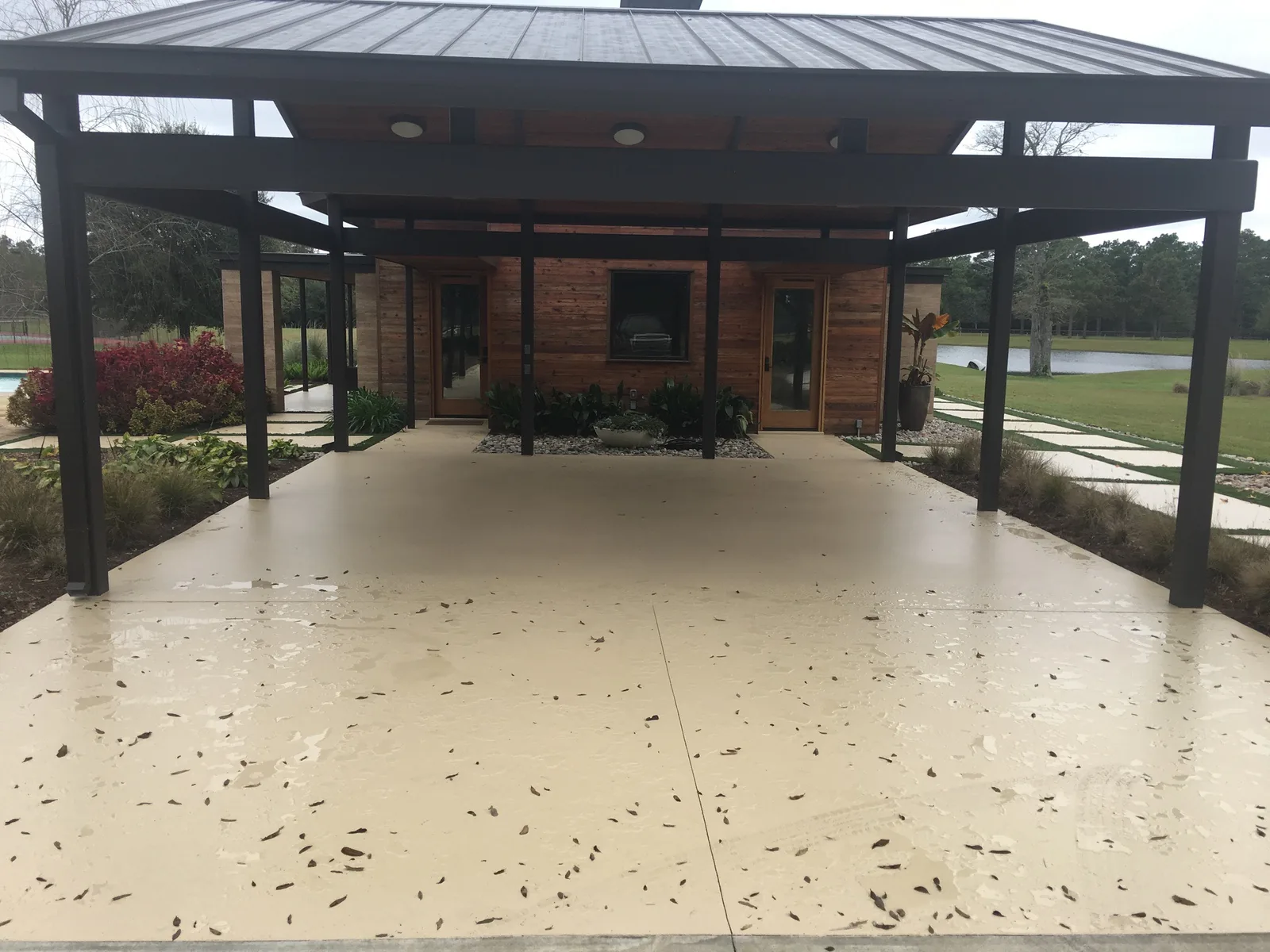
Patio Coatings
Overlays, stamped patterns and stain for covered and open patios and porches, finished with a topcoat that grips in the rain.
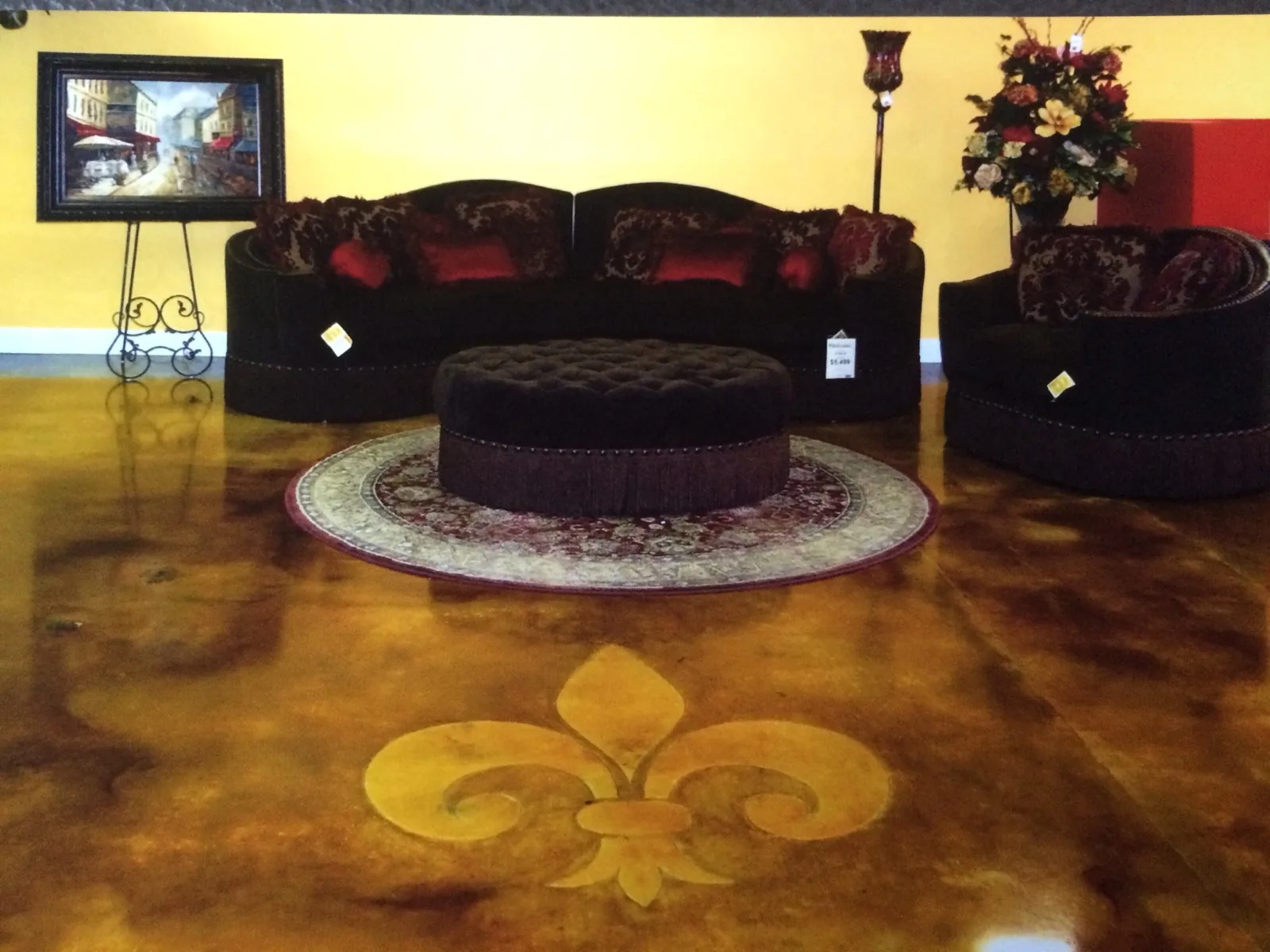
Concrete Staining
Reactive acid stain that gives a slab mottled, variegated color, scored or stenciled if you want a pattern, then sealed.
How any floor here gets built
The same order on every job, whatever the system.
The finish you actually walk on, matched to the use.
Where the system gets its build: resin, cement or a decorative overlay.
Soaks in and locks the system to the concrete.
Ground or shot blasted until the surface opens up and a coating can bite.
Whatever the slab is, it gets read first: moisture, cracks, old coatings, and how level it sits.
The next towns over
- Houma
4.4 miles away, Terrebonne Parish
- Bayou Cane
5 miles away, Terrebonne Parish
- Presquille
5.4 miles away, Terrebonne Parish
- Bourg
5.8 miles away, Terrebonne Parish
More in Lafourche Parish, on the services page and in the gallery.
Straight answers on floors
Or send the plans first.
Got a slab question we did not cover? Call.
(504) 231-6298Do you come out to Bayou Blue?
Yes. Bayou Blue is about 40 miles southwest of our base in Harvey, inside the roughly 100 miles we cover. Someone comes out, looks at the slab and gives you a price after seeing it.
What should I know about a slab from around 1991?
Patios and pool decks from the nineties may already have an acid stain or an acrylic sealer. The acrylic has to be stripped before a new coating goes on.
How long before people and trucks can use a new floor?
It depends on the system and the temperature. Foot traffic often comes the next day, while vehicles and heavy loads usually wait several days for a full cure. We give you the actual times for the product we install.
What floor works in a shipyard or fabrication shop?
A thick system over a shot-blasted slab, such as troweled epoxy, urethane cement or a heavy broadcast build. These take impact, heat and oil that would wreck a thin coating. We size the thickness to what gets dropped and dragged across the floor.
Can you redo a floor after storm flooding?
Yes, once the slab has dried and been tested. We grind off the old finish and contamination, repair cracks and spalls, then install the new system. If the building is waiting on other repairs, we fit the floor into that schedule.
Do you put down floors in seafood processing rooms and commercial kitchens?
Yes. Those rooms need urethane cement, cove base up the walls and a textured surface that keeps its grip when wet. Urethane cement handles hot water washdown and cleaning chemicals that would soften many epoxies.
Can you quote from photos or plans instead of a visit?
For commercial jobs, drawings, square footage and a schedule are often enough to price the work, with a look at the slab before we start. For homes, photos help, but we want to see the concrete in person before we commit to a system.
Is there a wait before cars or forklifts go back on?
Yes. Vehicles wait for a fuller cure, often several days on a coated garage and longer for heavy equipment. Polished concrete can usually take traffic as soon as the crew packs up.
Where do furniture, cars and equipment go?
Everything comes out of the work area, and cars stay out until the coating cures. For a plant or a kitchen, plan where the equipment sits during the job and when it comes back.
What does humidity do to a fresh coating?
Put down at the wrong moment, some coatings can turn cloudy or stay tacky at the surface. We read the dew point and slab temperature before we mix, and we hold off when the numbers are wrong.
Call it in or send the plans
Tell us the space, the square footage and what goes on the floor. We will tell you which system fits and when we can start.
Send the plans
Facility managers and GCs: send what you have, even a floor plan sketch, and the dates the space can be shut down.