
Garages and patios get coated in Pleasure Bend too
Grinders, vacuums and coating rigs make the trip 34 miles west of Harvey to Pleasure Bend whenever a floor there needs doing. Jacob’s crew runs the job from the first grind to the topcoat.
Pleasure Bend, St. John the Baptist Parish, Louisiana.
A look at Pleasure Bend
Housing figures from the US Census.
The median home in Pleasure Bend was built around 1985, by the Census count. Garages from the eighties often have a clear sealer someone rolled on years ago. It is hard to see, but water beads on it, and a primer would too.
A grind takes it off, and a cleaner alone does not.
Numbers like these are why we ask what the space is used for before we talk systems.
The corridor is plant country, with refineries, chemical plants and grain elevators lining the river roads alongside the shops, warehouses and contractors that keep them running. Around St. John the Baptist Parish, the floor work is mostly this: storm-repaired homes and shops in LaPlace, plant and warehouse floors near Garyville and Reserve, and patios on the Edgard side.
Pleasure Bend sits in St. John the Baptist Parish, one of the River Parishes strung along the Mississippi between New Orleans and Baton Rouge, where refineries, cane fields and neighborhoods sit close together.
Roughly 63% of homes are stand-alone houses; the rest is everything else. A mix of houses and apartments means two kinds of floor work: garages and patios for owners, and breezeways and laundry rooms for whoever runs the multifamily buildings.
Flood water and old floors
The River Parishes.
Pleasure Bend is in St. John the Baptist Parish, about 34 miles west of the shop.
Hurricane Ida hit the River Parishes hard in 2021, and storms here bring wind damage, roof leaks and standing water inside buildings never meant to flood. Many older commercial buildings in the river towns sit on slabs that have been patched, tiled over and repainted for decades. Before a new floor, that history comes off with grinding or shot blasting. Cracks get routed and filled, and joints get treated so they do not telegraph through the new finish.
Homeowners around Pleasure Bend with a garage or shop slab should moisture test before coating, since river-country ground keeps on-grade concrete damp longer than most people expect.
If a plant floor in Pleasure Bend sees chemicals, hand us the list of what gets spilled, because that list decides which resin we spec for the room.
Book floor work into a turnaround or shutdown window early, since the crew, the materials and the cure time all have to fit inside dates the plant sets.
Choosing a floor for Pleasure Bend
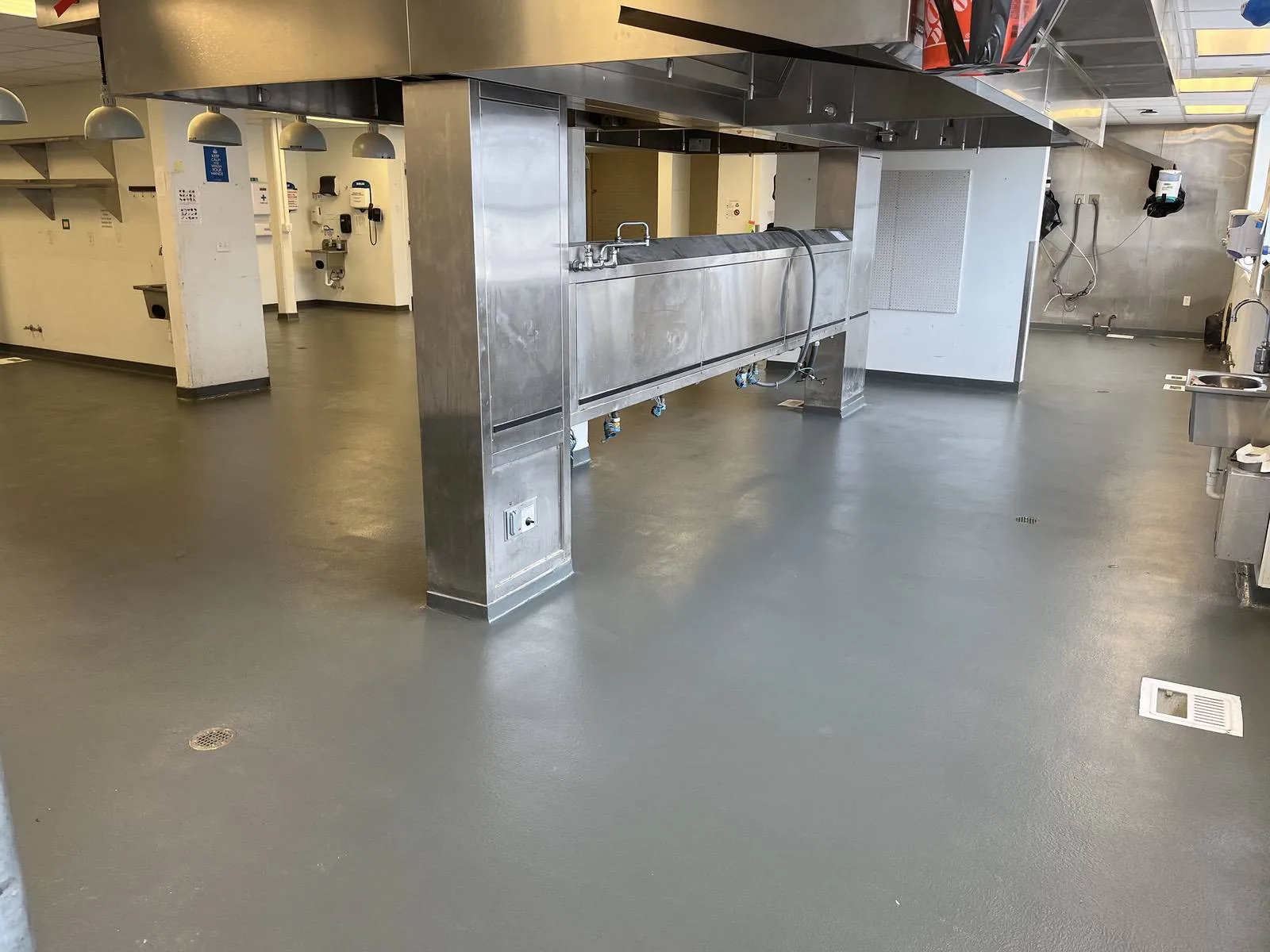
Industrial Flooring
Plants, process areas, shops and support buildings along the river and coast, zoned by use and installed around shutdown windows.
Garage Floor Coatings
Flake, solid color, metallic or polished concrete for home garages, ground first so hot tires and oil never lift it.

Patio Coatings
Overlays, stamped patterns and stain for covered and open patios and porches, finished with a topcoat that grips in the rain.
How any floor here gets built
The same order on every job, whatever the system.
The finish you actually walk on, matched to the use.
Where the system gets its build: resin, cement or a decorative overlay.
Soaks in and locks the system to the concrete.
Ground or shot blasted until the surface opens up and a coating can bite.
Whatever the slab is, it gets read first: moisture, cracks, old coatings, and how level it sits.
The next towns over
- South Vacherie
3.1 miles away, St. James Parish
- Kraemer
4.4 miles away, Lafourche Parish
- Wallace
7.2 miles away, St. John the Baptist Parish
- Choctaw
7.2 miles away, Lafourche Parish
More in St. John the Baptist Parish, on the services page and in the gallery.
Straight answers on floors
Or send the plans first.
Got a slab question we did not cover? Call.
(504) 231-6298Do you come out to Pleasure Bend?
Yes. Pleasure Bend is about 34 miles west of our base in Harvey, inside the roughly 100 miles we cover. Someone comes out, looks at the slab and gives you a price after seeing it.
What should I know about a slab from around 1985?
Clear sealers were common on garages then, and they are hard to spot. If water beads on the floor, there is a sealer, and it has to be ground off before a primer will hold.
What do you do about moisture in river-country slabs?
We test every slab before we spec a system. High vapor readings call for a moisture-mitigating primer or urethane cement, both of which tolerate conditions that make a standard epoxy blister.
What floor holds up to chemical spills?
Urethane cement and chemical-resistant epoxies, installed thick over a properly prepared slab. Which one depends on the chemicals, the temperatures and the cleaning routine. We match the resin to your exposure list rather than guessing.
Do you take residential work along the river?
Yes, garages, patios, shops and interiors. Homeowners get the same moisture test and grinding a commercial floor gets, because the slab does not care who owns it.
Do you work at plants and refineries along the river?
Yes. Industrial and plant floors are a big part of what we do, and we work to whatever safety rules and work permits the site requires. Send the scope, the chemical exposure and the shutdown dates, and we will price a system that fits.
What happens during a site visit?
Dustin walks the slab, looks at the cracks, joints and anything glued or coated to it, and asks what the floor has to handle. Sometimes he runs a quick moisture check in a corner. The quote you get is built on what he saw.
How long does a typical floor take?
A two-car garage usually takes one to two days of work plus cure time. Bigger commercial floors depend on square footage, the system and how much prep the slab needs, and the schedule comes with the quote.
Where do furniture, cars and equipment go?
Everything comes out of the work area, and cars stay out until the coating cures. For a plant or a kitchen, plan where the equipment sits during the job and when it comes back.
Can you coat floors in Pleasure Bend in the middle of summer?
Yes, with some adjustments. Heat shortens working time, so the crew mixes smaller batches and may start early in the day. Humidity matters most for the slab underneath, which we test either way.
Call it in or send the plans
Five minutes on the phone usually tells us whether it is a grind and seal, a coating or a polish.
Send the plans
Bidding a job? Send the plans and the schedule. We price from drawings and walk the slab before we commit to a date.