
Damp Empire slabs and the primers that hold them
Twenty-two years on grinders taught Jacob Lawson one thing about Gulf concrete: it holds water. Floors in Empire get a moisture check before a primer is chosen, because that call decides whether a coating stays down. It sits in Plaquemines Parish, about 41 miles southeast of Harvey.
Empire, Plaquemines Parish, Louisiana.
Getting to Empire
Housing figures from the US Census.
Census numbers put the typical home in Empire at about 2005. A lot of Gulf South building after the 2005 storms was rebuilding, with slabs poured fast and covered fast. Some never got the time to dry out before flooring went down.
We test the moisture and pick a primer built for a slab that is still giving off vapor.
Stand-alone houses are only about 15% of the housing here. When most people live in shared buildings, the hardest-working floors are in shared rooms. Mailrooms, gyms, pool decks and trash rooms all take a beating.
That mix decides who calls: owners redoing a garage or patio, landlords between tenants, or a business with a shop or a kitchen.
Commercial floors in the delta see boots, saltwater and heavy equipment far more than foot traffic, so slip resistance and corrosion matter more than shine. Around Plaquemines Parish, the floor work is mostly this: oilfield and marine shops, dock buildings and raised homes down the river road, where salt air and storms decide what lasts. The nearest towns on our list range from Port Sulphur (typical home around 2004) to Triumph (around 2006); Empire lands on the older side.
Work down here supports fishing fleets, oil and gas service yards, and the terminals along the river, with many homes raised on pilings beside the shops and docks.
Storm season and concrete
Lower Plaquemines and the river delta.
Empire is in Plaquemines Parish, about 41 miles southeast of the shop.
Salt air reaches everything this close to the Gulf. It carries chlorides onto slabs, into cracks and onto steel, and it speeds up rusting of rebar wherever the concrete cover is thin or cracked. Spalls over rusting steel are a familiar sight in older slabs exposed to it. Repair means cutting out the loose concrete, dealing with the steel, patching with repair mortar and only then coating. A coating by itself does not stop rust already under way.
Plan floor work for the calmer months when you can, since hurricane season can push a schedule around anywhere in the delta.
For the slab under a raised house in Empire, pick a flake or slip-resistant system that can be hosed off and does not mind getting wet.
Dock-side and processing floors need a textured topcoat, because boots, fish slime and saltwater make a smooth coating dangerous within hours of opening.
Polish or coating
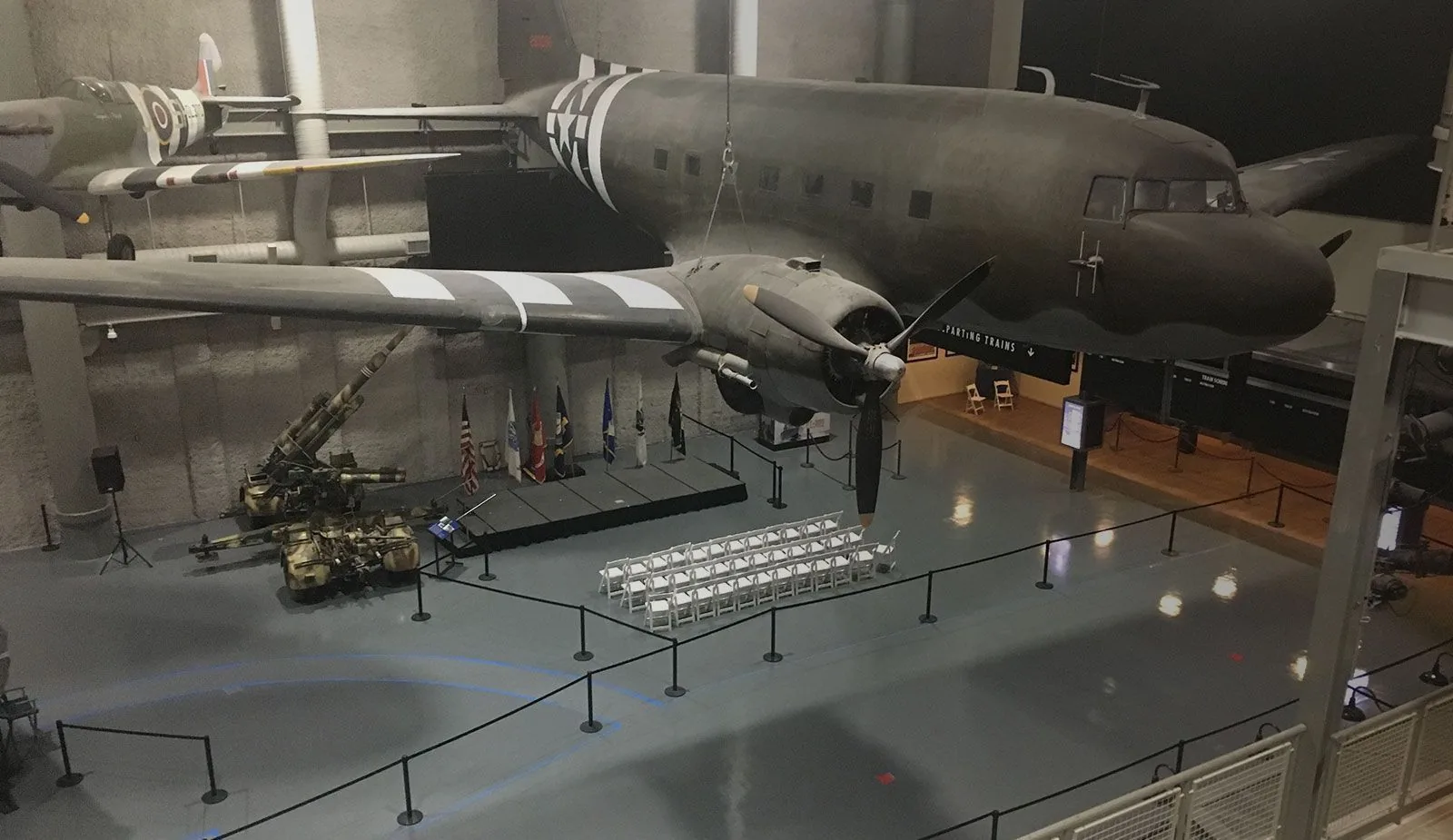
Concrete Polishing
Mechanical grind and polish of the existing slab, densified and guarded, for showrooms, warehouses, restaurants and offices that want a bright floor.
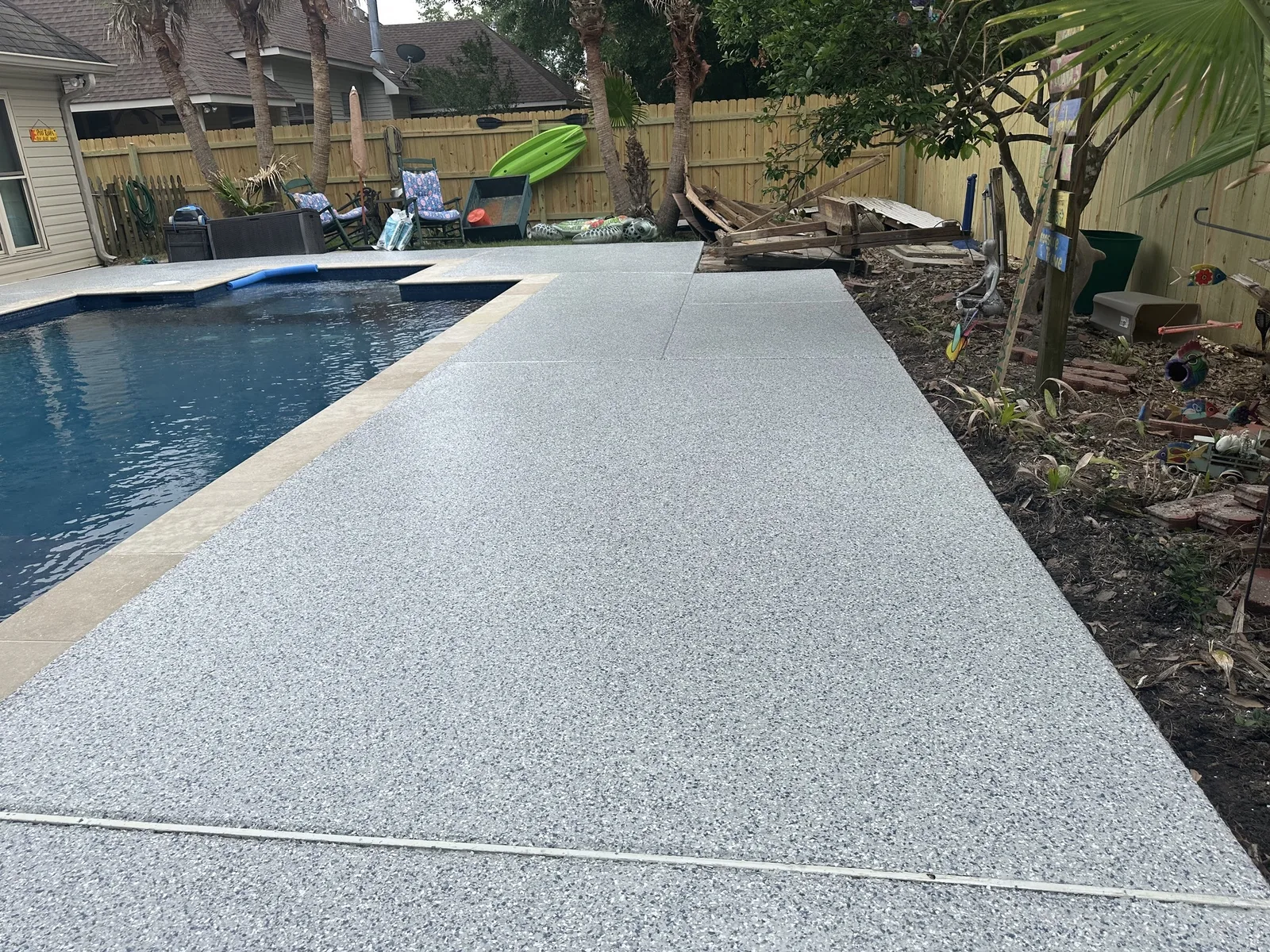
Pool Deck Coatings
Textured overlays and flake decks in light, cooler colors, sealed with grit and built to live with chlorine, salt and wet feet.
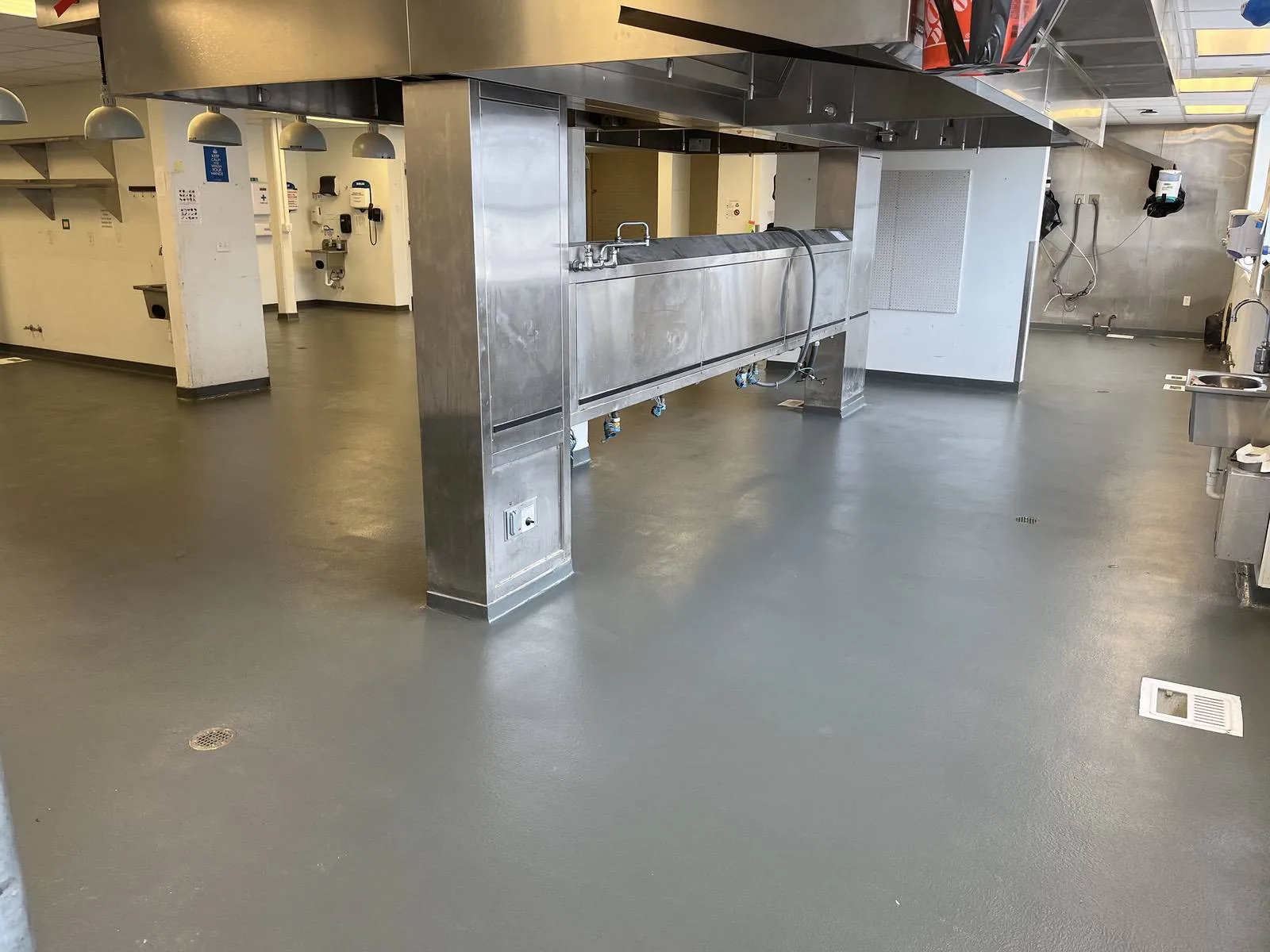
Commercial Kitchen Flooring
Urethane cement and slip-resistant floors with integral cove base for restaurants, school and hotel kitchens, and bars that get mopped every night.
How any floor here gets built
The same order on every job, whatever the system.
Topcoat or guard, set to the traffic and the shine you want.
The color and the thickness: epoxy, urethane cement, stain or an overlay.
Soaks in and locks the system to the concrete.
Ground or shot blasted until the surface opens up and a coating can bite.
The concrete as we find it. Moisture, old sealer and cracks decide everything above it.
The next towns over
- Port Sulphur
7.7 miles away, Plaquemines Parish
- Buras
8.3 miles away, Plaquemines Parish
- Triumph
11 miles away, Plaquemines Parish
- Pointe a la Hache
13 miles away, Plaquemines Parish
More in Plaquemines Parish, on the services page and in the gallery.
Quick answers before a visit
Or send the plans first.
Still unsure? Dustin or Jacob will tell you straight.
(504) 231-6298Do you come out to Empire?
Yes. Empire is about 41 miles southeast of our base in Harvey, inside the roughly 100 miles we cover. Someone comes out, looks at the slab and gives you a price after seeing it.
What should I know about a slab from around 2005?
Newer slabs often carry a curing compound or builder’s sealer you cannot see. We grind it off, because a coating will not bond to it.
What coating works on a slab that floods?
A system that bonds to well-prepared concrete and tolerates being washed out, usually a flake epoxy or a urethane with a textured topcoat. After a flood we clean the slab, let it dry, test it and repair anything loose before recoating. No coating seals a slab against water from below, so moisture is always part of the plan.
How long after a storm can a flooded slab be coated?
Only after it has dried and tests within the system’s moisture limits. That can take a while on a low slab with water close underneath, which is why moisture-tolerant primers exist. We test the slab and go by the reading.
Which finish keeps people from slipping on a wet working floor?
A broadcast system, with flake or aggregate locked into the topcoat, gives grip when the floor is wet. We set the texture to the job, coarser for washdown areas and finer where carts roll. A smooth gloss floor is the wrong pick for a dock, a processing room or a boat shop.
Can you fix spalling concrete caused by salt air?
Yes. We cut out the loose concrete down to sound material, deal with the exposed steel and rebuild the area with repair mortar. A coating then protects the surface from more chlorides getting in.
How should the floor look when Dustin arrives?
Clear enough to see bare concrete in a few spots. If the slab is under carpet or tile, pull back a corner where you can. Ten seconds of looking at the real surface tells us more than any description.
What can push a schedule back?
Moisture in the slab, surprises under old flooring and rain on outdoor jobs. We test early and look under the old floor during the visit, so most of that shows up before the dates are set.
Does anyone need to be home during the work?
Only for access at the start and a walkthrough at the end, unless you want to watch. Grinding is loud, so pets and kids are better off somewhere else that day.
Can you coat floors in Empire in the middle of summer?
Yes, with some adjustments. Heat shortens working time, so the crew mixes smaller batches and may start early in the day. Humidity matters most for the slab underneath, which we test either way.
Two ways to start
Five minutes on the phone usually tells us whether it is a grind and seal, a coating or a polish.
Send the plans
Facility managers and GCs: send what you have, even a floor plan sketch, and the dates the space can be shut down.