
Concrete floors made for Natalbany weather
Natalbany sits 52 miles northwest of Harvey, well inside the range our crew works. We grind the slab, deal with the moisture coming up from below and put down a floor built for Gulf weather.
Natalbany, Tangipahoa Parish, Louisiana.
Old and new construction
Housing figures from the US Census.
Census numbers put the typical home in Natalbany at about 2000. Newer slabs often carry a curing compound or a builder’s sealer that keeps a coating from bonding. It is invisible and it does not mop off.
The grinder takes it off, which is why we grind even a slab that looks perfect.
With a rental-heavy housing mix, the person living on the floor is often not the person paying for it. We talk to both and get the owner’s approval in writing before we start.
Flooding reaches farther north than people assume: the 2016 flood hit Livingston and Tangipahoa hard, and Katrina pushed surge from the lake into Slidell. Around Tangipahoa Parish, the floor work is mostly this: distribution warehouses, campus buildings, farm sheds and homes still recovering from the 2016 flood, each needing a different floor.
Up in the Florida Parishes, Natalbany sits in Tangipahoa Parish, where pine and hardwood country mixes with fast-growing suburbs, small farm towns and horse pastures.
Stand-alone houses are only about 31% of the housing here. Attached units share slabs and walls, so floor work in one unit can affect the next. That calls for real dust control and a schedule the whole building knows about.
Storm season and concrete
The Northshore and the Florida Parishes.
Natalbany is in Tangipahoa Parish, about 52 miles northwest of the shop.
The older towns and farm country carry a different kind of slab: barns, shops and stores poured decades ago, often with no vapor barrier, then patched and painted over the years. Those floors need old coatings and mastic ground off, cracks and joints repaired, and moisture checked before a new system goes down. Equipment sheds and farm shops want rough service floors with real traction. Polished concrete suits older retail buildings when the slab underneath is sound.
For an equipment shed or farm shop in the country around Natalbany, a broadcast system with coarse aggregate gives traction a smooth coat never will.
Use a UV-stable urethane topcoat on patios, pool decks and open garages, since plain epoxy yellows once it sits in the sun for a summer.
Pick a lighter color and a textured finish for a pool deck, so bare feet do not burn or slide when the deck gets wet.
What to put down here

Concrete Polishing
Mechanical grind and polish of the existing slab, densified and guarded, for showrooms, warehouses, restaurants and offices that want a bright floor.
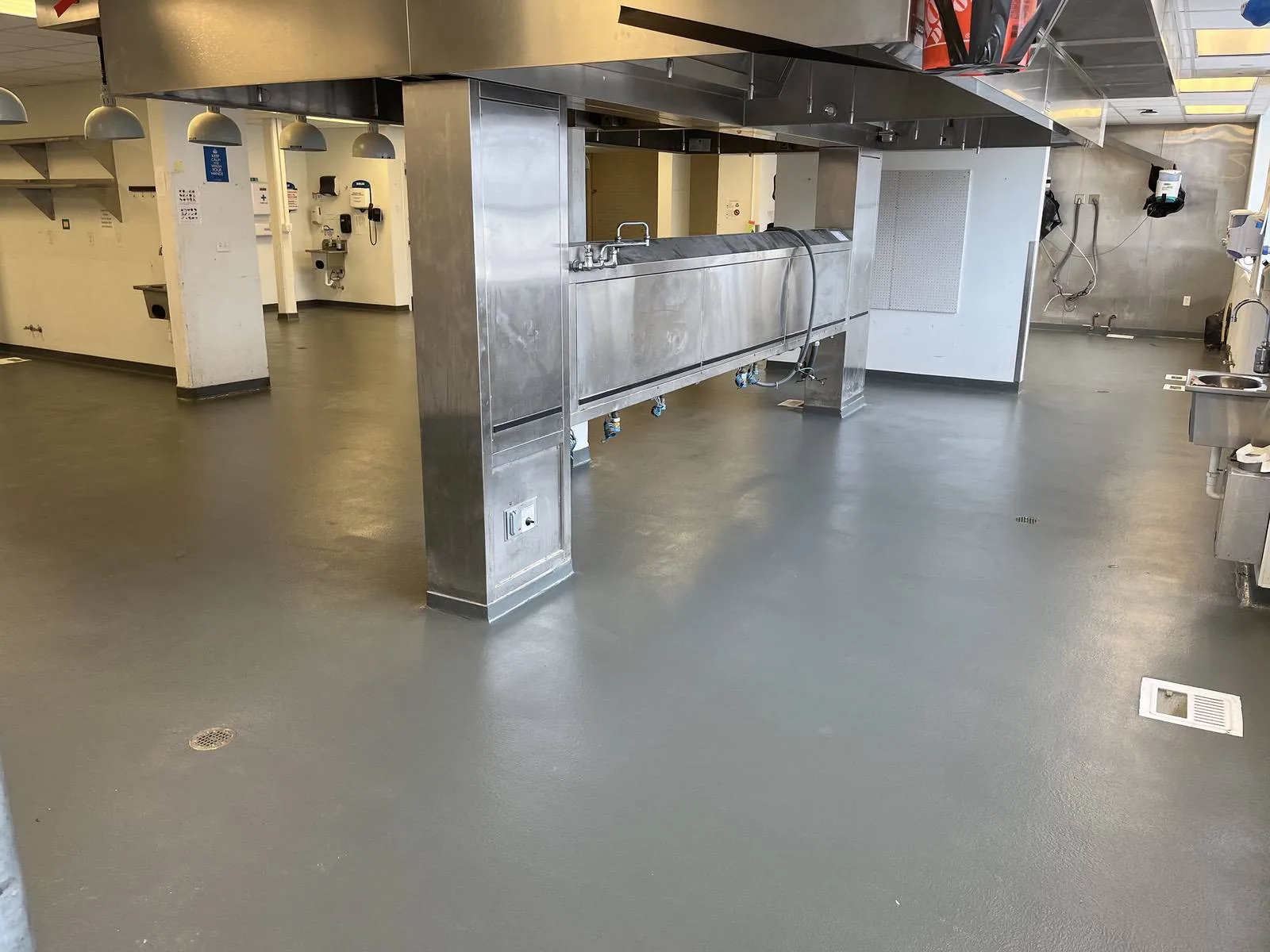
Commercial Kitchen Flooring
Urethane cement and slip-resistant floors with integral cove base for restaurants, school and hotel kitchens, and bars that get mopped every night.
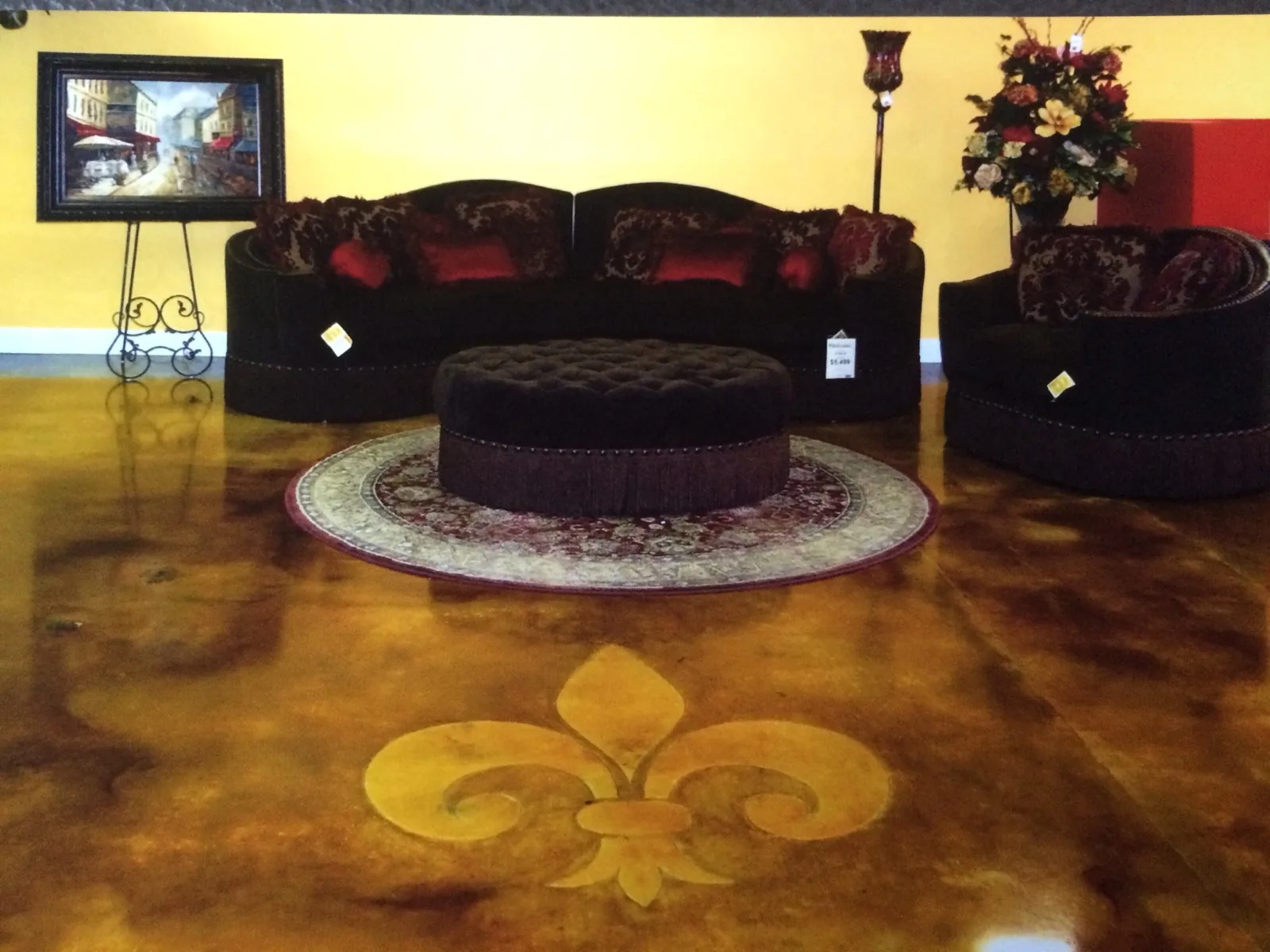
Retail Flooring
Polished, stained or metallic epoxy floors for stores, showrooms and restaurants, installed on night shifts and between tenants.
How any floor here gets built
The same order on every job, whatever the system.
Topcoat or guard, set to the traffic and the shine you want.
The color and the thickness: epoxy, urethane cement, stain or an overlay.
Soaks in and locks the system to the concrete.
Ground or shot blasted until the surface opens up and a coating can bite.
The concrete as we find it. Moisture, old sealer and cracks decide everything above it.
The next towns over
- Tickfaw
1.9 miles away, Tangipahoa Parish
- Hammond
3.5 miles away, Tangipahoa Parish
- Independence
6.1 miles away, Tangipahoa Parish
- Albany
6.7 miles away, Livingston Parish
More in Tangipahoa Parish, on the services page and in the gallery.
Do you come out to Natalbany?
Yes. Natalbany is about 52 miles northwest of our base in Harvey, inside the roughly 100 miles we cover. Someone comes out, looks at the slab and gives you a price after seeing it.
What should I know about a slab from around 2000?
A slab poured after the 2005 storms may have been covered before it fully dried. A moisture test tells us whether it needs a vapor-tolerant primer.
What finish works best on a pool deck here?
A light-colored, textured system with a UV-stable topcoat, or a stamped overlay sealed for outdoor use. Both stay cooler and give grip when wet. Dark, glossy coatings get hot and slick, so we steer people away from them.
Can you coat the slab in a brand-new house?
Yes, once the concrete has cured enough to pass a moisture test. New slabs hold a lot of water, and coating too early is how floors blister. If the schedule is tight, a moisture-tolerant primer can let the work go ahead.
Do you take floor jobs on the Northshore and in Natalbany?
Yes. St. Tammany, Tangipahoa, Livingston, Washington and St. Helena are all inside the area we cover from Harvey. Contractors can send plans and the schedule, and homeowners can have Dustin come look at the floor.
What floor works in an equipment shed or farm shop?
Tractors, trailers and dropped tools need a thick system with coarse texture, usually a broadcast epoxy or urethane cement over a ground slab. It cleans up with a hose and keeps its grip when the floor is wet or muddy.
Do I have to be there for the visit?
It helps. You know where the leaks, old spills and soft spots are, and Dustin can answer questions on the spot. If you cannot make it, a manager or contractor who knows the space works fine.
Is there a wait before cars or forklifts go back on?
Yes. Vehicles wait for a fuller cure, often several days on a coated garage and longer for heavy equipment. Polished concrete can usually take traffic as soon as the crew packs up.
Where do furniture, cars and equipment go?
Everything comes out of the work area, and cars stay out until the coating cures. For a plant or a kitchen, plan where the equipment sits during the job and when it comes back.
What does humidity do to a fresh coating?
Put down at the wrong moment, some coatings can turn cloudy or stay tacky at the surface. We read the dew point and slab temperature before we mix, and we hold off when the numbers are wrong.
Two ways to start
Tell us the space, the square footage and what goes on the floor. We will tell you which system fits and when we can start.
Send the plans
Facility managers and GCs: send what you have, even a floor plan sketch, and the dates the space can be shut down.