
Every Delacroix floor gets the full grind
Delacroix sits 19 miles southeast of Harvey, well inside the range our crew works. We grind the slab, deal with the moisture coming up from below and put down a floor built for Gulf weather.
Delacroix, St. Bernard Parish, Louisiana.
Where Delacroix sits
Housing figures from the US Census.
Census numbers put the typical home in Delacroix at about 2005. Newer slabs often carry a curing compound or a builder’s sealer that keeps a coating from bonding. It is invisible and it does not mop off.
The grinder takes it off, which is why we grind even a slab that looks perfect.
Numbers like these are why we ask what the space is used for before we talk systems.
Commercial floor work around Delacroix runs on tight windows, because a restaurant, a school or a store in this metro rarely gets to close its doors for long. Around St. Bernard Parish, the floor work is mostly this: refinery and port-side shops, rebuilt storefronts and garages in Chalmette and Arabi, on slabs that have already seen one flood.
The metro mixes old and new, with raised cottages and shotgun doubles in the older neighborhoods, slab-on-grade ranch houses in the suburbs, and commercial kitchens and warehouses nearly everywhere you look.
Only about 12% of homes are stand-alone houses. Apartment-heavy housing means floor decisions usually sit with a building owner or an association. We work through them and schedule around the residents.
Sweating floors
The New Orleans metro.
Delacroix is in St. Bernard Parish, about 19 miles southeast of the shop.
The building stock runs from century-old commercial buildings with tired, patched slabs to suburban strip centers and new restaurants poured last year. Old slabs usually mean layers of tile mastic, paint and past repairs, plus joints that have moved. New slabs bring the opposite problem: they hold water while they cure, and flooring put down too early fails. Either way, prep decides the floor. Grinding to the right profile, filling joints properly and reading the moisture are most of the job.
For a restaurant or commercial kitchen in Delacroix, urethane cement handles hot water, grease and daily washdown far better than a thin epoxy roll coat ever will.
Garage and patio owners should go with a flake or slip-resistant finish, because a glossy floor turns slick fast once humid air or tracked-in rain hits it.
If the building took water in a past storm, plan for full grinding and repair, since old flood residue under a new coating is how floors fail early.
Commercial and home floors

Concrete Polishing
Mechanical grind and polish of the existing slab, densified and guarded, for showrooms, warehouses, restaurants and offices that want a bright floor.
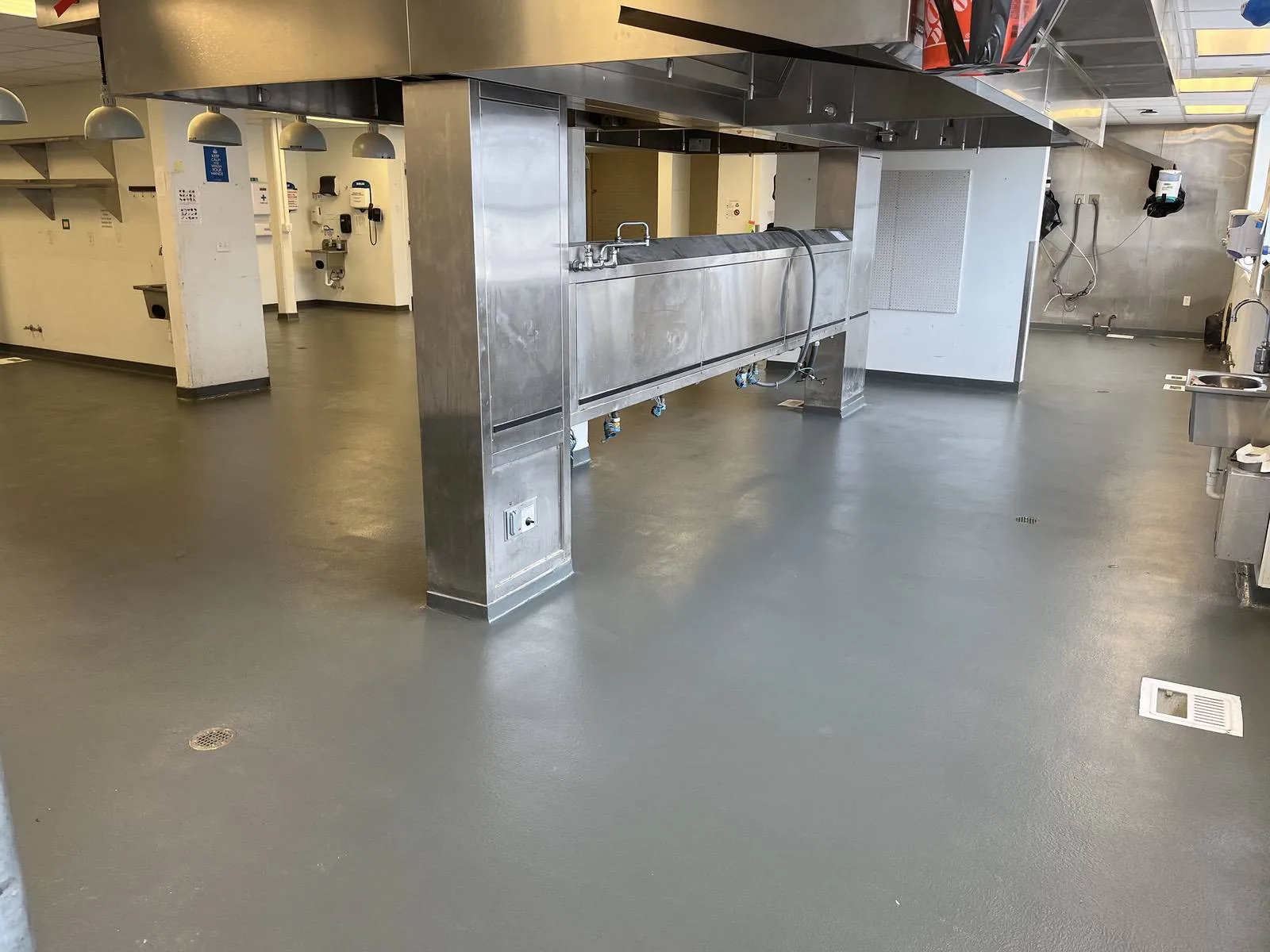
Commercial Kitchen Flooring
Urethane cement and slip-resistant floors with integral cove base for restaurants, school and hotel kitchens, and bars that get mopped every night.
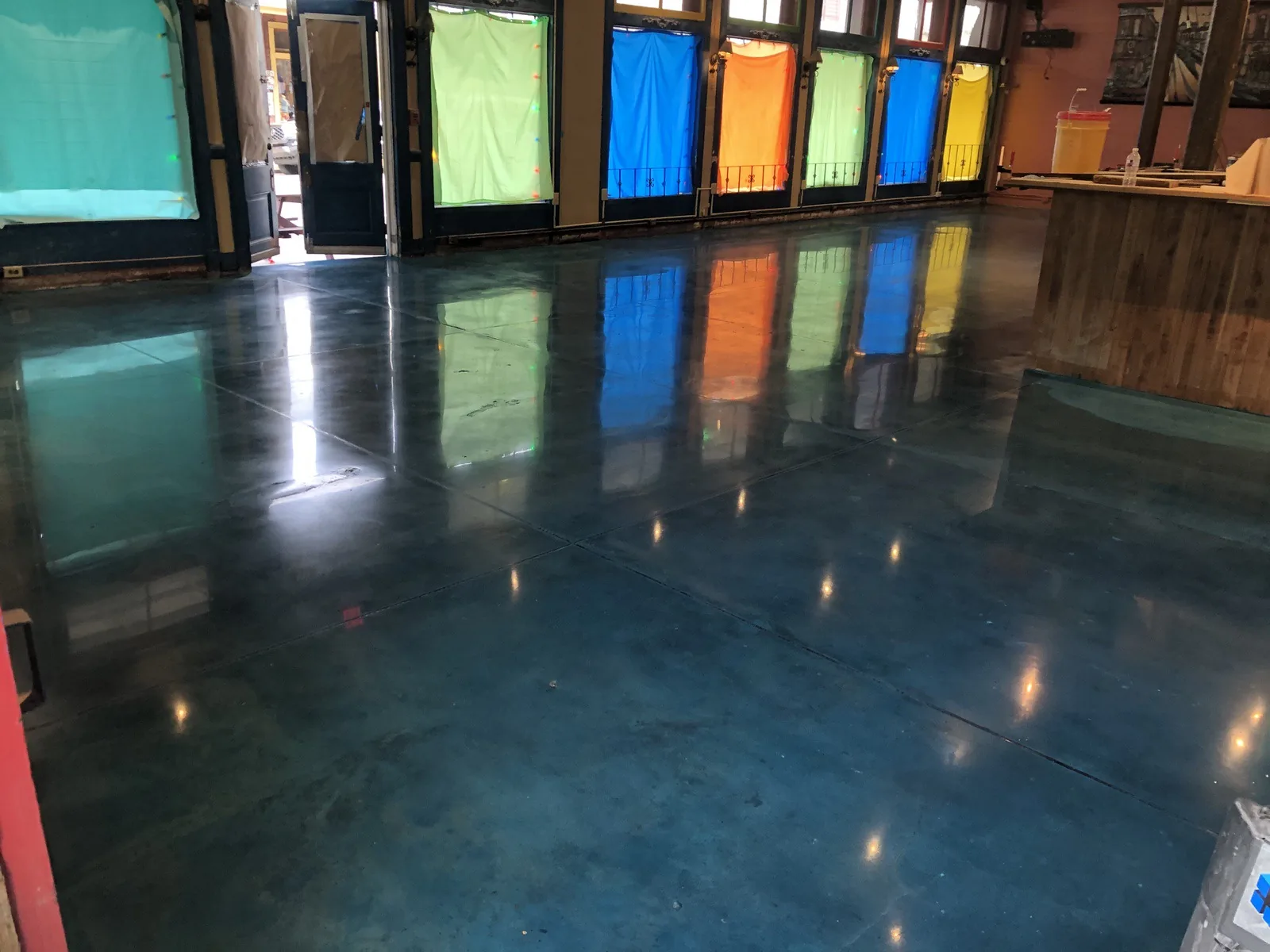
Retail Flooring
Polished, stained or metallic epoxy floors for stores, showrooms and restaurants, installed on night shifts and between tenants.
How any floor here gets built
The same order on every job, whatever the system.
Topcoat or guard, set to the traffic and the shine you want.
The color and the thickness: epoxy, urethane cement, stain or an overlay.
Soaks in and locks the system to the concrete.
Ground or shot blasted until the surface opens up and a coating can bite.
The concrete as we find it. Moisture, old sealer and cracks decide everything above it.
The next towns over
- Poydras
8.9 miles away, St. Bernard Parish
- Violet
11 miles away, St. Bernard Parish
- Pointe a la Hache
13 miles away, Plaquemines Parish
- Meraux
14 miles away, St. Bernard Parish
More in St. Bernard Parish, on the services page and in the gallery.
Quick answers before a visit
Or send the plans first.
Got a slab question we did not cover? Call.
(504) 231-6298Do you come out to Delacroix?
Yes. Delacroix is about 19 miles southeast of our base in Harvey, inside the roughly 100 miles we cover. Someone comes out, looks at the slab and gives you a price after seeing it.
What should I know about a slab from around 2005?
A slab poured after the 2005 storms may have been covered before it fully dried. A moisture test tells us whether it needs a vapor-tolerant primer.
What finish suits an old slab in an older building?
Polished or honed concrete often suits an old slab if it is sound, because it shows the character of the concrete instead of covering it. Heavily patched or uneven slabs may need a micro-topping or an overlay first. We look at the floor before we recommend either.
Can a floor that flooded be coated again?
Usually, once the concrete is sound. We grind off the old coating, adhesive and contamination, repair cracks and spalls, and test moisture after the slab has had time to dry. If the concrete itself is damaged, it gets repaired before any coating goes down.
Does the humidity change how long a floor takes to cure?
It can. Heat and humidity change cure times for epoxies and urethanes, and some products blush or cloud when the air is wrong. We pick products and time the coats around the conditions on the day, and we tell you when the floor is ready for traffic.
How do you handle moisture coming up through older metro slabs?
We test the slab before we quote a system. When vapor readings are high, we use a moisture-mitigating primer or a urethane cement built for it instead of hoping a standard epoxy holds. That test costs far less than tearing out a failed floor.
Do I have to be there for the visit?
It helps. You know where the leaks, old spills and soft spots are, and Dustin can answer questions on the spot. If you cannot make it, a manager or contractor who knows the space works fine.
Is there a wait before cars or forklifts go back on?
Yes. Vehicles wait for a fuller cure, often several days on a coated garage and longer for heavy equipment. Polished concrete can usually take traffic as soon as the crew packs up.
Where do furniture, cars and equipment go?
Everything comes out of the work area, and cars stay out until the coating cures. For a plant or a kitchen, plan where the equipment sits during the job and when it comes back.
Can you coat floors in Delacroix in the middle of summer?
Yes, with some adjustments. Heat shortens working time, so the crew mixes smaller batches and may start early in the day. Humidity matters most for the slab underneath, which we test either way.
Pick your way in
Call with the address and what the floor has to survive. Someone will come look at the slab before anybody talks price.
Send the plans
Facility managers and GCs: send what you have, even a floor plan sketch, and the dates the space can be shut down.