
Ground down and built back up in Independence
Independence sits 58 miles northwest of Harvey, well inside the range our crew works. We grind the slab, deal with the moisture coming up from below and put down a floor built for Gulf weather.
Independence, Tangipahoa Parish, Louisiana.
Old and new construction
Housing figures from the US Census.
Census numbers put the typical home in Independence at about 1971. Most 1970s slabs were poured to sit under carpet or vinyl. Strip that away and you get plain, rough concrete.
Ground and polished, it shows its age, which some owners like and others cover with a solid-color coating instead.
Up in the Florida Parishes, Independence sits in Tangipahoa Parish, where pine and hardwood country mixes with fast-growing suburbs, small farm towns and horse pastures. Around Tangipahoa Parish, the floor work is mostly this: distribution warehouses, campus buildings, farm sheds and homes still recovering from the 2016 flood, each needing a different floor. The nearest towns on our list range from Amite City (typical home around 1969) to Natalbany (around 2000); Independence lands on the older side.
Flooding reaches farther north than people assume: the 2016 flood hit Livingston and Tangipahoa hard, and Katrina pushed surge from the lake into Slidell.
Stand-alone houses make up the bulk of it, roughly 82%. With detached houses making up most of the homes, patios and pool decks are a big part of the floor picture. Outdoor slabs like those need a coating that handles sun and stays grippy when wet.
Numbers like these are why we ask what the space is used for before we talk systems.
Humidity and the slab
The Northshore and the Florida Parishes.
Independence is in Tangipahoa Parish, about 58 miles northwest of the shop.
The older towns and farm country carry a different kind of slab: barns, shops and stores poured decades ago, often with no vapor barrier, then patched and painted over the years. Those floors need old coatings and mastic ground off, cracks and joints repaired, and moisture checked before a new system goes down. Equipment sheds and farm shops want rough service floors with real traction. Polished concrete suits older retail buildings when the slab underneath is sound.
Use a UV-stable urethane topcoat on patios, pool decks and open garages, since plain epoxy yellows once it sits in the sun for a summer.
For an equipment shed or farm shop in the country around Independence, a broadcast system with coarse aggregate gives traction a smooth coat never will.
Pick a lighter color and a textured finish for a pool deck, so bare feet do not burn or slide when the deck gets wet.
What to put down here
Garage Floor Coatings
Flake, solid color, metallic or polished concrete for home garages, ground first so hot tires and oil never lift it.
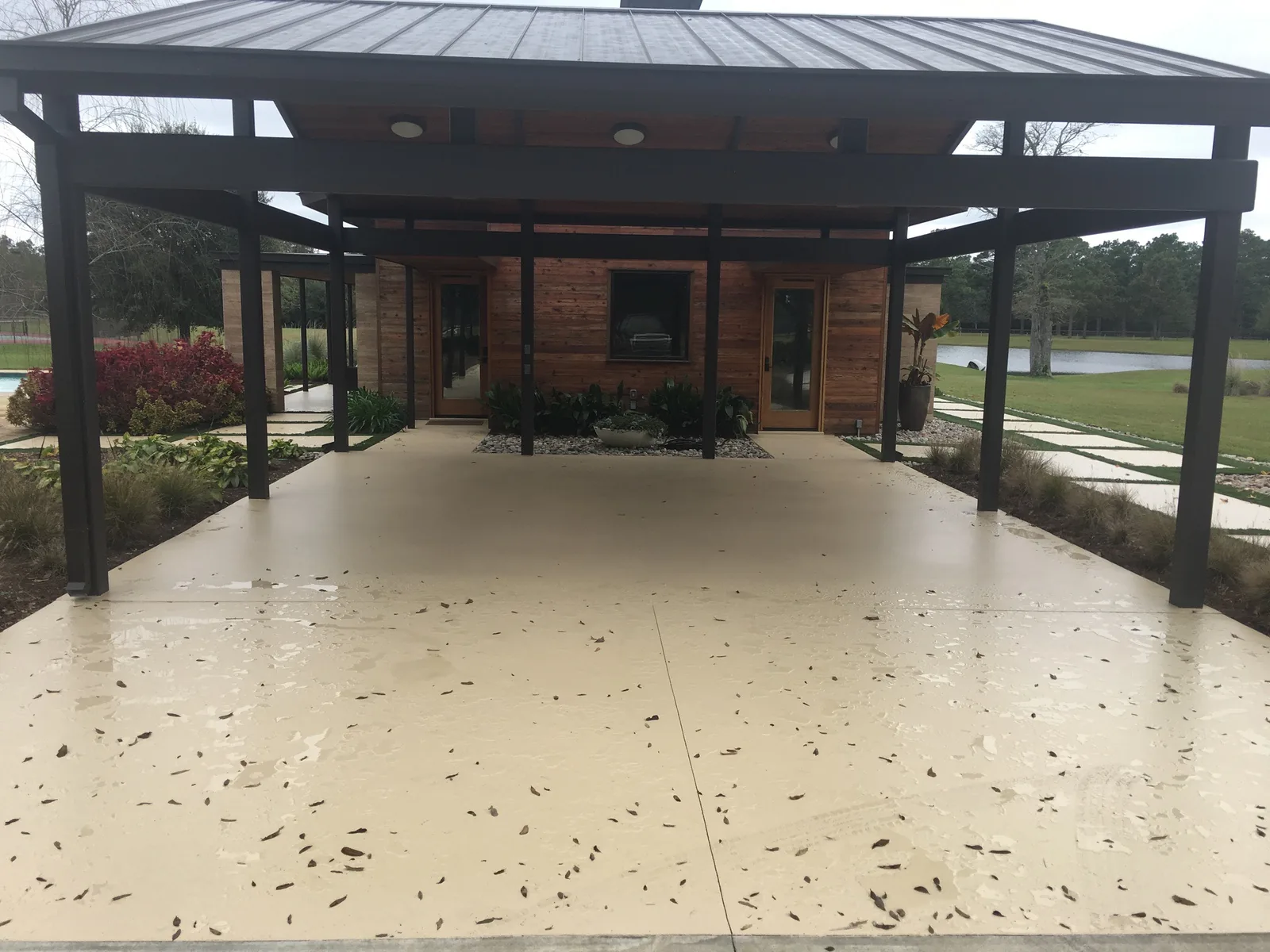
Patio Coatings
Overlays, stamped patterns and stain for covered and open patios and porches, finished with a topcoat that grips in the rain.
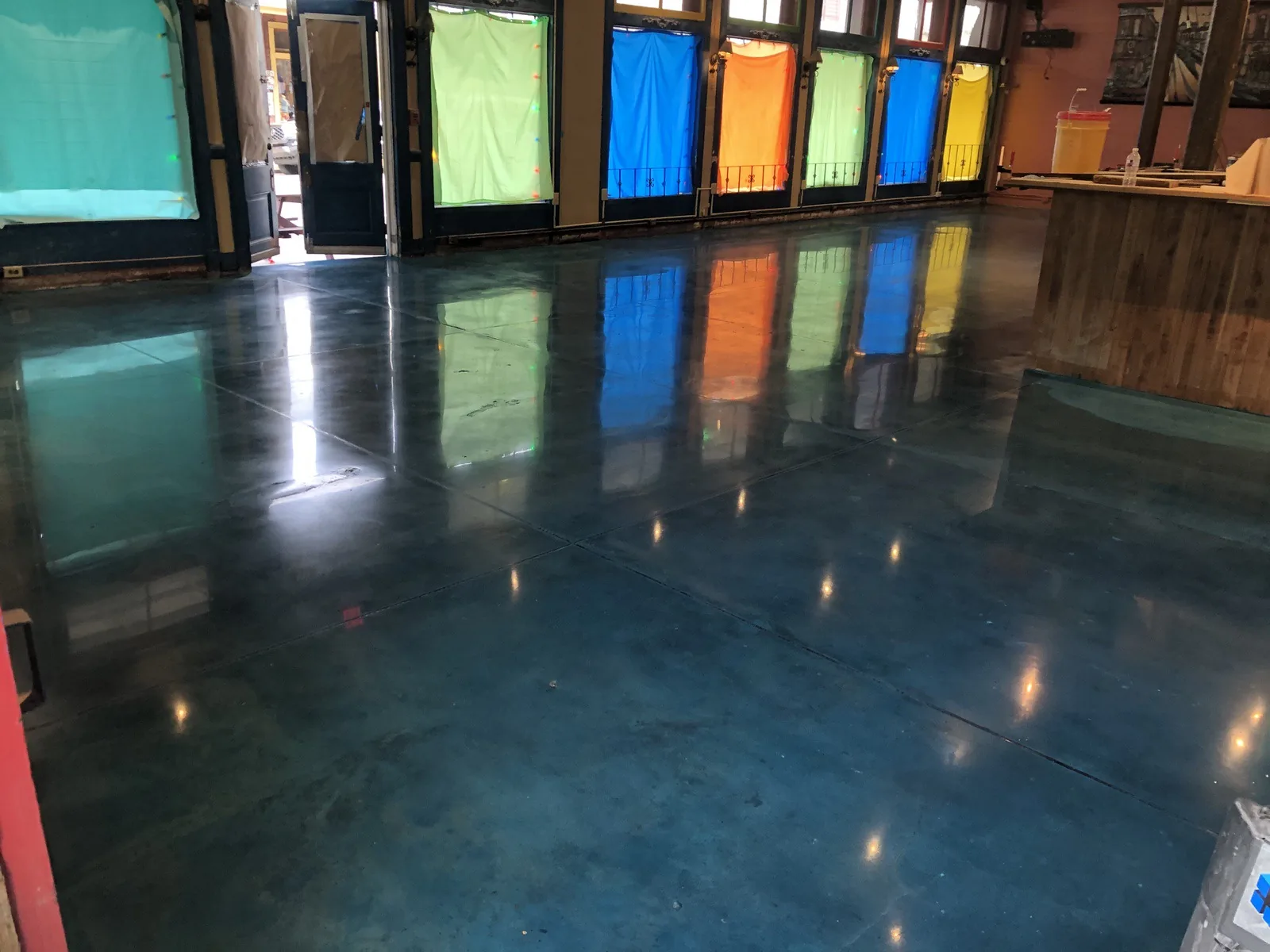
Concrete Staining
Reactive acid stain that gives a slab mottled, variegated color, scored or stenciled if you want a pattern, then sealed.
How any floor here gets built
The same order on every job, whatever the system.
Topcoat or guard, set to the traffic and the shine you want.
The color and the thickness: epoxy, urethane cement, stain or an overlay.
Soaks in and locks the system to the concrete.
Ground or shot blasted until the surface opens up and a coating can bite.
The concrete as we find it. Moisture, old sealer and cracks decide everything above it.
The next towns over
- Tickfaw
4.2 miles away, Tangipahoa Parish
- Natalbany
6.1 miles away, Tangipahoa Parish
- Amite City
6.7 miles away, Tangipahoa Parish
- Roseland
8.8 miles away, Tangipahoa Parish
More in Tangipahoa Parish, on the services page and in the gallery.
Quick answers before a visit
Or send the plans first.
Still unsure? Dustin or Jacob will tell you straight.
(504) 231-6298Do you come out to Independence?
Yes. Independence is about 58 miles northwest of our base in Harvey, inside the roughly 100 miles we cover. Someone comes out, looks at the slab and gives you a price after seeing it.
What should I know about a slab from around 1971?
Concrete from then is usually sound and settled. Most of the work is removing what was glued or painted on it and filling the cracks that opened up over fifty years.
What floor works in an equipment shed or farm shop?
Tractors, trailers and dropped tools need a thick system with coarse texture, usually a broadcast epoxy or urethane cement over a ground slab. It cleans up with a hose and keeps its grip when the floor is wet or muddy.
Do you build floors for schools, clinics and new retail?
Yes. Polished concrete, epoxy and slip-resistant coatings all fit those buildings, and we work to the general contractor’s schedule and submittals. Samples and product data are available on request.
Do you take floor jobs on the Northshore and in Independence?
Yes. St. Tammany, Tangipahoa, Livingston, Washington and St. Helena are all inside the area we cover from Harvey. Contractors can send plans and the schedule, and homeowners can have Dustin come look at the floor.
What finish works best on a pool deck here?
A light-colored, textured system with a UV-stable topcoat, or a stamped overlay sealed for outdoor use. Both stay cooler and give grip when wet. Dark, glossy coatings get hot and slick, so we steer people away from them.
Which details help you put a quote together?
The size of the area, what the floor has to handle and when you need it back. For commercial work, add the specs, the shutdown window and any submittal requirements. From there we come back with a price.
When can I walk on it?
Light foot traffic is typically fine within a day on most coatings, and full cure takes longer. We give you the timing for your system, because urethane cement, epoxy and polished concrete all behave differently.
Does anyone need to be home during the work?
Only for access at the start and a walkthrough at the end, unless you want to watch. Grinding is loud, so pets and kids are better off somewhere else that day.
Can you coat floors in Independence in the middle of summer?
Yes, with some adjustments. Heat shortens working time, so the crew mixes smaller batches and may start early in the day. Humidity matters most for the slab underneath, which we test either way.
Two ways to start
Five minutes on the phone usually tells us whether it is a grind and seal, a coating or a polish.
Send the plans
Facility managers and GCs: send what you have, even a floor plan sketch, and the dates the space can be shut down.