
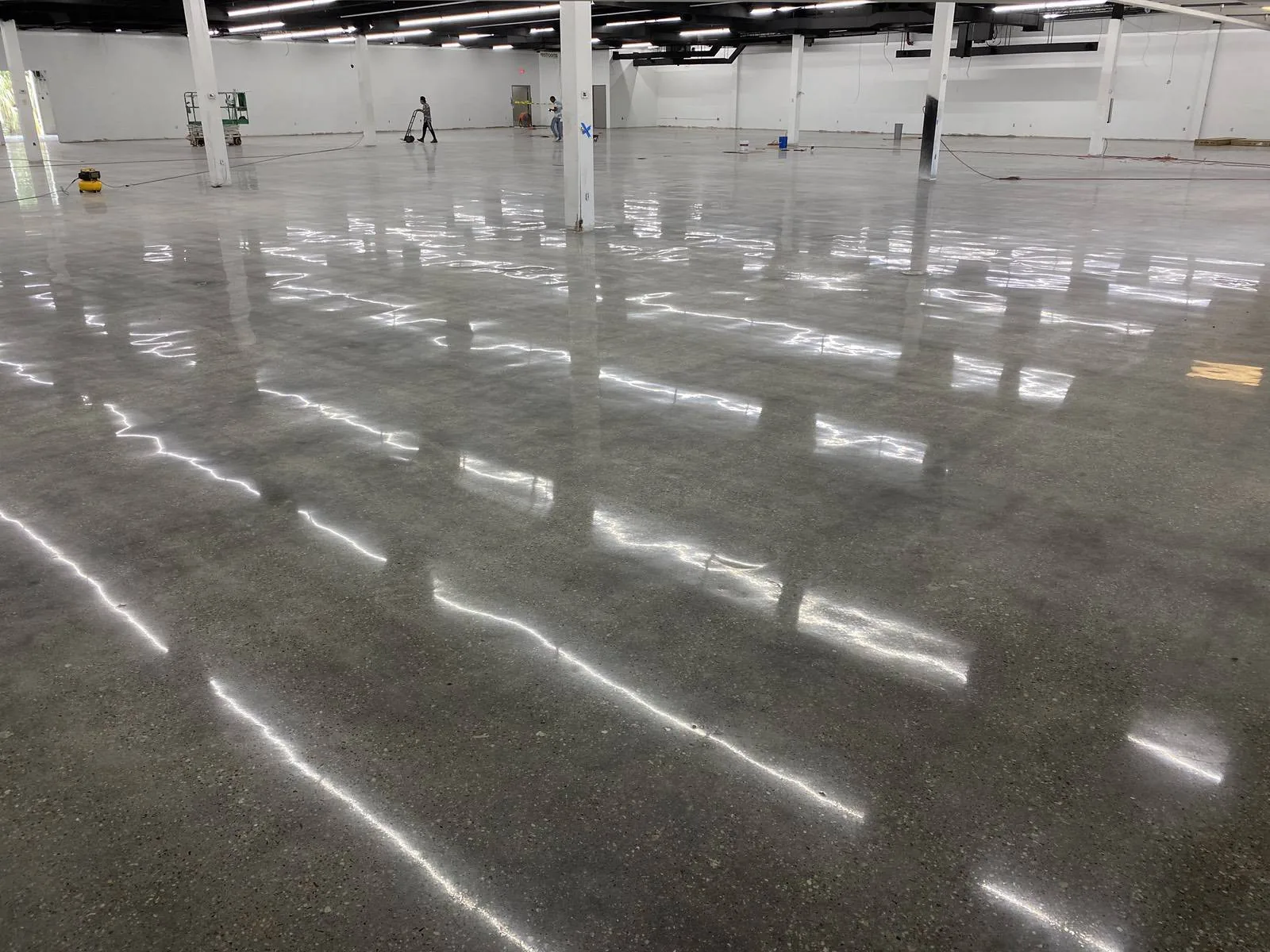
Dustproofing a concrete floor that keeps shedding
A dusting slab has a weak skin of laitance on top that powders under every wheel. We grind that skin off, densify the sound concrete under it and guard the surface so it stays clean.
22 years in businessPolished5.0 on Google from 36 reviews
What it is
Dust coming off a concrete floor is the slab wearing away a little at a time. When a slab is finished too wet, troweled while bleed water is still on top, or cured badly, the top skin ends up weak. Every forklift and pallet jack knocks more of it loose, and so does the broom. It settles on the racks and the product, and sweeping only uncovers the next layer.
Dustproofing is the repair. We grind through the laitance into sound concrete, densify what is left so it hardens, and burnish in a guard that tightens the top and helps it shed spills. The calls come from warehouses, distribution buildings, plants and older shops where the floor has been throwing powder for years and a full coating is more than the job needs. Plants that handle food or parts have a simple reason to care: dust in the air ends up in the product and in the bearings.
Its twin is Concrete Densifying, and people mix them up because both use the same liquid. Densifying is the treatment: a sound slab with a little surface softness at most gets cleaned and the densifier goes in. Dustproofing is the fix for a slab already failing at the top, and the grind is the part that matters. Spray densifier on a bad laitance layer and you harden powder that is going to break loose anyway. Same goes for a sealer alone: put it over laitance and it peels off with the dust. To tell which one you have, we scratch the surface and look at what comes up. That answers it fast.
Part of our polished work. See all of it.

Start with the concrete.
What goes down, from the surface you walk on to the slab under it.
We will not spray densifier on a powdering floor and call it dustproofed; if the laitance stays, the dust comes back.
Burnished guard
A guard is burnished in to tighten the surface, leaving a hard, clean floor to drive on.
Densifier
Lithium silicate soaks into the freshly opened paste and hardens it.
Joint and crack repair
Spalled joints and open cracks get filled so wheels stop chipping new edges.
Ground to sound paste
Metal-bond diamonds take the weak skin off until the scratch test comes back hard.
Dusting slab
Concrete with a soft, chalky skin of laitance that powders under wheels and brooms.
Where it belongs
Warehouses and distribution
Rack aisles stop coating stock and shrink wrap in gray powder, and the cleaning crew stops chasing the same dust every shift.
Manufacturing plants
Less dust in the air around machinery and electrical cabinets, on a floor that still takes forklift traffic.
Dry storage and packing
Food and product storage areas get a cleaner slab; wet process rooms usually need a coating instead.
Older shops and garages
A tired slab in a shop or a home garage stops dusting without going all the way to an epoxy coating.
How the crew runs it
Five steps, in order.
Scratch and look
We check the slab with a scratch test and a water drop, and look at the joints, the cracks and any old sealer.
Grind the skin off
Metal-bond passes cut through the laitance, with vacuums on the grinders so we are not adding to your dust problem.
Fix joints and cracks
Spalled joints and cracks get filled before the densifier, so the floor stops breaking down at the edges.
Densify
Densifier goes down on the fresh paste, gets worked in and the excess is picked up.
Guard and burnish
A guard is burnished in and the floor goes back into service.
For the GC or the facility
- Our grinders run with vacuum extraction, but the area still needs stock and people out during the grind; plan it as a shutdown window or in sections.
- Foot traffic is typical soon after the guard is burnished, and forklifts once the guard has cured, depending on the product.
- Spalled joints and cracks get priced as their own line so you can see what the slab needs.
- Product data and a sample area on request.
Gulf South conditions
Heat works against a fresh slab here. Concrete placed on a hot, humid day can set up on top while bleed water is still rising, and a crew racing the sun may trowel that water back into the surface. Years later, that is often the floor that dusts.
Humidity also changes how we fix it. A slab sweating on a muggy morning holds moisture at the surface, which slows the densifier and can leave a haze if the pickup is rushed. We keep the building closed and the air moving where we can, and we wait out the wet days. Ports and plants along the river and the coast track in grit all year, and a hardened, guarded surface takes it better than soft paste. After a flood, silt and water sit in a dusting floor’s soft top, so it gets cleaned and dried before any grinding starts.
Look at the finish.
“On this particular project, they installed a Urethane Floor at the kitchen and bar and also polished the existing concrete floors throughout the building.”
David Hubbard, Google review5.0 on Google from 36 reviews
Living with it
Dust mop and run an auto scrubber with a neutral cleaner. The floor will stop making its own powder, but grit tracked in from outside still needs to come up. Keep acid and harsh degreasers off it. Fix damaged joints before wheels chip them wider. A scrub and a burnish bring dull lanes back.
Next to this one
See finished floorsQuestions about concrete dustproofing
See finished jobs in the gallery, or send the plans.
Why does my concrete floor keep making dust?
The top layer is weak. Too much water at the finish, troweling bleed water back in, or poor curing leaves a soft skin that wears off under traffic. Sweeping only exposes the next layer of it.
How is dustproofing different from densifying?
Densifying is putting the hardener on a slab that is basically sound. Dustproofing is the full repair for a slab that is already shedding: grind off the weak layer first, then densify and guard. Without the grind, densifier just hardens powder that will break loose.
Will grinding make more dust in my building?
Our grinders run with vacuum extraction, which catches most of it at the head. Some fine dust still gets around, so we ask for the area to be cleared and stock covered or moved. Once the grind is done, the floor stops making its own.
Do I need epoxy instead?
Not always. If the floor only needs to stop dusting and take traffic, dustproofing does it with no coating to peel. If you need color, chemical resistance, a wet room that cleans easy or a slip-resistant texture, a coating is the better call.
Can you work around a running warehouse?
Yes, in sections or during a shutdown window. We move through aisles and docks in an order your operations team can live with. Nights and weekends are on the table when the job needs it.
How do we get a price?
Have Dustin come look at the floor, because dustproofing depends on how deep the weak layer runs and what shape the joints are in. Send square footage and the schedule ahead of the visit if you have them.
Let’s look at your floor.
Call with the address and what the floor has to survive. Someone will come look at the slab before anybody talks price.
Bidding a job? Send the plans and the schedule. We price from drawings and walk the slab before we commit to a date.