
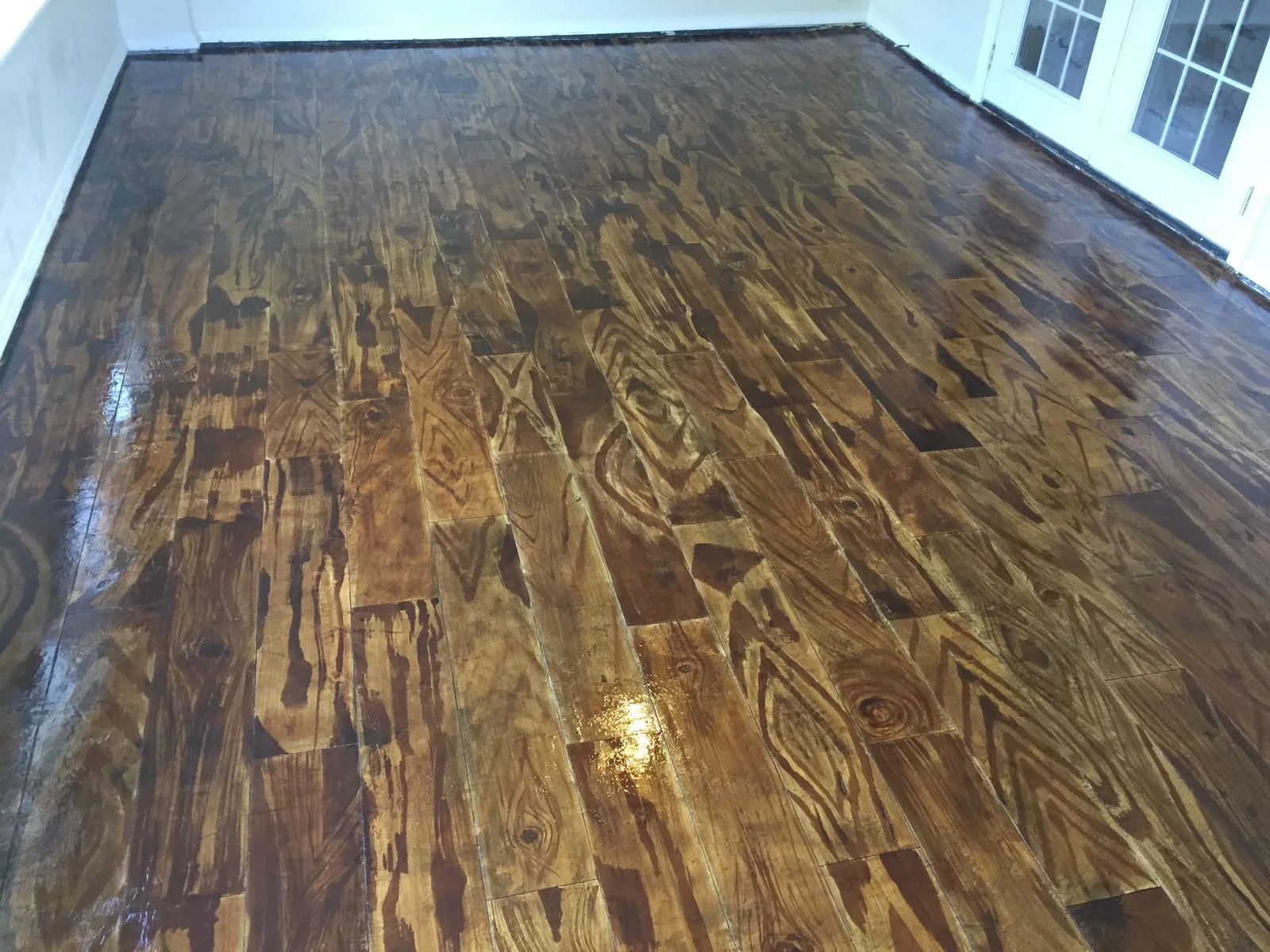
Micro toppings for a thin, troweled concrete finish
Micro topping is cement troweled on in coats so thin they follow the surface underneath, and it gives floors, walls, counters and stairs a smooth, hand-worked look with soft cloud in the color.
22 years in businessDecorative5.0 on Google from 36 reviews
What it is
The mix is a polymer-modified cement with very fine sand, mixed thin and troweled on by hand. A full system is typically a base coat and two finish coats, and the whole thing usually ends up around an eighth of an inch or less. Each pass is troweled, then sanded or burnished, so the surface comes out dense and smooth with the faint marks of the steel still in it. Color goes in as an integral tint or gets stained after, and a two-part sealer goes on last.
Because it is so thin, it goes places a thicker overlay cannot. Stair treads and risers, a bar front, a feature wall, a kitchen counter, a column, the edge of a step-down: all of it can carry the same finish as the floor beside it, with no thick edges to hide. Designers and architects spec it for restaurants, retail, offices and lofts where the drawings call for a concrete look and the slab is a patchwork. Homeowners use it on floors, stairs and countertops without pouring anything new.
The line between this and a concrete overlay is thickness and what that thickness buys you. A concrete overlay, especially self-leveling, is thick enough to take out low spots and give you a flat floor, and it is the better choice where heavy carts roll. A micro topping follows the surface under it, dips and all, so the slab has to be flat already. In return you get a finer, more uniform face, and it climbs walls and wraps stair noses where an overlay would be clumsy. Some jobs call for both: an overlay to flatten the floor, then micro topping on the stairs and bar so they match.
Part of our decorative work. See all of it.
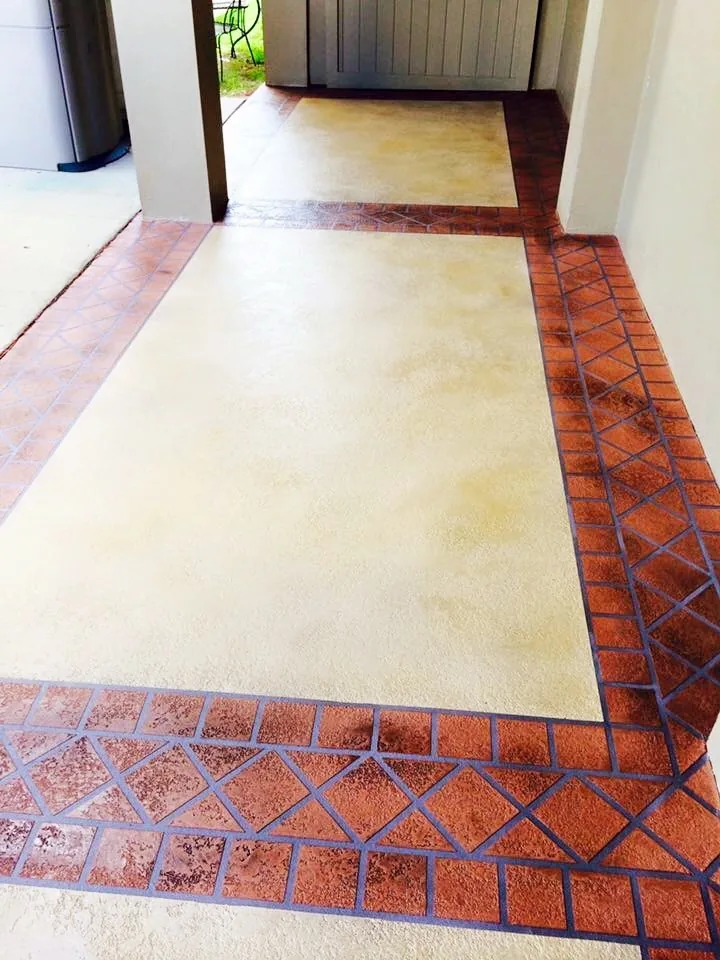

Start with the concrete.
What goes down, from the surface you walk on to the slab under it.
We will not trowel a micro topping over a wavy floor and call it flat, because it follows every dip under it.
Two-part sealer
The surface you walk on or set a glass on, typically a two-part urethane that keeps water and stains out.
Color
Integral tint in the mix, or stain and dye after the last coat for more movement.
Finish coats
Two thin trowel passes of the fine mix, sanded between, that set the final look.
Base coat
A slightly coarser coat that fills pinholes and small voids and hides the color underneath.
Prep and primer
Ground or sanded to open the surface, then primed so the first coat bonds and does not dry out too fast.
Sound substrate
Flat concrete, or a counter, wall or stair that is solid and clean. The topping shows every dip underneath.
Where it belongs
Stairs
Treads, risers and nosings finished to match the floor at the top and bottom, with a clean edge on every nose.
Countertops and bars
Existing counters and bar fronts refaced in place, so the cabinets and plumbing stay where they are.
Feature walls
Lobby walls, columns and reception desks that need a concrete look with no forms and no pour.
Shop and home floors
Flat slabs in shops, offices and homes where the traffic is people on foot and the owner wants one even color wall to wall.
How the crew runs it
Five steps, in order.
Check the flatness
We run a straightedge across the floor first, because a micro topping will not hide a dip. If it needs leveling, that happens before we start.
Prep and prime
The surface is ground or sanded, vacuumed and primed, with joints and cracks treated so they do not show through.
Base coat
A base coat goes on with a steel trowel or squeegee and is knocked down smooth once it sets.
Finish coats by hand
Two thin finish coats are troweled in overlapping passes, and that hand work is where the look comes from.
Color and seal
Stain or dye goes on if the design calls for it, then the sealer, with a cure before anyone walks on it or sets a drink down.
For the GC or the facility
- Send the finish schedule and square footage for floors, walls and stairs. Sample boards in your colors on request.
- Floors have to be flat and sound before we start. If they are not, leveling goes on the schedule ahead of us.
- Each coat needs its own dry time, so a typical floor runs several working days, plus sealer cure before traffic.
- Other trades stay off it while we work, because boot prints and dust end up in the finish.
Gulf South conditions
Thin cement and hot, wet air do not get along. In a building with the doors open in July, a coat can skin over before the crew finishes troweling it, and on a humid morning the next coat waits longer than the schedule says. We want the air conditioning running and the space closed in for interior work, and we mix smaller batches when it is hot.
Moisture is the other thing. A thin topping has very little body to fight vapor coming up through a slab on grade, so the sealer can cloud or lift if the slab is wet. We test, and on a slab that is wet from below we put down a moisture-mitigating primer first or recommend a different system. Outside, under full Gulf sun, a micro topping wears faster than a thicker overlay, so we usually keep it indoors or under a roof.
Look at the finish.

“The craftsmanship and attention to detail really show. They were professional, punctual, and kept the work area clean throughout the project.”
Hang Pham, Google review5.0 on Google from 36 reviews
Living with it
Treat it like a good sealed counter. Wipe up wine, citrus and vinegar before they sit, and clean with a pH-neutral cleaner and soft pads. Use cutting boards and trivets on counters and felt pads under chairs. When the sealer looks worn where people walk, a maintenance coat brings it back.
Next to this one
See finished floorsQuestions about micro toppings
See finished jobs in the gallery, or send the plans.
How thin is a micro topping?
Typically an eighth of an inch or less for the full system, base coat and finish coats together. That is why it can wrap a stair nose or go up a wall where a thicker overlay would look heavy.
Should I pick this or a concrete overlay?
If the floor is uneven or takes pallet jacks and heavy carts, go with a concrete overlay. If it is flat, the traffic is people, and you want a fine troweled face that carries onto stairs and walls, micro topping fits.
Can it go over my existing countertop?
Often, yes, if the counter is solid and does not flex. Tile and stone can take it with the right prep and primer, but a top that moves when you lean on it will crack the finish.
Will it crack?
Moving cracks and control joints in the slab will show through, so we honor the joints and treat cracks before we start. A fine hairline in the topping itself can happen, and it reads as part of the concrete look.
Can you use it on an outdoor patio?
We can, on a covered porch or under a roof, with an exterior sealer. In full sun or around a pool, a stamped or concrete overlay holds up better and gives you more grip.
What do you need from us to price it?
Square footage of the floors, a count of stair treads, the size of any counters or walls, and photos. Dustin can come look if the surfaces need a closer read, and we quote once we know what is underneath.
Let’s look at your floor.
Call with the address and what the floor has to survive. Someone will come look at the slab before anybody talks price.
Bidding a job? Send the plans and the schedule. We price from drawings and walk the slab before we commit to a date.