
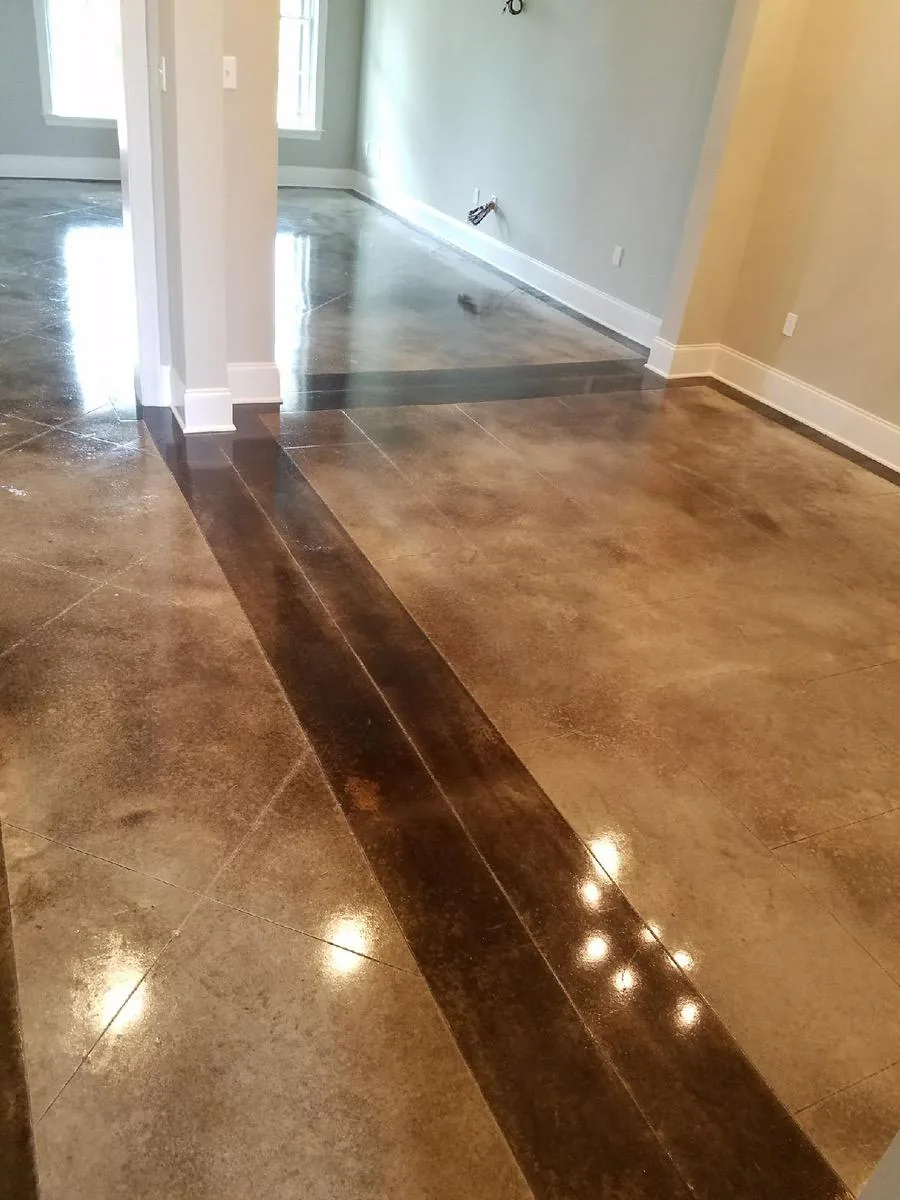
Concrete sealing that matches the slab and the traffic
We seal interior and exterior slabs with the sealer the floor actually needs: penetrating where it has to breathe, film-forming where you want color and sheen, and a resealing schedule you can plan around.
22 years in businessPolished5.0 on Google from 36 reviews
What it is
Sealing is the job that keeps water, oil and salt out of concrete. There are two kinds of sealer and they do different work. A penetrating sealer (silane or siloxane) soaks into the pores and reacts below the surface, so the slab still looks like bare concrete and still lets vapor out. A film-forming sealer (acrylic, epoxy or urethane) sits on top as a thin coat, darkens the color, adds sheen and takes the wear itself. Picking the wrong one is the most common sealing mistake we see.
Our sealing work leans commercial: warehouse floors that are going to stay bare concrete, loading docks, restaurant back-of-house, exterior walks at schools and municipal buildings, and the stained floors we finish ourselves. On the residential side it is driveways, patios, pool surrounds and garage floors that are not getting a full coating. Plenty of floors only need sealing. A sound slab with a good finish and light traffic does not need a full epoxy system to survive, and we will tell you that.
Sealing is easy to confuse with its neighbors. Polishing changes the slab itself: we grind it, densify it and refine it with finer and finer diamonds, then apply a thin guard. Sealing leaves the surface as it is and protects it, either from inside the pores or with a film on top. Staining adds color through a chemical reaction and always ends with a sealer, so on a stained floor the seal coat is the last step of that job. Call us just to seal and the slab keeps the color and finish it has now.
Part of our polished work. See all of it.


Start with the concrete.
What goes down, from the surface you walk on to the slab under it.
We will not roll glossy acrylic over a damp outdoor slab to make it look good for the walkthrough, because it will be white and peeling by next summer.
Wear surface
The face you walk on, with fine grit added on wet or outdoor slabs so it does not turn slick.
Film-forming coat
Floors that want depth and sheen get an acrylic, epoxy or urethane film instead, or over the penetrant where the maker allows it.
Penetrating treatment
Silane or siloxane goes into exterior slabs that need to shed water and still let vapor out.
Open, clean surface
We degrease, pressure wash or lightly grind so the pores are open and the sealer has something to grab.
Slab as found
Bare broom finish, a troweled interior floor, or old sealer that has to come off before anything new will bond.
Where it belongs
Warehouse and plant floors
A penetrating sealer keeps forklift oil and spills from soaking in, with no film to wear through in the traffic lanes.
Back-of-house and storage
Sealed concrete in dry storage and service corridors. Wet cook lines usually need urethane cement instead, and we will say so.
Exterior walks and plazas
Schools, municipal buildings and storefronts, where rain, salt air and foot traffic work on the surface every day.
Driveways, patios and pool decks
Homeowners who want the concrete protected without a full coating, sealed with a product that keeps its grip when wet.
How the crew runs it
Five steps, in order.
Read the slab
We check the finish, old sealer and moisture, since the wrong sealer on a damp slab blushes white or peels.
Strip and clean
Failing sealer comes off with stripper or a light grind, then the slab is degreased and rinsed until water soaks in instead of beading.
Fix what shows
Cracks, spalls and open joints get filled first, since a sealer will not bridge a crack.
Apply to spec
Sealer goes on by sprayer and roller at the maker’s coverage rate, thin and even, with no puddles left to dry cloudy.
Cure and hand back
Traffic stays off until the product has cured, then we walk the floor with you and set the resealing date.
For the GC or the facility
- A cleared floor typically seals in a day or two.
- Product data, submittals and a sample patch on your slab on request.
- Before we set a date we need the slab cleared, any curing compound named and the moisture known.
- Night and weekend shutdown windows work fine for sealing occupied buildings.
Gulf South conditions
Slabs down here sweat most of the year. On-grade floors pull vapor up from a high water table, and a film sealer laid over that moisture can trap it and turn milky or lift in patches. On those slabs we test first and lean toward a breathable penetrating sealer, or a film rated for the vapor we measure.
Outside, the sun on a pool deck or patio breaks down cheap acrylics fast, and heavy rain finds every unsealed crack. Near the coast and the river delta, salt air works into exterior concrete and rusts the steel inside it, which is the strongest case for a silane on walks, docks and ramps. After a flood, let the slab dry and get it cleaned before anyone seals it, or the sealer locks the problem in.
Look at the finish.
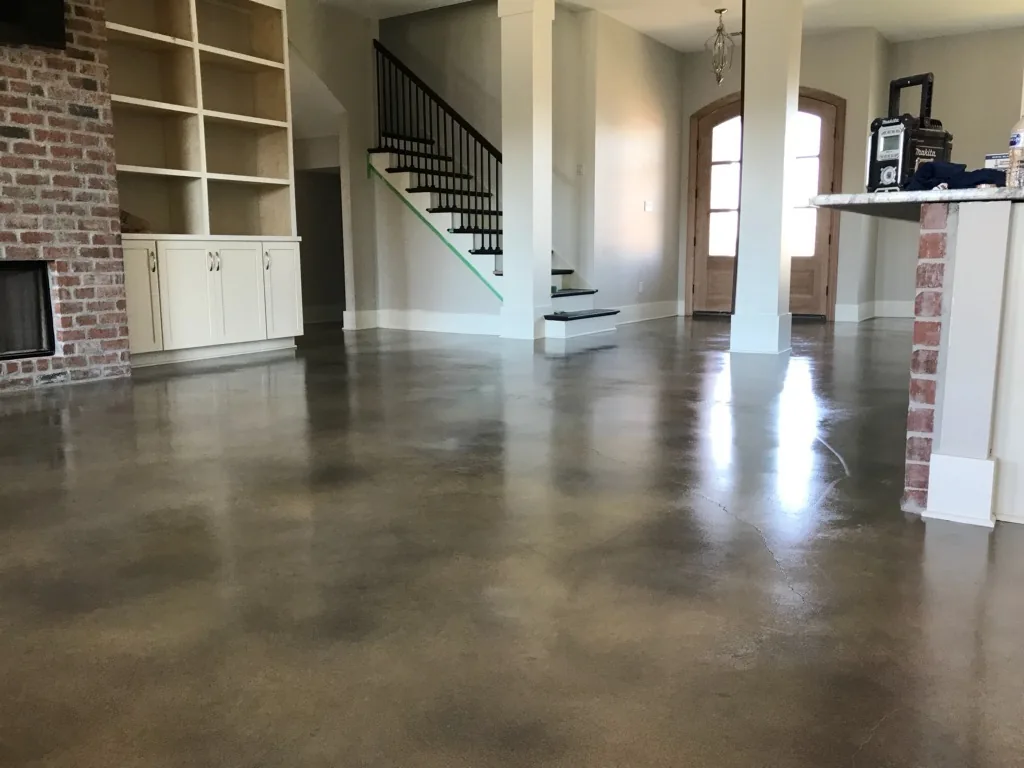
“On this particular project, they installed a Urethane Floor at the kitchen and bar and also polished the existing concrete floors throughout the building.”
David Hubbard, Google review5.0 on Google from 36 reviews
Living with it
Sweep or dust mop, and wash with a neutral pH cleaner. Skip vinegar, bleach and citrus degreasers, which eat at the sealer. Keep rubber-backed mats off film sealers, since some of them stain the coat. When water stops beading on the surface, it is time to talk about resealing.
Next to this one
See finished floorsQuestions about concrete sealing
See finished jobs in the gallery, or send the plans.
How often does sealed concrete need resealing?
It depends on the sealer and the exposure. Exterior acrylics in full sun typically need it every two to three years, and penetrating sealers and interior floors go longer. The easy test is water: when it soaks in instead of beading, reseal.
Penetrating or film-forming: which one do I need?
If the slab has to breathe, stays bare, or sits outside where grip matters, penetrating is usually right. If you want darker color, some sheen or easier cleanup on an interior floor, a film sealer fits better. We look at the slab and the traffic before we recommend either.
Will a sealer make my concrete slippery?
A glossy film sealer can get slick when wet, especially on a pool deck or a sloped drive. On those slabs we add fine grit to the final coat, or use a penetrating sealer that leaves the surface texture alone.
Can you seal over an old sealer?
Only if it is the same type and still bonded. Mixing chemistries, like a solvent acrylic over a water-based one, often lifts or clouds, so failing or unknown sealer gets stripped first. We test a small area before deciding.
Is sealing enough for a warehouse or plant floor?
For a bare slab with forklift traffic, a penetrating sealer or densifier helps a lot with very little downtime. Floors with chemical spills, hot washdowns or heavy impact need a coating or urethane cement. Dustin can come look and tell you which side of that line your floor is on.
How long before we can use the floor?
Foot traffic is typically fine the next day on most sealers. Vehicles and heavy carts usually wait a few days, depending on the product and the weather. Humidity slows cure here, so we give you a date for your slab instead of a number off the can.
Let’s look at your floor.
Call with the address and what the floor has to survive. Someone will come look at the slab before anybody talks price.
Bidding a job? Send the plans and the schedule. We price from drawings and walk the slab before we commit to a date.