
Urethane cement where Port Vincent kitchens run hot
If you run a business or own a home in Port Vincent, the floor question starts the same way: what is under the old finish, and how wet is the slab? We find that out before we quote. It sits in Livingston Parish, about 56 miles northwest of Harvey.
Port Vincent, Livingston Parish, Louisiana.
Who lives and works in Port Vincent
Housing figures from the US Census.
Census numbers put the typical home in Port Vincent at about 1993. Garage floors from this decade often have tire marks burned into an old sealer and oil soaked in under where the car leaks. Hot tire pickup is why we prefer a ground slab and a real primer.
Oil spots get cleaned and tested so the coating grabs there too.
Growth north of the lakes keeps new subdivisions, schools, medical offices and retail going up on fresh slabs, often right beside towns that have been there for generations.
Roughly 61% of homes are stand-alone houses; the rest is everything else. A mix of houses and apartments means two kinds of floor work: garages and patios for owners, and breezeways and laundry rooms for whoever runs the multifamily buildings.
That mix decides who calls: owners redoing a garage or patio, landlords between tenants, or a business with a shop or a kitchen.
Slabs in Port Vincent deal with the same heavy rain and long humid summers as the south shore, and on-grade concrete still pulls moisture vapor up from below. Around Livingston Parish, the floor work is mostly this: new subdivisions, strip retail and homes rebuilt after the 2016 flood, many with slabs that need a moisture check before coating.
When the slab stays damp
The Northshore and the Florida Parishes.
Port Vincent is in Livingston Parish, about 56 miles northwest of the shop.
The older towns and farm country carry a different kind of slab: barns, shops and stores poured decades ago, often with no vapor barrier, then patched and painted over the years. Those floors need old coatings and mastic ground off, cracks and joints repaired, and moisture checked before a new system goes down. Equipment sheds and farm shops want rough service floors with real traction. Polished concrete suits older retail buildings when the slab underneath is sound.
Pick a lighter color and a textured finish for a pool deck, so bare feet do not burn or slide when the deck gets wet.
Use a UV-stable urethane topcoat on patios, pool decks and open garages, since plain epoxy yellows once it sits in the sun for a summer.
For an equipment shed or farm shop in the country around Port Vincent, a broadcast system with coarse aggregate gives traction a smooth coat never will.
Matching the system to the space
Garage Floor Coatings
Flake, solid color, metallic or polished concrete for home garages, ground first so hot tires and oil never lift it.
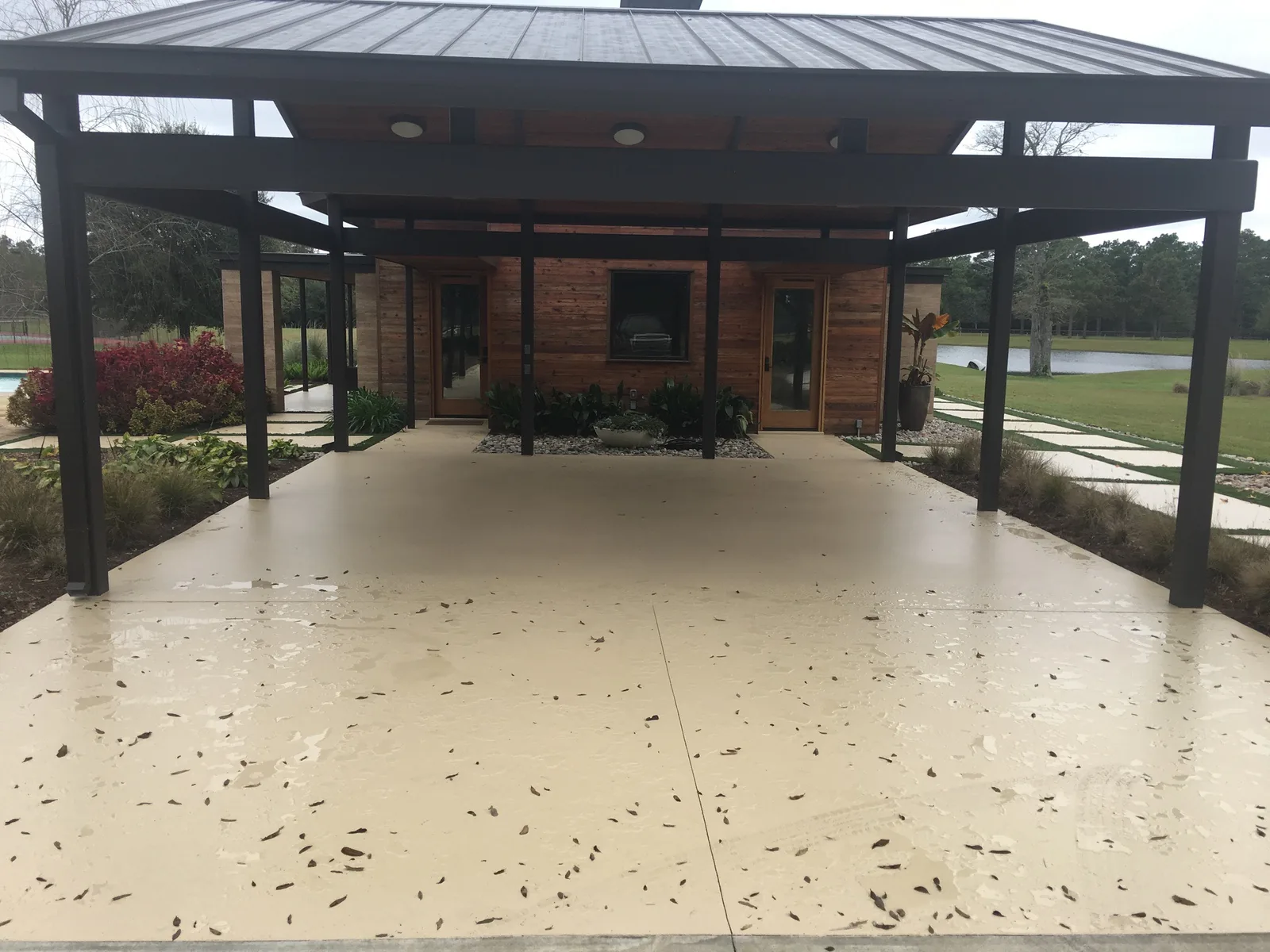
Patio Coatings
Overlays, stamped patterns and stain for covered and open patios and porches, finished with a topcoat that grips in the rain.
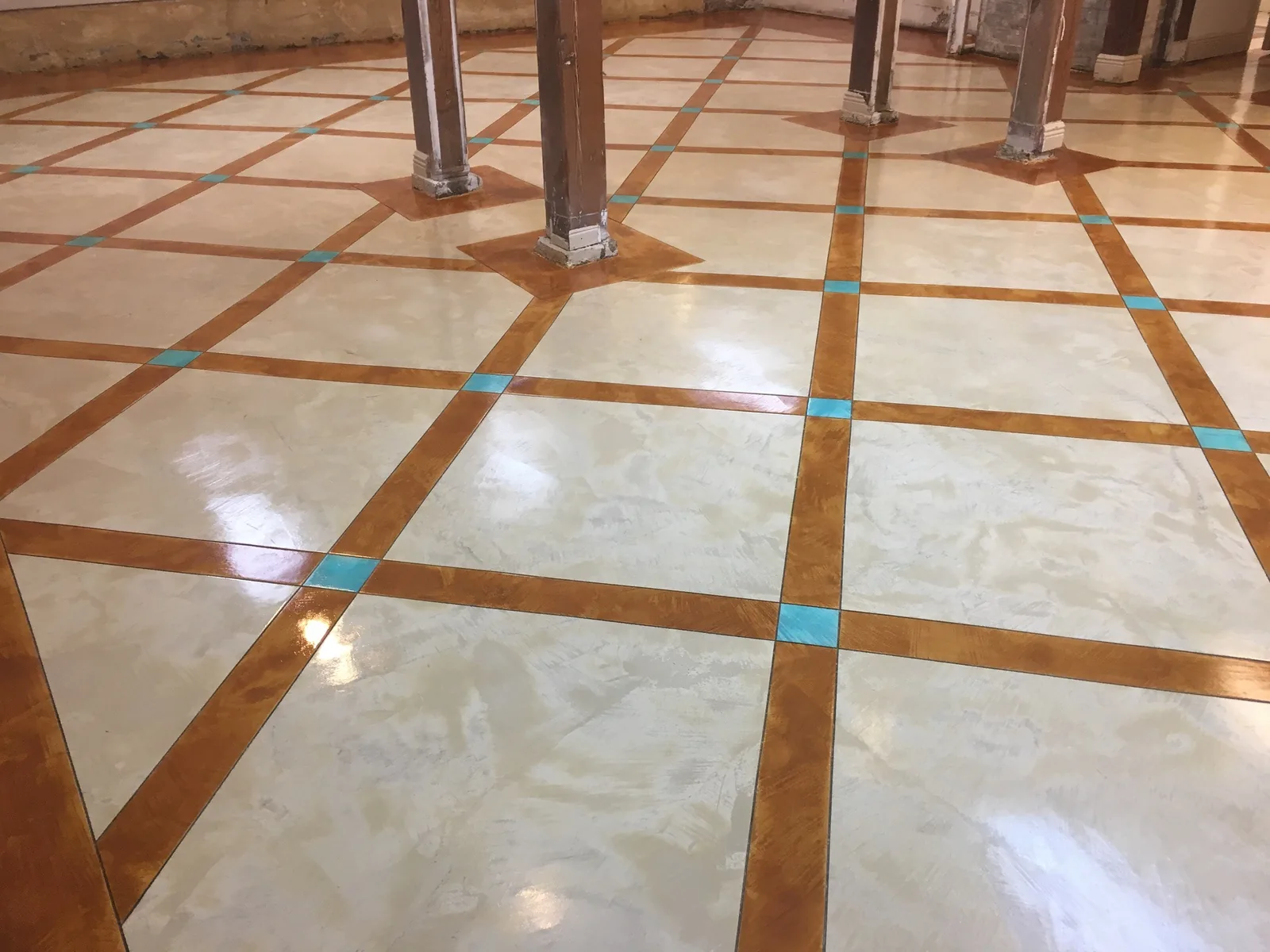
Concrete Staining
Reactive acid stain that gives a slab mottled, variegated color, scored or stenciled if you want a pattern, then sealed.
How any floor here gets built
The same order on every job, whatever the system.
The finish you actually walk on, matched to the use.
Where the system gets its build: resin, cement or a decorative overlay.
Soaks in and locks the system to the concrete.
Ground or shot blasted until the surface opens up and a coating can bite.
Whatever the slab is, it gets read first: moisture, cracks, old coatings, and how level it sits.
The next towns over
- French Settlement
1.8 miles away, Livingston Parish
- Prairieville
7 miles away, Ascension Parish
- Gonzales
9.7 miles away, Ascension Parish
- Old Jefferson
10 miles away, East Baton Rouge Parish
More in Livingston Parish, on the services page and in the gallery.
Asked and answered
Or send the plans first.
Got a slab question we did not cover? Call.
(504) 231-6298Do you come out to Port Vincent?
Yes. Port Vincent is about 56 miles northwest of our base in Harvey, inside the roughly 100 miles we cover. Someone comes out, looks at the slab and gives you a price after seeing it.
What should I know about a slab from around 1993?
Some houses from then have post-tension slabs. Grinding is safe, and cutting or drilling waits until the cables are located.
Do you take floor jobs on the Northshore and in Port Vincent?
Yes. St. Tammany, Tangipahoa, Livingston, Washington and St. Helena are all inside the area we cover from Harvey. Contractors can send plans and the schedule, and homeowners can have Dustin come look at the floor.
Can an older slab in a farm town be polished?
If the concrete is sound and reasonably flat, yes. Old slabs often show aggregate, patches and stains once ground, and plenty of owners like that look. Badly damaged or uneven floors may need repair or a micro-topping first.
What finish works best on a pool deck here?
A light-colored, textured system with a UV-stable topcoat, or a stamped overlay sealed for outdoor use. Both stay cooler and give grip when wet. Dark, glossy coatings get hot and slick, so we steer people away from them.
Can you coat the slab in a brand-new house?
Yes, once the concrete has cured enough to pass a moisture test. New slabs hold a lot of water, and coating too early is how floors blister. If the schedule is tight, a moisture-tolerant primer can let the work go ahead.
Do I have to be there for the visit?
It helps. You know where the leaks, old spills and soft spots are, and Dustin can answer questions on the spot. If you cannot make it, a manager or contractor who knows the space works fine.
How long does a typical floor take?
A two-car garage usually takes one to two days of work plus cure time. Bigger commercial floors depend on square footage, the system and how much prep the slab needs, and the schedule comes with the quote.
Where do furniture, cars and equipment go?
Everything comes out of the work area, and cars stay out until the coating cures. For a plant or a kitchen, plan where the equipment sits during the job and when it comes back.
What does humidity do to a fresh coating?
Put down at the wrong moment, some coatings can turn cloudy or stay tacky at the surface. We read the dew point and slab temperature before we mix, and we hold off when the numbers are wrong.
Start with the slab
Tell us the space, the square footage and what goes on the floor. We will tell you which system fits and when we can start.
Send the plans
Facility managers and GCs: send what you have, even a floor plan sketch, and the dates the space can be shut down.