
Epoxy that sticks to Welcome concrete
Big community or small, Welcome deals with the same concrete trouble as the rest of the Gulf South: vapor coming up from below and old adhesive sitting on top. Our crew has spent 22 years grinding through it. It sits in St. James Parish, about 50 miles west of Harvey.
Welcome, St. James Parish, Louisiana.
Who lives and works in Welcome
Housing figures from the US Census.
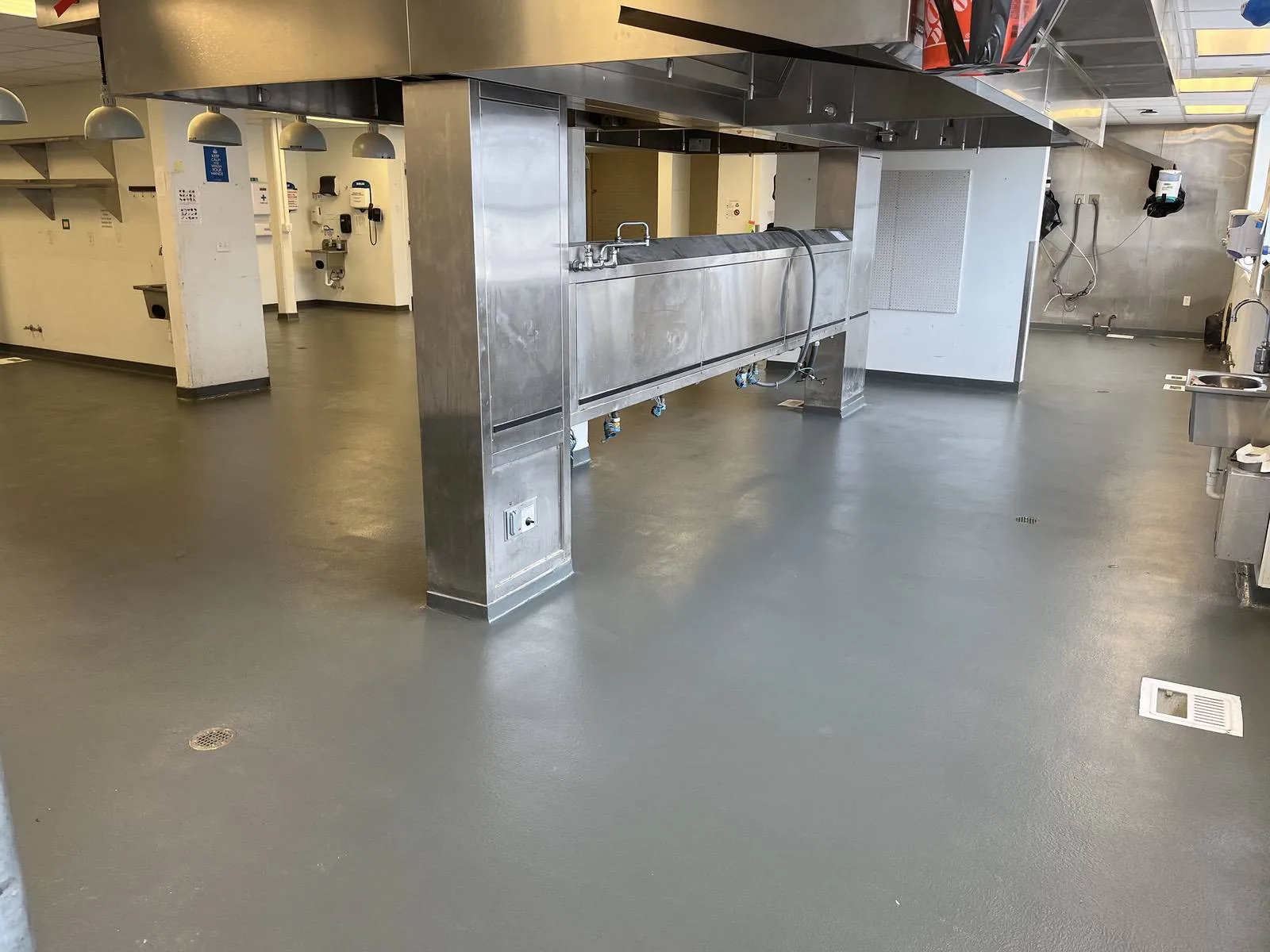
The median home in Welcome was built around 1978, by the Census count. Quarry tile in old kitchens and restaurants from this decade often sits in a thick mortar bed. Taking it out leaves a rough, uneven slab.
We level and grind it before any urethane cement goes down, because a kitchen floor needs to drain where it is supposed to.
The corridor is plant country, with refineries, chemical plants and grain elevators lining the river roads alongside the shops, warehouses and contractors that keep them running. Around St. James Parish, the floor work is mostly this: process plant and terminal floors along the river, farm shops in the cane, and homes in Lutcher, Gramercy and Vacherie.
Homes along the corridor range from older raised houses near the levee to newer slab-on-grade subdivisions set back from the river, so residential slabs vary as much as the commercial ones.
Roughly 46% of homes are stand-alone houses; the rest is everything else. In the middle of the housing range, floor work splits between homeowner projects and the common areas of multifamily buildings.
That mix decides who calls: owners redoing a garage or patio, landlords between tenants, or a business with a shop or a kitchen.
Rain and curing times
The River Parishes.
Welcome is in St. James Parish, about 50 miles west of the shop.
Plant and refinery floors along the river see chemical spills, hot washdowns, forklifts and steel wheels, sometimes all in one room. A decorative epoxy will not last in that service. Urethane cement, chemical-resistant novolac epoxies and thick troweled systems are built for it, and they need a properly ground or shot-blasted profile to bond. We match the system to what actually lands on the floor, so the first thing we ask a plant for is its chemical list.
Book floor work into a turnaround or shutdown window early, since the crew, the materials and the cure time all have to fit inside dates the plant sets.
If a plant floor in Welcome sees chemicals, hand us the list of what gets spilled, because that list decides which resin we spec for the room.
On older commercial slabs, plan time for removing what is already there, because old coatings and mastic are often the biggest part of the job.
Matching the system to the space
Industrial Flooring
Plants, process areas, shops and support buildings along the river and coast, zoned by use and installed around shutdown windows.
Garage Floor Coatings
Flake, solid color, metallic or polished concrete for home garages, ground first so hot tires and oil never lift it.

Concrete Polishing
Mechanical grind and polish of the existing slab, densified and guarded, for showrooms, warehouses, restaurants and offices that want a bright floor.
How any floor here gets built
The same order on every job, whatever the system.
The finish you actually walk on, matched to the use.
Where the system gets its build: resin, cement or a decorative overlay.
Soaks in and locks the system to the concrete.
Ground or shot blasted until the surface opens up and a coating can bite.
Whatever the slab is, it gets read first: moisture, cracks, old coatings, and how level it sits.
The next towns over
- St. James
2.6 miles away, St. James Parish
- Union
2.9 miles away, St. James Parish
- Romeville
3.8 miles away, St. James Parish
- Convent
4.3 miles away, St. James Parish
More in St. James Parish, on the services page and in the gallery.
Your slab, your questions
Or send the plans first.
Still unsure? Dustin or Jacob will tell you straight.
(504) 231-6298Do you come out to Welcome?
Yes. Welcome is about 50 miles west of our base in Harvey, inside the roughly 100 miles we cover. Someone comes out, looks at the slab and gives you a price after seeing it.
What should I know about a slab from around 1978?
Concrete from then is usually sound and settled. Most of the work is removing what was glued or painted on it and filling the cracks that opened up over fifty years.
Do you work at plants and refineries along the river?
Yes. Industrial and plant floors are a big part of what we do, and we work to whatever safety rules and work permits the site requires. Send the scope, the chemical exposure and the shutdown dates, and we will price a system that fits.
What floor holds up to chemical spills?
Urethane cement and chemical-resistant epoxies, installed thick over a properly prepared slab. Which one depends on the chemicals, the temperatures and the cleaning routine. We match the resin to your exposure list rather than guessing.
Do you take residential work along the river?
Yes, garages, patios, shops and interiors. Homeowners get the same moisture test and grinding a commercial floor gets, because the slab does not care who owns it.
Can you finish a floor during a short plant shutdown?
Often, if we plan it before the shutdown starts. We stage materials, run grinding and coating back to back, and pick systems whose cure fits the dates. If the window is too tight for the system you need, we say so up front.
How long does a typical floor take?
A two-car garage usually takes one to two days of work plus cure time. Bigger commercial floors depend on square footage, the system and how much prep the slab needs, and the schedule comes with the quote.
Where do furniture, cars and equipment go?
Everything comes out of the work area, and cars stay out until the coating cures. For a plant or a kitchen, plan where the equipment sits during the job and when it comes back.
After a flood, how soon can a floor be coated?
Not until the slab has dried out and been tested. Flood water leaves salts and silt in the concrete, so we grind deeper and check moisture before committing to a coating. Rushing it is how a new floor fails a year later.
Start with the slab
Call with the address and what the floor has to survive. Someone will come look at the slab before anybody talks price.
Send the plans
Bidding a job? Send the plans and the schedule. We price from drawings and walk the slab before we commit to a date.