
Commercial coatings, built to your Boutte spec
Every floor we put down in Boutte starts with a grinder and a moisture test. Epoxy, urethane cement, polished concrete or a decorative finish only holds when that first step is done right. It sits in St. Charles Parish, about 19 miles west of Harvey.
Boutte, St. Charles Parish, Louisiana.
Old and new construction
Housing figures from the US Census.
Half the homes in Boutte are older than about 1994 and half are newer, according to the Census. If a Boutte building from the nineties took on water in a later storm, the walls likely got replaced while the slab stayed. That slab may still have mold-treatment residue and drywall mud stuck to it.
All of it grinds off before we put a coating on.
Floor work around Boutte often answers to industrial standards, since plant owners and their contractors expect submittals, safety plans and work that fits inside a shutdown window. Around St. Charles Parish, the floor work is mostly this: plant control rooms, maintenance shops and warehouses on the river, plus garages and patios in Luling, Destrehan and St. Rose. The nearest towns on our list range from Paradis (typical home around 1964) to Bayou Gauche (around 1997); Boutte lands on the newer side.
Homes along the corridor range from older raised houses near the levee to newer slab-on-grade subdivisions set back from the river, so residential slabs vary as much as the commercial ones.
Most homes here are stand-alone houses, about 65 in every 100. Neighborhoods of houses carry plenty of slabs that have never been coated, and a bare slab is the easiest kind to start with.
We read those numbers the way we read a slab: they say whether to expect garages, rentals or commercial floors before we drive out.
Gulf air on bare concrete
The River Parishes.
Boutte is in St. Charles Parish, about 19 miles west of the shop.
The river corridor gets the same wet heat and heavy rain as the rest of Southeast Louisiana, and the low ground near the river and the swamps behind it holds water. On-grade slabs push moisture vapor up into whatever covers them. A moisture test comes before any system gets picked. Where the readings run high, a moisture-tolerant primer or a urethane cement goes down first, and the finish system goes on top of that.
If a plant floor in Boutte sees chemicals, hand us the list of what gets spilled, because that list decides which resin we spec for the room.
On older commercial slabs, plan time for removing what is already there, because old coatings and mastic are often the biggest part of the job.
Book floor work into a turnaround or shutdown window early, since the crew, the materials and the cure time all have to fit inside dates the plant sets.
Polish or coating
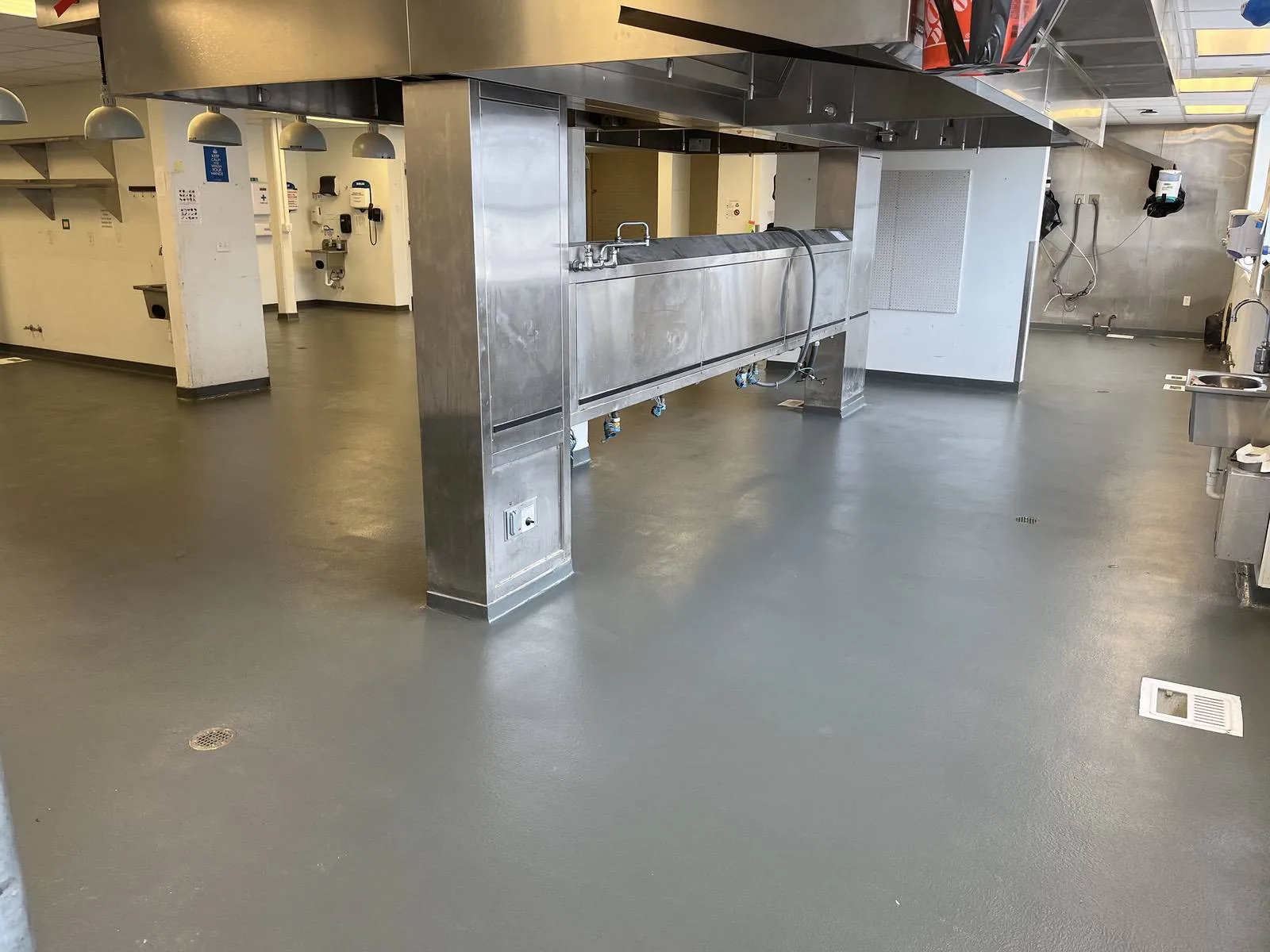
Industrial Flooring
Plants, process areas, shops and support buildings along the river and coast, zoned by use and installed around shutdown windows.
Garage Floor Coatings
Flake, solid color, metallic or polished concrete for home garages, ground first so hot tires and oil never lift it.
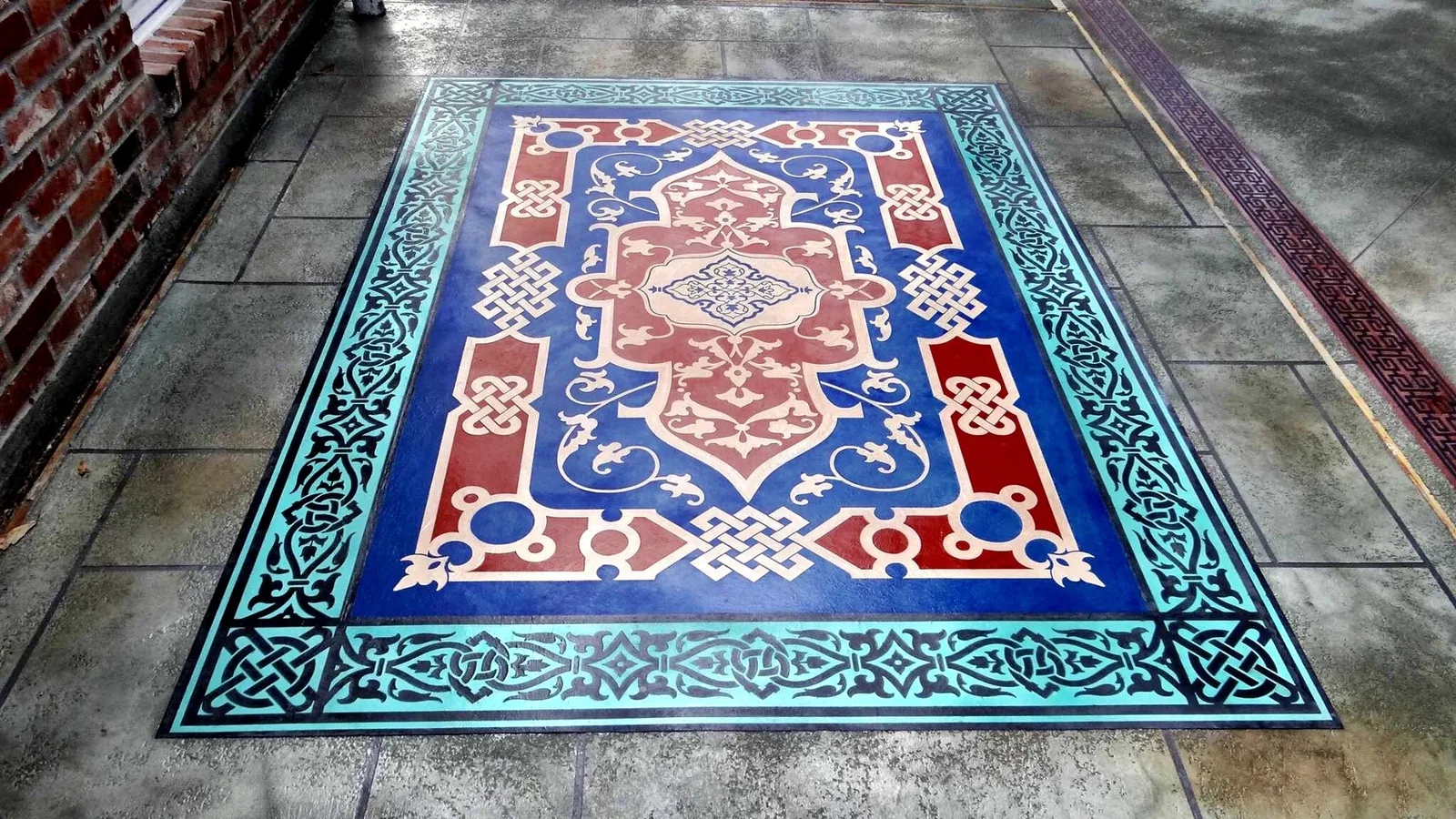
Patio Coatings
Overlays, stamped patterns and stain for covered and open patios and porches, finished with a topcoat that grips in the rain.
How any floor here gets built
The same order on every job, whatever the system.
Topcoat or guard, set to the traffic and the shine you want.
The color and the thickness: epoxy, urethane cement, stain or an overlay.
Soaks in and locks the system to the concrete.
Ground or shot blasted until the surface opens up and a coating can bite.
The concrete as we find it. Moisture, old sealer and cracks decide everything above it.
The next towns over
- Luling
2.3 miles away, St. Charles Parish
- Paradis
3.4 miles away, St. Charles Parish
- Hahnville
5.5 miles away, St. Charles Parish
- Bayou Gauche
5.9 miles away, St. Charles Parish
More in St. Charles Parish, on the services page and in the gallery.
Quick answers before a visit
Or send the plans first.
Still unsure? Dustin or Jacob will tell you straight.
(504) 231-6298Do you come out to Boutte?
Yes. Boutte is about 19 miles west of our base in Harvey, inside the roughly 100 miles we cover. Someone comes out, looks at the slab and gives you a price after seeing it.
What should I know about a slab from around 1994?
It is usually a good, flat, well-cured slab. The main jobs are removing tile or glue and opening the surface so a coating can bond.
What do you do about moisture in river-country slabs?
We test every slab before we spec a system. High vapor readings call for a moisture-mitigating primer or urethane cement, both of which tolerate conditions that make a standard epoxy blister.
Is Boutte inside your service area?
Yes. The River Parishes sit well inside the area we cover from Harvey on the Westbank. Dustin can set a time to come look at the floor, or a contractor can send plans and the schedule.
Do you take residential work along the river?
Yes, garages, patios, shops and interiors. Homeowners get the same moisture test and grinding a commercial floor gets, because the slab does not care who owns it.
Can you finish a floor during a short plant shutdown?
Often, if we plan it before the shutdown starts. We stage materials, run grinding and coating back to back, and pick systems whose cure fits the dates. If the window is too tight for the system you need, we say so up front.
Which details help you put a quote together?
The size of the area, what the floor has to handle and when you need it back. For commercial work, add the specs, the shutdown window and any submittal requirements. From there we come back with a price.
What can push a schedule back?
Moisture in the slab, surprises under old flooring and rain on outdoor jobs. We test early and look under the old floor during the visit, so most of that shows up before the dates are set.
Should I clean the slab before you arrive?
Sweep it if you like, but the grinder does the real cleaning. Tell us about oil spots, chemical spills or anything soaked into the concrete so we can plan for it.
After a flood, how soon can a floor be coated?
Not until the slab has dried out and been tested. Flood water leaves salts and silt in the concrete, so we grind deeper and check moisture before committing to a coating. Rushing it is how a new floor fails a year later.
Two ways to start
Call with the address and what the floor has to survive. Someone will come look at the slab before anybody talks price.
Send the plans
General contractors: send drawings, square footage, finish schedule and the window you have. Submittals and samples on request.