
Kitchens and shops in Supreme need harder floors
Our trucks run 56 miles west of Harvey to reach Supreme. Once there, the first job is reading the slab: old sealers, glue, cracks and how much moisture it pushes up through the surface.
Supreme, Assumption Parish, Louisiana.
The drive from Harvey
Housing figures from the US Census.
The median home in Supreme was built around 1968, by the Census count. Plenty of Gulf houses from the 1960s went up on slabs poured over thin plastic sheeting or nothing at all. Moisture testing matters a lot here.
A slab can look dry in March and sweat through a fresh coating by August.
Numbers like these are why we ask what the space is used for before we talk systems.
The work here runs on oilfield service, shipyards, boat builders and seafood, plus the shops, warehouses and offices behind them, from Houma and Thibodaux down toward the coast. Around Assumption Parish, the floor work is mostly this: mill shops, farm sheds, churches and small-town storefronts, mostly older slabs that need real prep before any coating goes down.
A floor in Supreme has to handle a high water table pushing moisture into on-grade slabs, on top of the humidity that comes with living among bayous and marsh.
Roughly 59% of homes are stand-alone houses; the rest is everything else. A mix of houses and apartments means two kinds of floor work: garages and patios for owners, and breezeways and laundry rooms for whoever runs the multifamily buildings.
What the weather does to a slab
Bayou Lafourche and Terrebonne.
Supreme is in Assumption Parish, about 56 miles west of the shop.
Shipyards, fabrication shops and oilfield service buildings put floors through welding slag, dropped steel, forklift wheels and spilled oil. Thin roll-on coatings do not last in that service. Troweled epoxy, urethane cement and heavy broadcast systems over a shot-blasted profile hold up far longer. Older homes and businesses along the bayous bring their own trouble: patched slabs, additions poured at different times, and floors that have already been under water once.
Run cove base and sealed joints in kitchens and seafood rooms, because water left standing where the floor meets the wall is where bacteria and failures start.
In a shop or yard near Supreme, pick a troweled or heavy broadcast system, because welding spatter and dropped parts chew through thin coatings fast.
For a home in Supreme that has taken water before, choose a flake system you can scrub and pressure wash after a storm without it lifting.
Systems that hold up here
Garage Floor Coatings
Flake, solid color, metallic or polished concrete for home garages, ground first so hot tires and oil never lift it.

Concrete Polishing
Mechanical grind and polish of the existing slab, densified and guarded, for showrooms, warehouses, restaurants and offices that want a bright floor.
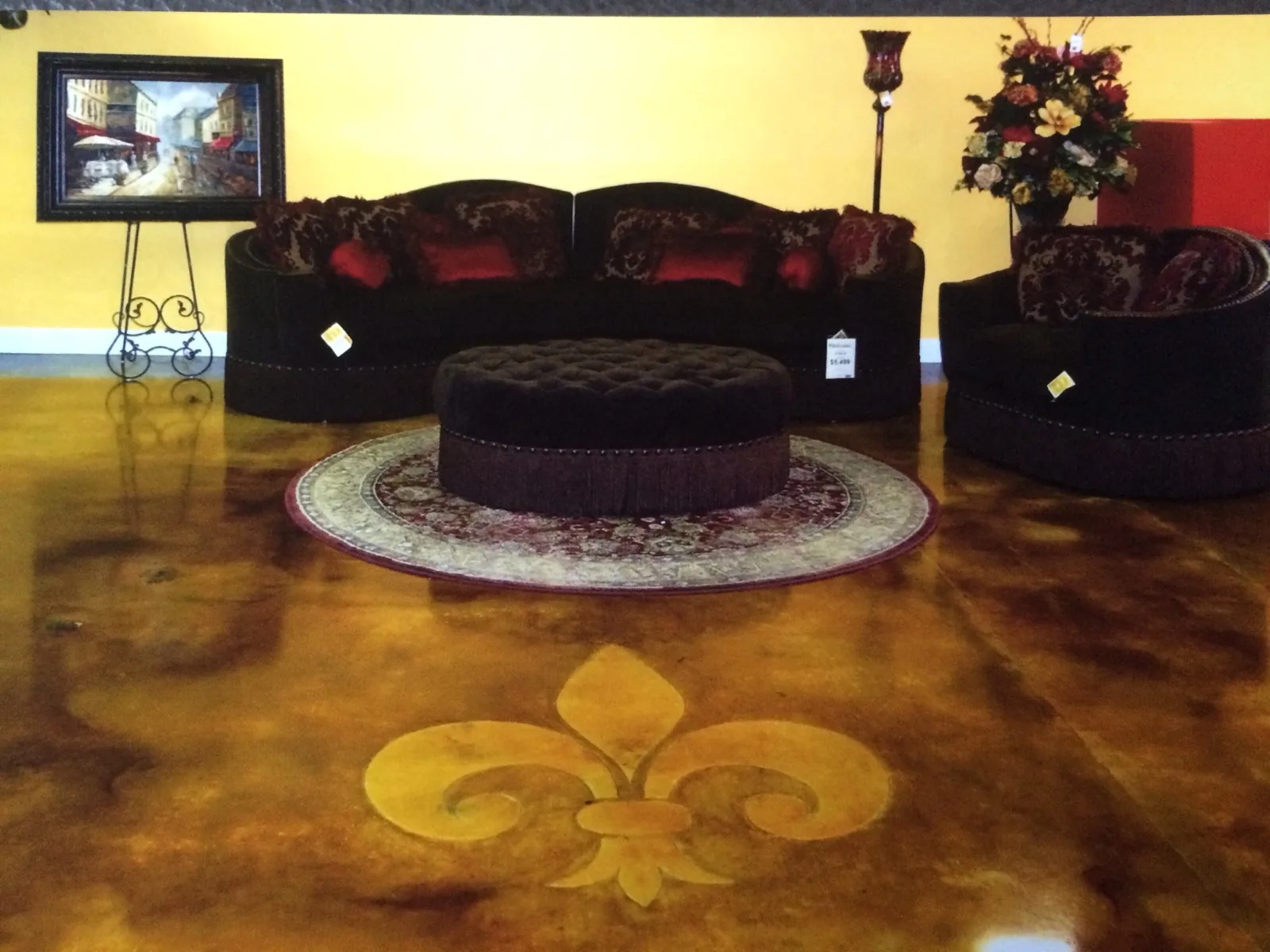
Retail Flooring
Polished, stained or metallic epoxy floors for stores, showrooms and restaurants, installed on night shifts and between tenants.
How any floor here gets built
The same order on every job, whatever the system.
The finish you actually walk on, matched to the use.
Where the system gets its build: resin, cement or a decorative overlay.
Soaks in and locks the system to the concrete.
Ground or shot blasted until the surface opens up and a coating can bite.
Whatever the slab is, it gets read first: moisture, cracks, old coatings, and how level it sits.
The next towns over
- Labadieville
3.5 miles away, Assumption Parish
- Napoleonville
5.7 miles away, Assumption Parish
- Paincourtville
9.5 miles away, Assumption Parish
- Bayou L’Ourse
11 miles away, Assumption Parish
More in Assumption Parish, on the services page and in the gallery.
Questions about floors in Supreme
Or send the plans first.
Easier to talk it through? Call the shop.
(504) 231-6298Do you come out to Supreme?
Yes. Supreme is about 56 miles west of our base in Harvey, inside the roughly 100 miles we cover. Someone comes out, looks at the slab and gives you a price after seeing it.
What should I know about a slab from around 1968?
Look for plumbing patches, tack strip holes and glue under any carpet or tile. Each one adds prep time, and Dustin can tell you how much once he sees the floor.
Why do garage floor coatings peel in bayou country?
Moisture coming up through the slab is the usual cause, along with poor prep. Water vapor pushes on a coating from below until it lets go. We grind the slab and test moisture first, then use a primer rated for the readings.
How long before people and trucks can use a new floor?
It depends on the system and the temperature. Foot traffic often comes the next day, while vehicles and heavy loads usually wait several days for a full cure. We give you the actual times for the product we install.
Can you redo a floor after storm flooding?
Yes, once the slab has dried and been tested. We grind off the old finish and contamination, repair cracks and spalls, then install the new system. If the building is waiting on other repairs, we fit the floor into that schedule.
Do you put down floors in seafood processing rooms and commercial kitchens?
Yes. Those rooms need urethane cement, cove base up the walls and a textured surface that keeps its grip when wet. Urethane cement handles hot water washdown and cleaning chemicals that would soften many epoxies.
Do I have to be there for the visit?
It helps. You know where the leaks, old spills and soft spots are, and Dustin can answer questions on the spot. If you cannot make it, a manager or contractor who knows the space works fine.
Is there a wait before cars or forklifts go back on?
Yes. Vehicles wait for a fuller cure, often several days on a coated garage and longer for heavy equipment. Polished concrete can usually take traffic as soon as the crew packs up.
Do I need to remove the old flooring myself?
No. Pulling carpet, tile or glue is part of our prep, and it is priced in. Some owners pull carpet themselves to save time, which is fine as long as the tack strips and pad come up too.
Does hurricane season change the schedule?
Indoor work goes on as normal. Outdoor jobs and anything with a long cure get planned around the forecast, and if a storm is coming we would rather move the date than rush a coating.
Call it in or send the plans
Five minutes on the phone usually tells us whether it is a grind and seal, a coating or a polish.
Send the plans
Bidding a job? Send the plans and the schedule. We price from drawings and walk the slab before we commit to a date.