
Your Pearlington slab, coated to last
Commercial floors around Pearlington take hot water, grease and wheeled traffic all day. Jacob Lawson’s crew has spent 22 years grinding slabs like these, and every job still starts at bare concrete. It sits in Hancock County, about 37 miles northeast of Harvey.
Pearlington, Hancock County, Mississippi.
Who lives and works in Pearlington
Housing figures from the US Census.
Half the homes in Pearlington are older than about 2003 and half are newer, according to the Census. Builder-grade garage coatings from this era are often a thin paint-on epoxy that has already started peeling in the tire paths. Every bit of it comes off.
A new coating over a failing one fails the same way, only later.
Casinos and hotels along the beach in Biloxi and Gulfport run around the clock, so their floors get done in short windows, one section at a time, between guests. Around Hancock County, the floor work is mostly this: garage slabs under raised homes, commercial builds along I-10 and the older storefronts of Old Town Bay St. Louis.
Shipbuilding at Pascagoula, the port at Gulfport and the port of Mobile put a lot of industrial floor work on this coast, from fab shops to big warehouses.
Stand-alone houses make up the bulk of it, roughly 79%. Single-family homes dominate, so most floor work starts in a garage or out back. Commercial floors in a place like this tend to be shops, restaurants and small offices.
That mix decides who calls: owners redoing a garage or patio, landlords between tenants, or a business with a shop or a kitchen.
Rain and curing times
The Mississippi Gulf Coast.
Pearlington is in Hancock County, about 37 miles northeast of the shop.
Katrina came ashore near the Louisiana and Mississippi line in 2005 and pushed surge across the whole coast, from Waveland and Bay St. Louis through Biloxi to Pascagoula and on into Mobile. Much of the coast was rebuilt afterward, with houses raised and businesses redone or moved. That leaves post-storm slabs beside older floors that once sat under salt water. Those older floors get ground to clean concrete, tested and repaired before anything goes over them.
Outdoor slabs need a UV-stable topcoat and a lighter color, since coastal sun yellows plain epoxy and a dark deck gets too hot for bare feet.
For a casino, hotel or restaurant, pick a system that can go down and take traffic between closing and reopening, and book that window early.
Under an elevated house, choose a flake or broadcast floor you can hose off after a storm, and keep high-gloss finishes for rooms that stay dry.
Matching the system to the space
Garage Floor Coatings
Flake, solid color, metallic or polished concrete for home garages, ground first so hot tires and oil never lift it.
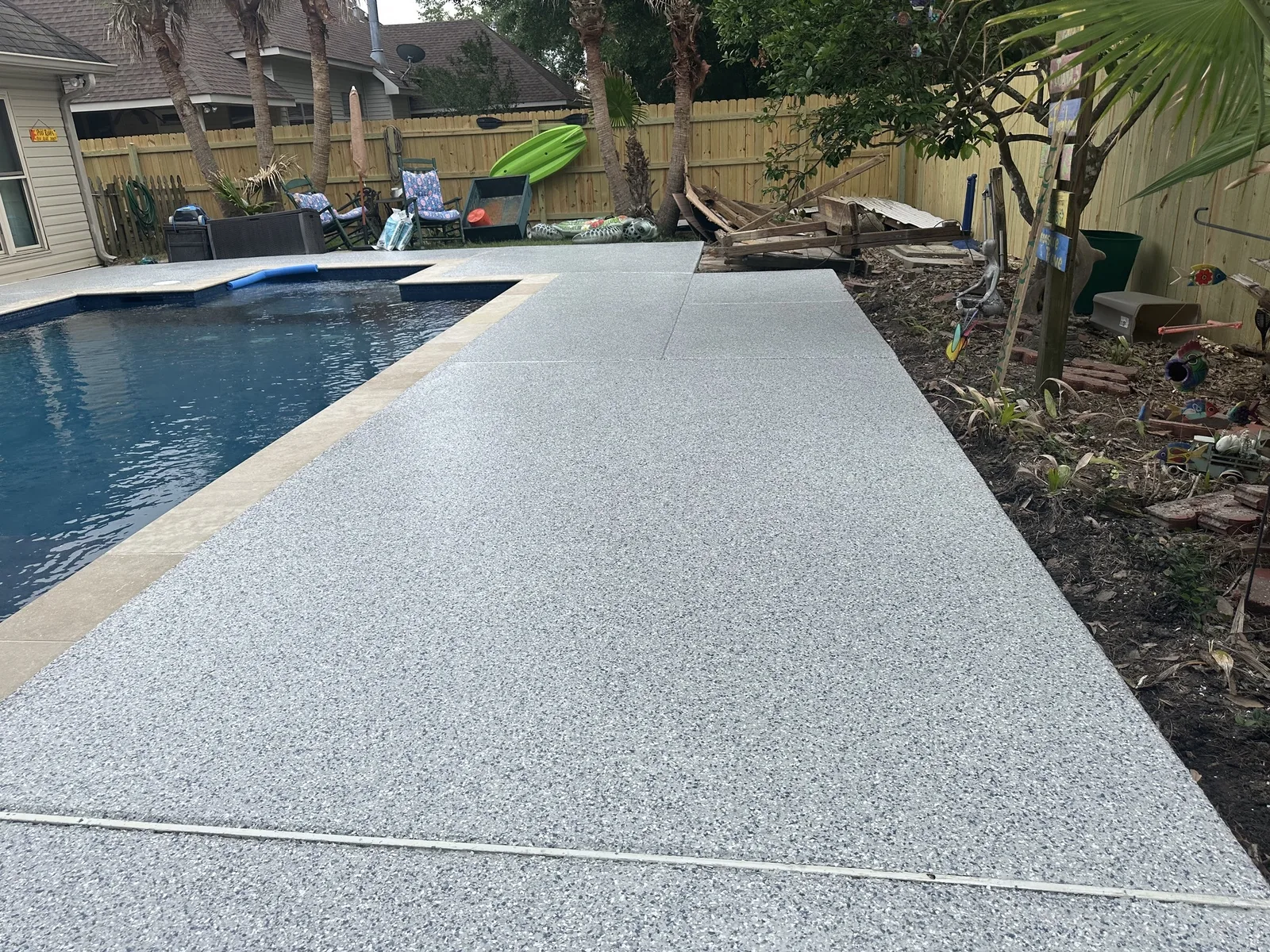
Pool Deck Coatings
Textured overlays and flake decks in light, cooler colors, sealed with grit and built to live with chlorine, salt and wet feet.
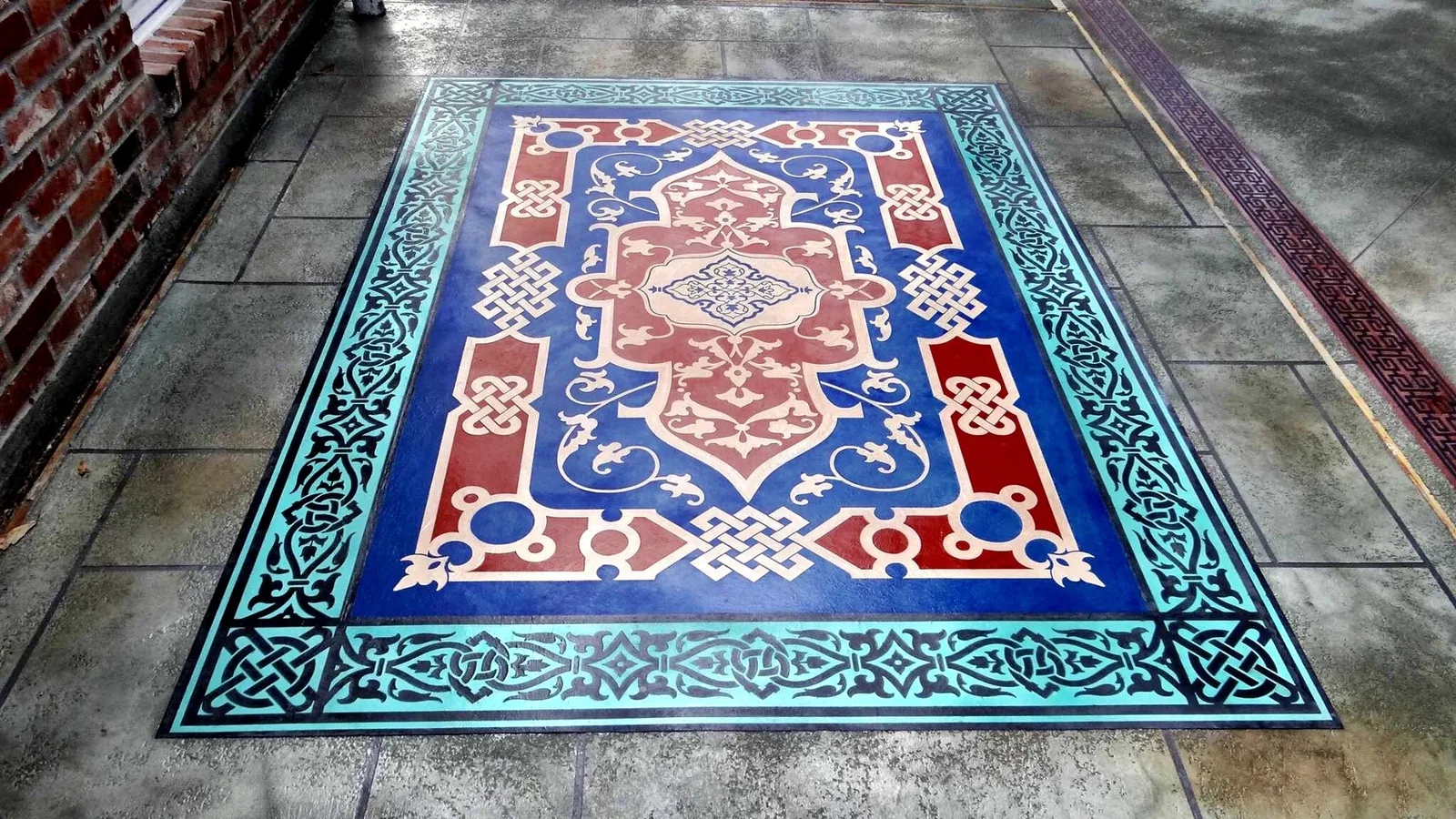
Patio Coatings
Overlays, stamped patterns and stain for covered and open patios and porches, finished with a topcoat that grips in the rain.
How any floor here gets built
The same order on every job, whatever the system.
The finish you actually walk on, matched to the use.
Where the system gets its build: resin, cement or a decorative overlay.
Soaks in and locks the system to the concrete.
Ground or shot blasted until the surface opens up and a coating can bite.
Whatever the slab is, it gets read first: moisture, cracks, old coatings, and how level it sits.
The next towns over
- Slidell
11 miles away, St. Tammany Parish
- Pearl River
12 miles away, St. Tammany Parish
- Eden Isle
12 miles away, St. Tammany Parish
- Waveland
13 miles away, Hancock County
More in Hancock County, on the services page and in the gallery.
Before you call
Or send the plans first.
Still unsure? Dustin or Jacob will tell you straight.
(504) 231-6298Do you come out to Pearlington?
Yes. Pearlington is about 37 miles northeast of our base in Harvey, inside the roughly 100 miles we cover. Someone comes out, looks at the slab and gives you a price after seeing it.
What should I know about a slab from around 2003?
It is likely dense and flat, and it may be post-tensioned. That makes it a strong candidate for polished concrete, as long as nobody cuts into the cables.
Why does a patio coating turn yellow near the beach?
Most likely it was plain epoxy, which breaks down in direct sun. Outdoors we finish with a UV-stable urethane topcoat that holds its color. Texture goes into that topcoat too, so the patio still grips when it is wet.
Can you coat the ground-level slab under an elevated house in Pearlington?
Yes, and that slab does a lot of work as parking, storage or a shop. A flake or broadcast system bonds well to it and hoses clean after a storm. We test moisture first, because ground-level concrete near the coast often stays damp.
Do you do floors for shipyards and port warehouses?
Yes. Fab shops and port warehouses take steel, forklifts and oil, so they get thick troweled or broadcast systems over a shot-blasted slab. Send the loads, the chemicals and the work schedule and we will price it.
Can an older slab that once took salt water be saved?
Most can. We grind off old finishes, sound the concrete, cut out spalls and treat any rusting steel before patching. Once the slab is sound and tests dry enough, a new system goes down over it.
Do I have to be there for the visit?
It helps. You know where the leaks, old spills and soft spots are, and Dustin can answer questions on the spot. If you cannot make it, a manager or contractor who knows the space works fine.
Will the whole floor be out of service at once?
Not always. Larger floors can be done in sections so part of the building stays open, with the order planned around traffic. It takes longer overall, and nobody has to shut down completely.
Is there anything to do for a commercial floor before you start?
Send the submittal requirements and any site safety rules early. Have equipment moved, drains and doorways marked and the area closed to other trades while we work.
After a flood, how soon can a floor be coated?
Not until the slab has dried out and been tested. Flood water leaves salts and silt in the concrete, so we grind deeper and check moisture before committing to a coating. Rushing it is how a new floor fails a year later.
Start with the slab
Call with the address and what the floor has to survive. Someone will come look at the slab before anybody talks price.
Send the plans
Facility managers and GCs: send what you have, even a floor plan sketch, and the dates the space can be shut down.