
Polished concrete fits a community like Port Sulphur
Every floor we put down in Port Sulphur starts with a grinder and a moisture test. Epoxy, urethane cement, polished concrete or a decorative finish only holds when that first step is done right. It sits in Plaquemines Parish, about 34 miles southeast of Harvey.
Port Sulphur, Plaquemines Parish, Louisiana.
Census facts for Port Sulphur
Housing figures from the US Census.
Census numbers put the typical home in Port Sulphur at about 2004. Newer slabs often carry a curing compound or a builder’s sealer that keeps a coating from bonding. It is invisible and it does not mop off.
The grinder takes it off, which is why we grind even a slab that looks perfect.
Numbers like these are why we ask what the space is used for before we talk systems.
Under a raised house in Port Sulphur, the ground-level slab often does the hard jobs like parking, storage or a workshop, and it is the floor that takes water when storms push in. Around Plaquemines Parish, the floor work is mostly this: oilfield and marine shops, dock buildings and raised homes down the river road, where salt air and storms decide what lasts.
Work down here supports fishing fleets, oil and gas service yards, and the terminals along the river, with many homes raised on pilings beside the shops and docks.
Only about 10% of homes are stand-alone houses. Fewer houses means fewer driveways and more stairwells, landings and walkways. Those take a coating built for foot traffic and rain.
Water coming up from below
Lower Plaquemines and the river delta.
Port Sulphur is in Plaquemines Parish, about 34 miles southeast of the shop.
Much of the housing sits raised on pilings or piers, often rebuilt higher after past storms, so the living floor is usually wood framing while the concrete sits underneath at grade. Commercial buildings, shops and fabrication yards are mostly slab-on-grade, and trailers, heavy equipment and saltwater all hit them hard. Ground water sits close to the surface, which keeps slabs damp from below, so moisture testing comes before any coating goes down.
For the slab under a raised house in Port Sulphur, pick a flake or slip-resistant system that can be hosed off and does not mind getting wet.
Plan floor work for the calmer months when you can, since hurricane season can push a schedule around anywhere in the delta.
Repair spalls and rusting steel before coating anything, because salt air keeps working on bad concrete underneath a fresh finish.
Systems that hold up here

Concrete Polishing
Mechanical grind and polish of the existing slab, densified and guarded, for showrooms, warehouses, restaurants and offices that want a bright floor.
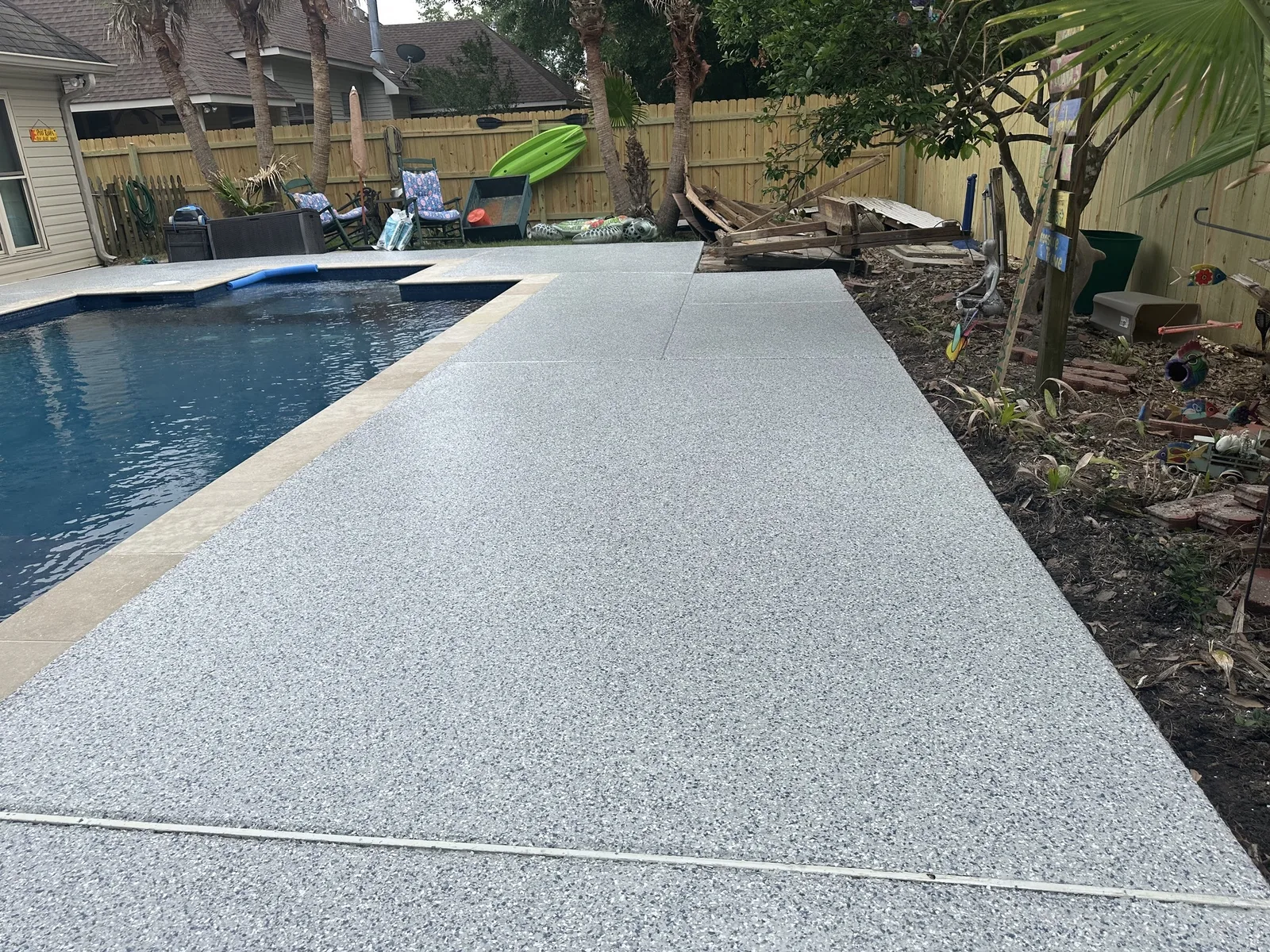
Pool Deck Coatings
Textured overlays and flake decks in light, cooler colors, sealed with grit and built to live with chlorine, salt and wet feet.
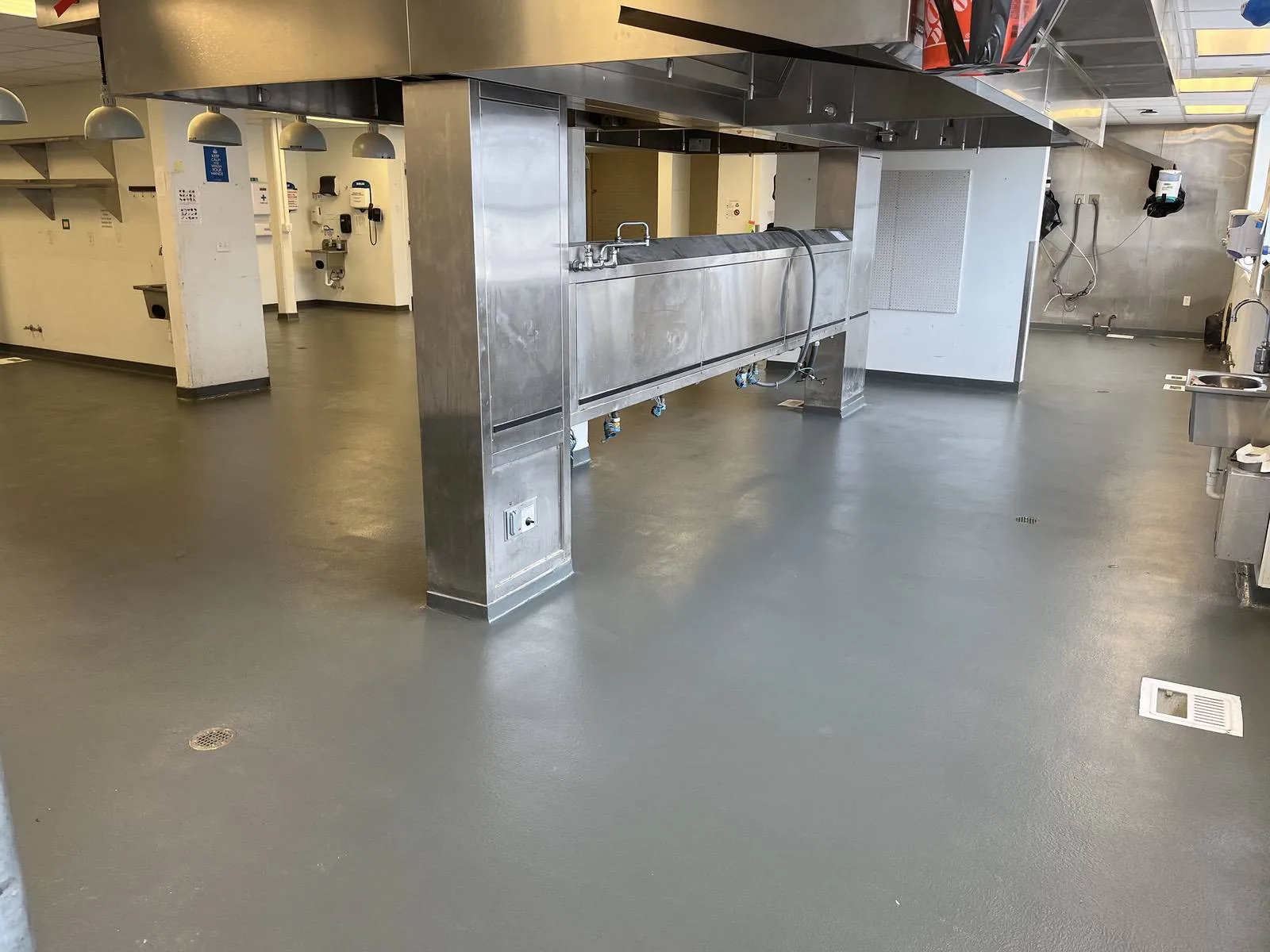
Commercial Kitchen Flooring
Urethane cement and slip-resistant floors with integral cove base for restaurants, school and hotel kitchens, and bars that get mopped every night.
How any floor here gets built
The same order on every job, whatever the system.
The finish you actually walk on, matched to the use.
Where the system gets its build: resin, cement or a decorative overlay.
Soaks in and locks the system to the concrete.
Ground or shot blasted until the surface opens up and a coating can bite.
Whatever the slab is, it gets read first: moisture, cracks, old coatings, and how level it sits.
The next towns over
- Pointe a la Hache
6 miles away, Plaquemines Parish
- Empire
7.7 miles away, Plaquemines Parish
- Buras
16 miles away, Plaquemines Parish
- Delacroix
18 miles away, St. Bernard Parish
More in Plaquemines Parish, on the services page and in the gallery.
Asked and answered
Or send the plans first.
Want a straight answer today? Ring the office.
(504) 231-6298Do you come out to Port Sulphur?
Yes. Port Sulphur is about 34 miles southeast of our base in Harvey, inside the roughly 100 miles we cover. Someone comes out, looks at the slab and gives you a price after seeing it.
What should I know about a slab from around 2004?
If it has a builder-grade garage coating that is peeling, all of it comes off. Putting a new coating over a failing one just moves the failure down the road.
What coating works on a slab that floods?
A system that bonds to well-prepared concrete and tolerates being washed out, usually a flake epoxy or a urethane with a textured topcoat. After a flood we clean the slab, let it dry, test it and repair anything loose before recoating. No coating seals a slab against water from below, so moisture is always part of the plan.
How long after a storm can a flooded slab be coated?
Only after it has dried and tests within the system’s moisture limits. That can take a while on a low slab with water close underneath, which is why moisture-tolerant primers exist. We test the slab and go by the reading.
Do you coat floors in oil and gas service shops?
Yes, shops and warehouses that support oil and gas are the kind of industrial work we do. They see heavy equipment, motor oil and hydraulic fluid, so we spec thicker, chemical-resistant systems over a ground or shot-blasted profile.
Can you quote from photos or plans instead of a visit?
For commercial jobs, drawings, square footage and a schedule are often enough to price the work, with a look at the slab before we start. For homes, photos help, but we want to see the concrete in person before we commit to a system.
How long does a typical floor take?
A two-car garage usually takes one to two days of work plus cure time. Bigger commercial floors depend on square footage, the system and how much prep the slab needs, and the schedule comes with the quote.
Is there anything to do for a commercial floor before you start?
Send the submittal requirements and any site safety rules early. Have equipment moved, drains and doorways marked and the area closed to other trades while we work.
Does hurricane season change the schedule?
Indoor work goes on as normal. Outdoor jobs and anything with a long cure get planned around the forecast, and if a storm is coming we would rather move the date than rush a coating.
Call it in or send the plans
Five minutes on the phone usually tells us whether it is a grind and seal, a coating or a polish.
Send the plans
Facility managers and GCs: send what you have, even a floor plan sketch, and the dates the space can be shut down.