
Stained, stamped and decorative concrete
Acid stains, dyes, stamped overlays, micro-toppings, terrazzo and concrete countertops for floors people are supposed to look at. Restaurants, lobbies, patios and homes, built over new or tired concrete.
7 systems in this family
Decorative concrete is the part of our work where the slab gets a vote on how the floor looks. An acid stain reacts with the lime in the concrete, so two rooms stained from the same jug can come out different shades, mottled and veined like leather or stone. Dyes sit in the pores instead of reacting, which gives you steadier color and brighter options. If the old slab is too cracked, patched or ugly to stain, an overlay gives you a fresh surface to work on.
A stamped overlay is thick enough to take a texture mat, so a plain patio can carry a slate, brick or wood-plank pattern.
Overlays come in weights. A stamped overlay is thick enough to take a texture mat, so a plain patio can carry a slate, brick or wood-plank pattern. A concrete overlay is a troweled or self-leveling layer that resurfaces a worn slab. Micro-toppings go on thin, a few coats by trowel, for smooth modern floors, walls and stair treads. Terrazzo is the heavy end: chips of glass or stone set in a binder, ground and polished flat, the floor you see in old bank lobbies. Concrete countertops are cast or troweled, then sealed. None of it hides a moving crack. We fix the slab first, or we tell you the crack will come back through.
One by one
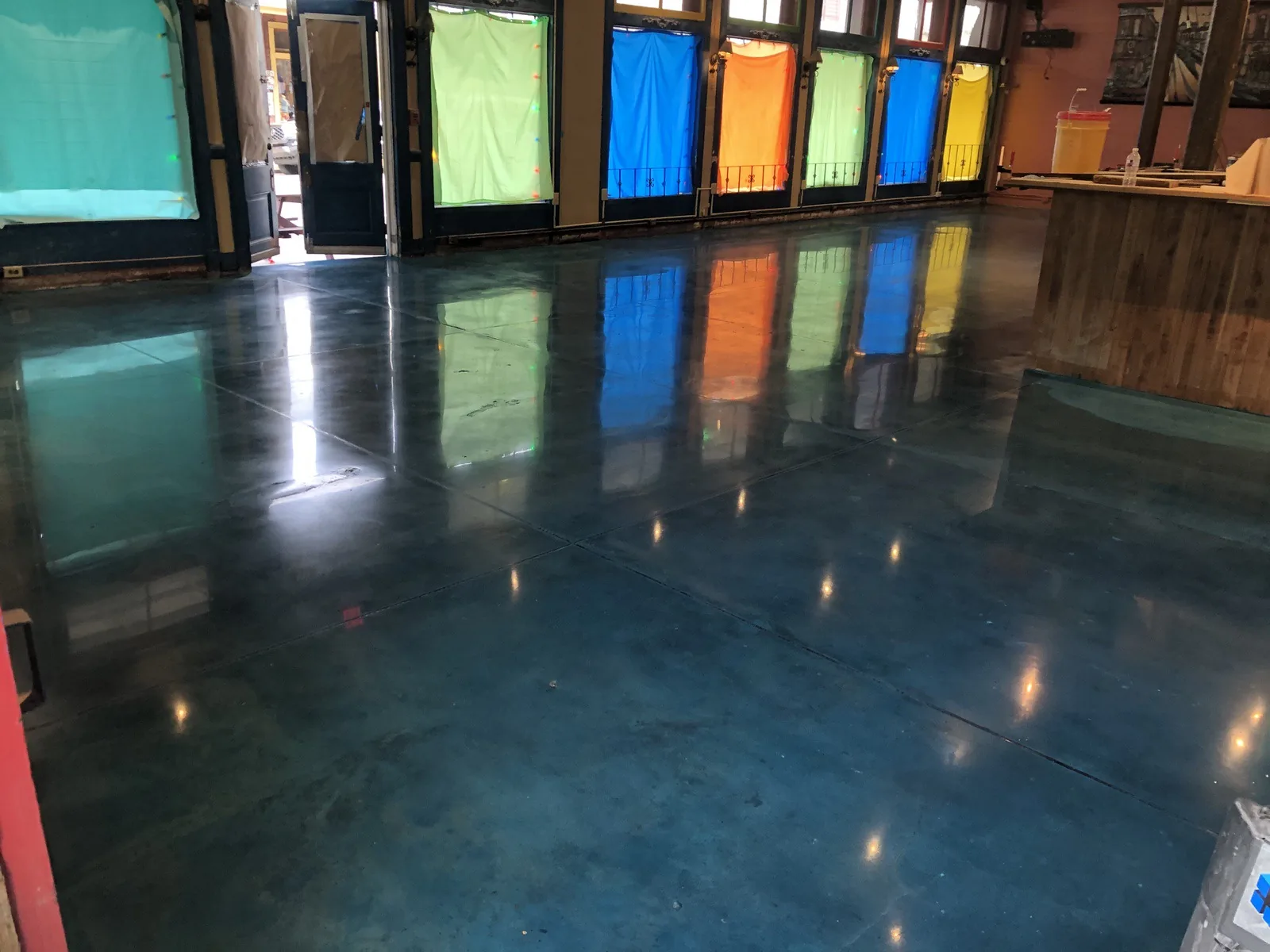
Concrete Staining
Reactive acid stain that gives a slab mottled, variegated color, scored or stenciled if you want a pattern, then sealed.
Read the system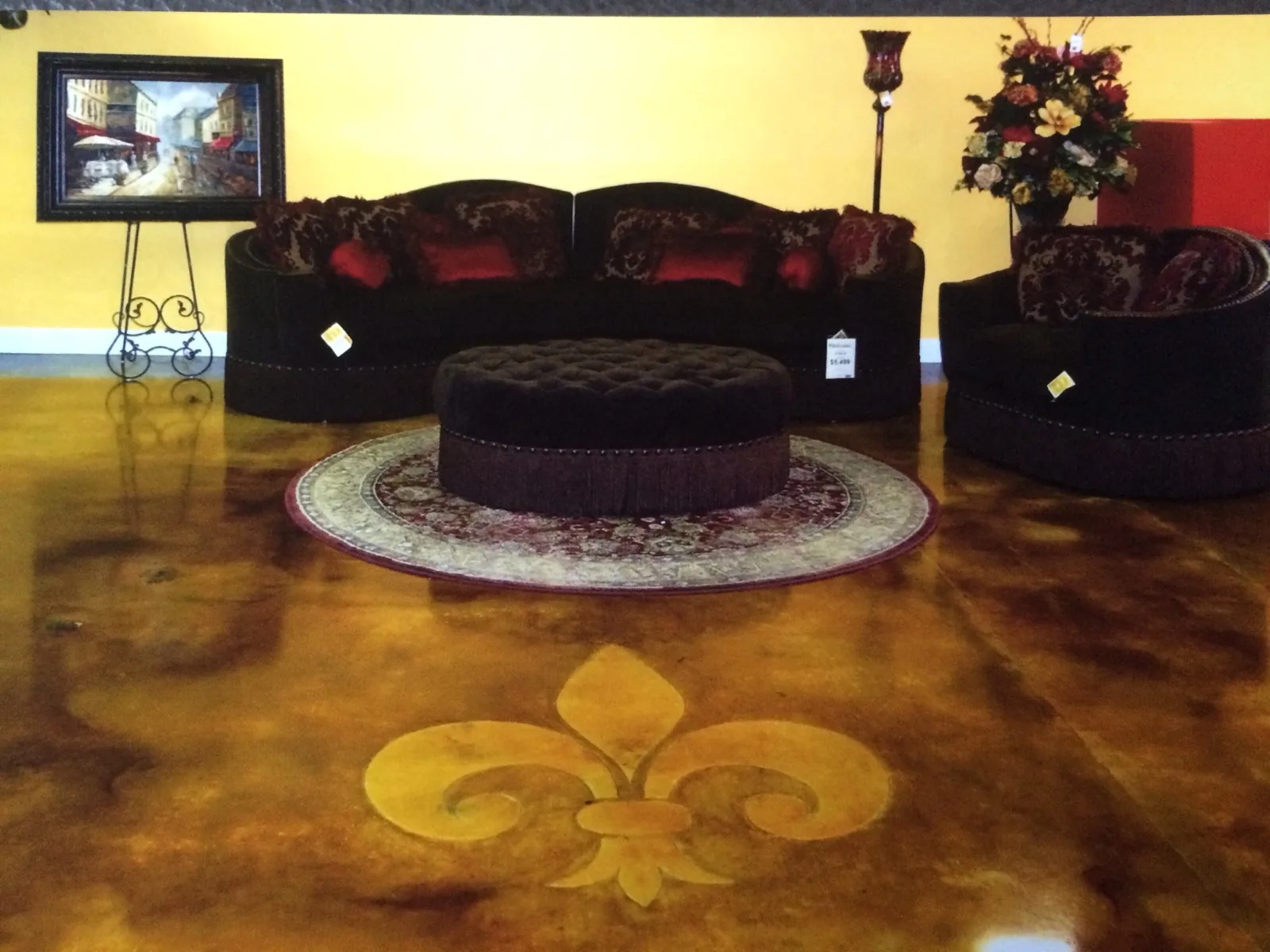
Concrete Dyeing
Water and solvent dyes that color a slab evenly, in a far wider range than stain, often finished as polished concrete.
Read the system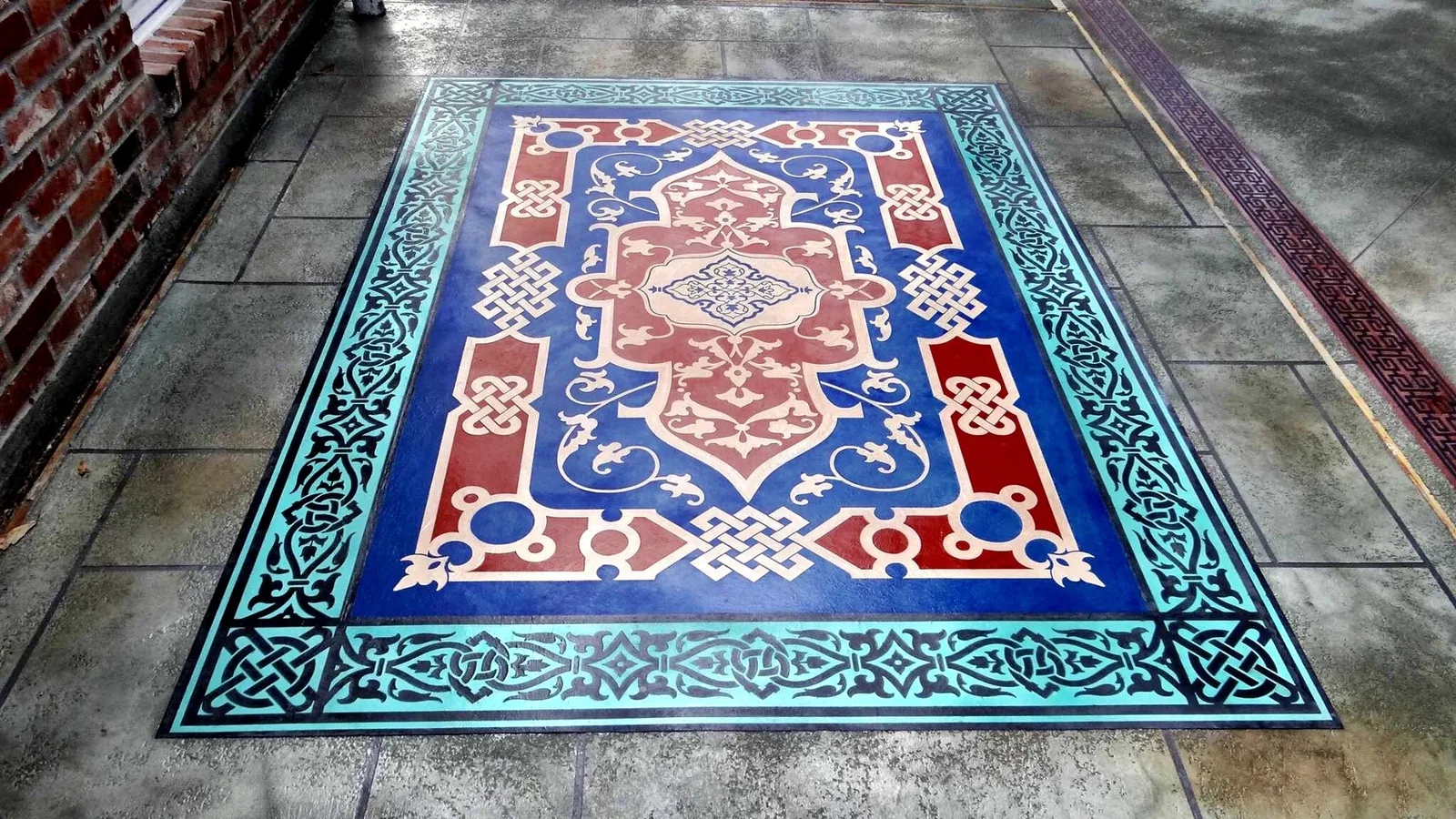
Stamped Concrete Overlays
A stamped cement overlay that puts flagstone, slate, brick or wood plank texture on sound concrete without breaking it out.
Read the system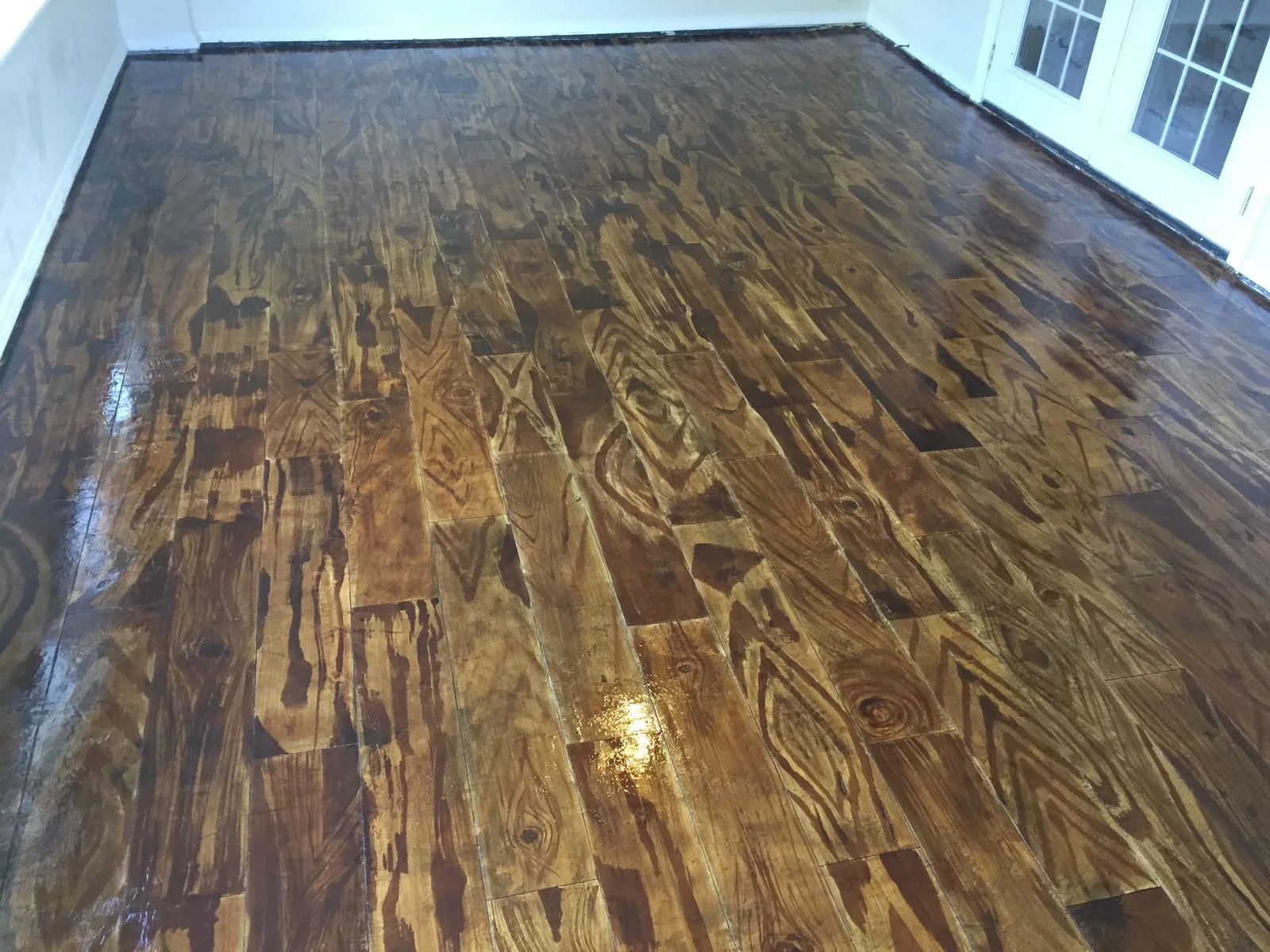
Concrete Overlays
A new cement wearing surface over a sound but beat-up slab, poured self-leveling or troweled down, then scored, stained or tinted.
Read the system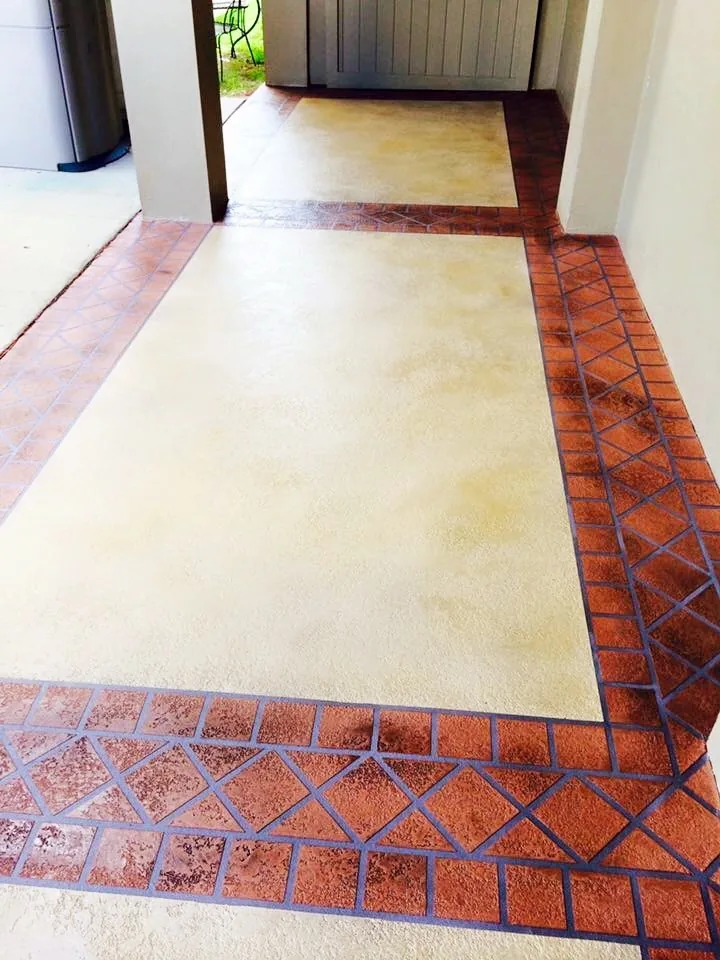
Micro Toppings
A polymer-modified cement skim, troweled in thin coats for a uniform modern finish on floors, walls, counters and stairs.
Read the systemConcrete Countertops
Cast-in-place or precast concrete tops for kitchens, bars, outdoor kitchens and service counters, sealed against the stains each one sees.
Read the systemTerrazzo Flooring
Epoxy or cementitious terrazzo with divider strips and chosen aggregate, plus grinding and polishing of old terrazzo in older buildings.
Read the systemWhich one is yours
Acid stain or dye?
Acid stain if you want variegated, earthy color that looks like it has always been there, and you are fine letting the slab decide some of it. Dye if you need a specific, even color or something outside the browns and greens, like a deep black or a blue. Dyes belong indoors mostly, since some fade under strong sun.
Stamped overlay or a plain concrete overlay?
Stamped if you want texture and pattern, usually outdoors on a patio, walkway or pool surround. A plain concrete overlay is about getting a smooth, sound surface back over a worn slab, and it can then be stained, dyed or polished.
Concrete overlay or micro-topping?
It comes down to thickness and look. A concrete overlay builds more and can level out a rough slab, while a micro-topping is thin and troweled for a smooth, hand-finished look on floors, walls and countertops. A micro-topping needs a slab that is already fairly flat.
Concrete countertops or epoxy countertops?
Concrete countertops are heavy, matte to satin, and wear in like stone over the years. Epoxy countertops are poured over a new or existing substrate and give you gloss, depth and metallic color. If you want the kitchen to match the floor, either one can be tied to it.
Whatever the system, the order holds
Every floor in this family is still a stack, built slab first.
Seal and cure
The wear layer, rolled clear or tinted, is what you walk and drive on. It cures before anyone gets the floor back.
Seed flake or quartz
Flake, quartz or grit goes into the wet body coat for texture and grip. Solid-color floors skip it or take a light grit.
Roll the build
The body coat carries the thickness and the color, pulled to the mils on the spec and back-rolled so it lays flat.
Prime and seal
Primer soaks into the opened concrete and locks the stack to it. Where vapor runs high, a moisture-mitigating primer goes down first.
Grind or shot blast
Diamond grinders or a shot blaster open the surface to the CSP the system calls for, all under vacuum. Cracks and joints get filled here.
Test and map
We check moisture and vapor, mark cracks, spalls and joints, and find out what has soaked into the concrete. On-grade slabs down here sweat, so this step picks the system.
Often paired with
Pool Deck Coatings
Textured overlays and flake decks in light, cooler colors, sealed with grit and built to live with chlorine, salt and wet feet.
Epoxy Flooring
Solid-color epoxy over a ground slab, built in coats to the thickness the room needs, for commercial floors and homes.
Metallic Epoxy Flooring
Hand-worked metallic pigment in clear epoxy, giving showrooms, restaurants and homes a deep, moving floor no one else will have.
Flake Epoxy Flooring
Vinyl chips broadcast to full coverage in epoxy under a clear topcoat, for floors that see water, boots and spills.
Questions about decorative work
Not sure? You can send the plans, or see the gallery.
Easier to talk it through? Call the shop.
(504) 231-6298Can you stain an old concrete floor?
Usually, once the old glue, paint and sealer are ground or stripped off. Stain needs open, bare concrete to react with, and anything left on the surface shows up as a blotch. Patches take stain differently than the original slab, so we point those out before you pick a color.
Will a stamped patio crack?
If the slab under it is cracking, the overlay will follow. We repair and fill what is there, keep the existing control joints and lay the pattern out to them where we can. On sound, stable concrete an overlay holds up well.
How do decorative floors hold up in Gulf heat?
Outdoors, sun works on color and sealer, so we pick UV-stable sealers and resealing becomes part of owning the floor. Humidity matters during the install, because stains and overlays need the right surface conditions. We will move a day before we put one down on a sweating slab.
Do you install terrazzo?
Yes. We place it, grind it flat and polish it, with the chip mix and color picked for the room. It shows up in lobbies and commercial spaces more often than homes, mostly because of the work involved.
Is a stained floor slippery?
A stained floor is only as slick as the sealer on top. Indoors we finish with a sealer or polish that suits the room, and outdoors we can add grit to the sealer for wet patios and pool decks.
Pick your way in
Call with the address and what the floor has to survive. Someone will come look at the slab before anybody talks price.
Send the plans
Bidding a job? Send the plans and the schedule. We price from drawings and walk the slab before we commit to a date.