
Ground down and built back up in Grand Isle
Pool decks, garages and kitchen floors around Grand Isle all start as plain concrete, and plain concrete in the Gulf South sweats. The fix begins with grinding to an open profile and checking how much vapor comes through. It sits in Jefferson Parish, about 47 miles south of Harvey.
Grand Isle, Jefferson Parish, Louisiana.
Old and new construction
Housing figures from the US Census.
Census numbers put the typical home in Grand Isle at about 1974. Additions and enclosed carports are common on houses this age, so one room can sit on a slab poured decades after the rest. The two pours rarely match in height or moisture.
We grind, patch the seam and treat them as two slabs until the coating ties them together.
Commercial floor work around Grand Isle runs on tight windows, because a restaurant, a school or a store in this metro rarely gets to close its doors for long.
Stand-alone houses make up the bulk of it, roughly 80%. When nearly every home is a house, the driveway counts as a floor too. Concrete that has cracked or stained out front can be repaired and coated with something built for sun and rain.
We read those numbers the way we read a slab: they say whether to expect garages, rentals or commercial floors before we drive out.
Floors in Grand Isle live with the same Gulf air as the rest of the metro: wet heat most of the year and slabs that sweat whenever warm, heavy air rolls in over cool concrete. Around Jefferson Parish, the floor work is mostly this: harvey Canal shops, Metairie storefronts, Kenner kitchens and garages on both banks, close enough to start early and stay late. The nearest towns on our list range from Golden Meadow (typical home around 1960) to Port Sulphur (around 2004); Grand Isle lands on the older side.
Humidity and the slab
The New Orleans metro.
Grand Isle is in Jefferson Parish, about 47 miles south of the shop.
Heat and humidity hang on here for most of the year, and that air is full of water. On-grade slabs pick up moisture from below and from the air above, so a floor that looked dry in the morning can sweat by afternoon. Coatings laid over a damp slab without a moisture test are the ones that blister and peel a season later. We test first, and when vapor readings run high we spec a moisture-mitigating primer or a urethane cement that tolerates it.
For a restaurant or commercial kitchen in Grand Isle, urethane cement handles hot water, grease and daily washdown far better than a thin epoxy roll coat ever will.
If the building took water in a past storm, plan for full grinding and repair, since old flood residue under a new coating is how floors fail early.
Have the slab moisture tested before you pick a system, because in a metro this wet the reading decides between a standard epoxy primer and a moisture-tolerant build.
Polish or coating
Garage Floor Coatings
Flake, solid color, metallic or polished concrete for home garages, ground first so hot tires and oil never lift it.
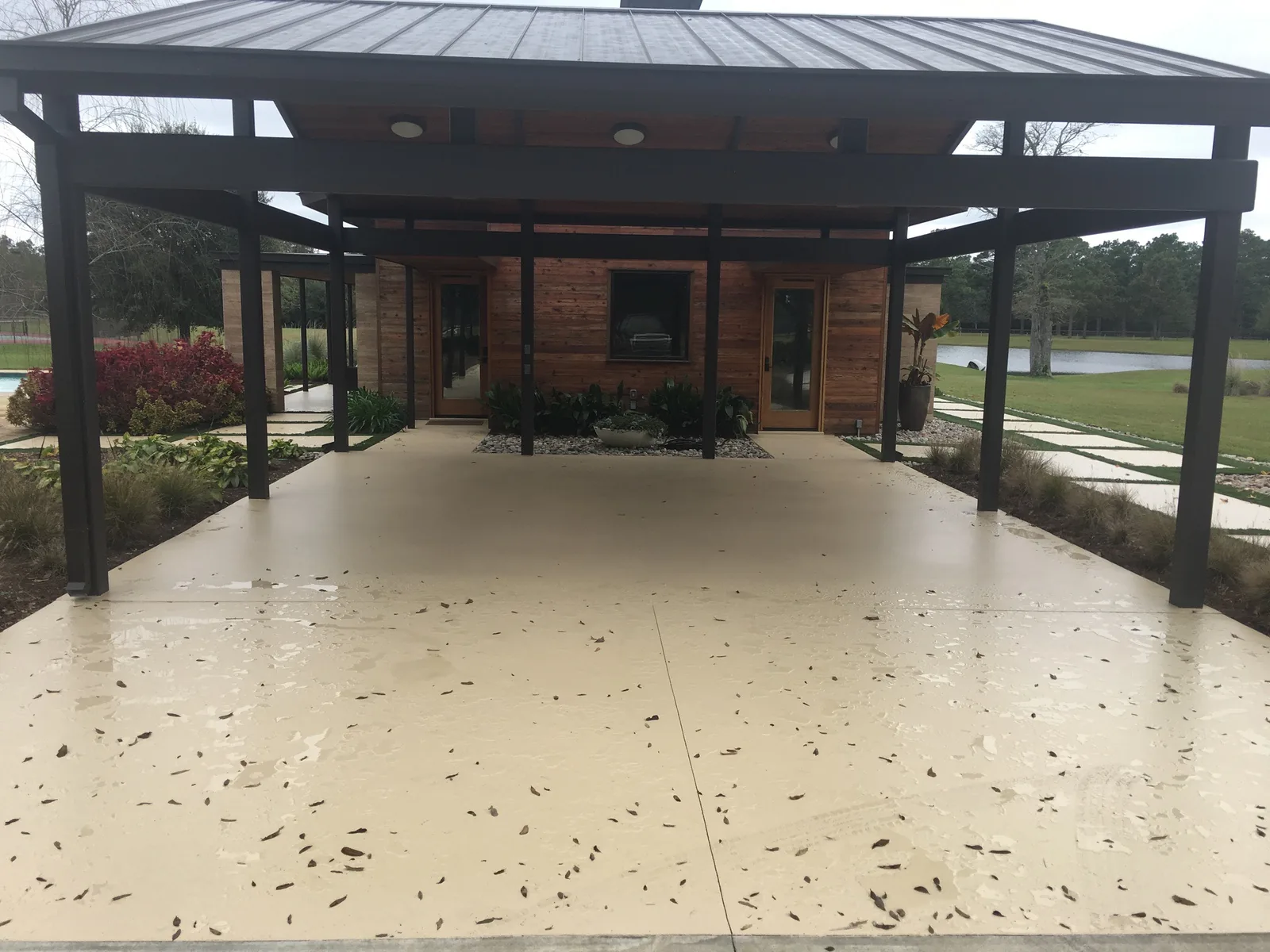
Patio Coatings
Overlays, stamped patterns and stain for covered and open patios and porches, finished with a topcoat that grips in the rain.
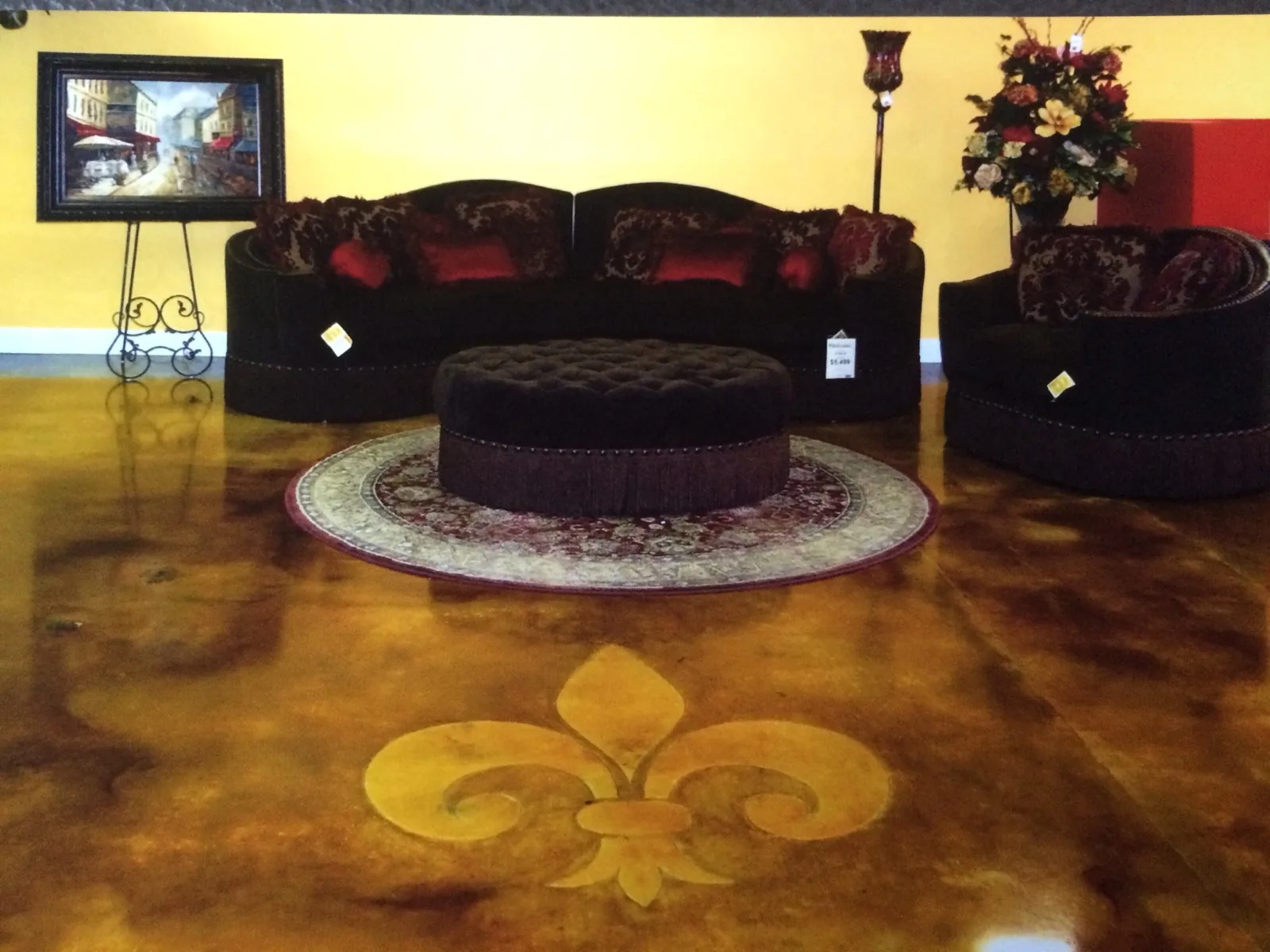
Concrete Staining
Reactive acid stain that gives a slab mottled, variegated color, scored or stenciled if you want a pattern, then sealed.
How any floor here gets built
The same order on every job, whatever the system.
Topcoat or guard, set to the traffic and the shine you want.
The color and the thickness: epoxy, urethane cement, stain or an overlay.
Soaks in and locks the system to the concrete.
Ground or shot blasted until the surface opens up and a coating can bite.
The concrete as we find it. Moisture, old sealer and cracks decide everything above it.
The next towns over
- Golden Meadow
19 miles away, Lafourche Parish
- Galliano
23 miles away, Lafourche Parish
- Port Sulphur
27 miles away, Plaquemines Parish
- Cut Off
28 miles away, Lafourche Parish
More in Jefferson Parish, on the services page and in the gallery.
Grand Isle floor FAQ
Or send the plans first.
Easier to talk it through? Call the shop.
(504) 231-6298Do you come out to Grand Isle?
Yes. Grand Isle is about 47 miles south of our base in Harvey, inside the roughly 100 miles we cover. Someone comes out, looks at the slab and gives you a price after seeing it.
What should I know about a slab from around 1974?
Some 1970s slabs have a thin plastic vapor barrier and some have none, so a moisture test tells us which one you have. Sheet vinyl and its adhesive are common on top and grind off slowly.
Can a floor that flooded be coated again?
Usually, once the concrete is sound. We grind off the old coating, adhesive and contamination, repair cracks and spalls, and test moisture after the slab has had time to dry. If the concrete itself is damaged, it gets repaired before any coating goes down.
Does the humidity change how long a floor takes to cure?
It can. Heat and humidity change cure times for epoxies and urethanes, and some products blush or cloud when the air is wrong. We pick products and time the coats around the conditions on the day, and we tell you when the floor is ready for traffic.
Can you work around a restaurant that cannot close for long?
That is a normal job here. We plan the grind, the build and the cure around your closed hours or a short shutdown, and some urethane cement systems take traffic sooner than many epoxies. Tell us your window and we will tell you straight whether it fits.
How do you handle moisture coming up through older metro slabs?
We test the slab before we quote a system. When vapor readings are high, we use a moisture-mitigating primer or a urethane cement built for it instead of hoping a standard epoxy holds. That test costs far less than tearing out a failed floor.
Can you quote from photos or plans instead of a visit?
For commercial jobs, drawings, square footage and a schedule are often enough to price the work, with a look at the slab before we start. For homes, photos help, but we want to see the concrete in person before we commit to a system.
When can I walk on it?
Light foot traffic is typically fine within a day on most coatings, and full cure takes longer. We give you the timing for your system, because urethane cement, epoxy and polished concrete all behave differently.
Does anyone need to be home during the work?
Only for access at the start and a walkthrough at the end, unless you want to watch. Grinding is loud, so pets and kids are better off somewhere else that day.
Can you coat floors in Grand Isle in the middle of summer?
Yes, with some adjustments. Heat shortens working time, so the crew mixes smaller batches and may start early in the day. Humidity matters most for the slab underneath, which we test either way.
Two ways to start
Tell us the space, the square footage and what goes on the floor. We will tell you which system fits and when we can start.
Send the plans
Facility managers and GCs: send what you have, even a floor plan sketch, and the dates the space can be shut down.