
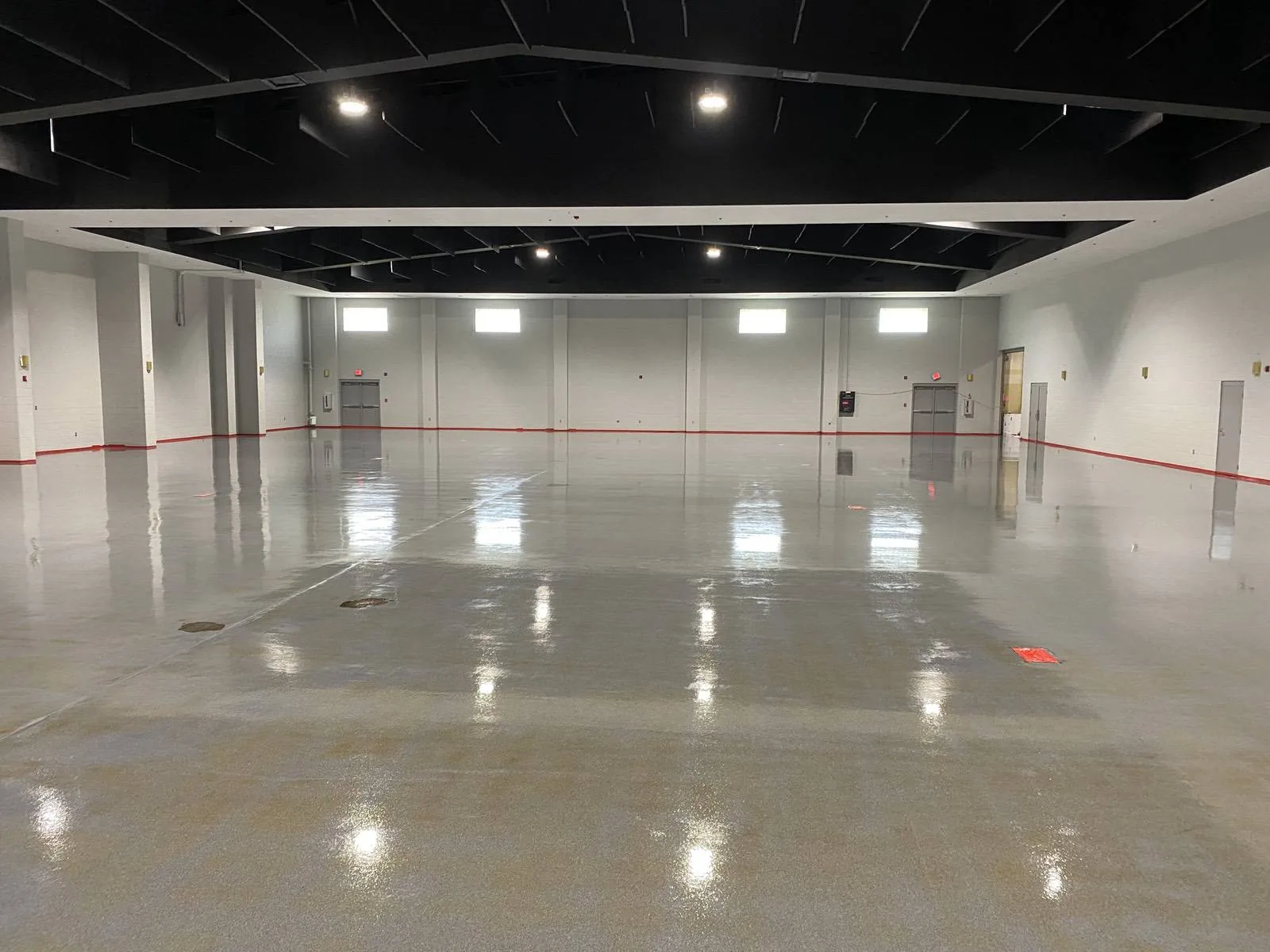
Industrial coatings matched to what spills on the floor
The coating family for plants, shops and process areas: high-build epoxy for traffic, novolac where acids live, chemical-resistant topcoats and line striping, chosen after we know what hits your floor.
22 years in businessCoatings5.0 on Google from 36 reviews
What it is
Industrial floor coatings are a family, and picking the right member is most of the job. A machine shop with cutting oil and steel carts needs a different build than a battery room or a brewery washdown area. We start with what actually lands on the floor: which chemicals, how strong, how hot the water runs, what rolls across it and how heavy. Then we look at the slab, because a coating only holds as well as the concrete under it.
Most of these floors start from high-build epoxy, a thick body coat that levels small defects and takes forklift traffic. Where acids or harsh cleaners sit on the floor, standard epoxy softens and stains, so we go to novolac, a tighter resin made for chemical exposure. It is what we want in chemical storage, under acid tanks and anywhere a spill sits overnight before someone finds it. Urethane topcoats handle abrasion and sun better than epoxy, and urethane cement takes over where hot water and thermal shock would crack a thin coat. Line striping, aisle marks and safety zones go down last, laid out with whoever runs the floor.
Our Epoxy Flooring page covers the system itself, layer by layer, in solid, flake, quartz and metallic. Industrial Flooring is about the plant as a job site: shutdowns, phasing, working around a line that cannot stop. Industrial coatings sit between them: the menu we pick from once we know the exposure. The food plant off Gentilly Road in New Orleans got a non-slip coating, because a food floor that runs wet needs grip before it needs gloss.
Part of our coatings work. See all of it.
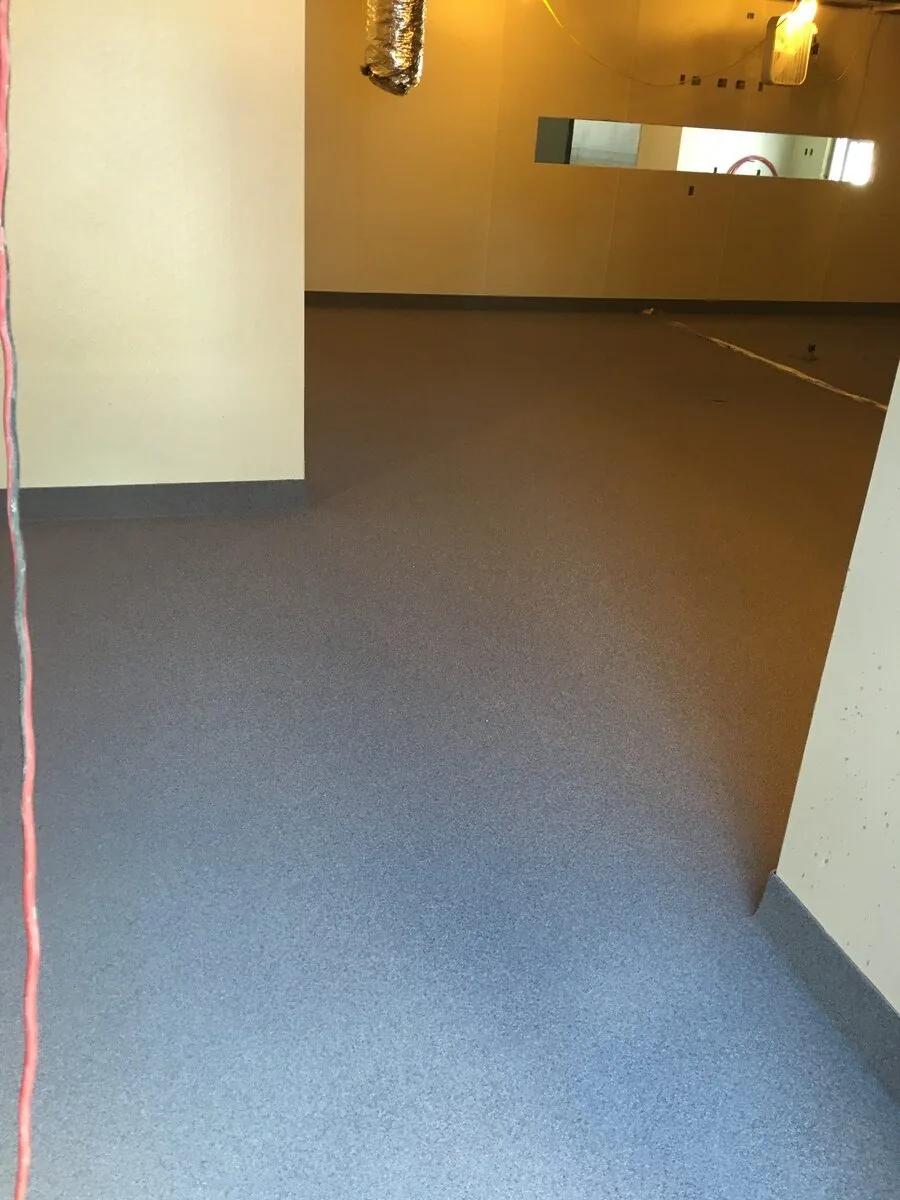
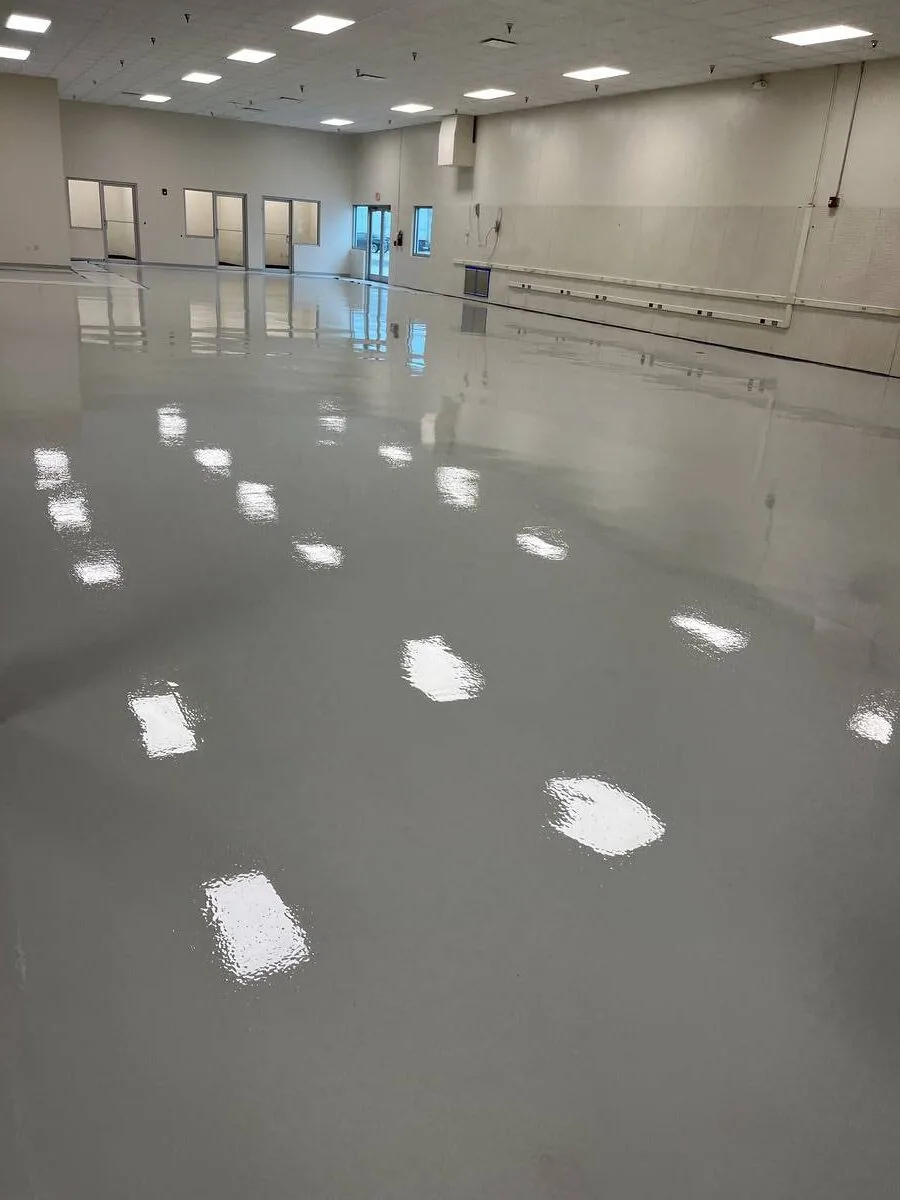
Start with the concrete.
What goes down, from the surface you walk on to the slab under it.
If the chemical list says novolac and the budget says standard epoxy, we will tell you straight which one fails first.
Topcoat and striping
A topcoat rated for the exposure seals the surface, and aisle lines and safety marks go on top.
High-build body coat
The thick layer that takes the beating, in epoxy or novolac depending on the chemicals, sometimes broadcast for texture.
Primer
A penetrating epoxy primer soaks into the open concrete and gives everything above it something to grab.
Profile and repairs
Shot-blasted or ground to the profile the system needs, with joints, spalls and cracks filled flush.
Plant slab as found
Usually oil-soaked in spots, with cracked joints, old striping and sometimes a failing coat from years back.
Where it belongs
Food and beverage plants
Washdowns, fats, sugars and sanitizers every shift, where the coating needs grip as much as chemical resistance.
Machine and fab shops
Cutting oil, hydraulic leaks, dropped parts and steel-wheeled carts. High-build epoxy with a tough topcoat handles it.
Chemical and battery rooms
Acid and caustic spills that would eat standard epoxy. Novolac goes here, with cove base so spills stay off the walls.
Warehouses and docks
Forklift lanes, pallet drops and tire marks, with striping that tells drivers where to go and where to stop.
How the crew runs it
Five steps, in order.
Walk the floor
Dustin or Jacob walks it with whoever runs the plant and asks what spills, how often and what it gets cleaned with.
Match the coating
We pick the resin and topcoat to the exposure, and send product data and samples if the job needs submittals.
Shot-blast and repair
Oil spots get degreased, the slab gets blasted or ground to profile, and joints and spalls get filled before any coating.
Build the coats
Primer, body coat and topcoat go down in sequence, each inside its recoat window so the layers bond to each other.
Stripe and release
Lines and markings go on last, and we tell you plainly when it can take foot traffic, then forklifts, then chemicals.
For the GC or the facility
- Shutdown windows are what we plan around: nights, weekends or a holiday week, phased by area if the line has to keep running.
- Typical cure before foot traffic is about a day. Forklifts and chemicals wait longer, and the product data says how long.
- Submittals, product data sheets and sample boards are available on request.
- Tell us about old coatings, sealers or curing compounds on the slab, because each one changes the prep.
Gulf South conditions
Plants along the river and the coast run hot and wet, and many of them sit on older slabs with no vapor barrier under them. Moisture pushing up through a slab is one of the most common reasons a coating lets go, so we test before we settle on a system and use a moisture-tolerant primer when the readings call for it.
Salt air near the coast and the refineries and shipyards along the river add their own problems: chlorides on the surface and floors that get hosed down daily. Chlorides left on a slab under a new coating cause trouble later, so they get washed off during prep. Storm season brings floodwater and mud into ground-floor plants, and a coated floor that is sealed tight cleans up and goes back to work far faster than bare concrete that soaked it all in.
Look at the finish.

“What set them apart was that they offered the product I actually wanted, not what was quickest or easiest for them.”
Jason Lagneaux, Google review5.0 on Google from 36 reviews
Living with it
Scrub with a neutral cleaner or the one the coating maker names, then rinse. Clean up acids and solvents when they hit, even on novolac, since every chemical rating has a time limit. Keep forks from dragging, and recoat forklift lanes before they wear through to the body coat.
Next to this one
See finished floorsQuestions about industrial floor coatings
See finished jobs in the gallery, or ask the crew.
What is the difference between epoxy and novolac?
Novolac is an epoxy resin built with a tighter chemical structure, so it holds up to stronger acids and solvents for longer. We use it where the chemical list calls for it and standard high-build epoxy everywhere else.
Can you coat the floor without shutting the plant down?
Usually, by phasing it. We section the floor by area, work nights and weekends, and use fast-cure systems where the schedule is tight. Bring us the shutdown window and we will build the sequence around it.
Is a coating the same as an industrial floor?
A coating is the resin layer. Industrial flooring is the whole job in a working plant, which can mean polished concrete, urethane cement or a coating, plus the scheduling around production. Picking the coating comes after a coating is the right answer.
Will a coating stand up to forklifts?
A high-build system on a properly prepared slab will, with the lanes recoated as they wear. What kills coatings under forklifts is thin product and poor prep, plus forks dropped or dragged across the floor.
Can you do the line striping too?
Yes. Aisles, walkways, forklift lanes, safety zones and hatched areas go down as part of the job, laid out from your plan or walked out with your safety lead. Striping done by the same crew ties into the topcoat schedule instead of waiting on another trade.
Do you coat food plants?
Yes. We put a non-slip floor coating down at a food plant off Gentilly Road in New Orleans. Food floors need grip when wet, resistance to the sanitizers used every shift, and cove base so washdown water cannot get under the wall line.
Let’s look at your floor.
Call with the address and what the floor has to survive. Someone will come look at the slab before anybody talks price.
Bidding a job? Send the plans and the schedule. We price from drawings and walk the slab before we commit to a date.