
What we put down on Belle Rose concrete
Every floor we put down in Belle Rose starts with a grinder and a moisture test. Epoxy, urethane cement, polished concrete or a decorative finish only holds when that first step is done right. It sits in Assumption Parish, about 60 miles west of Harvey.
Belle Rose, Assumption Parish, Louisiana.
How Belle Rose is built
Housing figures from the US Census.
The median home in Belle Rose was built around 1982, by the Census count. Slabs from the 1980s are usually in better shape than older ones, with a vapor barrier more often in place and finishing done with power trowels. That smooth, dense surface is good news for polish.
It is harder news for coatings, which need the grinder to open it up first.
We read those numbers the way we read a slab: they say whether to expect garages, rentals or commercial floors before we drive out.
Assumption Parish is bayou country, and Belle Rose shares what that means for a building: water close at hand, ground that stays damp, and storms that can roll straight in off the Gulf. Around Assumption Parish, the floor work is mostly this: mill shops, farm sheds, churches and small-town storefronts, mostly older slabs that need real prep before any coating goes down.
Shop floors across the bayou parishes take a beating from steel, hydraulic oil and heavy parts, while homes and businesses want a floor that comes through the next high water.
Stand-alone houses make up the bulk of it, roughly 72%. A place made up mostly of houses has a lot of garage floors, and garage floors are where cheap coatings fail first. We grind them and build a flake or solid epoxy that can take hot tires.
Vapor before primer
Bayou Lafourche and Terrebonne.
Belle Rose is in Assumption Parish, about 60 miles west of the shop.
Shipyards, fabrication shops and oilfield service buildings put floors through welding slag, dropped steel, forklift wheels and spilled oil. Thin roll-on coatings do not last in that service. Troweled epoxy, urethane cement and heavy broadcast systems over a shot-blasted profile hold up far longer. Older homes and businesses along the bayous bring their own trouble: patched slabs, additions poured at different times, and floors that have already been under water once.
For a home in Belle Rose that has taken water before, choose a flake system you can scrub and pressure wash after a storm without it lifting.
Run cove base and sealed joints in kitchens and seafood rooms, because water left standing where the floor meets the wall is where bacteria and failures start.
Test slab moisture before any coating goes down, since the high water table under bayou country will find any primer that was not built for it.
Commercial and home floors
Garage Floor Coatings
Flake, solid color, metallic or polished concrete for home garages, ground first so hot tires and oil never lift it.

Patio Coatings
Overlays, stamped patterns and stain for covered and open patios and porches, finished with a topcoat that grips in the rain.
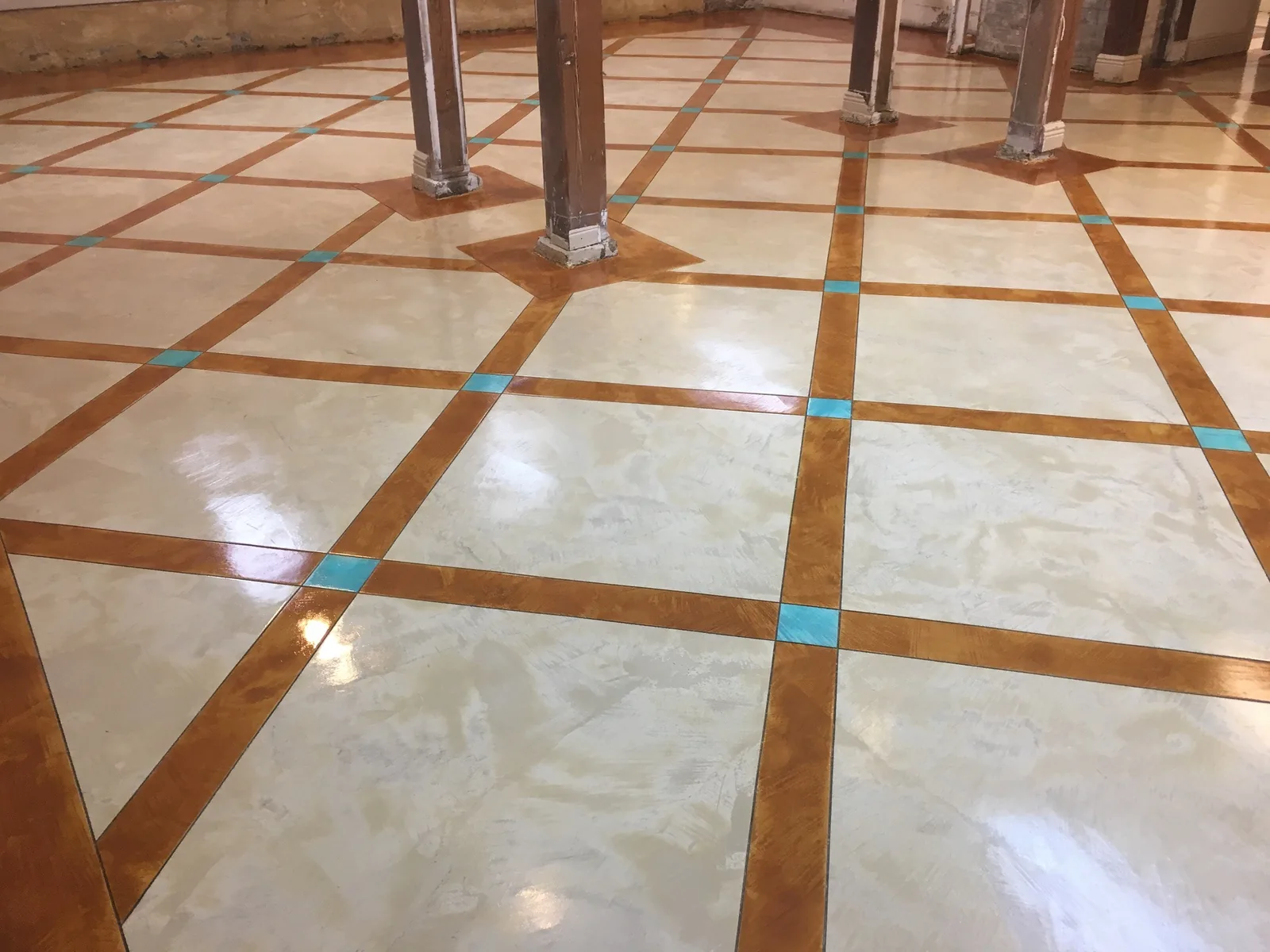
Concrete Staining
Reactive acid stain that gives a slab mottled, variegated color, scored or stenciled if you want a pattern, then sealed.
How any floor here gets built
The same order on every job, whatever the system.
Topcoat or guard, set to the traffic and the shine you want.
The color and the thickness: epoxy, urethane cement, stain or an overlay.
Soaks in and locks the system to the concrete.
Ground or shot blasted until the surface opens up and a coating can bite.
The concrete as we find it. Moisture, old sealer and cracks decide everything above it.
The next towns over
- Paincourtville
3.7 miles away, Assumption Parish
- Donaldsonville
5 miles away, Ascension Parish
- Bayou Corne
6.4 miles away, Assumption Parish
- Darrow
6.7 miles away, Ascension Parish
More in Assumption Parish, on the services page and in the gallery.
Things to know first
Or send the plans first.
Easier to talk it through? Call the shop.
(504) 231-6298Do you come out to Belle Rose?
Yes. Belle Rose is about 60 miles west of our base in Harvey, inside the roughly 100 miles we cover. Someone comes out, looks at the slab and gives you a price after seeing it.
What should I know about a slab from around 1982?
It may have been through more than one big storm. We check the wall edges and low spots for water damage and salt before choosing a system.
Why do garage floor coatings peel in bayou country?
Moisture coming up through the slab is the usual cause, along with poor prep. Water vapor pushes on a coating from below until it lets go. We grind the slab and test moisture first, then use a primer rated for the readings.
Can you redo a floor after storm flooding?
Yes, once the slab has dried and been tested. We grind off the old finish and contamination, repair cracks and spalls, then install the new system. If the building is waiting on other repairs, we fit the floor into that schedule.
How long before people and trucks can use a new floor?
It depends on the system and the temperature. Foot traffic often comes the next day, while vehicles and heavy loads usually wait several days for a full cure. We give you the actual times for the product we install.
How should the floor look when Dustin arrives?
Clear enough to see bare concrete in a few spots. If the slab is under carpet or tile, pull back a corner where you can. Ten seconds of looking at the real surface tells us more than any description.
Will the whole floor be out of service at once?
Not always. Larger floors can be done in sections so part of the building stays open, with the order planned around traffic. It takes longer overall, and nobody has to shut down completely.
Where do furniture, cars and equipment go?
Everything comes out of the work area, and cars stay out until the coating cures. For a plant or a kitchen, plan where the equipment sits during the job and when it comes back.
After a flood, how soon can a floor be coated?
Not until the slab has dried out and been tested. Flood water leaves salts and silt in the concrete, so we grind deeper and check moisture before committing to a coating. Rushing it is how a new floor fails a year later.
Pick your way in
Five minutes on the phone usually tells us whether it is a grind and seal, a coating or a polish.
Send the plans
Facility managers and GCs: send what you have, even a floor plan sketch, and the dates the space can be shut down.