
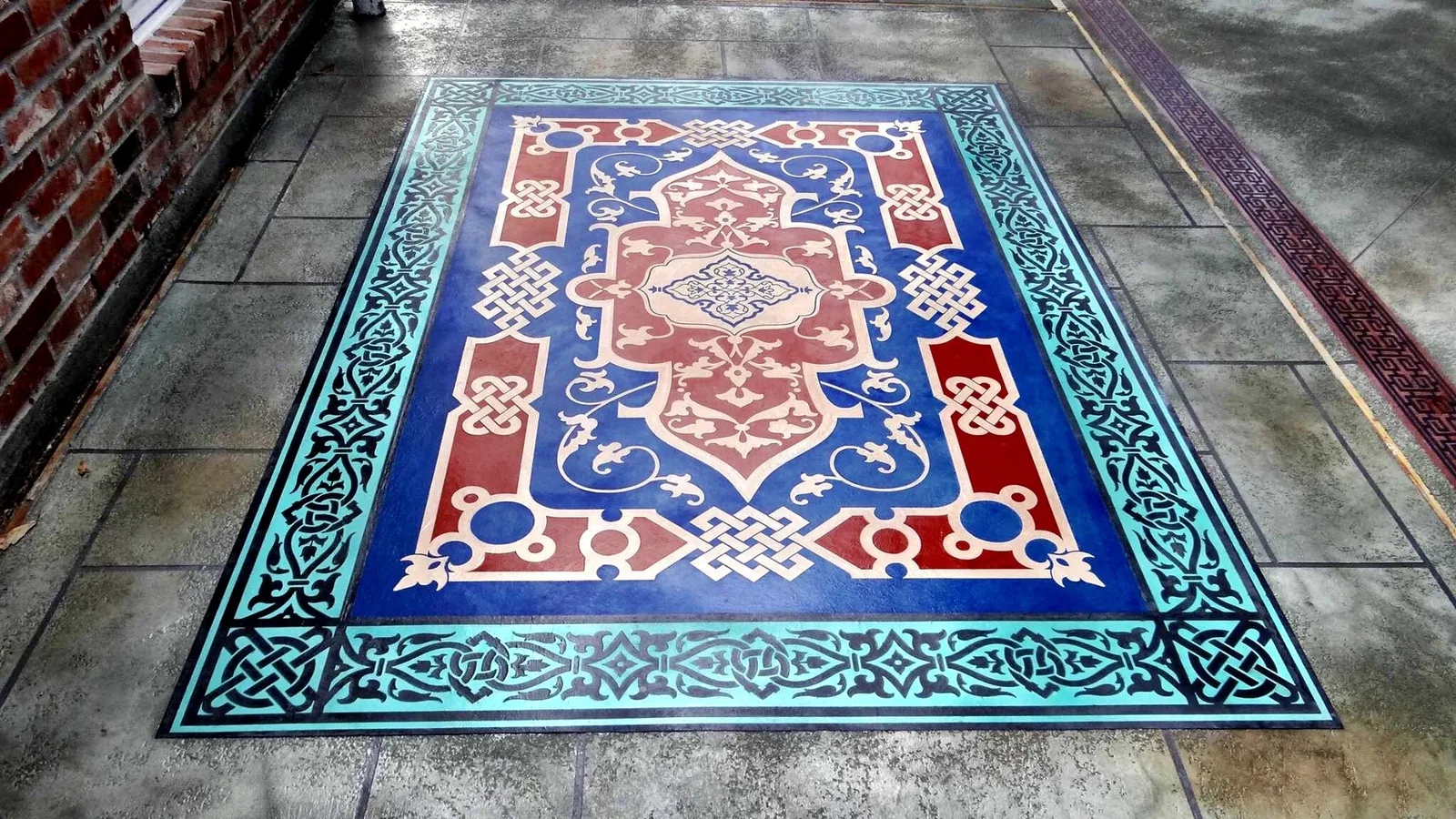
Stamped overlays over the concrete you already have
We trowel a cement overlay over sound concrete and stamp it while it is still soft, so a tired patio, porch or pool deck gets flagstone, slate or plank texture without a tear-out.
22 years in businessDecorative5.0 on Google from 36 reviews
What it is
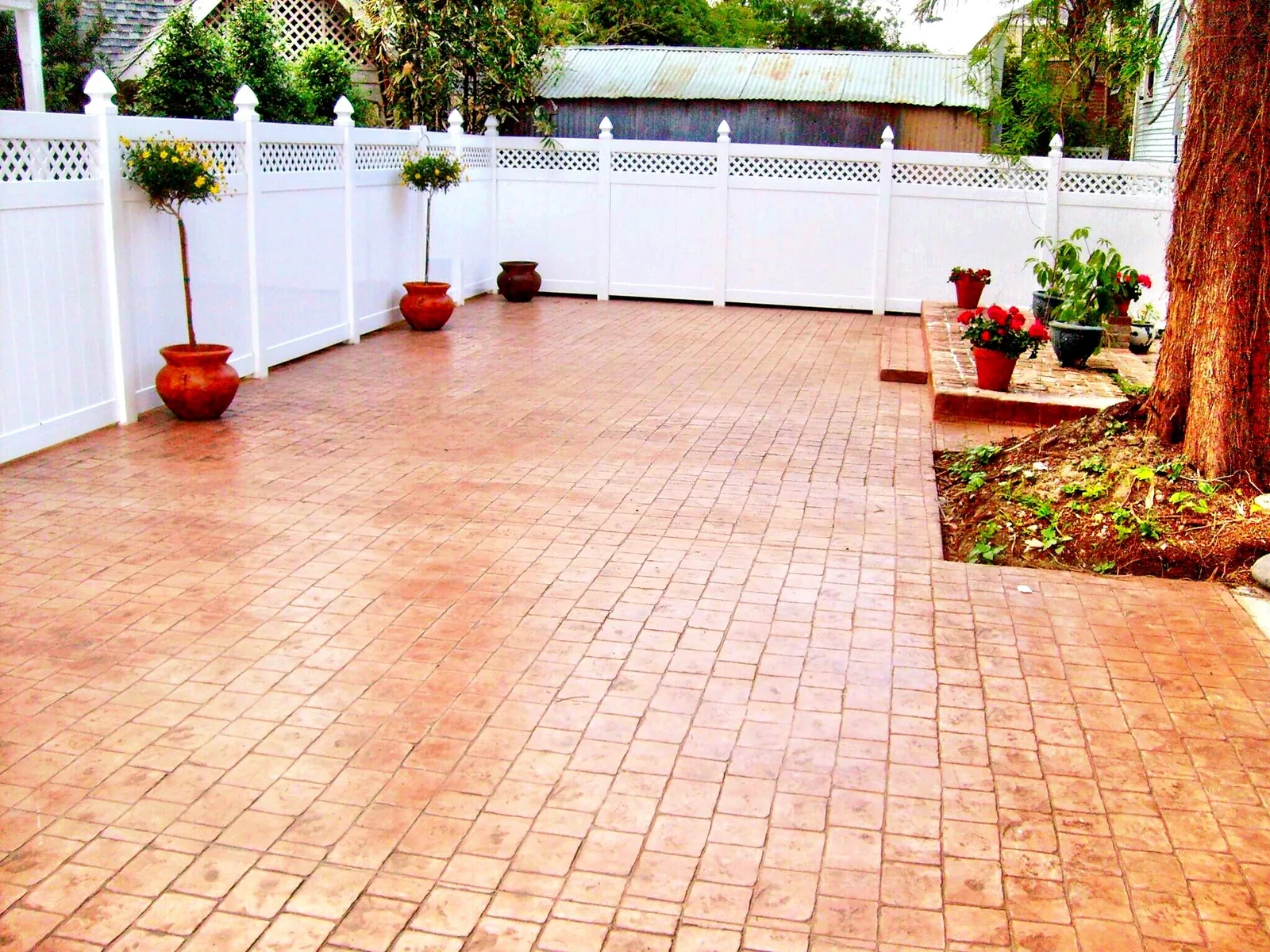
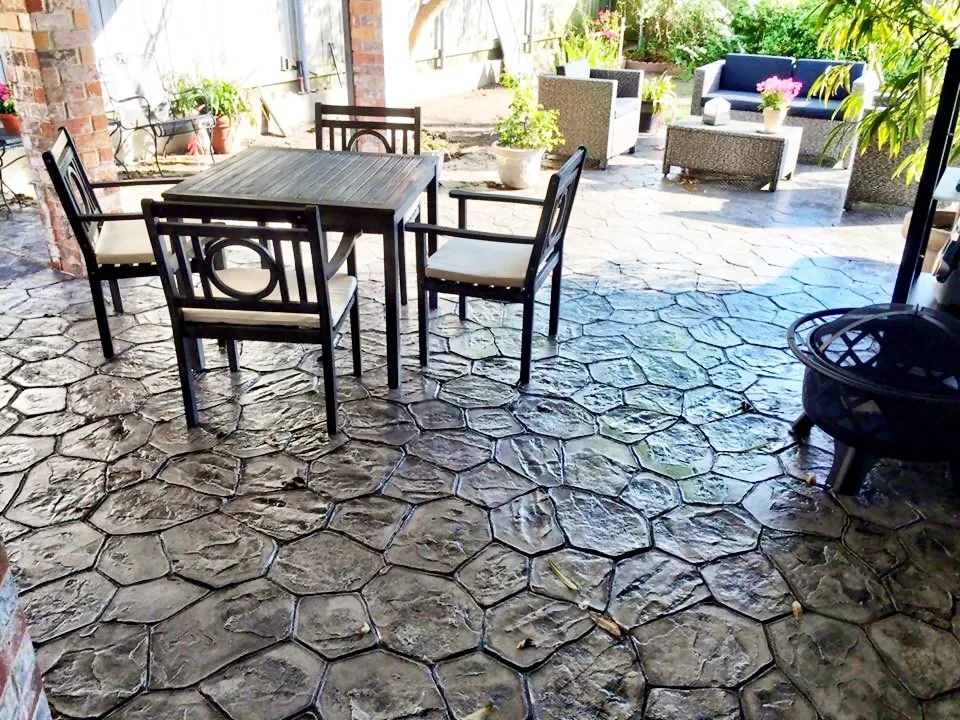
The overlay is a polymer-modified cement, typically a quarter inch to three quarters of an inch thick, and the pattern gets pressed in with stamp mats while it is still plastic. The patterns are the ones people ask for on patios and walks: flagstone, slate, brick, ashlar cut stone and wood plank. Color goes in the mix or on the surface, and a release agent left in the low spots gives the stone its shadows. The slab underneath stays put. No jackhammer and no new pour.
It is for concrete that is sound but ugly. Think of a back patio with old patches, a front porch that has been painted three times, a pool deck that is chalky and stained. Restaurants and hotels use it on outdoor seating areas and entries where the owner wants stone and the budget or the schedule will not carry real stone. If the slab is heaving, sinking or broken through, an overlay will copy every one of those problems, and we will tell you so before anyone signs.
The difference from our concrete overlays comes down to the mats. A concrete overlay resurfaces a slab to a flat or lightly textured finish, usually scored, stained or tinted, and it works indoors as easily as out. A stamped overlay is built thicker so it can take a deep imprint, it is almost always outside, and the finish reads as stone, brick or timber instead of concrete. If you want the slab to look like good concrete again, that is a concrete overlay. If you want it to look like a flagstone terrace, stamp it.
Part of our decorative work. See all of it.
Start with the concrete.
What goes down, from the surface you walk on to the slab under it.
We will not stamp over a slab that is heaving or broken through, because the overlay copies the crack and you pay for it twice.
Sealer
The surface you walk on, with grit added where bare feet and pool water meet it.
Release and accent color
Antiquing release stays in the grout lines and stone texture, giving each piece some shadow and age.
Stamped overlay body
The colored overlay mix, troweled to depth and imprinted with mats while it is workable.
Bond coat
A primer or slurry coat that locks the overlay to the old concrete.
Profile and repairs
The surface is ground or blasted to open it up, and cracks and spalls are filled so they do not telegraph through.
Existing slab
Sound concrete as we find it, checked for hollow spots, moving cracks and old sealers.
Where it belongs
Patios and porches
Old broom-finish concrete off the back of the house becomes slate or flagstone, and the thin build usually keeps door thresholds clear.
Pool decks
Stamped stone around a pool looks right, and a textured sealer keeps it from turning slick when it is wet.
Walks and entries
Front walks, courtyard paths and restaurant or hotel entries where the first thing a guest steps on should look like stone.
Driveway courts
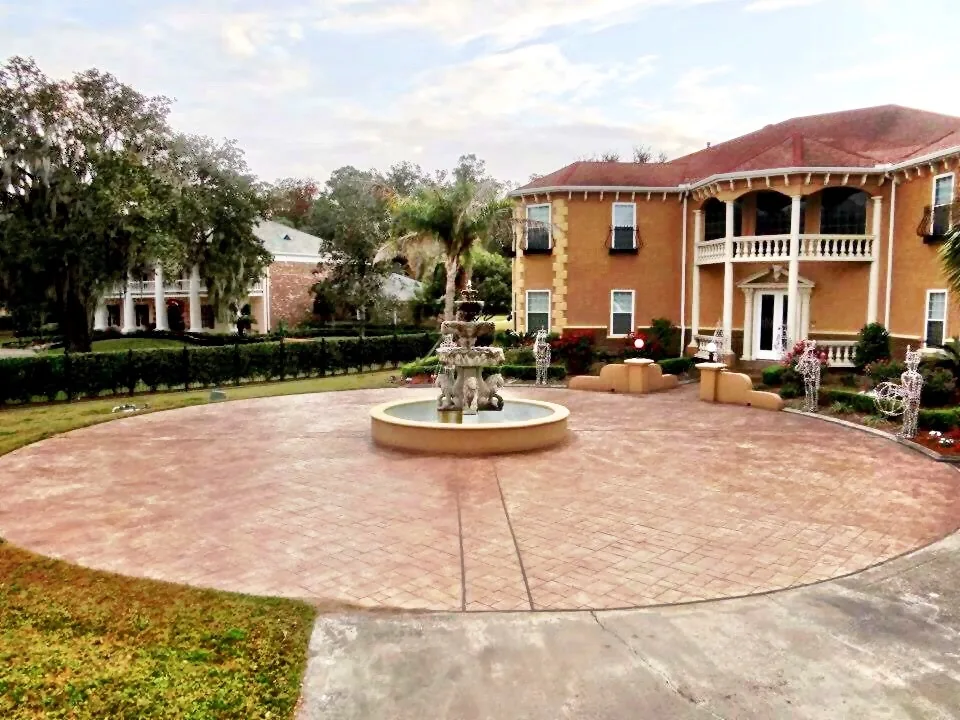
The motor court or apron at the head of a drive, on a slab that is sound and not settling.
How the crew runs it
Five steps, in order.
Look at the slab
Dustin or Jacob walks it, taps for hollow spots and checks which cracks are still moving. Bad concrete gets a straight answer before any pattern talk.
Strip and profile
Old sealer and paint come off, then the surface is ground or shot blasted to a profile the overlay can grab.
Repair and bond
Cracks and spalls are filled, control joints are marked so we can carry them through, and the bond coat goes down.
Trowel and stamp
The colored mix is placed and leveled, release goes on, and the crew walks the mats in sequence before the material stiffens.
Wash, cut, seal
Once it cures we wash off excess release, saw-cut the joints back in and roll on sealer with grit where people walk barefoot.
For the GC or the facility
- Send the site plan or photos with square footage and the pattern you want. Sample boards and product data on request.
- The existing slab has to be sound and clean of old sealer. We profile it ourselves and say so if it fails.
- Foot traffic is typically fine a day or two after sealing. Vehicles typically wait about a week.
- Outdoor work runs on weather, so we build a rain day into the schedule up front.
Gulf South conditions
Outdoor concrete down here takes sun most of the year, and a dark slate color on a pool deck can get too hot for bare feet by early afternoon. We steer pool decks toward lighter colors and a sealer that will not go cloudy. Humidity matters too: when the air is thick and the slab is sweating, the bond coat and the sealer both get scheduled around it, sometimes for early mornings.
Heavy rain is the other enemy. Fresh overlay and fresh sealer both need a dry window, so we watch the radar and would rather move a day than tarp a pattern. Near the coast, salt air and standing water after storms get into weak sealers fast, and a deck that has been through a flood gets cleaned and dried out before we bond anything to it.
Look at the finish.
“The craftsmanship and attention to detail really show. They were professional, punctual, and kept the work area clean throughout the project.”
Hang Pham, Google review5.0 on Google from 36 reviews
Living with it
Sweep and rinse it, and use a mild cleaner when it gets grimy. Keep a pressure washer on a wide tip and back from the surface. Plan on a fresh coat of sealer every couple of years, sooner on a pool deck in full sun. Skip harsh acid cleaners, and rinse off pool chemicals and fertilizer before they sit.
Next to this one
See finished floorsQuestions about stamped concrete overlays
See finished jobs in the gallery, or book a slab visit.
How thick is a stamped overlay?
Typically a quarter inch to three quarters of an inch, depending on the pattern and how deep the texture runs. That thin build is why it can go over a patio without raising it much at the door.
Can you stamp over my cracked patio?
Hairline and shrinkage cracks, usually yes, once they are routed and filled. A crack that is still moving, or a slab that has settled out of level, will come right back through any overlay. We tell you which kind you have when we look at it.
Is it slippery around a pool?
Any sealed surface can get slick when it is wet. On pool decks we pick a pattern with some texture and mix grit into the sealer so it grips under wet feet.
Can you match the brick or stone on my house?
We can get close with integral color and a contrasting release, and we make sample boards to hold up against the brick or stone before the job. An exact match to natural stone is not something a cement product can promise.
Will it hold up to cars on a driveway court?
On a sound slab with the right sealer, it handles cars and SUVs fine. It is not the surface for loaded trucks or equipment turning on it.
How do we get a price?
Send Dustin photos and rough measurements, or have him come look at the slab. The price depends on condition, square footage and the pattern, so we quote after we have seen it.
Let’s look at your floor.
Tell us the space, the square footage and what goes on the floor. We will tell you which system fits and when we can start.
General contractors: send drawings, square footage, finish schedule and the window you have. Submittals and samples on request.