
Getting Slaughter slabs ready for a coating
Grinders, vacuums and coating rigs make the trip 86 miles northwest of Harvey to Slaughter whenever a floor there needs doing. Jacob’s crew runs the job from the first grind to the topcoat.
Slaughter, East Feliciana Parish, Louisiana.
Census facts for Slaughter
Housing figures from the US Census.
Census numbers put the typical home in Slaughter at about 1988. Garages from the eighties often have a clear sealer someone rolled on years ago. It is hard to see, but water beads on it, and a primer would too.
A grind takes it off, and a cleaner alone does not.
That mix decides who calls: owners redoing a garage or patio, landlords between tenants, or a business with a shop or a kitchen.
The August 2016 flood put water into homes and businesses across the capital area, including neighborhoods that had never flooded before. Around East Feliciana Parish, the floor work is mostly this: schools, churches, parish buildings and farm shops in the hills, often older slabs that need repair before any finish goes on. Close by, typical homes run from about 1977 in Jackson to 2002 in Zachary, and Slaughter sits on the older side of that spread.
The capital area mixes towns that go back to plantation days with subdivisions poured in the last few years, so a crew working near Slaughter sees every kind of slab.
Stand-alone houses make up the bulk of it, roughly 88%. With detached houses making up most of the homes, patios and pool decks are a big part of the floor picture. Outdoor slabs like those need a coating that handles sun and stays grippy when wet.
What the weather does to a slab
The Baton Rouge area.
Slaughter is in East Feliciana Parish, about 86 miles northwest of the shop.
In August 2016 days of rain pushed the Amite and Comite rivers out of their banks and flooded a wide stretch of the capital area. Floors that sat under that water came up with ruined tile, swollen wood and slabs carrying silt. A slab that got covered back over in a hurry during the rebuild can still hide that residue. When we take up a floor like that, we grind down to clean concrete, test the moisture and repair what the water left before any new system goes on.
If the building took water in 2016, plan on pulling up whatever went down afterward and testing the concrete underneath before choosing a new system.
For a plant floor, tell us what rolls across it and what gets spilled on it, because wheel loads and chemicals decide both the resin and the thickness.
Polished concrete suits a lot of older retail space in the capital area, provided the slab is still sound once the old tile and glue come off.
Systems that hold up here
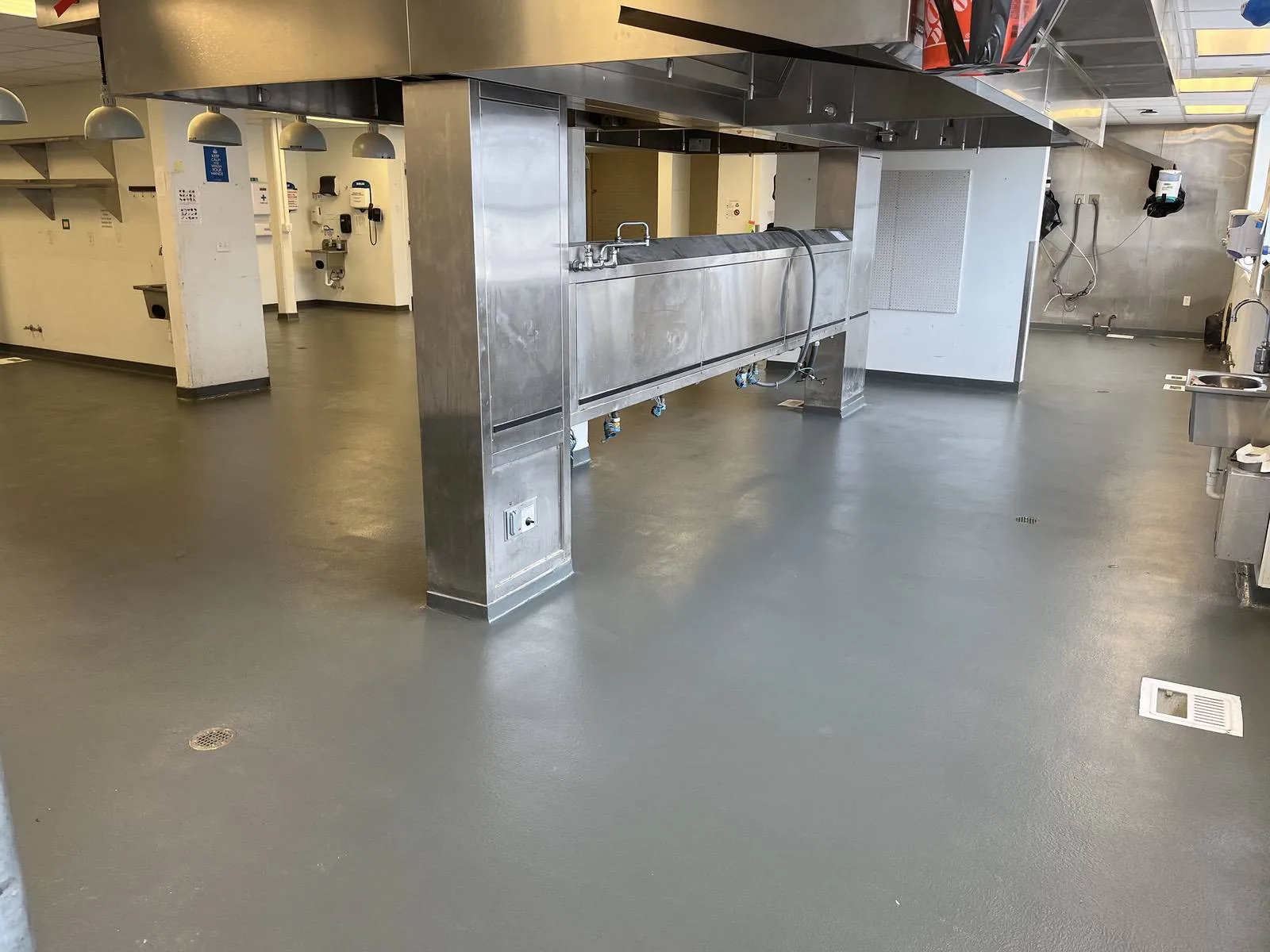
Industrial Flooring
Plants, process areas, shops and support buildings along the river and coast, zoned by use and installed around shutdown windows.
Garage Floor Coatings
Flake, solid color, metallic or polished concrete for home garages, ground first so hot tires and oil never lift it.
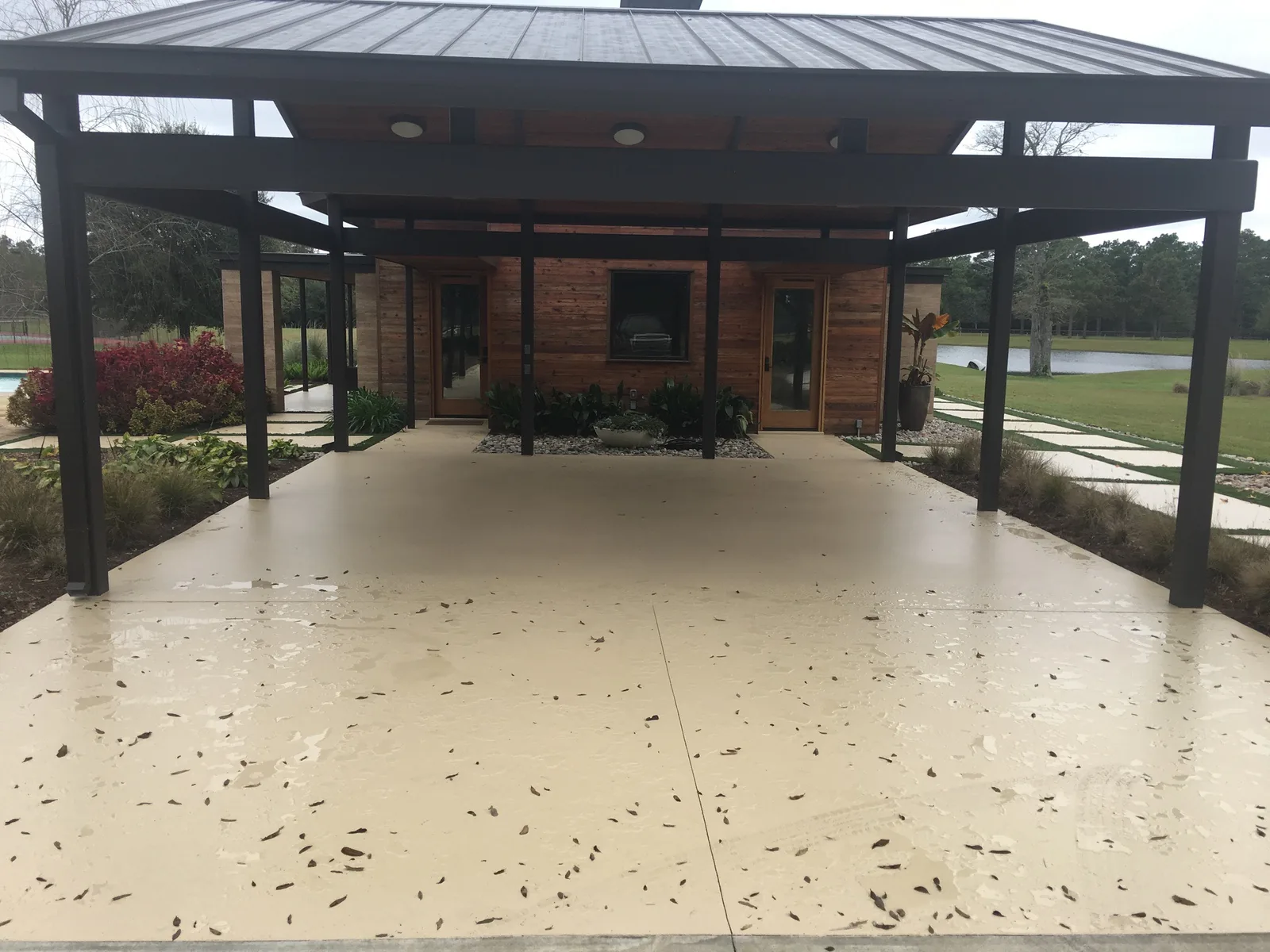
Patio Coatings
Overlays, stamped patterns and stain for covered and open patios and porches, finished with a topcoat that grips in the rain.
How any floor here gets built
The same order on every job, whatever the system.
The finish you actually walk on, matched to the use.
Where the system gets its build: resin, cement or a decorative overlay.
Soaks in and locks the system to the concrete.
Ground or shot blasted until the surface opens up and a coating can bite.
Whatever the slab is, it gets read first: moisture, cracks, old coatings, and how level it sits.
The next towns over
- Zachary
4.7 miles away, East Baton Rouge Parish
- Jackson
8.5 miles away, East Feliciana Parish
- Baker
10 miles away, East Baton Rouge Parish
- Clinton
12 miles away, East Feliciana Parish
More in East Feliciana Parish, on the services page and in the gallery.
Asked and answered
Or send the plans first.
Got a slab question we did not cover? Call.
(504) 231-6298Do you come out to Slaughter?
Yes. Slaughter is about 86 miles northwest of our base in Harvey, inside the roughly 100 miles we cover. Someone comes out, looks at the slab and gives you a price after seeing it.
What should I know about a slab from around 1988?
Find out if it is post-tensioned. We grind only the surface and locate the cables before any cut or anchor.
What works in an older building in a river or plantation-country town?
It depends on what sits under the old floor. Many older slabs have paint, mastic and patches stacked on them, so we grind first and read the concrete. Sound slabs often polish well, and rough ones may need a micro-topping or an overlay.
Can you redo a floor that went under in the 2016 flood?
Yes. We take off whatever was laid over it, grind the slab back to sound concrete and test it for moisture. Cracks, spalls and loose patches get repaired before the new system goes down.
Will your crew work inside a plant with permits and safety orientations?
Yes. Plant and government work comes with site safety rules, and we have worked under a strict safety officer on a government job. Send the scope, the chemical exposure and the shutdown dates, and we will price a system that fits them.
Can you redo a school or clinic floor without shutting the building down for long?
Usually, by phasing the work around the building’s hours or a break. We finished a teaching-kitchen floor for Firstline Schools in New Orleans inside a short summer window, and capital-area jobs get planned the same way. Tell us the dates and we will say straight whether the system fits.
Which details help you put a quote together?
The size of the area, what the floor has to handle and when you need it back. For commercial work, add the specs, the shutdown window and any submittal requirements. From there we come back with a price.
When can I walk on it?
Light foot traffic is typically fine within a day on most coatings, and full cure takes longer. We give you the timing for your system, because urethane cement, epoxy and polished concrete all behave differently.
Should I clean the slab before you arrive?
Sweep it if you like, but the grinder does the real cleaning. Tell us about oil spots, chemical spills or anything soaked into the concrete so we can plan for it.
Is there a best time of year for an outdoor coating?
Spring and fall usually give the most dry days and milder heat. Outdoor work happens in summer too, and we watch the radar and pick days without afternoon storms in the forecast.
Call it in or send the plans
Five minutes on the phone usually tells us whether it is a grind and seal, a coating or a polish.
Send the plans
Facility managers and GCs: send what you have, even a floor plan sketch, and the dates the space can be shut down.