
Resurfacing a driveway that is sound but worn out
If the slab under your car is still in one piece, we can stain and seal it or lay an overlay over it. If it is breaking apart, you need a concrete contractor first, and we will say so.
22 years in businessResidential5.0 on Google from 36 reviews
What it is
The first thing we check on a driveway is whether the concrete is sound. A coating bonds to the concrete under it and moves with it. If your driveway has sunk at the joints, lifted from a tree root or cracked into loose pieces, any coating we put on will crack along with it. That job belongs to a concrete contractor who can tear out and pour. If the slab is sound and just ugly (gray, oil stained, scaled on top, patched in two colors), that is our work.
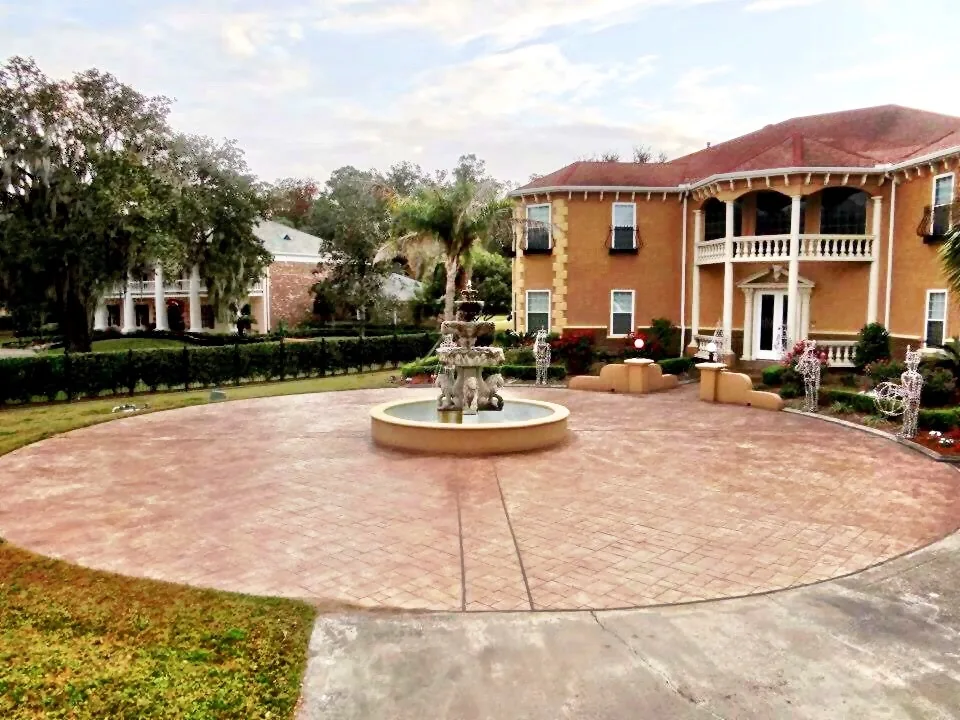
On a sound driveway there are three ways to go. Stain and seal is the lightest: we clean and open the surface, put down a penetrating color, and seal it so the concrete keeps its own texture. A concrete overlay is a thin polymer-modified cement layer troweled or sprayed over the old slab, which buries scaling, patches and mismatched color under one new surface. A stamped overlay is that same layer with a pattern pressed in, so a plain broom-finish driveway can read as slate, brick or stone.
We do not put a glossy garage-style epoxy on an open driveway. Plain epoxy yellows and chalks in direct sun, and a slick finish on a sloped slab in the rain is a fall waiting to happen. Driveway systems stay matte to satin, use UV-stable sealers, and keep some texture underfoot. That is the line between a driveway and a garage: the garage gets the thick gloss floor, the driveway gets something built to sit in the sun. Patios use the same overlay products with more freedom on pattern, since nobody parks a truck on them.
Part of our residential work. See all of it.
Start with the concrete.
What goes down, from the surface you walk on to the slab under it.
If your driveway is breaking up, we will tell you to spend the money on new concrete first, even though that means we do not get the job today.
UV-stable sealer
The surface your tires ride on, picked to stay clear in full sun and keep a little grip when wet.
Stain or overlay
Either a penetrating stain soaked into the old surface, or a polymer cement overlay, stamped or textured, laid over the top.
Clean and profile
Pressure washing and degreasing, crack routing and filling, then grinding or shot blasting so the new material has something rough to grab.
Old driveway slab
Broom-finished concrete with oil spots, surface scaling and hairline cracks but no heaving or loose pieces.
Where it belongs
Faded but sound driveway
Stain and seal brings back color without changing the texture, and it is the quickest of the three to install.
Scaled or patched driveway
A concrete overlay covers flaking surface and mismatched patches with one even finish.
Curb appeal makeover
A stamped overlay in a slate or cobble pattern, often tied in with a matching walkway or front porch.
Sunken, heaved or broken slab
Not a coating job. Call a concrete contractor to replace the bad sections, and we can stain or overlay the new pour after it cures.
How the crew runs it
Five steps, in order.
Walk the driveway
We look at joints, edges and cracks and tap for hollow spots before we tell you whether it is a coating job at all.
Strip the old surface
Oil gets degreased out, old sealers come off, and the slab is ground or blasted to a rough profile.
Fix cracks and edges
Cracks are routed and filled, and broken edges along the apron get rebuilt so the new surface has a clean line.
Color or overlay
Stain goes on in passes until the color is even, or the overlay is laid, textured or stamped, and given time to set.
Seal, then keep off
The sealer goes on last. You can walk on it well before you can drive on it, and we tell you which day.
For the GC or the facility
- Builders and remodelers: new driveway concrete needs a full cure, typically about four weeks, before stain or overlay.
- Cars stay off for several days after the last coat, typically longer in cool or wet weather.
- Stamp pattern and color samples on request, so the owner signs off before the overlay goes down.
Gulf South conditions
South Louisiana sun is the main enemy of a driveway finish. A dark sealer or a cheap acrylic can turn cloudy or peel in sheets after a summer or two of full exposure. We pick sealers built for UV and we steer people toward mid tones, because a very dark driveway also gets hot enough to feel through your shoes.
Rain is the other half. Water runs down a driveway toward the street, so we keep a textured finish that grips when it is wet, and we point out low spots that hold puddles. Heavy rain right after an overlay or sealer goes down can ruin the surface, so we schedule around the forecast, and storms rolling in off the Gulf will push the day. Salt air near the coast also eats at an unsealed surface over time.
Look at the finish.
“Had Extraordinary Flooring do my garage floor and they killed it. Super easy to work with, showed up when they said they would, and got everything done quickly.”
Trevor Garcia, Google review5.0 on Google from 36 reviews
Living with it
Rinse it down and scrub oil drips with a mild degreaser and a stiff nylon brush. Keep the pressure washer on a wide fan and back from the surface, because a tight tip can cut sealer. In full sun, plan to reseal every few years; we can do that for you.
Next to this one
See finished floorsQuestions about driveway coatings
See finished jobs in the gallery, or drop the office a line.
How do I know if my driveway needs replacing instead of a coating?
Look for sections that have sunk or lifted at the joints, cracks you can fit a coin into, and pieces that rock underfoot. Those mean the base underneath has moved. A coating will follow that movement and crack, so the slab needs repair or replacement first.
Will a stamped overlay crack?
An overlay follows the slab under it. Hairline cracks in the old concrete get repaired first, and we carry the control joints up through the overlay so it has a place to move. A sound slab with its joints kept usually stays clean.
Can you put epoxy on my driveway like a garage floor?
We would not. Standard epoxy yellows and chalks in direct sun, and a glossy coat on a sloped driveway is slick in the rain. Stain, overlays and UV-stable sealers are the right products outside.
Can you match the driveway to my walkway and porch?
Yes. The same overlay or stain can run from the street up the walkway to the front porch, and a matching stamp pattern ties it together. We lay out where the pattern changes direction before we start.
Will the sealer make my driveway slippery?
A plain glossy sealer can. We mix a fine anti-slip grit into the final coat on driveways, and the texture of an overlay or stamp gives your shoes something to grip.
How long before I can park on it?
Walking usually comes back first, within a day or so. Cars wait longer, typically several days, depending on the system and the weather. We give you the date when the job is done.
Let’s look at your floor.
Tell us the space, the square footage and what goes on the floor. We will tell you which system fits and when we can start.
General contractors: send drawings, square footage, finish schedule and the window you have. Submittals and samples on request.