
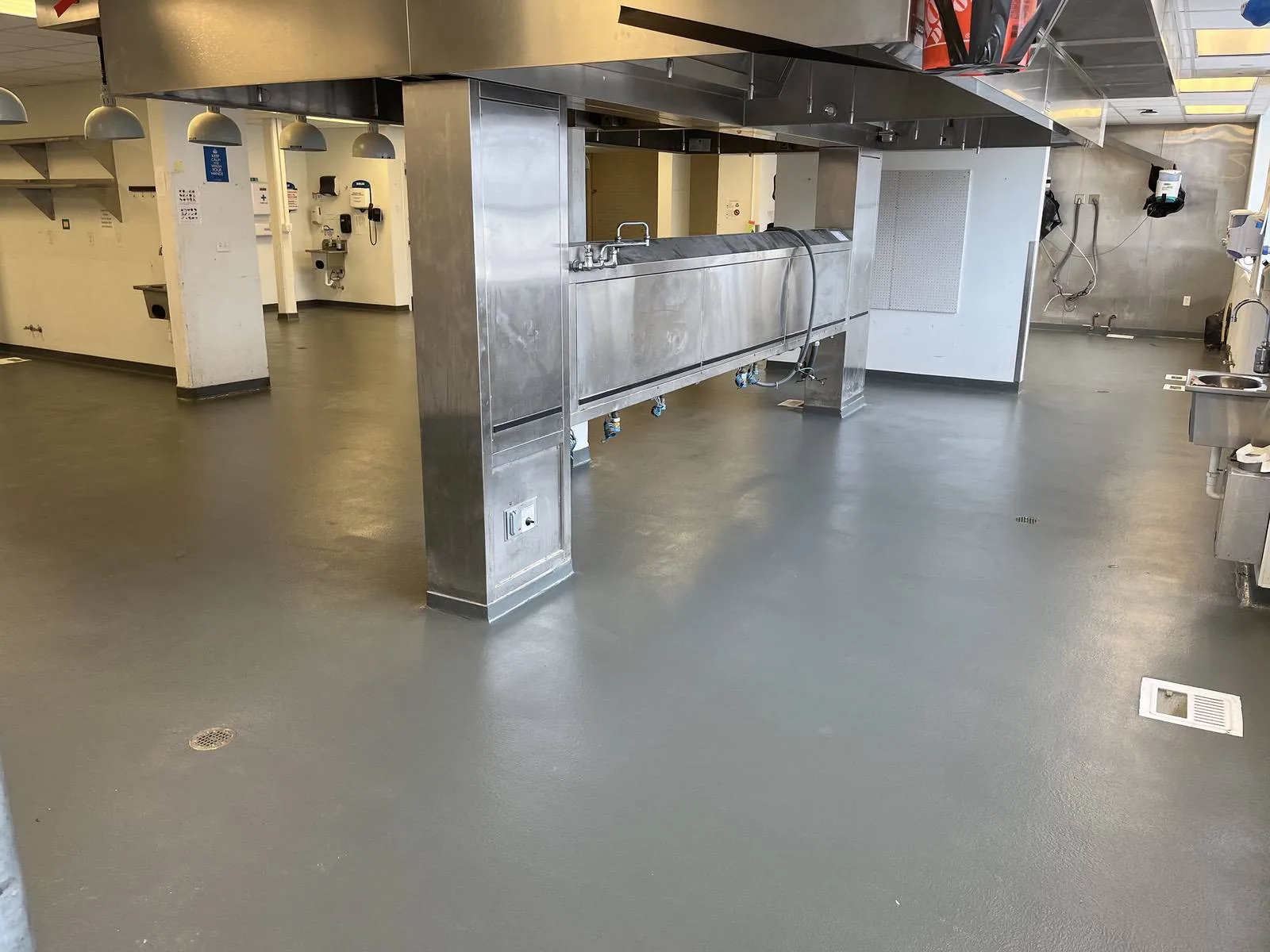
Plant and shop floors that take forklifts and chemicals
Industrial floors get picked by what happens on them: forklift traffic, acid spills, hot washdown, welding slag, steel wheels. Jacob’s crew sorts the plant by area and puts the right system in each one, on your shutdown schedule.
22 years in businessCommercial5.0 on Google from 36 reviews
What it is
A plant floor is several floors at once. The process area takes chemicals and hot washdown. The aisles take forklifts all shift. The maintenance shop takes dropped tools, welding spatter and oil. Battery charging stations see acid, and loading docks see blown-in rain and pallet jacks with grit in the wheels. The control room or electronics bench may need a static-control floor. A wash bay and a break room do not need the same floor. Putting one system across all of it wastes money in the easy rooms and fails early in the hard ones, so we zone the building and spec each area on its own.
That is the difference from a coating chosen off a chart. Epoxy Flooring is a single system: what it is made of and how it goes down. Industrial Floor Coatings is the family (epoxy, urethane, urethane cement, ESD) and how those compare on paper. Read those for the chemistry and this one for where it goes. In a working plant those choices get made against the forklifts, the chemical list and the shutdown date you actually have.
These floors sit in food processing plants, fabrication shops, port warehouses and the support buildings around refineries and shipyards along the river and coast. We put non-slip floor coating down at a food plant off Gentilly Road in New Orleans, and worked a government project under a strict safety officer. That suits us fine. The crew runs its own safety talks, wears what the site requires and stays inside the barricades it is given, and a crew like that gets asked back.
Part of our commercial work. See all of it.
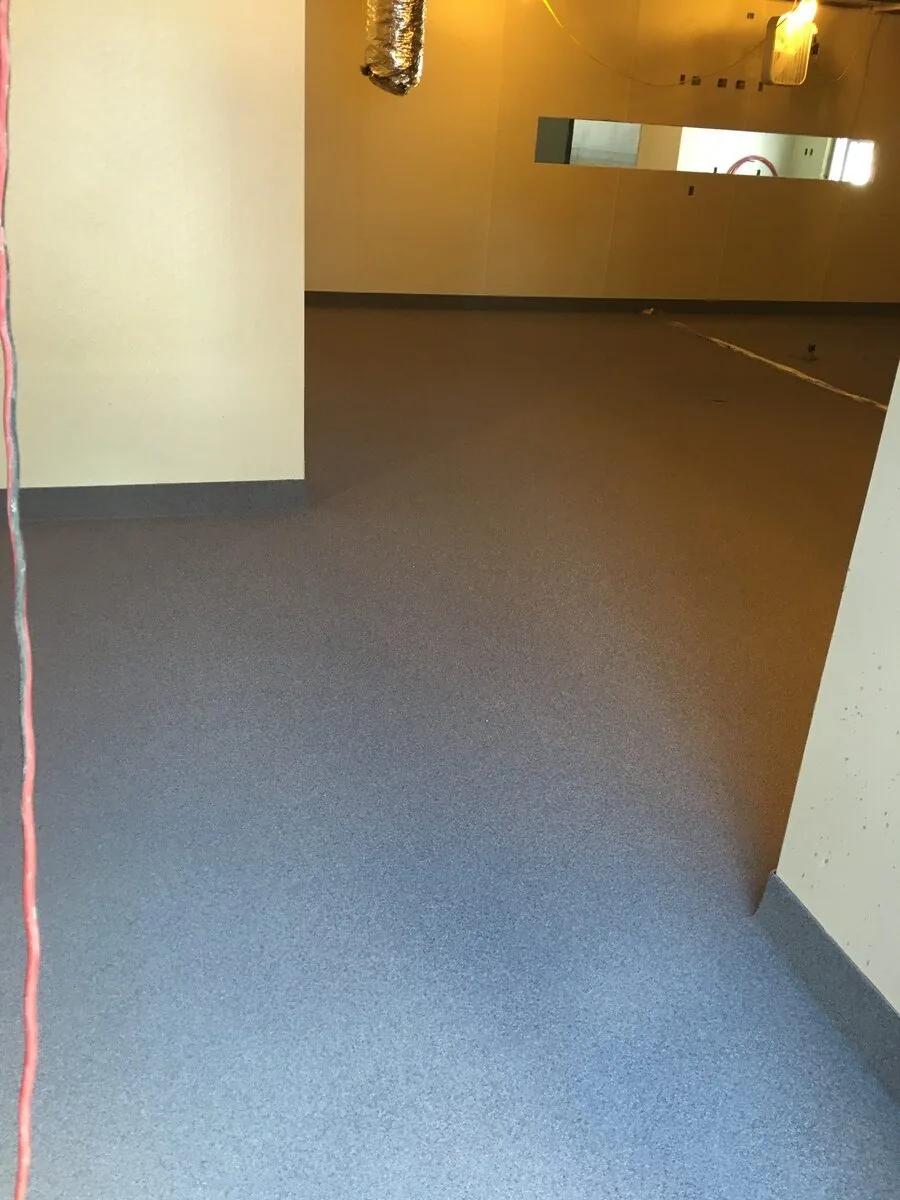
Start with the concrete.
What goes down, from the surface you walk on to the slab under it.
We will not roll a thin warehouse epoxy into a process room to hit a number, because it peels at the first hot washdown and you pay for the floor twice.
Topcoat and color
A chemical-resistant topcoat with the grip each zone needs, and color changes to mark aisles if you want them.
Zoned body coat
Urethane cement in hot and chemical areas, broadcast or troweled epoxy in aisles and shops, ESD where electronics live.
Primer
A penetrating primer, or a moisture-control primer where on-grade slabs read wet.
Prep and repair
Blasting or grinding to each system’s profile, with joints rebuilt and spalls patched so forklifts roll smooth.
Slab as found
Usually an older slab with oil, chemical etching, cracked joints and a worn coating from a past shutdown.
Where it belongs
Process and washdown rooms
Food and chemical process rooms with hot water and sanitizers get urethane cement with a coved base.
Warehouse aisles and docks
Forklift lanes need an epoxy that takes wheel traffic, with joints filled so the edges do not chip.
Maintenance and fab shops
Oil, dropped steel and grinding sparks call for a thick broadcast system that can be patched in place.
Electronics and control rooms
Static-control (ESD) flooring protects sensitive equipment and goes where your electrical people say it belongs.
How the crew runs it
Five steps, in order.
Walk and zone
We walk the plant with your maintenance or safety lead, mark each area by what it sees, and agree on a system per zone.
Plan the shutdown
Work is sequenced into your outage or weekend windows, area by area, so production loses as little time as possible.
Site safety first
The crew goes through your site orientation and works under your permits and lockout rules from day one.
Prep and install
Each zone is blasted or ground under vacuum, repaired and coated with its own system.
Cure and release
We hold each area until the product reaches the cure its data sheet calls for, then walk it with you before forklifts return.
For the GC or the facility
- We price and schedule by zone, so a shutdown can cover the critical areas first and the rest later.
- Submittals, product data, chemical resistance charts and samples are available on request.
- Cure before forklifts is typically longer than cure before foot traffic, and you get both in writing before the outage.
- Tell us what the slab carries now (old coating, oil, chemical damage) so prep is in the price from the start.
Gulf South conditions
Plants along the river and coast run in heat and humidity that never really quits, and many sit on low ground over a high water table. Moisture vapor coming up through those slabs will blister a coating put down without a test, so every zone gets checked and a moisture-control primer goes where the readings call for it. Heat also shortens working time on the mixes, so the crew sizes batches for the temperature that day.
Salt air near the coast and the delta gets into shops and dock areas, and hurricane season can push storm surge or flood water through a plant. After a storm, ruined coatings and silt have to come off before anything new goes down. Dock floors also catch blowing rain, so we give them more texture than an interior aisle.
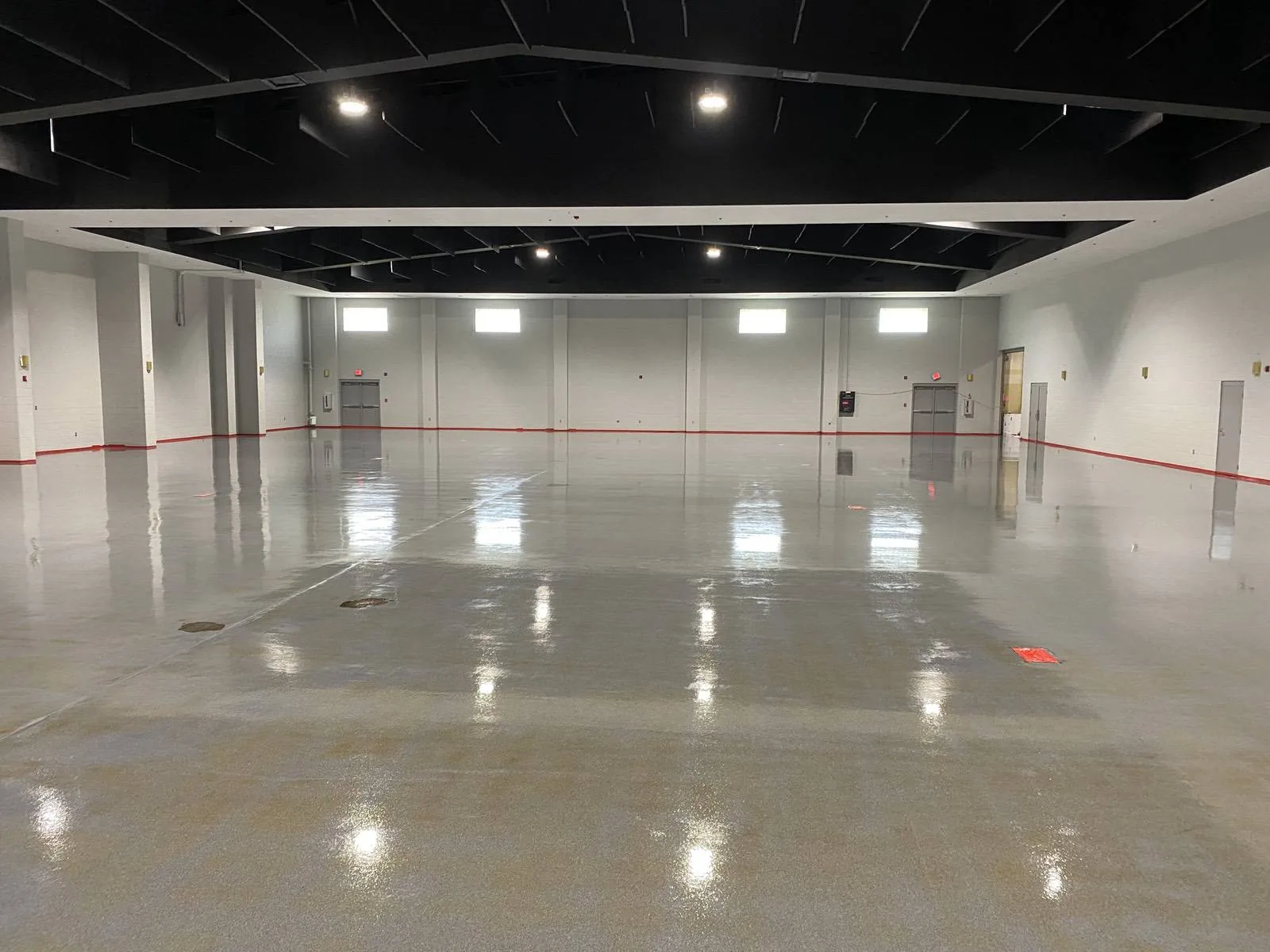
Look at the finish.

“Extraordinary Flooring completed 2 projects for me while I was managing projects for Hilton Worldwide. They were professional, coordinated their work with all operational activities, analytical and proactive when responding to difficult situations.”
Keith Faust, Google review5.0 on Google from 36 reviews
Living with it
Sweep grit off the aisles, since sand under forklift tires grinds a floor down like sandpaper. Clean spills when they happen, acids and solvents first, and scrub with a cleaner the coating maker approves. Keep forklift tires and dock plates in good shape. When a zone gets gouged, call early: a small patch is quick, and a big failure means another shutdown.
Next to this one
See finished floorsQuestions about industrial flooring
See finished jobs in the gallery, or reach the office.
Can you work during a plant shutdown or turnaround?
That is how most industrial floors get done. We plan the sequence before the outage, bring enough crew to hit the window and hand areas back as each one cures. If the window is short, the zones that cannot wait go first.
How do you decide which system goes in which area?
We look at what each area sees: temperature, chemicals, wheel loads, water and impact. Then we match a system to it and show you the product data. Two rooms in the same plant can end up with very different floors.
How is this different from your Industrial Floor Coatings page?
That page compares the coating types themselves. Here the work is laying them out in a working plant around your traffic and schedule. If your engineer already named a product, either page gets you to the same quote.
Does your crew follow site safety programs?
Yes. The crew sits through your orientation and works under your permits, lockout rules and barricade requirements. We have worked a government project under a strict safety officer, and we bring that standard to every site.
Can you put ESD flooring in just part of a plant?
Yes. Static-control floors go in control rooms, electronics benches and anywhere sensitive gear is handled, tied to ground points your electrician confirms. The rest of the building can get a standard system.
Will the floor hold up to forklifts?
A properly prepped system at the right thickness will, and the joints matter as much as the coating. A lot of forklift damage starts at open or broken joints, so we rebuild those before coating. Keeping grit swept does the rest.
Let’s look at your floor.
Tell us the space, the square footage and what goes on the floor. We will tell you which system fits and when we can start.
General contractors: send drawings, square footage, finish schedule and the window you have. Submittals and samples on request.