
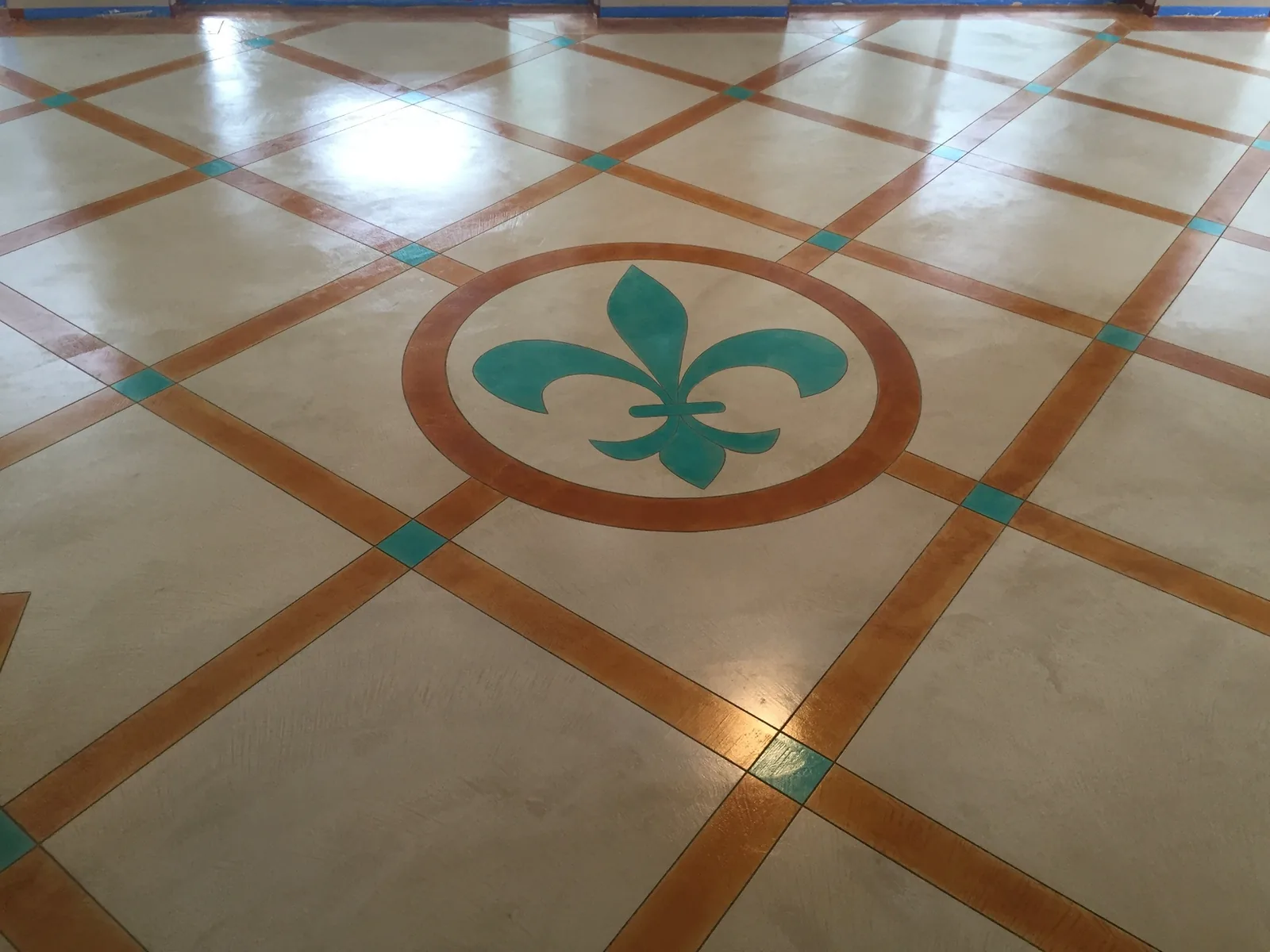
Concrete dye for an even color you can repeat
Dye is a fine colorant in water or solvent that soaks into the slab without reacting, so the color comes out even and repeatable. Much of it goes into polished floors, between grinding passes.
22 years in businessDecorative5.0 on Google from 36 reviews
What it is
On a big commercial floor, the lobby, the corridors and the next phase all have to match the approved sample. That is where dye earns its place. It is a colorant with very fine particles, carried in water or a solvent such as acetone, that soaks into the pores of the slab. Nothing reacts with the slab. The color goes where the carrier takes it, so a dyed floor reads as one even color from wall to wall, with only the natural character of the concrete showing through.
Next to acid stain, the difference is plain. Stain reacts chemically with the lime in the slab and gives a mottled, variegated finish in a limited range of earth tones. Dye does no reacting, so it gives even color in almost any shade, including black, charcoal, deep blue and red. Stain gives you movement. Dye gives you control. The tradeoff is sunlight: many dyes fade under strong UV, so dye mostly lives indoors, and stain is the better pick for an exterior slab.
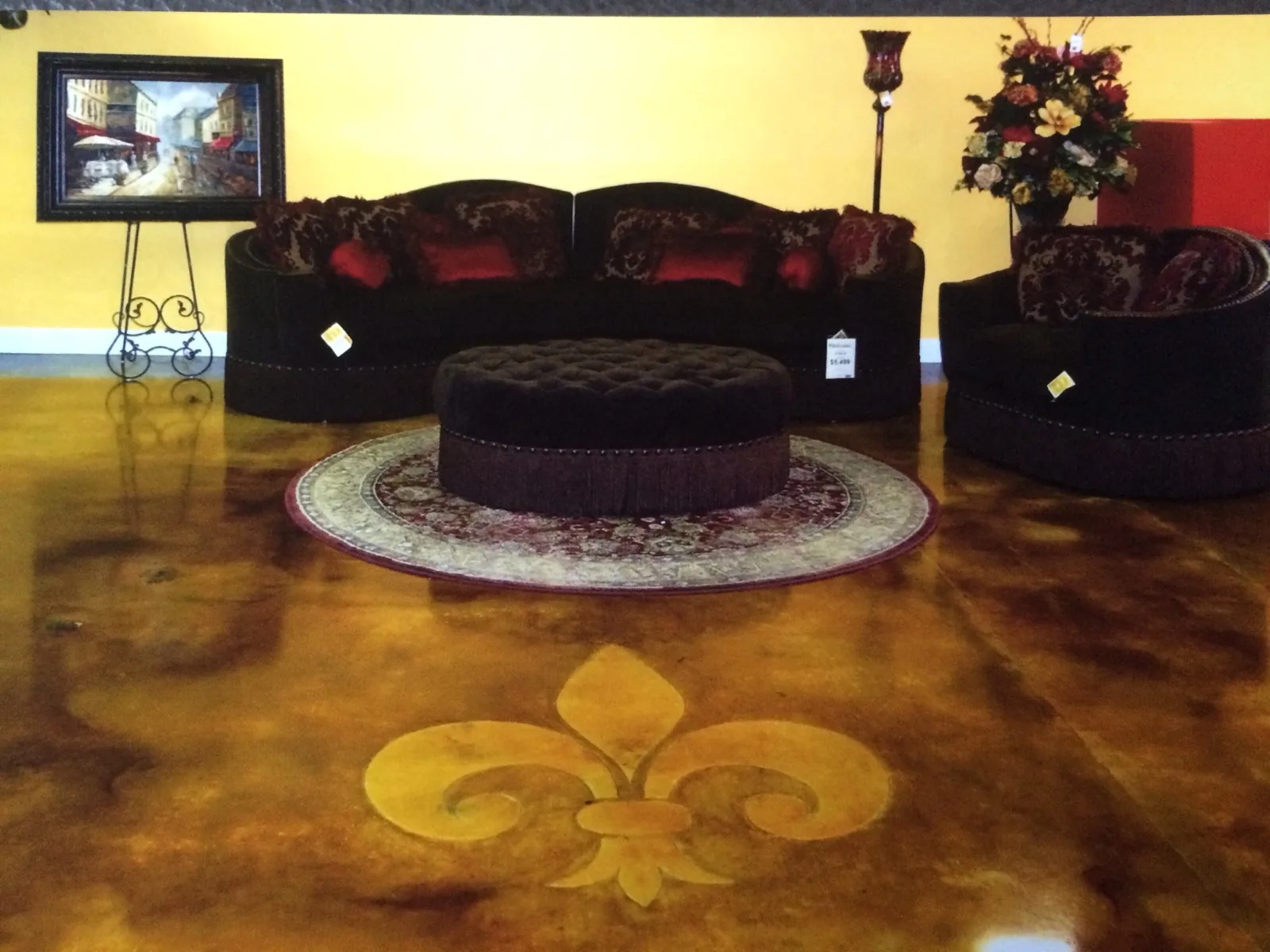
A lot of the dye we put down goes into polished concrete. We grind to the profile we want, put the dye down between grinding and polishing passes, then lock it in with densifier and polish up to the sheen. Dye also works on a ground and sealed floor, for logos, borders and color-coded zones in plants and schools. Homeowners use it on interior slabs when they want a clean, modern color without the mottle. Jacob’s crew treats dye as part of the polish, so the same people run the grinder and the sprayer.
Part of our decorative work. See all of it.
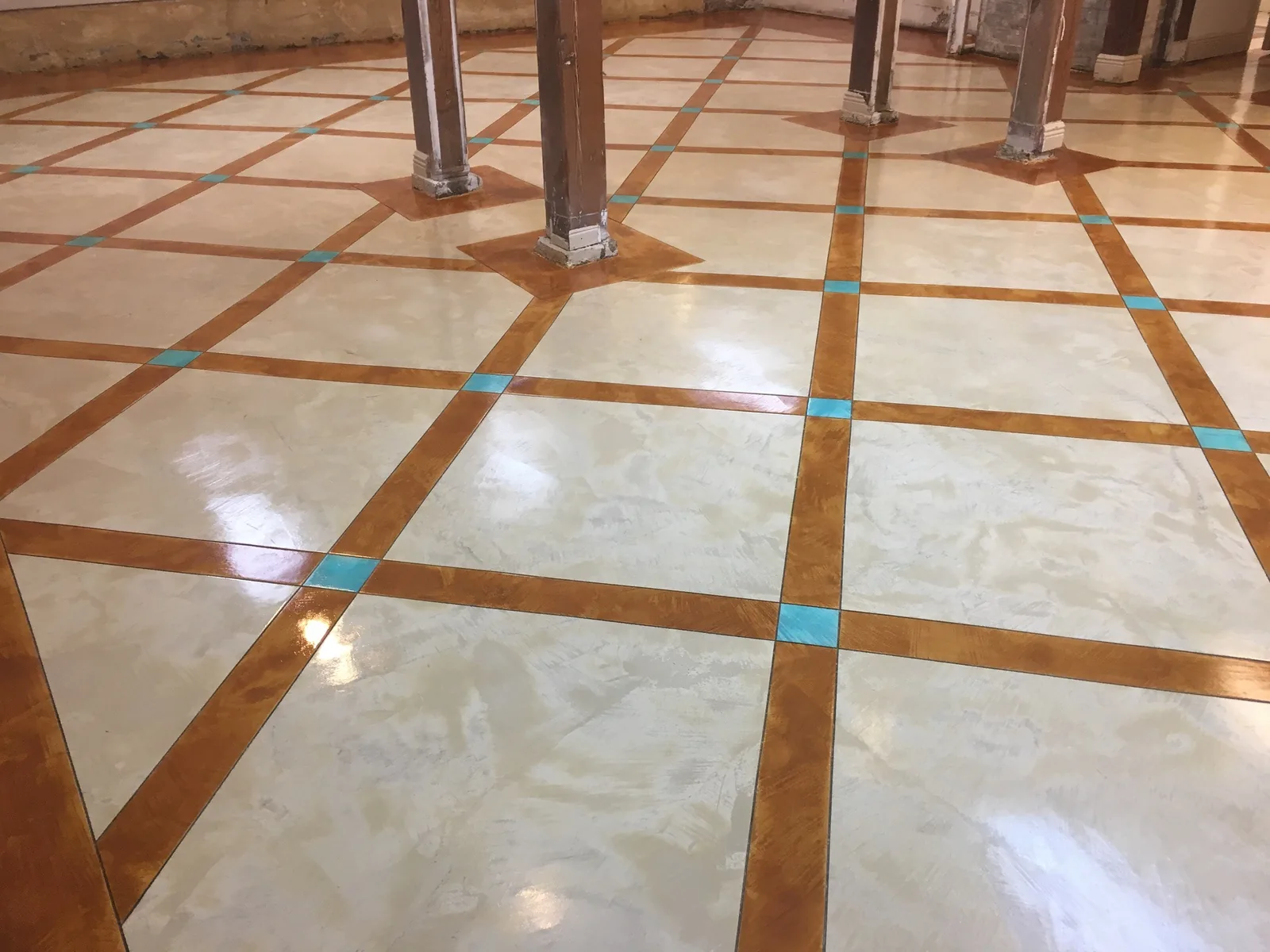
Start with the concrete.
What goes down, from the surface you walk on to the slab under it.
We will not put a standard dye on a floor that sits in full afternoon sun, because it will fade in patches and the owner will blame the floor.
Polish and guard
Finer diamond passes bring up the sheen, and a burnished stain guard is the surface you walk on.
Silicate densifier
A lithium or sodium silicate hardens the surface and helps hold the color in place.
Dye coats
Water or solvent dye sprayed and worked in, often two passes for depth, with stencils or saw cuts for borders and logos.
Ground surface
Diamond grinding opens the slab to an even profile so the dye takes the same everywhere.
Slab as found
New or existing concrete, with any coating, sealer or curing compound identified, since dye only goes where the pores are open.
Where it belongs
Retail and office lobbies
Big floors that have to match a sample, then match again when the next phase opens.
Schools and healthcare
Color-coded corridors, wayfinding bands and logos set into a polished floor, with no coating to peel or patch.
Restaurants and showrooms
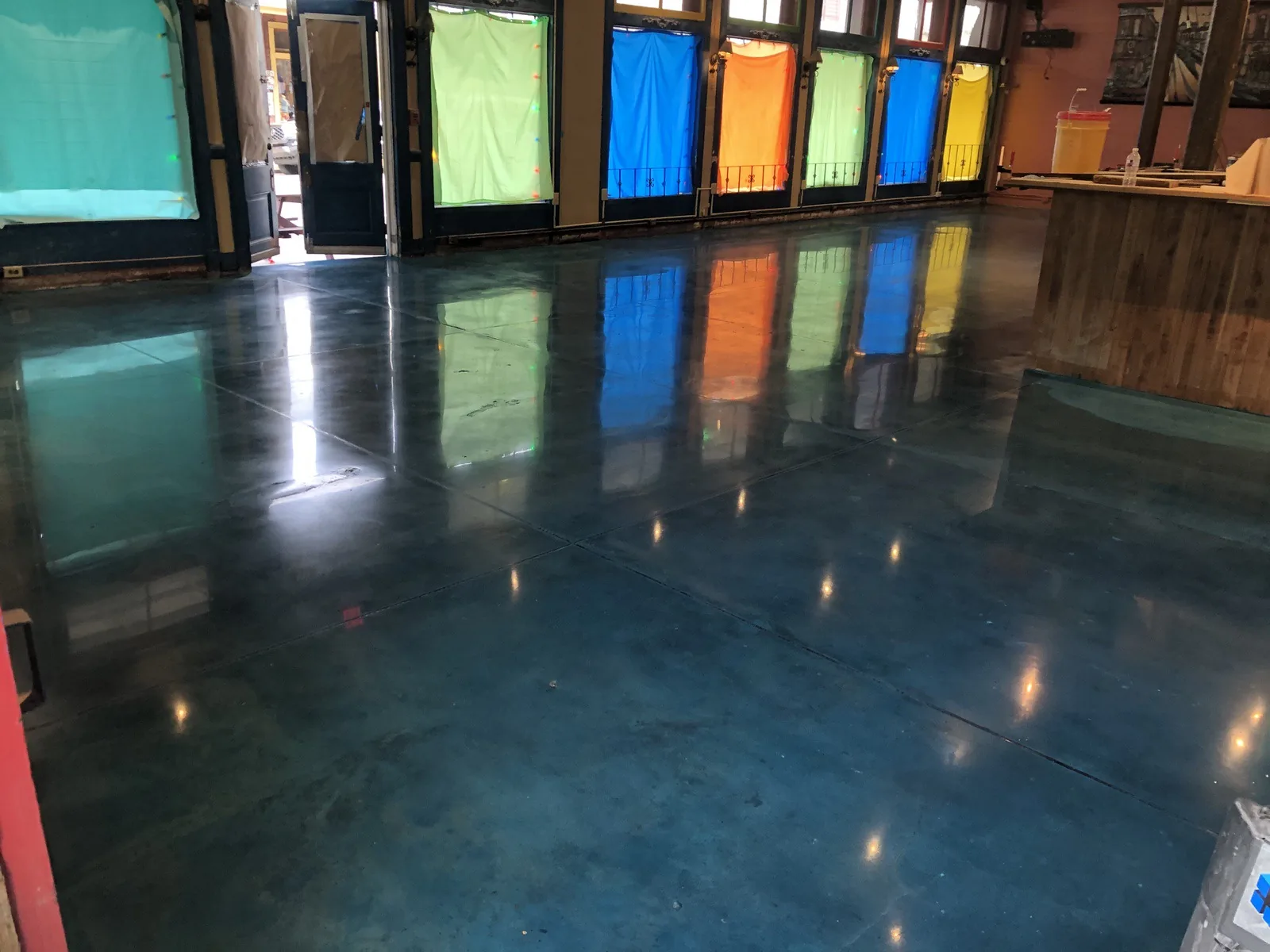
Charcoal or black polished floors under bright lighting, a color acid stain cannot produce.
Interior home slabs
Living areas and kitchens for owners who want the concrete as the floor, in one clean color without the mottled look.
How the crew runs it
Five steps, in order.
Approve the color
We make samples on your slab or a matching panel, because the same dye looks different on every concrete mix.
Grind and clean
The crew grinds to an even profile and vacuums the dust off, so nothing blocks the dye.
Dye in passes
Dye goes on by sprayer and gets worked in with a pad, with masking and stencils for borders, logos and zones.
Densify and polish
Densifier goes on after the dye, then the floor is polished up through the grits to the sheen on the spec.
Guard and hand over
A stain guard is burnished in, and we walk the floor with you before traffic goes back on.
For the GC or the facility
- Dye and polish get scheduled together, once the slab can be ground and the walls are up.
- Color samples, product data and an on-site mockup for approval, on request.
- Protect the slab from framing until we grind. Tape, paint and oil stains can show through dye.
- Solvent dye needs ventilation and no open flame, so occupied buildings usually get water-based dye.
Gulf South conditions
Sun is what fades most dye. A dyed floor beside a wall of glass, a west-facing storefront or a sunroom will lighten where the light lands, so we steer those spots to a UV-stable dye or to acid stain, and we keep standard dye off exterior slabs. Blinds or UV film on that glass help a dyed floor hold its color for years.
Moisture is the other problem. On-grade slabs here pull vapor up from a high water table, and water-based dye on a sweating slab can wick unevenly and leave blotches. We check the slab, run dehumidifiers in a closed building when we have to, and pick water or solvent dye for the conditions that day. After flood cleanup, a slab has to dry out completely before any color goes down, or old tide lines can show through the dye.
Look at the finish.
“The craftsmanship and attention to detail really show. They were professional, punctual, and kept the work area clean throughout the project.”
Hang Pham, Google review5.0 on Google from 36 reviews
Living with it
Dust mop daily, because grit is what dulls a polished floor. Wash with a neutral pH cleaner, using an auto-scrubber on commercial floors. Keep acidic and high-pH cleaners off it, since they eat the guard and dull the shine. Have the guard refreshed when the traffic lanes lose their sheen.
Next to this one
See finished floorsQuestions about concrete dyeing
See finished jobs in the gallery, or drop the office a line.
How is concrete dye different from acid stain?
Acid stain reacts with the slab and leaves mottled, earthy color. Dye does not react, so the color is even and comes in a much wider range, including black and bright shades. Stain holds up better in sun, and dye is the one to pick for a color you need to repeat.
Will dyed concrete fade?
Indoors and out of direct sun, it holds well. Many dyes fade under UV, so sunny spots get a UV-stable dye or a different system. The guard on top helps, but it will not stop strong afternoon sun through glass.
Can you dye a floor that is already polished?
Usually, but the floor has to be ground back far enough to open the surface, which means redoing part of the polish. Dustin can look at it and tell you whether that makes sense or whether a new guard is all it needs.
Can dye do logos and more than one color?
Yes. With stencils, saw cuts and masking we can set logos, borders and color zones into one floor. Each color goes on separately, so more colors means more time on site.
Water-based or solvent dye: which is better?
Solvent dye gets in fast and dries quickly, but it needs ventilation and nothing burning nearby. Water-based dye has less odor and suits occupied buildings, though it is touchier on a damp slab. We pick by the slab, the space and who is in the building that week.
Will the color match across phases of a project?
Dye repeats far better than stain, and we record the product, mix and number of passes for each area. Concrete still varies a little from pour to pour, so we sample on the new slab before color goes down.
Let’s look at your floor.
Tell us the space, the square footage and what goes on the floor. We will tell you which system fits and when we can start.
General contractors: send drawings, square footage, finish schedule and the window you have. Submittals and samples on request.