
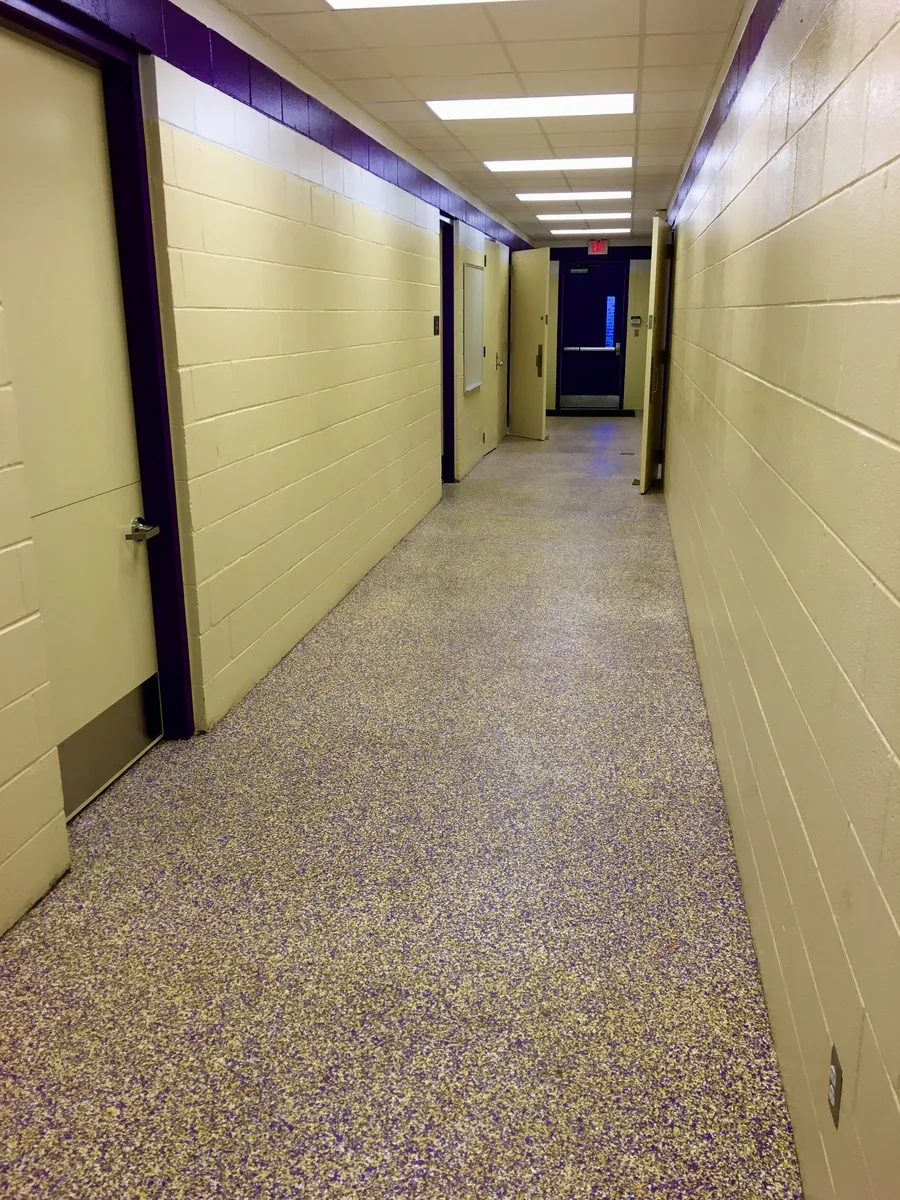
Floors that keep their grip when they get wet
Aggregate-loaded topcoats and textured resin systems for wet kitchens, ramps, restrooms and pool surrounds, built so the texture is part of the coating and wears with it.
22 years in businessCoatings5.0 on Google from 36 reviews
What it is
A smooth resin floor is fine dry. Add grease, water, soap or a freshly mopped floor nobody coned off, and it turns into a rink. Slip-resistant systems put texture into the resin itself: aggregate like aluminum oxide or silica broadcast into the body coat or mixed into the topcoat, so it wears with the floor instead of peeling off like a stick-on strip. We put it where people fall: commercial kitchens, school and hospital restrooms, entry ramps, walk-in coolers and the concrete around pools.
The texture is a dial, and we set it for the room. A restaurant line with grease on the floor all night needs more bite than a school restroom. Restrooms get a finer grade so they still look clean. A pool surround needs grip for bare feet without feeling like sandpaper. Ramps need the most. The trade-off is cleaning: the more texture, the harder the floor is to mop, so we go as coarse as the room needs and no coarser. Tell us who walks it and in what shoes.
Flake epoxy is the twin people mix up with this one. A full flake broadcast does add some texture, and with a grit additive in the clear topcoat it can be made safer for a garage or a showroom. Flake still gets picked for looks first. A slip-resistant system gets picked for grip first, usually in a solid color, and it can go on top of a sound coating that has turned slick. That recoat is often the quickest fix for an older epoxy kitchen floor. If your floor is wet every day, start here.
Part of our coatings work. See all of it.
Start with the concrete.
What goes down, from the surface you walk on to the slab under it.
A little grit stirred into a thin clear coat is not a slip-resistant floor, and we will not sell it as one.
Locking topcoat
A final coat rolled over the grit to lock it down, so the texture stays put under traffic and scrubbing.
Aggregate broadcast
Aluminum oxide or silica seeded into the wet coat at the grade the room calls for.
Primer and body coat
Epoxy or urethane built up thick enough to hold the aggregate without it punching through.
Profile
Ground or shot-blasted concrete, or a sanded and cleaned old coating, so the new layers have something to bite.
Slab or old floor
Bare concrete or an existing coating that is still bonded but has gone slick.
Where it belongs
Commercial kitchens
Grease, water and dropped food under the line all shift long. This is where the coarser grades earn their keep.
Ramps and entries
Rain blows in, shoes track it across, and a sloped floor gives nobody a second chance.
Restrooms and locker rooms
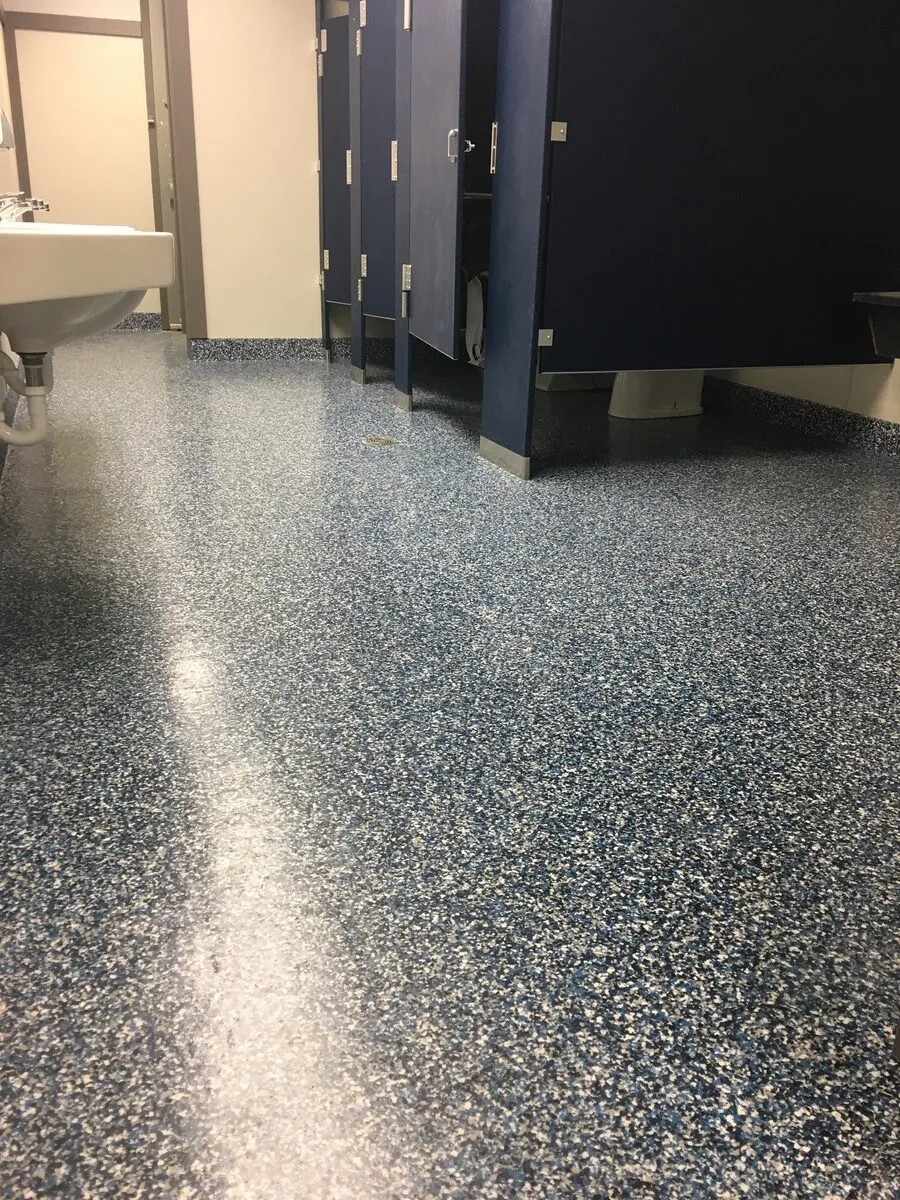
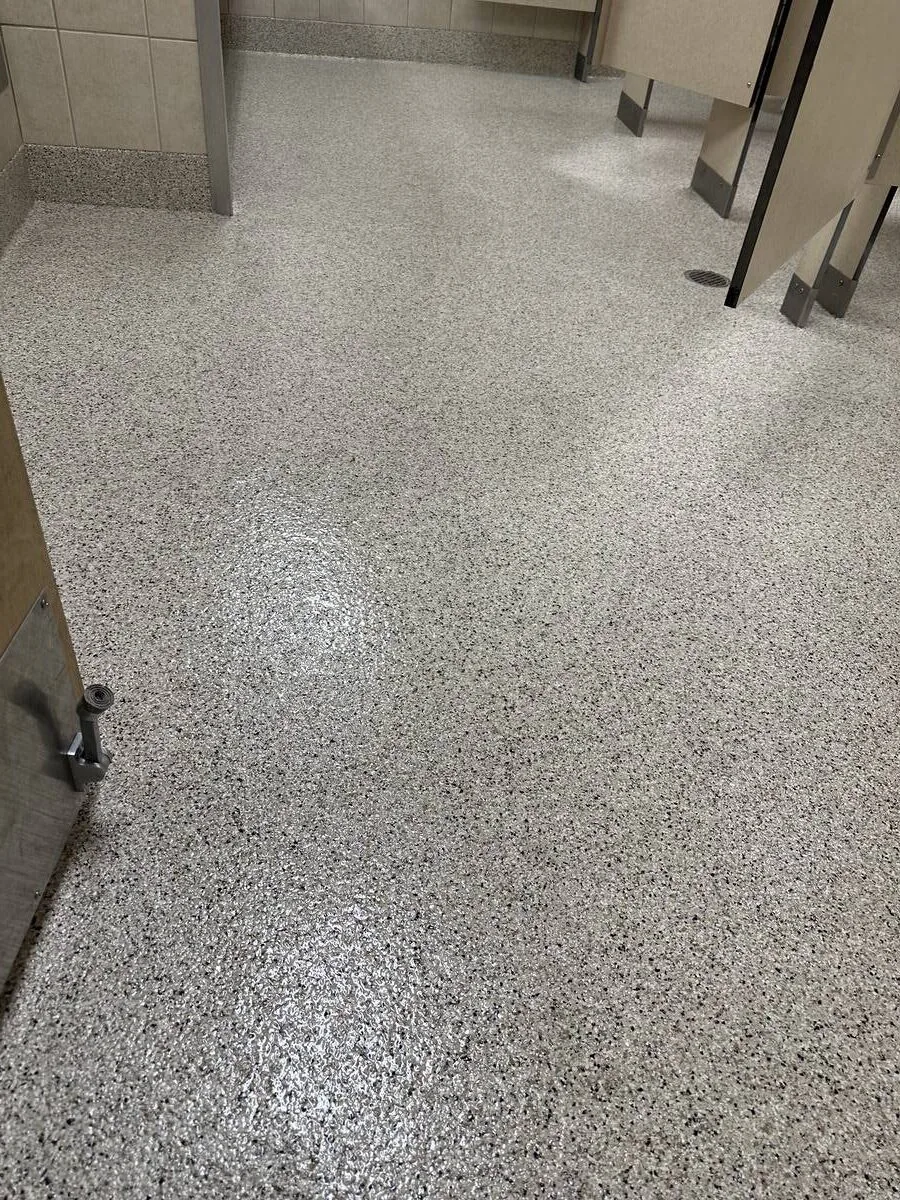
A finer texture that still mops clean, with cove base so water stays out of the wall line.
Pool surrounds
Bare feet, chlorinated water and hard sun. The coating needs a grip that does not scrape skin and a topcoat that holds up to UV.
How the crew runs it
Five steps, in order.
Find the slip
We look at where people actually slide, what gets on the floor there and what shoes they wear.
Pick the grade
A sample board or test patch shows the texture before the whole floor goes down, so you can walk it and mop it.
Prep the surface
Concrete gets ground or blasted to profile, and an old coating gets degreased and sanded until the new coat can bond.
Broadcast the grit
Aggregate goes into the wet body coat evenly, edge to edge, so there are no slick patches where the throw got light.
Lock and cure
The topcoat goes over the texture to seal it in, and the floor cures before the kitchen staff and their mops come back.
For the GC or the facility
- Typical kitchen jobs run overnight or over one or two closed days, depending on the system and the size of the floor.
- Sample boards in the grades we propose come with the submittals on request, so the owner can feel the texture before signing off.
- If a slip-resistance value is in the spec, send it with the drawings and we will match the system to it.
- Equipment has to come out or be lifted, and floor drains need to be clear so the coating can finish into them.
Gulf South conditions
Humidity is the hidden slip hazard down here. On a muggy morning a cool slab sweats, and a floor that was dry at close is wet at open without anyone spilling a thing. Walk-in coolers and freezer doors do the same all day as warm air hits cold concrete. Older buildings with slabs poured right on grade feel it the most. Texture is the fix, since nobody mops condensation away faster than it forms.
Heavy rain means wet shoes at every entrance for months at a time, and ramps catch the worst of it. Outside, the Gulf sun bakes pool decks and patios, so exterior jobs get a UV-stable topcoat, since plain epoxy chalks and yellows in the sun, and usually a lighter color that stays cooler underfoot. After a storm, a textured coating scrubs clean once the mud is hosed off.
Look at the finish.
“What set them apart was that they offered the product I actually wanted, not what was quickest or easiest for them.”
Jason Lagneaux, Google review5.0 on Google from 36 reviews
Living with it
Scrub with a deck brush or an auto-scrubber and a degreaser the coating can handle, then squeegee to the drain. A string mop drags grease into the texture and leaves it there. Check the busiest paths now and then, and when the grit wears smooth, a fresh textured topcoat brings the grip back.
Next to this one
See finished floorsQuestions about slip-resistant floor coatings
See finished jobs in the gallery, or write to the office.
How rough will the floor feel?
As rough as the room needs. A kitchen line might get a coarse grade you can feel through a shoe, while a restroom or pool deck gets a finer one that is easier on bare feet.
Is this the same as flake epoxy?
No. Flake epoxy is a decorative system that can be given some grip with an additive in the topcoat. A slip-resistant coating is built around the texture from the body coat up, so it holds more grip for longer on floors that are wet every day.
Our epoxy floor has gotten slick. Do we have to tear it out?
Often not. If the old coating is still bonded, we degrease it, sand it and lay a textured topcoat over it. If it is peeling or soft, it comes off first, because new texture on a failing floor fails right along with it.
Is it hard to keep clean?
It takes more than a damp mop. Textured floors clean best with a stiff deck brush or an auto-scrubber and a squeegee, which pulls grease out of the low spots instead of spreading it around.
Does it work outside on a pool deck?
Yes, with a UV-stable topcoat and a finer grade that grips bare feet without scraping them. Lighter colors run cooler in full sun. If the deck holds standing water, that gets dealt with first, because a coating will not change the slope.
How soon can the kitchen reopen?
With a fast-cure system, often the next day. Standard epoxy needs longer before carts and hot water hit it, and cool weather slows everything down. We set the schedule with you before we start.
Let’s look at your floor.
Call with the address and what the floor has to survive. Someone will come look at the slab before anybody talks price.
Bidding a job? Send the plans and the schedule. We price from drawings and walk the slab before we commit to a date.