
We bring the grinders to Lafourche Crossing
Our trucks run 43 miles west of Harvey to reach Lafourche Crossing. Once there, the first job is reading the slab: old sealers, glue, cracks and how much moisture it pushes up through the surface.
Lafourche Crossing, Lafourche Parish, Louisiana.
Lafourche Crossing by the numbers
Housing figures from the US Census.
Half the homes in Lafourche Crossing are older than about 1990 and half are newer, according to the Census. Tile set on thinset covers a lot of 1990s kitchens and baths. Removing it is loud, dusty work, and we run dust collection on the grinders the whole time.
What is left once the mortar is gone is usually a good, flat slab.
Stand-alone houses make up the bulk of it, roughly 91%. A place made up mostly of houses has a lot of garage floors, and garage floors are where cheap coatings fail first. We grind them and build a flake or solid epoxy that can take hot tires.
We read those numbers the way we read a slab: they say whether to expect garages, rentals or commercial floors before we drive out.
A floor in Lafourche Crossing has to handle a high water table pushing moisture into on-grade slabs, on top of the humidity that comes with living among bayous and marsh. Around Lafourche Parish, the floor work is mostly this: shipyard and fabrication floors down the bayou, oilfield shops near Fourchon, and homes and schools from Thibodaux to Cut Off.
The work here runs on oilfield service, shipyards, boat builders and seafood, plus the shops, warehouses and offices behind them, from Houma and Thibodaux down toward the coast.
Rain and curing times
Bayou Lafourche and Terrebonne.
Lafourche Crossing is in Lafourche Parish, about 43 miles west of the shop.
Hurricane Ida came ashore at Port Fourchon in 2021 and ran north through these parishes, and surge has reached the lower bayou towns many times before that. Floors in flooded buildings need the old finish stripped and the contamination ground out. Cracks and joints get repaired, and the slab has to dry and pass a test before anything new goes on. Rushing a coating onto a wet, dirty slab after a storm is a reliable way to pay for the floor twice.
In a shop or yard near Lafourche Crossing, pick a troweled or heavy broadcast system, because welding spatter and dropped parts chew through thin coatings fast.
Run cove base and sealed joints in kitchens and seafood rooms, because water left standing where the floor meets the wall is where bacteria and failures start.
Test slab moisture before any coating goes down, since the high water table under bayou country will find any primer that was not built for it.
Matching the system to the space
Garage Floor Coatings
Flake, solid color, metallic or polished concrete for home garages, ground first so hot tires and oil never lift it.
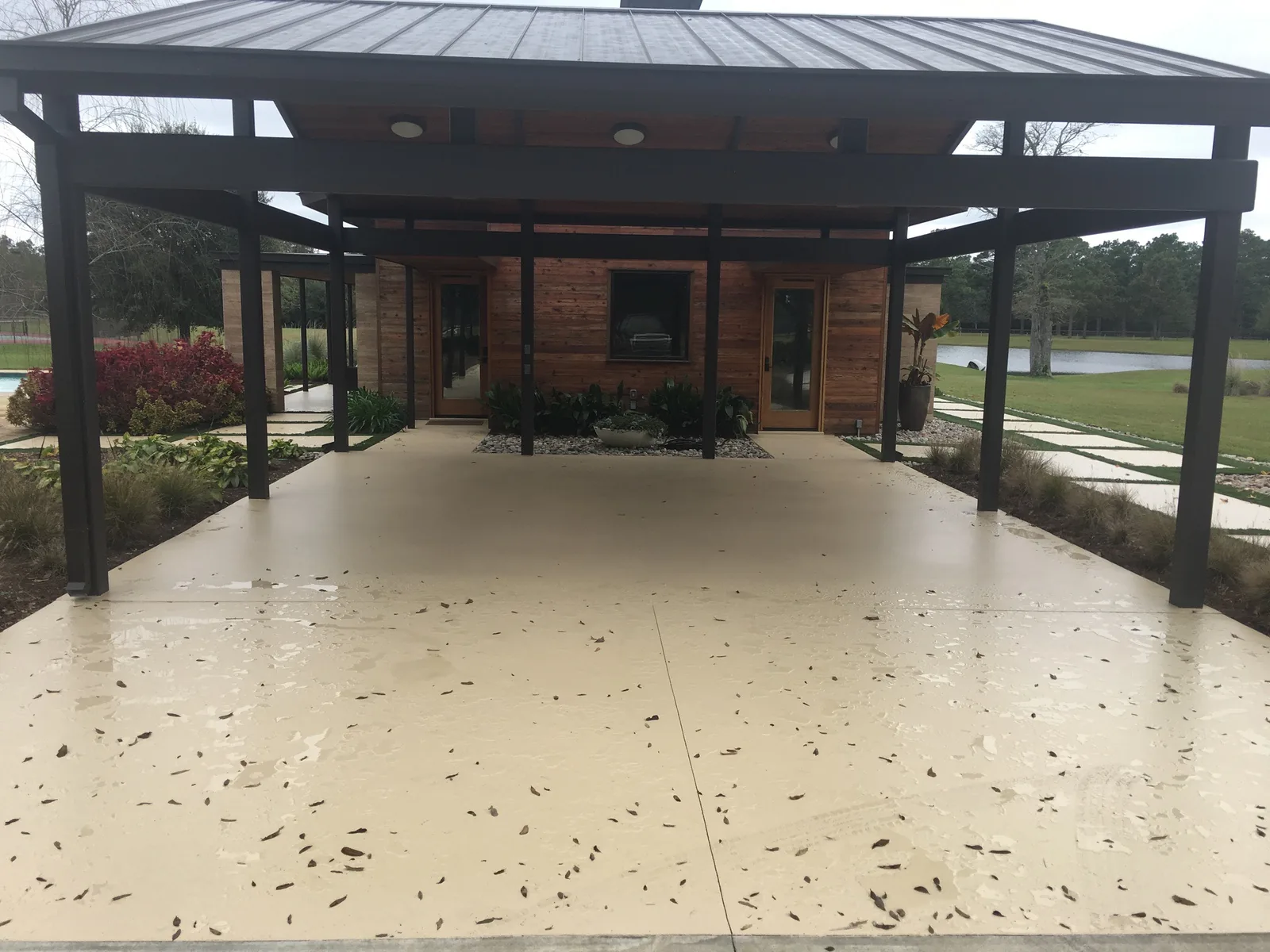
Patio Coatings
Overlays, stamped patterns and stain for covered and open patios and porches, finished with a topcoat that grips in the rain.
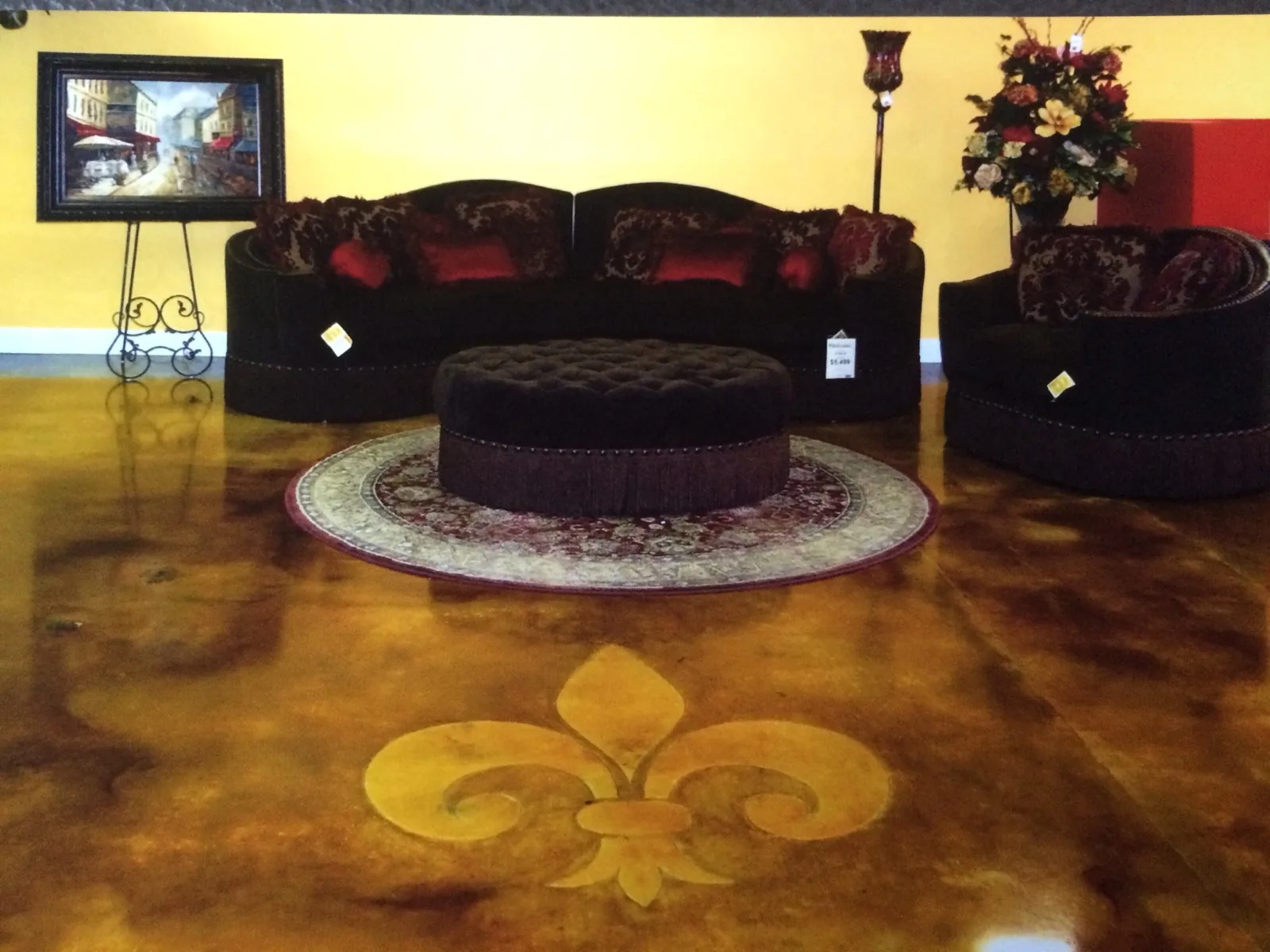
Concrete Staining
Reactive acid stain that gives a slab mottled, variegated color, scored or stenciled if you want a pattern, then sealed.
How any floor here gets built
The same order on every job, whatever the system.
The finish you actually walk on, matched to the use.
Where the system gets its build: resin, cement or a decorative overlay.
Soaks in and locks the system to the concrete.
Ground or shot blasted until the surface opens up and a coating can bite.
Whatever the slab is, it gets read first: moisture, cracks, old coatings, and how level it sits.
The next towns over
- Bayou Country Club
1.4 miles away, Lafourche Parish
- Thibodaux
3.3 miles away, Lafourche Parish
- Schriever
4.8 miles away, Terrebonne Parish
- Choctaw
6.1 miles away, Lafourche Parish
More in Lafourche Parish, on the services page and in the gallery.
Questions about floors in Lafourche Crossing
Or send the plans first.
Rather ask a person? The office picks up.
(504) 231-6298Do you come out to Lafourche Crossing?
Yes. Lafourche Crossing is about 43 miles west of our base in Harvey, inside the roughly 100 miles we cover. Someone comes out, looks at the slab and gives you a price after seeing it.
What should I know about a slab from around 1990?
Garage slabs from that decade often have hot-tire marks in an old sealer. We grind through the sealer and use a primer that bonds to bare concrete.
Can you redo a floor after storm flooding?
Yes, once the slab has dried and been tested. We grind off the old finish and contamination, repair cracks and spalls, then install the new system. If the building is waiting on other repairs, we fit the floor into that schedule.
What floor works in a shipyard or fabrication shop?
A thick system over a shot-blasted slab, such as troweled epoxy, urethane cement or a heavy broadcast build. These take impact, heat and oil that would wreck a thin coating. We size the thickness to what gets dropped and dragged across the floor.
How long before people and trucks can use a new floor?
It depends on the system and the temperature. Foot traffic often comes the next day, while vehicles and heavy loads usually wait several days for a full cure. We give you the actual times for the product we install.
Why do garage floor coatings peel in bayou country?
Moisture coming up through the slab is the usual cause, along with poor prep. Water vapor pushes on a coating from below until it lets go. We grind the slab and test moisture first, then use a primer rated for the readings.
How should the floor look when Dustin arrives?
Clear enough to see bare concrete in a few spots. If the slab is under carpet or tile, pull back a corner where you can. Ten seconds of looking at the real surface tells us more than any description.
Will the whole floor be out of service at once?
Not always. Larger floors can be done in sections so part of the building stays open, with the order planned around traffic. It takes longer overall, and nobody has to shut down completely.
Do I need to remove the old flooring myself?
No. Pulling carpet, tile or glue is part of our prep, and it is priced in. Some owners pull carpet themselves to save time, which is fine as long as the tack strips and pad come up too.
Is there a best time of year for an outdoor coating?
Spring and fall usually give the most dry days and milder heat. Outdoor work happens in summer too, and we watch the radar and pick days without afternoon storms in the forecast.
Start with the slab
Tell us the space, the square footage and what goes on the floor. We will tell you which system fits and when we can start.
Send the plans
General contractors: send drawings, square footage, finish schedule and the window you have. Submittals and samples on request.