
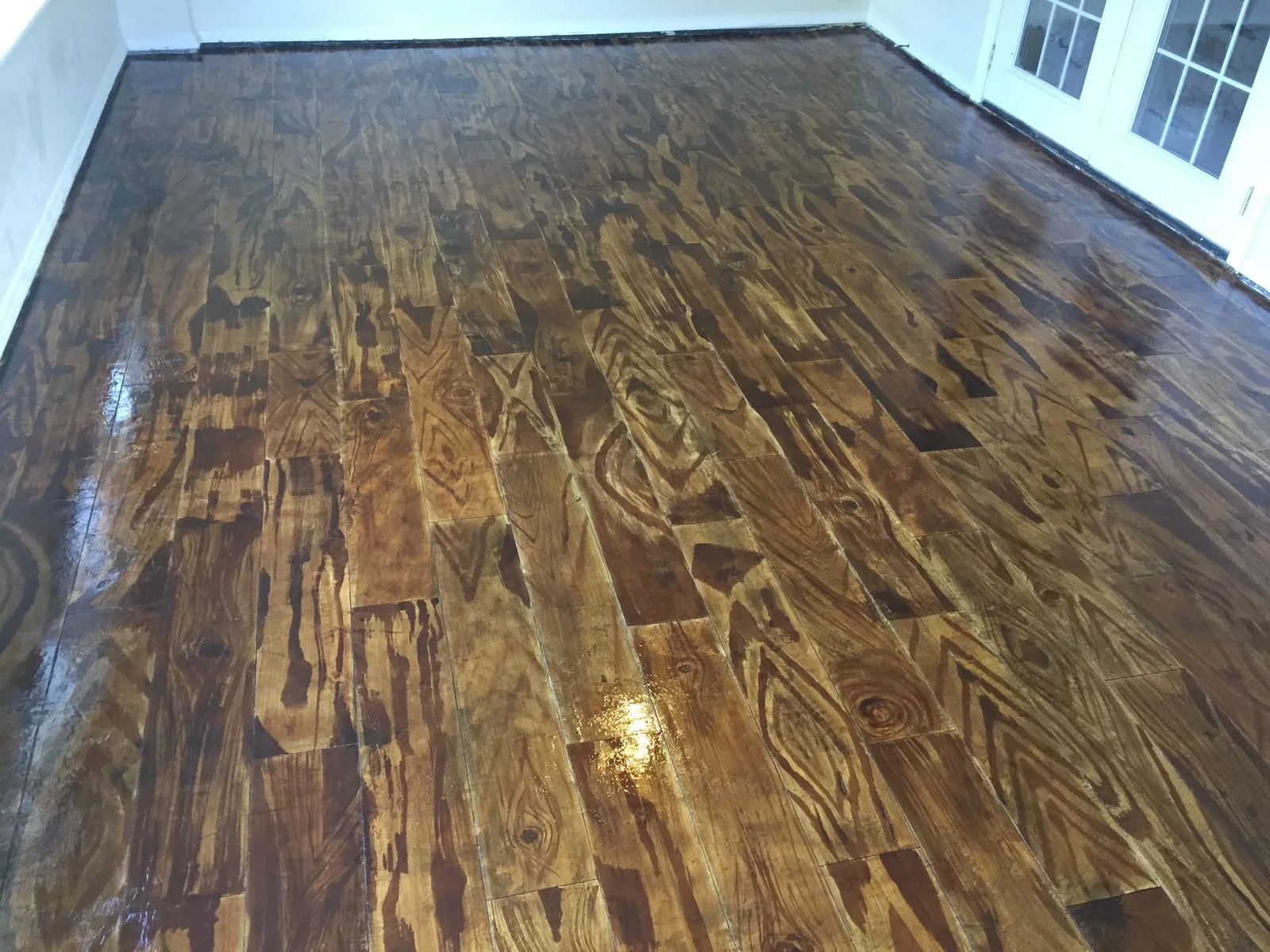
Resurfacing for worn, patched and mismatched slabs
When a slab is structurally fine but covered in patches, old adhesive and years of wear, we put a new cement surface over it and finish it scored, stained or tinted.
22 years in businessDecorative5.0 on Google from 36 reviews
What it is
Old concrete gets a fresh wearing surface from a polymer-modified cement that bonds to it. Indoors it is usually a self-leveling mix, pumped or mixed in batches and spread with a gauge rake so it finds its own flat. Outside, or on walls and edges where a pour will not stay put, it goes on by trowel or spray hopper and gets a smooth, broom or knockdown texture. Once it hardens it takes saw cuts, stain, dye and tint like good concrete.
The people who call us for it are usually looking at a slab they cannot stand: a retail space after the old tile comes up and leaves thinset and patch everywhere, a restaurant dining room with years of repairs, an office or school corridor that wore through its coating, a warehouse showroom that needs to look finished. Homeowners use it on interiors, garages and patios that have gone gray and blotchy. The slab underneath still has to be sound, because an overlay is a skin and will not hold together concrete that is coming apart.
It sits between two of our other services. A stamped overlay is built thicker and imprinted with mats so the slab reads as flagstone, brick or plank; a concrete overlay still reads as concrete, just new. A micro topping goes on much thinner, in a few hand-troweled coats, and follows the slab it covers, while a self-leveling overlay can take out dips and ridges and give you a flatter floor. If the problem is an uneven floor, this is the right tool. If the slab is flat and you want a trowel-marked, modern look, that is micro topping.
Part of our decorative work. See all of it.
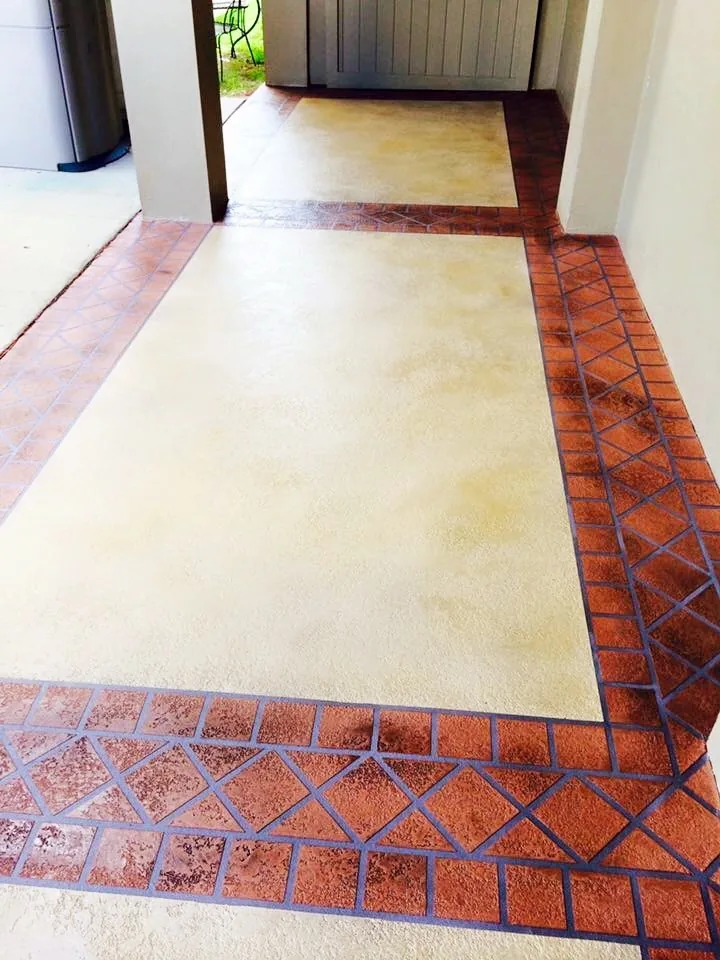

Start with the concrete.
What goes down, from the surface you walk on to the slab under it.
If the slab is coming apart or the moisture test comes back ugly, we say so, because a good overlay on bad concrete is a short-lived floor.
Sealer or topcoat
What you walk on: a sealer for light use, or a urethane topcoat where carts and spills come through.
Color and cuts
Saw-cut lines, stain, dye or integral tint, laid out to the room or the design.
Overlay coat
Self-leveler spread to a set depth indoors, or a trowel or spray-down coat outside and on vertical edges.
Repairs and primer
Cracks and joints are treated, then a primer seals the pores so the overlay does not pinhole or lose water too fast.
Ground profile
Adhesive and coatings are ground off and the surface opened up so the primer has something to bite.
Worn slab
The concrete as found, with its patches, glue, old coating and cracks, checked for moisture and hollow spots first.
Where it belongs
Retail and showrooms
Floors that come out of a tile or carpet demo full of adhesive and patch, and need to look finished by the opening date.
Restaurants
Dining rooms and bar areas where a stained, sealed overlay looks warm and wipes clean. Kitchens behind the line usually need urethane cement instead.
Schools and offices
Corridors, lobbies and classrooms on older slabs, done in a summer or holiday window.
Homes
Slab-on-grade houses where the flooring came up after a leak or a flood and the bare concrete underneath is a mess.
How the crew runs it
Five steps, in order.
Test before grinding
We check moisture coming up through the slab and tap for hollow spots, because both decide which product goes down.
Grind it clean
Glue, paint and failed coatings come off with diamond grinders, with the dust pulled into vacuums.
Fix and prime
Cracks get filled or honored, joints are marked, and primer goes on at the rate the product sheet calls for.
Place the overlay
Self-leveler is mixed in batches and spread wet edge to wet edge so there are no cold lines. Trowel-down coats go on in passes.
Cut, color, seal
After it cures we saw-cut the layout, apply stain or dye, and seal it for the traffic it will see.
For the GC or the facility
- Send drawings, square footage and the finish schedule, and we match the system to it. Samples and product data on request.
- Interior work needs the building closed in and the old flooring up before we mobilize.
- Self-leveling overlays typically take foot traffic within a day. A sealer or urethane topcoat adds its own cure time, which goes on the schedule we send.
- We want a moisture test on any slab on grade before we commit to a system.
Gulf South conditions
Most of the slabs we resurface sit on grade, and around here, with the water table this high, that means moisture vapor pushing up from below. Too much of it and an overlay or its sealer will blister, haze or let go. We test the slab first, and when the numbers are high we put down a moisture-mitigation primer before the overlay instead of hoping.
Flood cleanup is one of the usual reasons. Once wet flooring comes out, the slab underneath needs to dry, and then it shows every glue line and stain from the old floor. An overlay covers that. Heavy humidity also slows the cure and can trap water under a sealer, so we run air and dehumidifiers when the building allows it, and we do not rush the topcoat to make a date.
Look at the finish.

“The craftsmanship and attention to detail really show. They were professional, punctual, and kept the work area clean throughout the project.”
Hang Pham, Google review5.0 on Google from 36 reviews
Living with it
Dust mop daily and damp mop with a neutral cleaner. Put felt pads on chairs and walk-off mats at the doors, because grit is what wears a sealer down. Keep acids and bleach off it. A sealed overlay gets a maintenance coat when the traffic lanes start to dull, well before it needs stripping.
Next to this one
See finished floorsQuestions about concrete overlays
See finished jobs in the gallery, or send the plans.
Can an overlay fix a floor that is out of level?
A self-leveling overlay can take out dips and old patch ridges within its range, and that is the main reason to pick it over a micro topping. Big drops or a sinking slab are a different problem and need repair first.
Will the stain look like the sample?
Close, and we make the sample on the actual overlay mix. Cement takes stain with some variation, which is the look most people want. If you need dead-even color, a tinted overlay or a coating fits better.
Can you go over tile or old adhesive?
We take the tile up and grind the adhesive off. Overlays need to bond to concrete, and anything left between is the weak point that lets go first.
What happens to the joints?
Control joints and moving cracks are carried up through the overlay, either kept open or saw-cut back in. Cover a moving joint and it cracks through on its own, usually right where you did not want it.
Is it good outside, on a patio or pool deck?
Yes, with an exterior-rated mix and a trowel or spray-down texture instead of a smooth finish, which gets slick when wet. If you want a stone pattern out there, that is a stamped overlay.
How long is the floor out of service?
On a typical interior job, the overlay and color go down over a few days, and the room comes back once the sealer or topcoat has cured. We give you the real sequence after we see the square footage and the slab.
Let’s look at your floor.
Call with the address and what the floor has to survive. Someone will come look at the slab before anybody talks price.
Bidding a job? Send the plans and the schedule. We price from drawings and walk the slab before we commit to a date.