
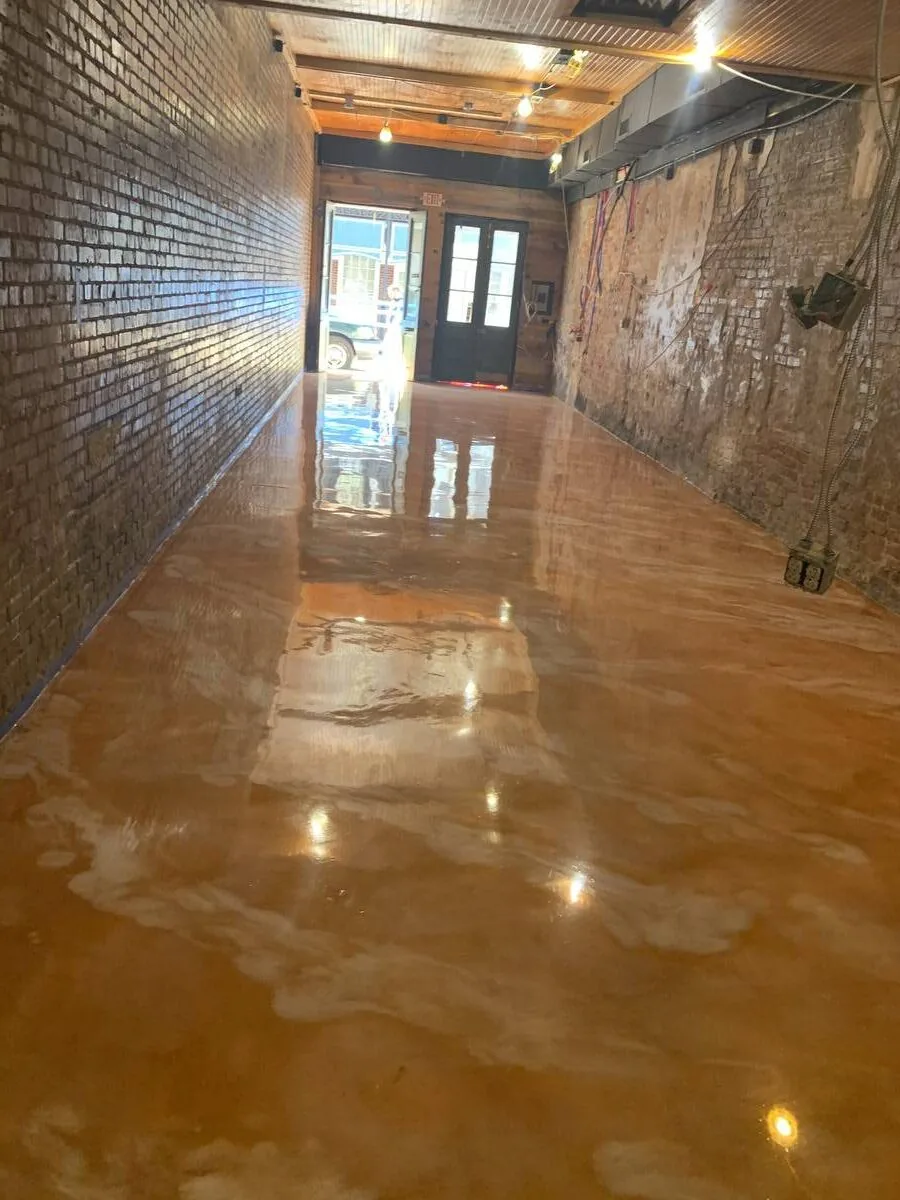
Metallic epoxy poured for showrooms and homes
Metallic pigment suspended in clear resin, moved by hand while it is wet, so every floor comes out with its own swirl and depth. We pour it in showrooms, restaurants, offices and houses.
22 years in businessCoatings5.0 on Google from 36 reviews
What it is
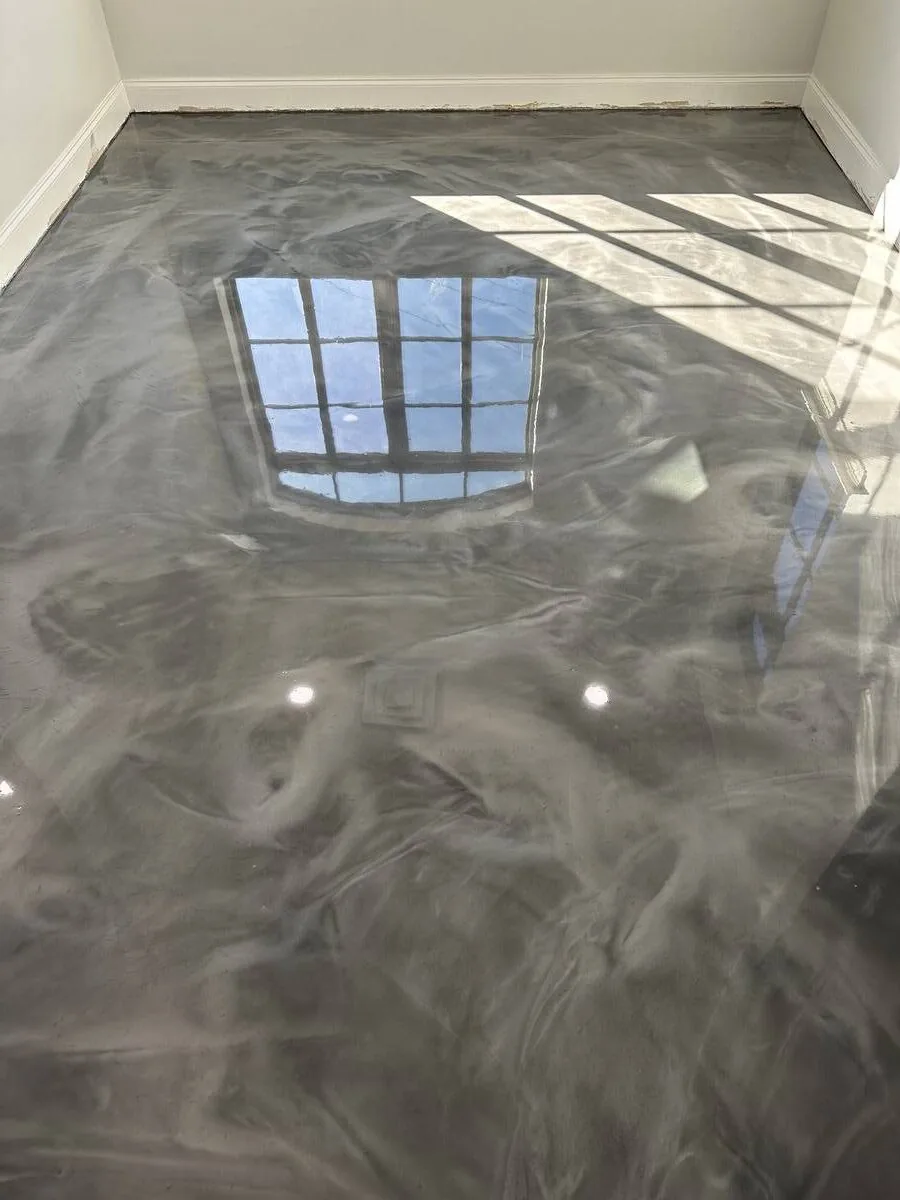
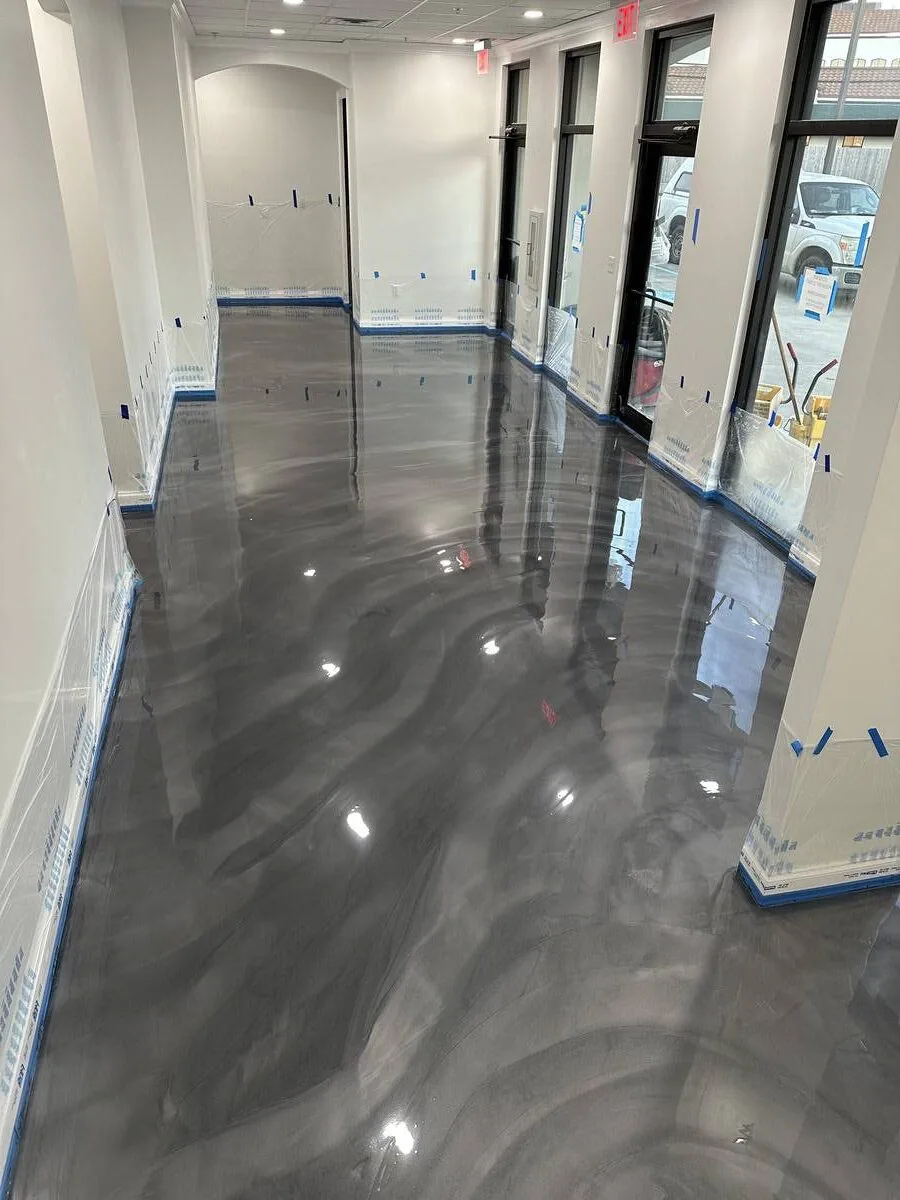
Walk across a good metallic floor and it looks like poured stone or moving water under glass. That look comes from mica and metallic pigments mixed into a clear epoxy, poured over a tinted base coat, then pushed around with rollers, trowels and sprayers while the resin is still open. The pigment drifts and settles as it cures. Colors run from pearl white and silver through copper, charcoal and deep blue. No two pours match, and on a showroom floor that is the whole reason to do it.
We put it where people stand still and look down: car and furniture showrooms, restaurant dining rooms, bars, lobbies, offices, and living areas and kitchens in homes. Under low, warm light the pigment picks up color and glows. It also goes on garage floors for owners who want the garage to look like the rest of the house. Where a metallic floor does not belong is a plant floor with forklifts, chemicals and constant scrubbing. Forklift tires and grit scratch the gloss there, and every scratch shows on a metallic pour.
Metallic sits on the same base as our solid-color epoxy: a ground slab, a primer, a resin base. The difference is the top half of the build and the hands doing it. Solid epoxy is rolled to an even color. Flake is broadcast for grip and hiding dirt. Metallic is art-directed on the floor in real time, so it takes a crew that has done it many times. We can pour sample boards in your colors, and you pick one before we mix anything for the floor.
Part of our coatings work. See all of it.
Start with the concrete.
What goes down, from the surface you walk on to the slab under it.
We will not pour metallic in a room where the drywall crew is still sanding next door, because drifting dust sets into the resin for good.
Urethane topcoat
A clear coat over the pour for scratch and UV resistance, in gloss or satin.
Metallic flood coat
Clear epoxy loaded with pigment, poured thick and worked by hand until the pattern looks right.
Tinted base coat
A solid color under the pour that sets the tone the metallic will move over.
Primer
Seals the pores so air does not bubble up through the clear resin later.
Ground and patched
We grind it flat and fill every crack and divot, because a metallic pour magnifies anything left in the slab.
Existing slab
Interior concrete, often under old tile, carpet glue or a failed coating that has to come off first.
Where it belongs
Showrooms
Cars, boats, furniture and fixtures sit on a floor that photographs well and wipes clean between customers.
Restaurant dining rooms and bars
A finished floor out front, with grit in the topcoat by the bar and the service station where drinks spill.
Offices and lobbies
One continuous floor across a lobby or open office, with no grout lines and no carpet to replace.
Homes
Living rooms, kitchens and garages on a slab foundation, where you want a floor nobody on the street has.
How the crew runs it
Five steps, in order.
See the room
Dustin comes out, checks the slab for moisture and cracks, and talks through colors and samples with you.
Grind it flat
Metallic shows every dip, so we grind tighter than we would for a solid floor and patch until it is smooth.
Prime and base
Primer and a tinted base coat go down and cure, and we mask walls, cabinets and doorways tight.
Pour and work it
The crew pours the metallic coat and works it wet in one push, wall to wall, because a metallic pour cannot stop halfway.
Topcoat and keep off
A urethane topcoat goes on once the pour cures, and the room stays closed until it is hard enough to walk.
For the GC or the facility
- Sample boards in the owner’s colors, approved before we mix the floor.
- Other trades out of the room for the pour and the cure; dust and foot traffic ruin a wet metallic.
- Typical schedule is several working days for prep, base, pour and topcoat, plus cure time before furniture or fixtures go back.
- Product data and submittals on request.
Gulf South conditions
Moisture shows on a metallic floor faster than on anything else we pour. Vapor coming up through an on-grade slab down here can push small bubbles and cloudy patches into the clear resin. On a solid color you might never notice. On metallic you see it from the doorway. So we test the slab, and on a damp one we lay down a moisture-control primer first.
Heat and humidity also change how the pour moves. On a hot, damp day the resin kicks faster and the working time shrinks, so we get the building’s air running before we mix and pour early when it is cooler. Big rooms get a bigger crew so the edges never dry before the middle. Sun through a storefront window will yellow plain epoxy over time, which is why every metallic floor we do gets a UV-stable urethane over it.
Look at the finish.
“What set them apart was that they offered the product I actually wanted, not what was quickest or easiest for them.”
Jason Lagneaux, Google review5.0 on Google from 36 reviews
Living with it
Dust mop every day. Fine grit scratches the gloss, and on metallic the scratches catch the light. Damp mop with a pH-neutral cleaner and skip soap-based products that leave a film. Felt pads go under every chair and table leg. Rubber-backed mats can stain it, so use mats made for coated floors. When the gloss wears in the walk paths, we screen and recoat the topcoat.
Next to this one
See finished floorsQuestions about metallic epoxy flooring
See finished jobs in the gallery, or reach the office.
Can you match a design I saw online?
We can get close on color and movement, and we will show you on a sample board how close. A metallic pour is worked by hand, so it will never copy a photo line for line.
Is a metallic floor slippery?
A high-gloss metallic can be slick when wet, the same as polished stone. In dining rooms, entries and around bars we add a fine grit to the topcoat, or go with a satin finish. You give up a little shine for a lot more grip.
Will it scratch?
Yes, sooner or later, like any glossy floor. The urethane topcoat takes most of it, and fine scratches in the topcoat can be screened and recoated without touching the metallic layer underneath. Felt pads and a dust mop do more than anything else to keep it looking new.
Can metallic go over my old tile?
We take the tile and thinset up and grind to bare concrete first. Pouring over tile means the grout lines can show through, and the floor would ride on the old adhesive. A metallic needs the slab itself.
Does metallic epoxy work outside on a patio?
We would not put it there. Full sun here will fade and yellow it, and an outdoor slab takes on rain and heat swings an interior floor never sees. For outdoor concrete we point people to a coating system built for sun and rain.
How long before I can move furniture back?
Light foot traffic is typically fine the day after the topcoat, and furniture can go back a few days later once it has cured harder. Heavy rolling loads and rugs wait the longest. We give you the dates for your product before we start.
Let’s look at your floor.
Tell us the space, the square footage and what goes on the floor. We will tell you which system fits and when we can start.
General contractors: send drawings, square footage, finish schedule and the window you have. Submittals and samples on request.