
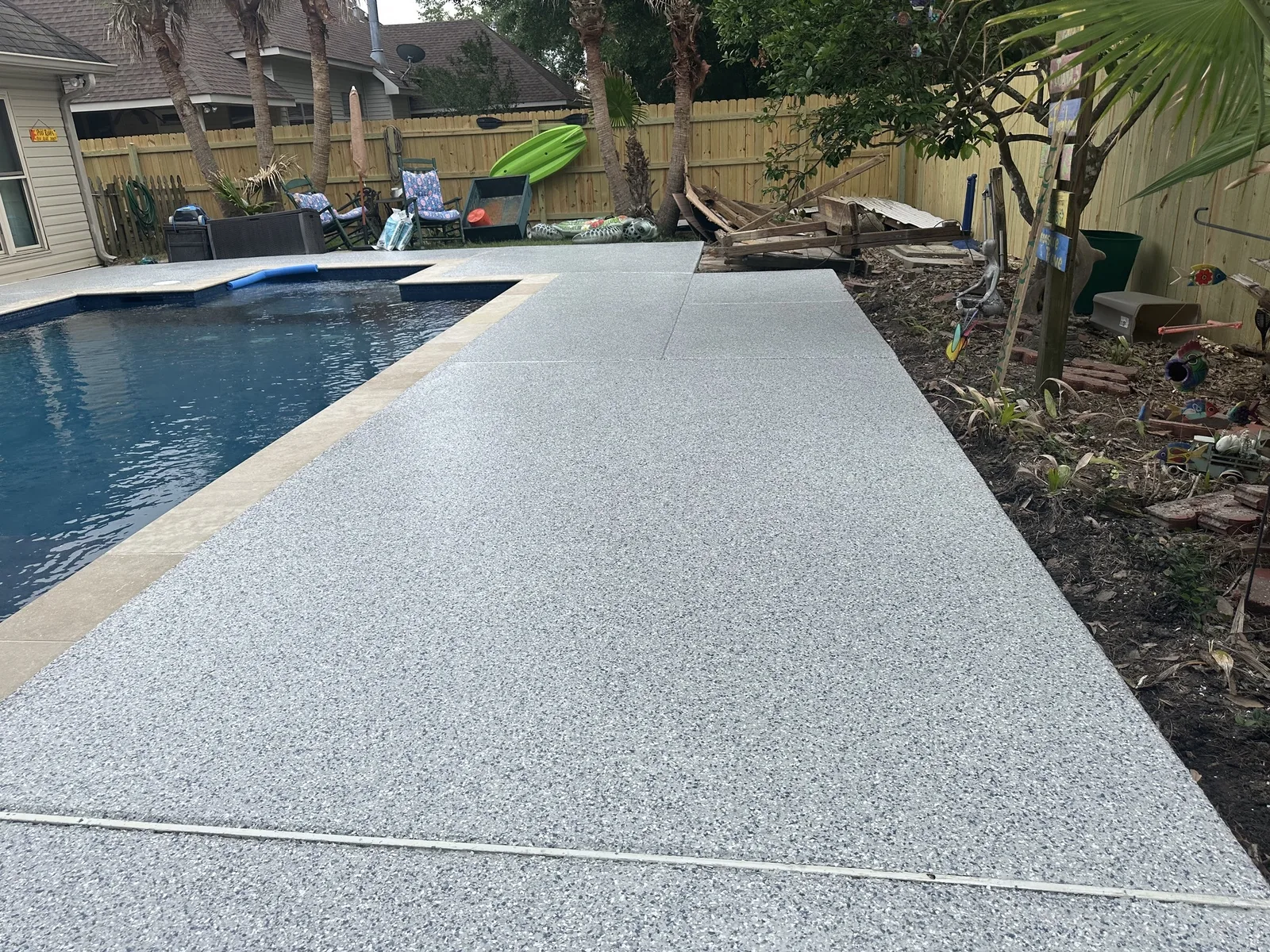
Flake floors that grip wet and hide the dirt
Garages, restrooms, school halls and kitchens take a beating, and a flake floor is built for it: colored vinyl chips broadcast into wet epoxy, then locked under a clear topcoat.
22 years in businessCoatings5.0 on Google from 36 reviews
What it is
Everything about this floor comes from the chips. They are thin flakes of colored vinyl, thrown by hand over a wet epoxy base coat until you cannot see any resin left between them. Once it cures we scrape and vacuum off the loose chips, then seal the whole thing under a clear topcoat. What you get is a speckled floor with texture you can feel under a shoe, and a pattern busy enough that a muddy boot print or a dropped french fry does not stand out. Chip size and blend change the look: small chips read tighter and finer, big chips read bolder and hide more.
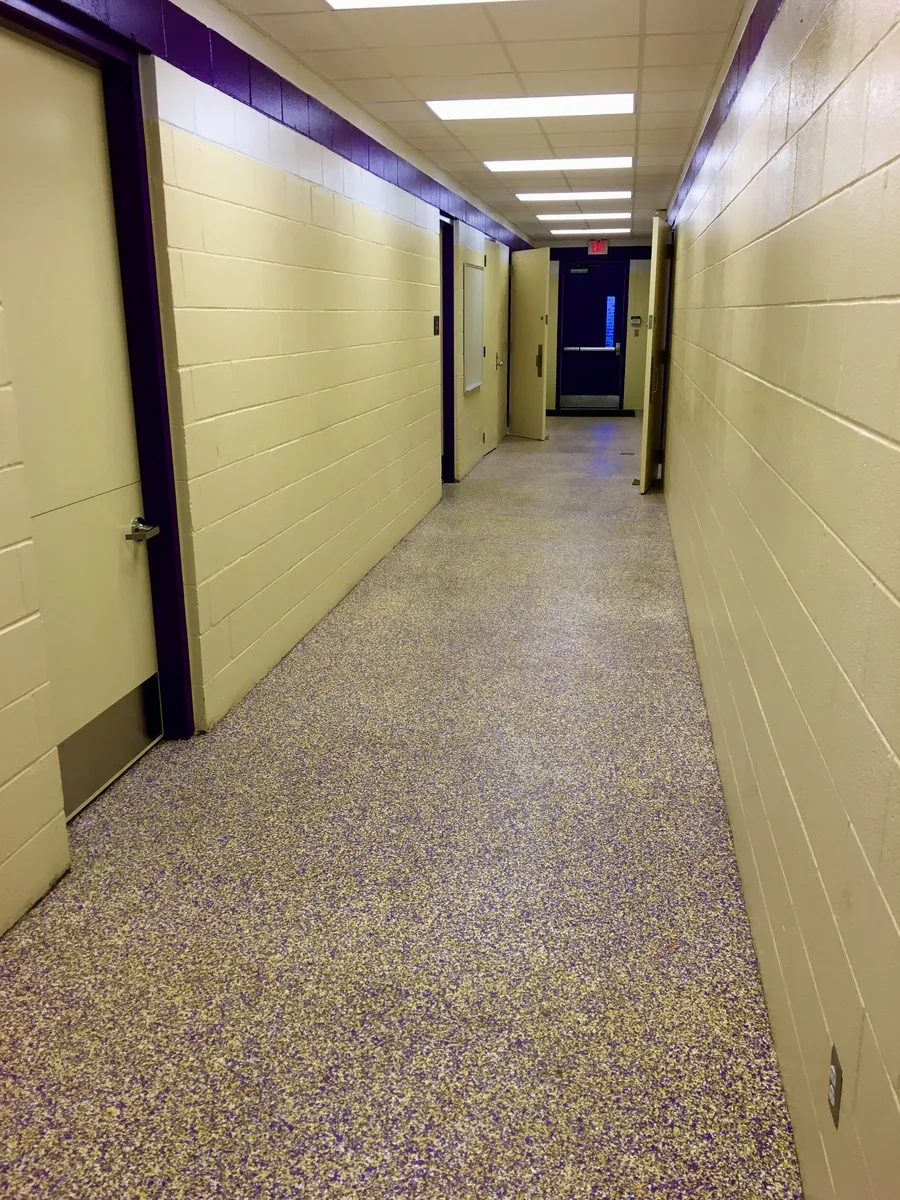
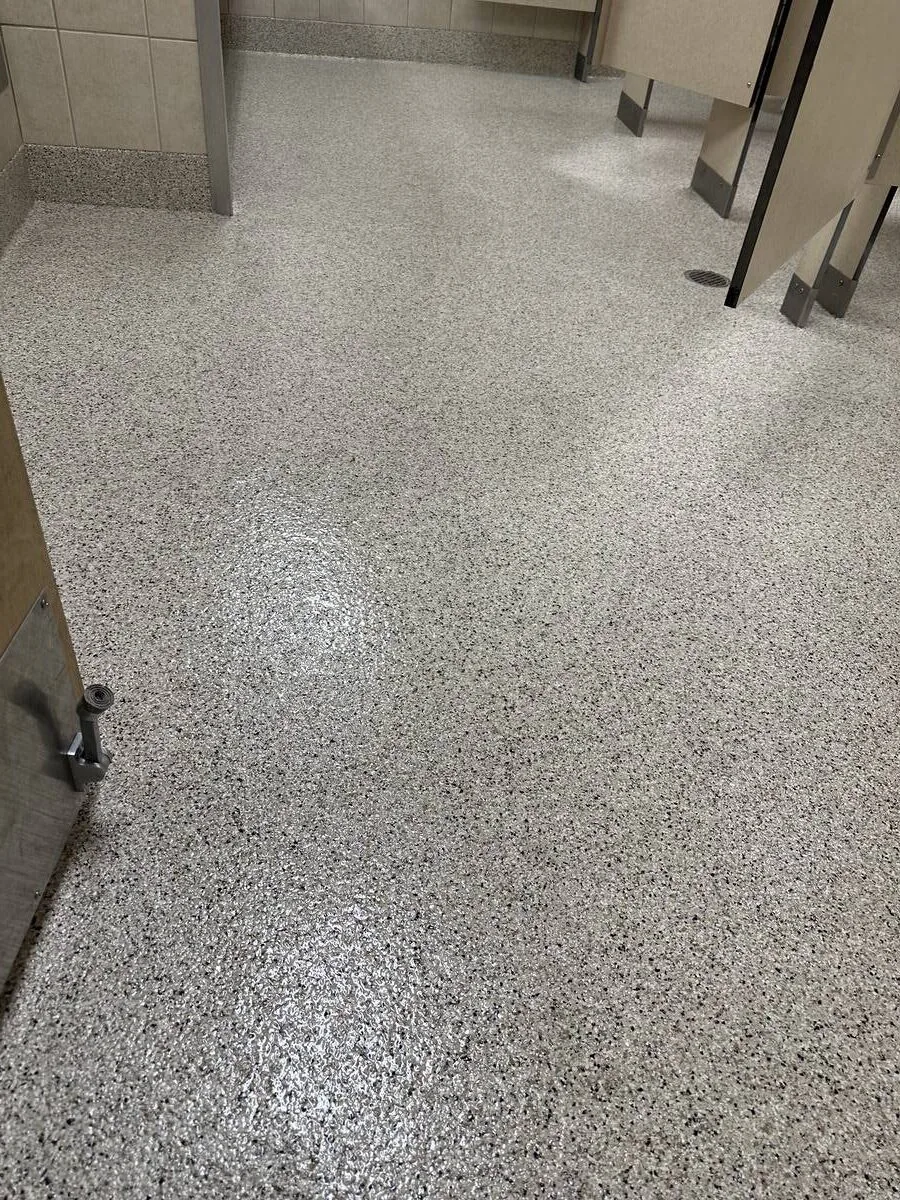
We put flake down in home garages, restrooms, locker rooms, school corridors and cafeterias, commercial kitchens away from the fryer line, break rooms and shop floors. It takes a mop every night and hides scuffs and wear far better than a solid color. For a homeowner, that means a garage that still looks clean on a Saturday after a week of tracking in.
Slip-Resistant Floor Coatings is the wider job of making a wet floor safe, which can mean grit in a topcoat, a urethane cement with built-in texture, or a flake floor like this one. Flake is the version for places that also want color and a pattern that hides dirt. Next to solid-color epoxy it takes an extra step to install and wants a deck brush now and then, and it gives you far more grip in return. The texture comes from the chips and the topcoat together, and we can add grit to the topcoat where the floor stays wet. A wet process room with hot water or heavy chemicals is urethane cement territory.
Part of our coatings work. See all of it.
Start with the concrete.
What goes down, from the surface you walk on to the slab under it.
We do not sprinkle a few chips over bare epoxy and call it flake; it looks thin and wears through, and we would rather lose the job.
Clear sealing topcoat
One or two clear coats that lock the chips in and set how rough or smooth the floor feels.
Full chip broadcast
Vinyl flakes thrown into the wet base until it is buried, then scraped and vacuumed once it cures.
Pigmented base coat
A tinted epoxy coat close to the chip blend, so any small gap in the broadcast disappears.
Profiled and repaired
Ground to an open profile, with cracks and control joints filled so the chips lie flat across them.
Concrete underneath
Garage slabs and school floors usually arrive with oil, old sealer, tile glue or paint that the grinder has to take off.
Where it belongs
Home garages
Oil drips and dropped tools land on a pattern that hides them, with a topcoat chosen to stand up to hot tires.
Restrooms and locker rooms
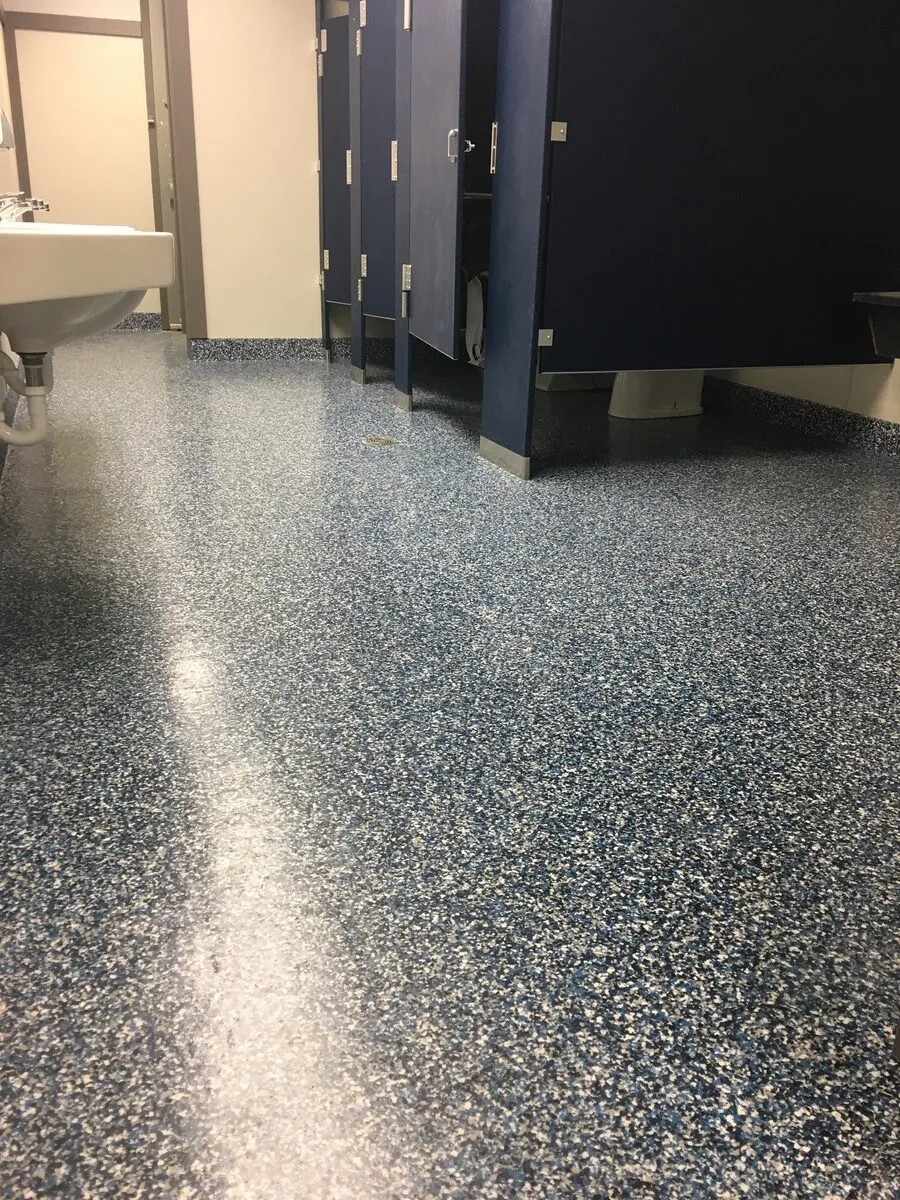
Wet floors all day, with cove base run up the walls so mop water never reaches the drywall.
School corridors and cafeterias
Heavy foot traffic all day and a scrub every night, on a floor that hides scuffs until the next summer recoat.
Kitchens and break rooms
Prep areas, dish rooms and staff kitchens where water and grease hit the floor, kept clear of the hottest cook line.
How the crew runs it
Five steps, in order.
Walk the floor
We look at the slab, drains and walls, and you pick the chip blend from real samples.
Grind and fill
Diamond grinding opens the slab, then cracks, pits and joints get filled and ground flush.
Base coat and broadcast
We roll the tinted base and throw chips into it right away, working in sections so the resin is still wet when the flake lands.
Scrape and vacuum
After cure, the crew scrapes off the chip high points and vacuums every loose flake so the topcoat goes on flat.
Seal and reopen
Clear topcoat goes on, with added grit where it stays wet, and the floor reopens once the topcoat has cured.
For the GC or the facility
- Chip blend samples and product data on request, with submittals for the topcoat and slip finish.
- School and restroom work fits a summer break or a long weekend when we can have the rooms to ourselves.
- Typical turnaround is a few working days per area, with foot traffic back about a day after the topcoat.
- Floor drains, door thresholds and cove height worked out with you before we mobilize.
Gulf South conditions
Flake earns its keep in wet places, and around here that is most places. Rain gets walked into school halls and tracked across restaurant back doors all summer, and a sweating slab can leave a film of water on a smooth floor on a humid morning. The chip texture gives a shoe something to catch on, and the busy pattern hides the water spots and mud that come with it.
The slab under it still has to be dry enough. On-grade concrete over a high water table can push vapor up and lift any epoxy, chips and all, so we moisture test before we commit and use a vapor-control primer when the slab calls for it. A garage with the door open in August also needs a topcoat that will not yellow in the sun, so we seal flake with a UV-stable clear.
Look at the finish.
“What set them apart was that they offered the product I actually wanted, not what was quickest or easiest for them.”
Jason Lagneaux, Google review5.0 on Google from 36 reviews
Living with it
Sweep or dust mop, then clean with an auto scrubber or a mop and a deck brush, since the texture holds dirt a flat mop glides over. Use a neutral cleaner. Wipe up brake fluid and battery acid fast, and set a mat under a drip-prone car. Keep the car off it until we say the topcoat has cured.
Next to this one
See finished floorsQuestions about flake epoxy flooring
See finished jobs in the gallery, or send the plans.
How rough is a flake floor underfoot?
Rough enough to feel through a sock and smooth enough to mop. With one clear coat the chip edges show more texture, and a second coat smooths it out.
Is flake the same as a slip-resistant coating?
It is one kind of slip-resistant coating. Slip resistance can also come from grit in a solid epoxy or a textured urethane cement. Flake is the pick when you want grip plus color and a floor that hides dirt.
Can I choose the chip colors?
Yes. There is a wide range of stock blends, from grays and tans to school colors. We can bring sample boards out so you see them under your own lights.
Will hot tires lift a flake garage floor?
Hot tire pickup happens when tires park on a soft or poorly bonded coating. On a ground slab with a proper base and a cured topcoat, it should not.
Can you coat a school restroom over a weekend?
Often, yes, for a small room on a sound slab with no moisture problem. The grind, base, broadcast and topcoat have to happen in order with cure time between, so bigger rooms or bad slabs need more days. Summer break is the easy window: we finished a teaching-kitchen floor at Samuel J Green School for Firstline Schools before classes started.
Do the chips wear off over time?
The chips sit under the clear topcoat, so the topcoat takes the traffic and the chips stay put. When the topcoat dulls in the lanes where cars turn or carts roll, we screen it and lay down a fresh coat.
Let’s look at your floor.
Call with the address and what the floor has to survive. Someone will come look at the slab before anybody talks price.
Bidding a job? Send the plans and the schedule. We price from drawings and walk the slab before we commit to a date.