
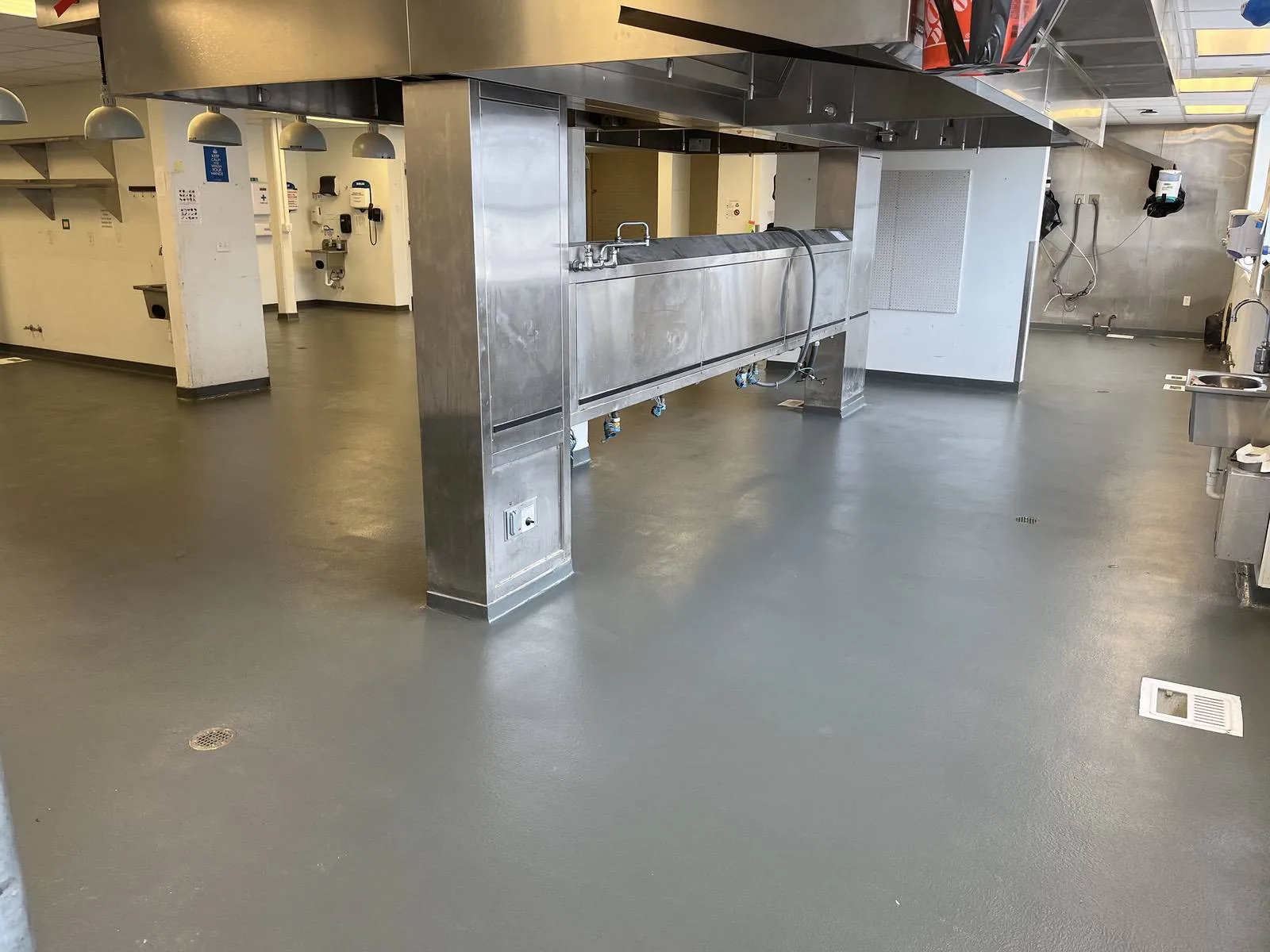
Solid-color epoxy floors built on a ground slab
Epoxy flooring is the base resin system behind our coatings work: a primer, a body coat and a topcoat over a slab we grind first. Plants, kitchens, warehouses and garages all start from it.
22 years in businessCoatings5.0 on Google from 36 reviews
What it is
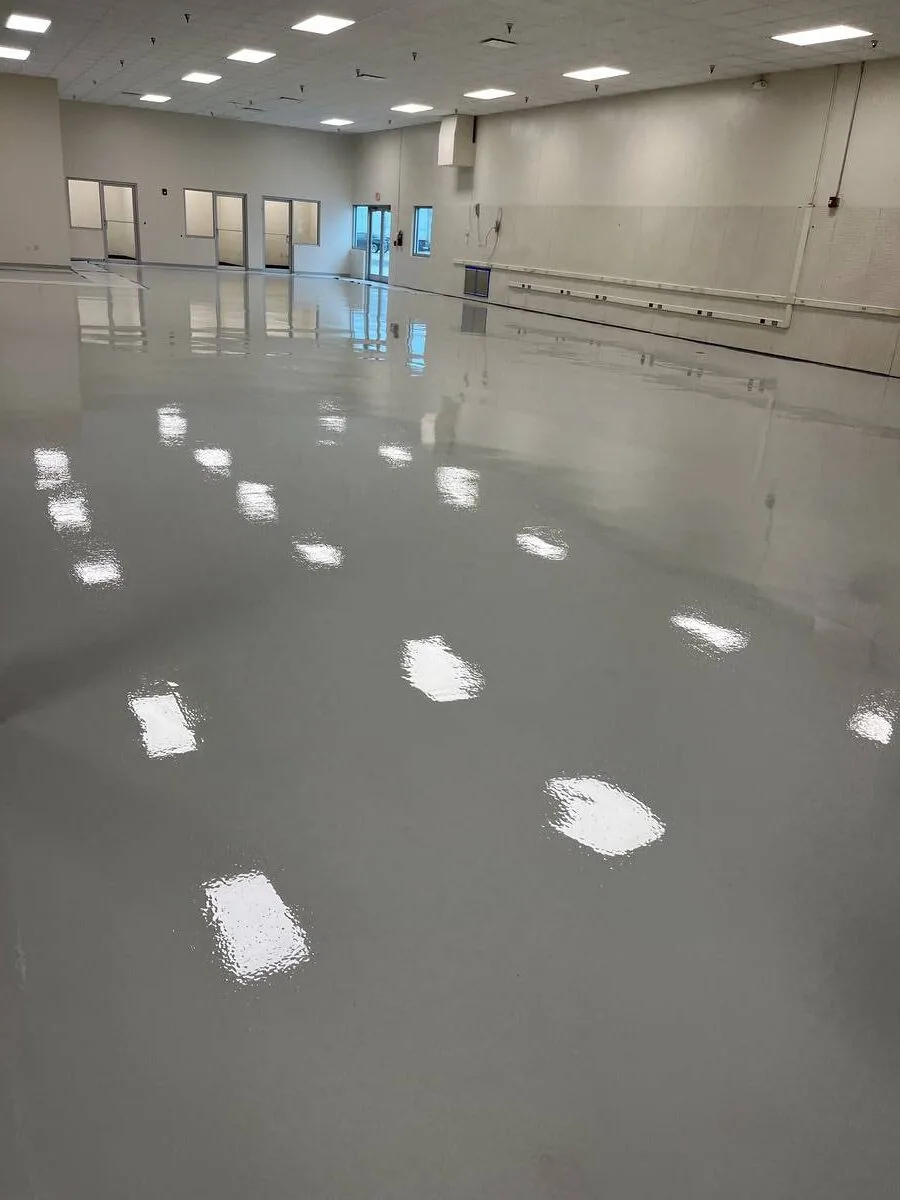
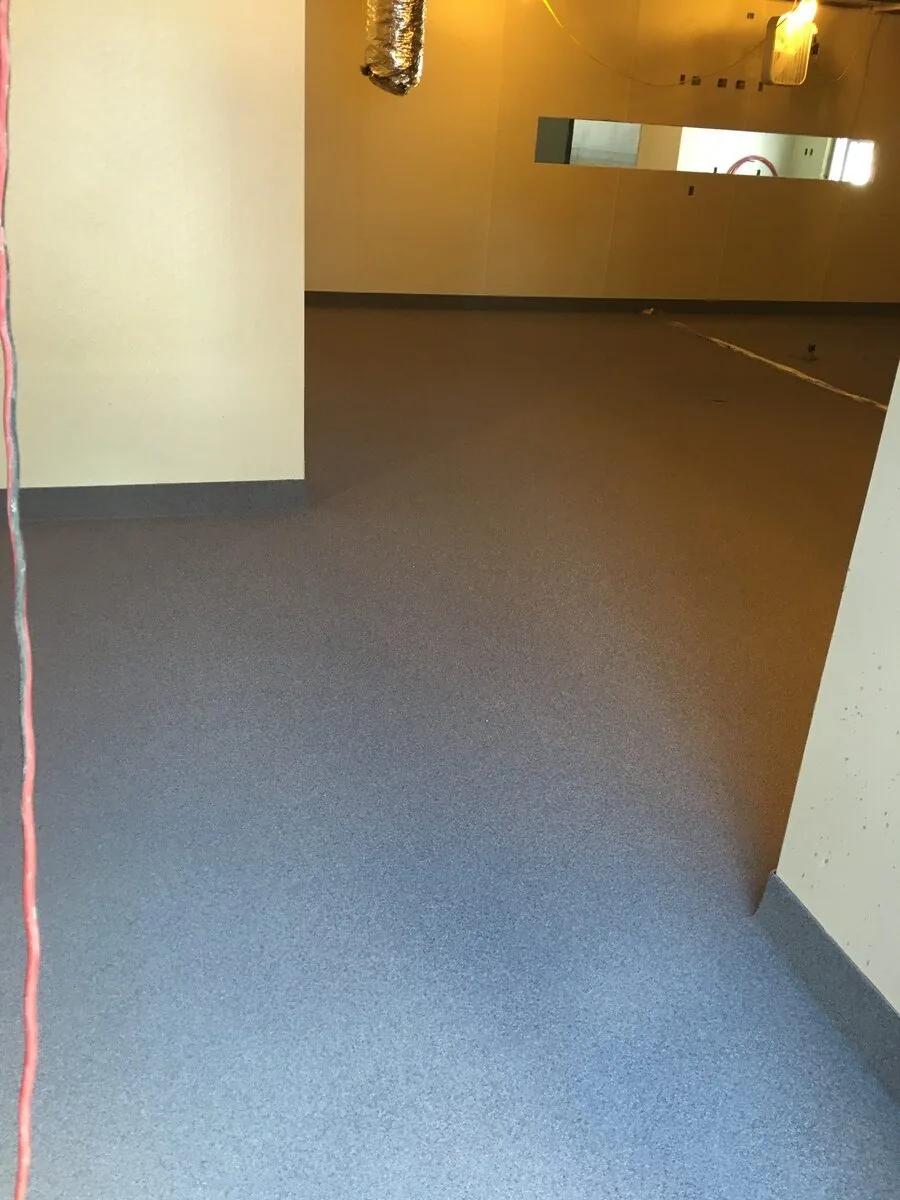
Epoxy flooring is a two-part resin poured and rolled over concrete that has been ground open. It cures hard and locks into the slab. You get one solid color from wall to wall, with no seams for dirt or water to sit in. Most of what we coat for plants, schools, restaurant kitchens and back-of-house corridors starts as this system. Homeowners get it in garages and laundry rooms. Solid color is the point. Safety yellow walk lanes, gray production floors, a white kitchen floor an inspector can see dirt on: the color is a working part of the floor.
The thickness is the part people get wrong. A thin roll coat over a dusty slab looks fine for a month and then lifts at the forklift lane. We build epoxy in layers, a penetrating primer and then a body coat measured in mils, so the floor has enough resin to take carts, pallet jacks and dropped pans. When a job calls for it, we install Sherwin-Williams High Performance Flooring solid-color systems.
Epoxy flooring is the system itself: primer, body coat and topcoat, built to a thickness. Industrial Floor Coatings is the wider family we pick from for heavy-duty work: epoxy, urethane cement, urethane topcoats and ESD, matched to chemicals and heat. Industrial Flooring is the plant application, where the slab, the drains, the shutdown window and the traffic decide the build. Flake Epoxy and Metallic Epoxy start from this same base and change what goes on top. If your floor sees hot water washdown or fryer oil every shift, we will likely steer you to urethane cement instead, and we will tell you why before you buy anything.
Part of our coatings work. See all of it.
Start with the concrete.
What goes down, from the surface you walk on to the slab under it.
We will not roll epoxy over a slab we have not ground and moisture tested, even when the schedule is screaming for it.
Topcoat
The surface you walk on, in solid color, with grit added where feet get wet.
Body coat
The build coat that carries the thickness, rolled or squeegeed to the mils the traffic calls for.
Penetrating primer
A thin first coat soaks into the pores and locks the system to the slab.
Ground profile
Diamond grinding or shot blasting opens the surface to a CSP the primer can bite into, and cracks and spalls get filled.
Slab as found
Old sealer, paint, oil and curing compound come up first, because epoxy only bonds to clean, open concrete.
Where it belongs
Warehouses and distribution
Sealed, light-colored floors that brighten aisles and wipe clean under pallet jack and cart traffic.
School corridors and labs
One color, no grout lines, and a surface custodians can mop and scrub every night.
Back-of-house and storage
Dry storage, mechanical rooms and loading areas where you want sealed concrete without a decorative finish.
Garages and shops
A home garage or workshop floor that wipes clean of oil drips, with a topcoat picked to resist hot tire marks.
How the crew runs it
Five steps, in order.
Look at the slab
Dustin or Jacob walks the floor, checks moisture, and reads the cracks, old coatings and drains before we price anything.
Grind and repair
We grind to profile, vacuum the dust, and fill cracks, spalls and joints so they do not telegraph through the color.
Prime and cove
Primer goes down, and where the room needs it we run cove base up the walls so washdown water stays on the floor.
Build the body
The body coat goes on at a set spread rate, and we check thickness with a gauge as we go.
Topcoat and cure
The topcoat seals it, and we hold traffic off until the resin has cured enough to take it.
For the GC or the facility
- Send drawings, square footage and the schedule, and we will price it off the plans and walk the slab before we start.
- Product data, color samples and submittals on request.
- New concrete needs to cure before it is coated; we will tell you when your pour is ready and test it.
- Foot traffic typically returns in about a day and full use in several days, depending on temperature and the product.
Gulf South conditions
In the Gulf South, the slab causes trouble before the resin ever does. On-grade concrete on the Westbank and across the parishes sits over a high water table, and moisture vapor pushes up through it. Put epoxy over a wet slab and the vapor gets trapped. Then come blisters and soft spots that peel. We test moisture first, and when the numbers are high we put down a vapor-control primer before the body coat.
Humidity matters on cure day too. On a sticky summer morning a slab can sweat, and resin rolled over that dew can blush and lose its bond. We watch the dew point and time the coats around the weather, with fans or air running when the building allows it. Epoxy also yellows in direct sun, so for a garage with the door open all afternoon we put a UV-stable topcoat over it.
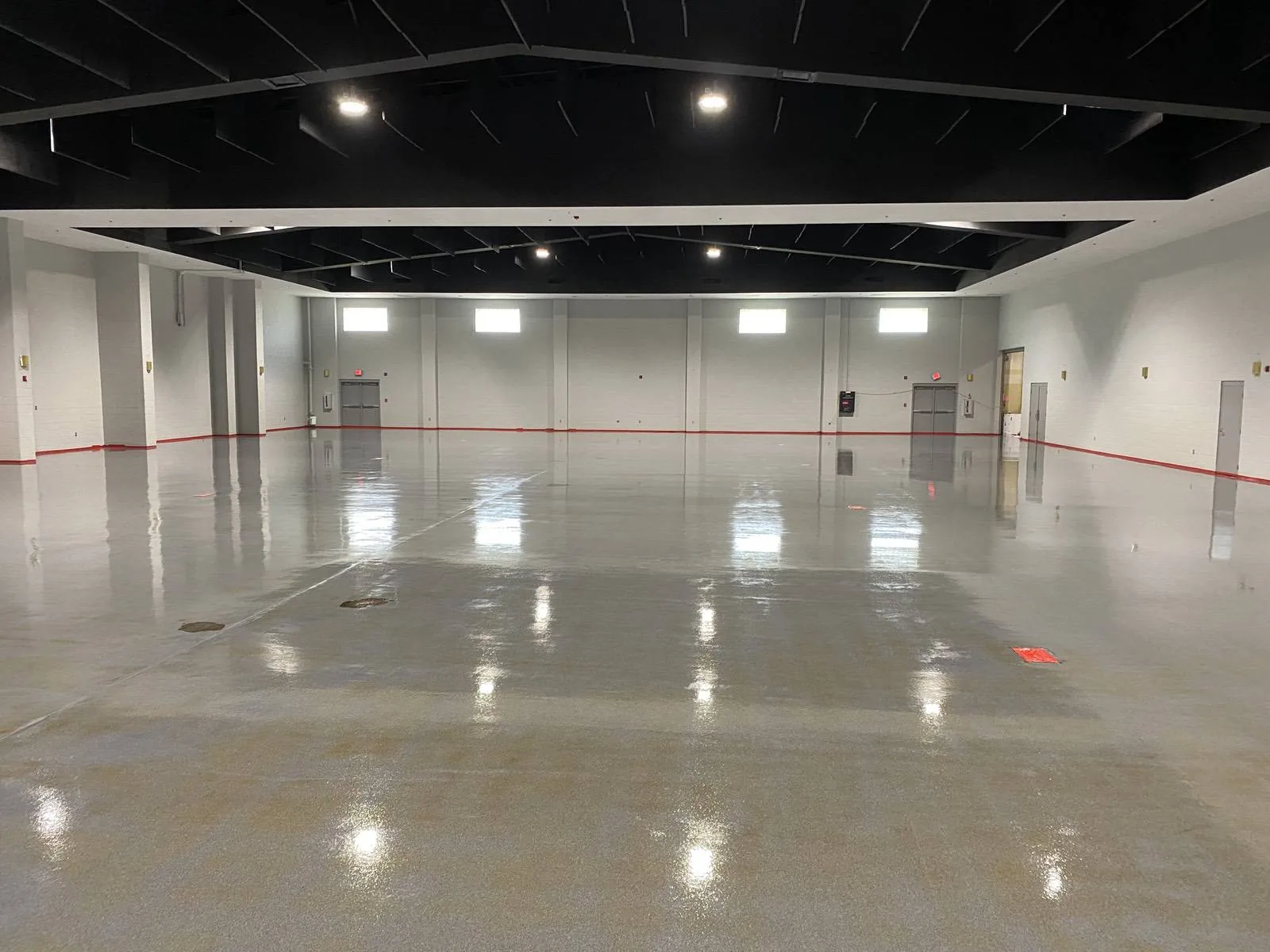
Look at the finish.
“What set them apart was that they offered the product I actually wanted, not what was quickest or easiest for them.”
Jason Lagneaux, Google review5.0 on Google from 36 reviews
Living with it
Sweep grit off often, because sand under a boot is what dulls the topcoat. Mop with a neutral cleaner and warm water, and use an auto scrubber on big floors. Skip harsh acids and citrus degreasers left to sit. Put pads under steel stand legs, and do not drag pallets across it. Plan on a fresh topcoat when the traffic lanes go dull.
Next to this one
See finished floorsQuestions about epoxy flooring
See finished jobs in the gallery, or send the plans.
How long does an epoxy floor last?
On a slab that was ground and primed right, a commercial epoxy floor lasts years before it needs more than a fresh topcoat. When the topcoat dulls, we recoat it, and the body coat underneath stays put.
Can you put epoxy over my old coating?
Usually we take it off. A new coat is only as good as the bond under it, and we cannot vouch for a coating someone else put down. If the old floor is sound and the same resin family, we may scuff and recoat it.
Is epoxy slippery when it gets wet?
A smooth gloss topcoat can be, which is why we add grit to the topcoat in kitchens, wash bays and entries. The grit size is a trade between grip and how easy the floor is to mop. If slip resistance is the main worry, look at our flake system too.
How long is the floor out of service?
Plan around the prep and the cure. A typical room is ground, primed and coated over a few working days, with foot traffic the day after the last coat and heavy traffic a few days later. For plants we work nights, weekends and shutdown windows.
Will epoxy hold up in a commercial kitchen?
In dry storage and prep areas, yes. Under fryers, steam kettles and hot washdown, standard epoxy can soften and crack from thermal shock, and urethane cement is the better floor. We can split a kitchen between the two and tie them together at the transition.
Do you install epoxy at houses, or only commercial?
Both. Most of our work is for contractors and facilities, and we also coat garages, laundry rooms and shops for homeowners across Southeast Louisiana. A garage gets the same grind and primer a warehouse gets.
Let’s look at your floor.
Call with the address and what the floor has to survive. Someone will come look at the slab before anybody talks price.
Bidding a job? Send the plans and the schedule. We price from drawings and walk the slab before we commit to a date.