

Polished concrete: the slab itself, ground to a shine
We grind the slab down through progressively finer diamonds, harden it with densifier and finish with a guard, so the floor you walk on is the concrete itself, with no coating to peel.
22 years in businessPolished5.0 on Google from 36 reviews
What it is
Polishing is mechanical work. The crew grinds the slab with metal-bond diamonds to open it up and flatten the surface, then steps through finer and finer resin-bond diamonds until the concrete itself starts to reflect light. Densifier goes in partway through to harden the paste, and a guard goes on at the end to help it resist spills. The shine comes from the stone, and how much of the aggregate shows is decided by how deep the first cut goes.
It belongs in rooms with a lot of floor and a lot of traffic: car and furniture showrooms, warehouses and distribution space, restaurant dining rooms, offices and retail. Forklifts do not chip it because there is no film to chip. In a restaurant dining room it mops fast and never needs stripping and waxing. An office or a retail floor gets the same benefit: long life and simple cleaning. Jacob’s own work includes polished concrete at the Superdome, and a small showroom gets the same sequence of passes, just less floor.
We also do four lighter treatments that use parts of the same process. Honed concrete stops early, at a flat, low-sheen finish. Densifying is the hardener on its own, worked into a slab to harden the surface. Dustproofing aims that hardener at an old warehouse floor that sheds powder, with little or no grinding. Sealing puts a film or a penetrating sealer on the slab and leaves the surface as it is. Polishing runs the whole sequence and gives the hardest, brightest floor of the five. Tell us what the floor has to do and we will say which one fits.
Part of our polished work. See all of it.
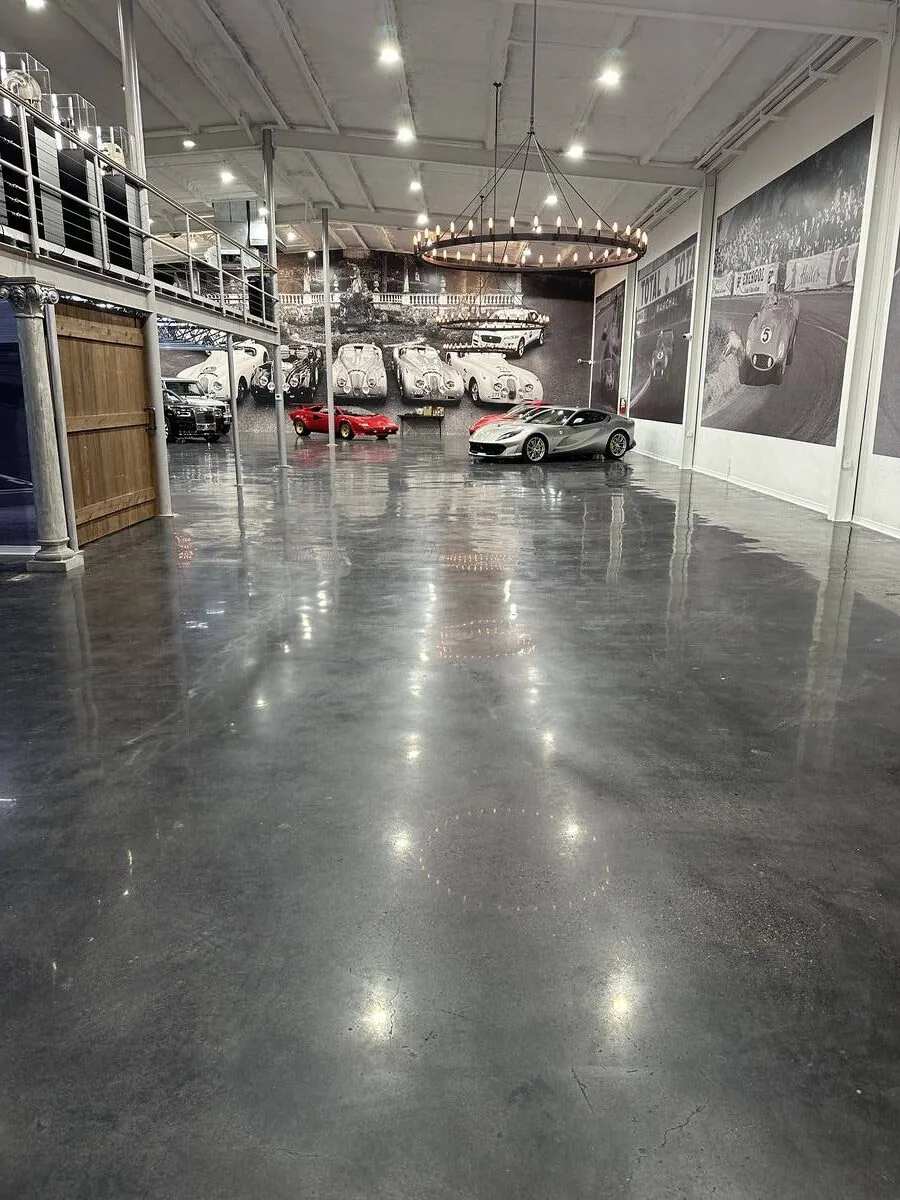
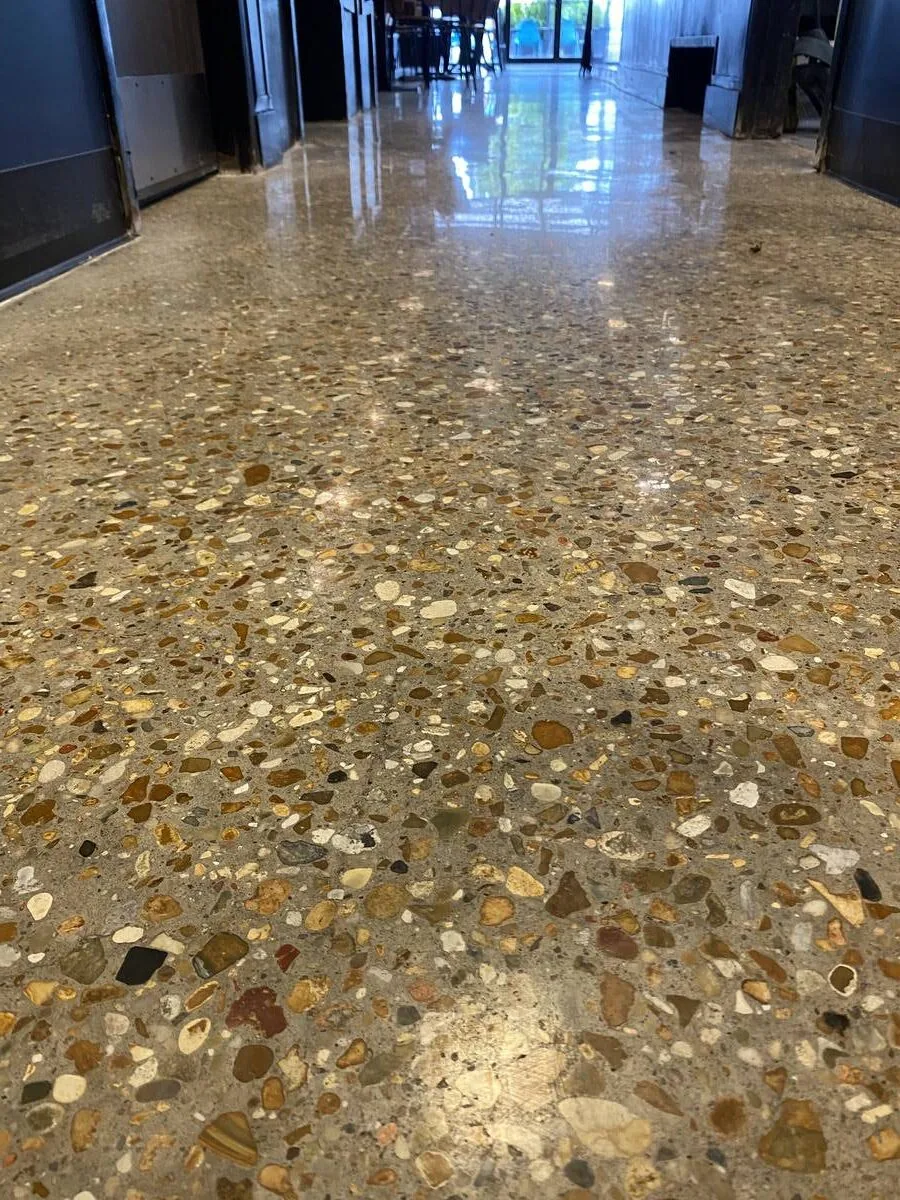
Start with the concrete.
What goes down, from the surface you walk on to the slab under it.
We will not promise a mirror finish on a soft, patched or wavy slab until we have ground a test spot, because the concrete decides how far it will polish.
Guard
A thin penetrating or topical guard that slows stains and is burnished in.
Resin-bond polish
Finer and finer diamonds, stopping at the sheen the owner picked.
Densifier
A penetrating silicate that reacts with the concrete and hardens the top of the slab.
Joint and crack fill
Joints and cracks get filled and ground flush so the polish runs across them.
Metal-bond grind
Coarse diamonds cut off coatings and glue, flatten high spots and set how much aggregate shows.
Slab as found
Old or new concrete, with its joints, cracks, patches, curing compound and whatever adhesive the last floor left.
Where it belongs
Showrooms
Car, furniture and appliance floors where the shine sells the product and the floor has to stay bright under rolling loads.
Warehouses
Forklift aisles and rack floors that stop dusting once polished and clean up with a ride-on scrubber.
Restaurant dining rooms
Front-of-house floors that mop fast and hold up to chairs scraping all night; the kitchen line usually wants urethane cement instead.
Offices and retail
Open-plan floors where carpet used to be, polished to a satin or a high gloss to match the space.
How the crew runs it
Five steps, in order.
Read the slab
We look at hardness, flatness, old coatings, cracks and joints, and grind a test patch if the slab is a question mark.
Cut and flatten
Metal-bond passes take off coatings and set the aggregate exposure, with dust collection running the whole time.
Fill and densify
Joints and cracks get filled, then densifier soaks in and reacts before we move to finer diamonds.
Polish up
Resin-bond passes step finer until the floor hits the sheen in the submittal, checked with a gloss meter if the spec calls for one.
Guard and burnish
The guard goes on thin and gets burnished with a high-speed machine, and the floor can usually take foot traffic once it dries.
For the GC or the facility
- Best done before walls, racks and fixtures go in, with the slab cured and the building closed in.
- Protect the slab from paint, drywall mud, oil and pipe-cutting fluid during construction; stains go in deep.
- Sheen level, aggregate exposure and samples for submittals on request.
- No cure wait for traffic: the floor typically opens to foot traffic as soon as the guard is dry.
Gulf South conditions
Polished concrete breathes, which is one reason it works on Gulf South slabs that push moisture up from a high water table. A coating can blister when vapor builds under it; a polished floor has no film to lift. That makes it a good answer on older on-grade slabs in New Orleans that may have no vapor barrier under them.
Humidity still shows up. A slab that sweats on a muggy morning gets slick, and a building with the doors rolled open will see it more than a closed, air-conditioned one. After a flood, mud and salt water get scrubbed out, and a polished floor usually comes back with a cleaning and a fresh guard instead of a tear-out. Near the coast, walk-off mats at the doors keep sand and salt from dulling the shine.
Look at the finish.
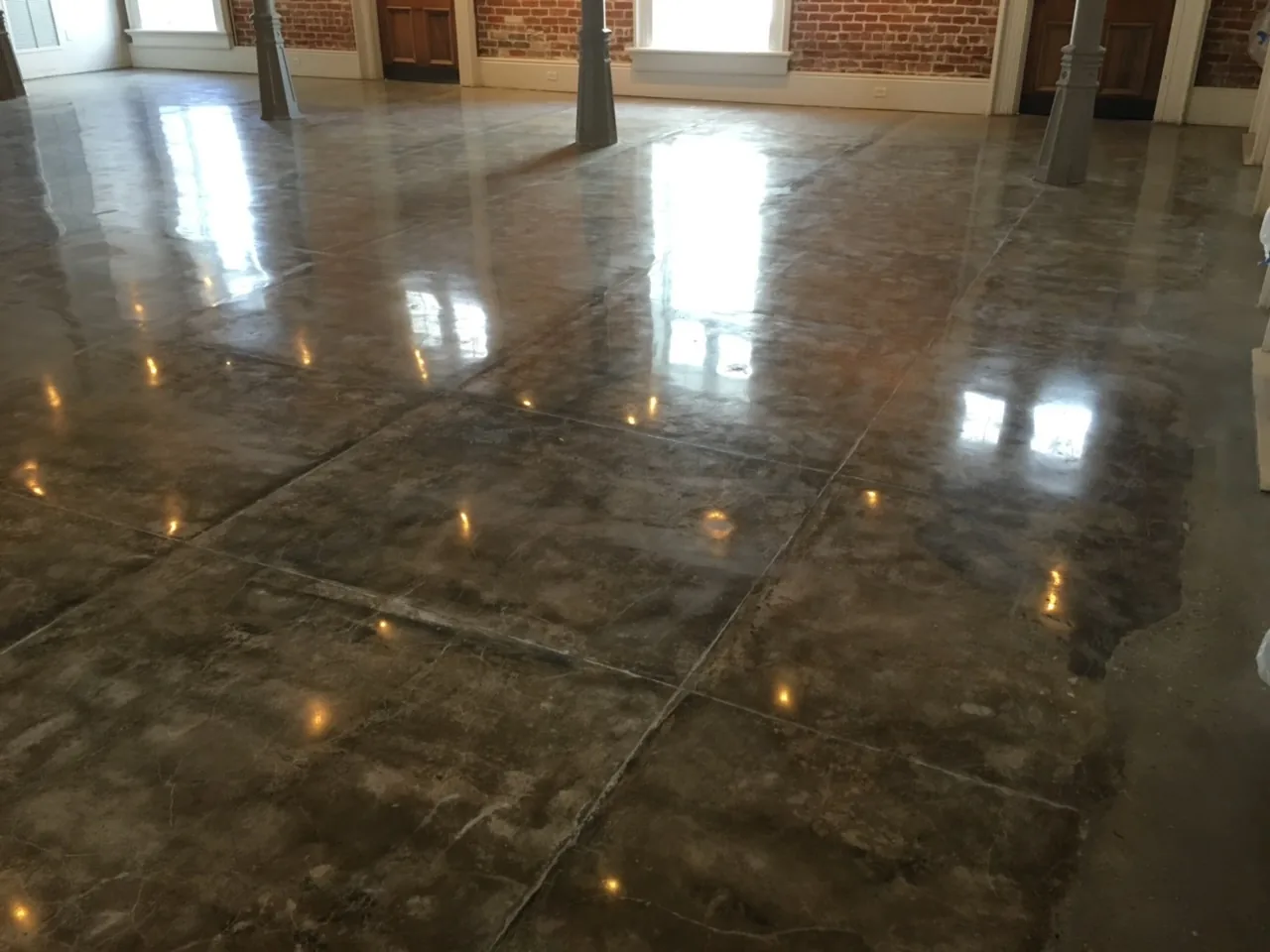
“On this particular project, they installed a Urethane Floor at the kitchen and bar and also polished the existing concrete floors throughout the building.”
David Hubbard, Google review5.0 on Google from 36 reviews
Living with it
Dust mop daily and wet clean with a neutral pH cleaner made for polished concrete. Acidic cleaners, vinegar and citrus etch the surface and pull the shine. Wipe up wine, oil and sauce soon. A worn traffic lane comes back with a burnish or a fresh guard and rarely needs a regrind.
Next to this one
See finished floorsQuestions about concrete polishing
See finished jobs in the gallery, or send the plans.
What is the difference between polished and honed concrete?
Honed concrete stops at the lower grits and leaves a flat, low-sheen finish. Polished keeps going through finer diamonds until the slab reflects light. Same machines and same start; the difference is how many passes and how much shine you want.
Can you polish an old slab with glue or paint on it?
Usually. The first metal-bond passes take off old coatings, carpet glue and tile mastic, and we fill cracks as we go. Old patches and repairs will show in the finished floor, and we tell you that up front.
Is polished concrete slippery?
Dry, a properly polished and guarded floor has decent traction, often better than waxed VCT. Water, grease and dust on top are what make it slick, so entrances get walk-off mats and kitchens get a different system.
How dusty is the job?
Far less than people expect. We grind with dust extractors hooked to the machines, and most of the polishing passes make very little dust. Occupied buildings still get the work area sectioned off.
Can you polish around racks and equipment in a working warehouse?
Yes, in sections. We work a zone at a time on nights or weekends, move product around with your crew and hand each area back as soon as the guard is down. Send the floor plan and the shutdown windows you can give us.
Does a polished floor need a coating to look good?
No. The shine is the concrete, hardened and ground smooth. The guard on top is thin and mostly there to slow stains, and it gets refreshed with a burnish when traffic lanes start to dull.
Let’s look at your floor.
Call with the address and what the floor has to survive. Someone will come look at the slab before anybody talks price.
Bidding a job? Send the plans and the schedule. We price from drawings and walk the slab before we commit to a date.