
Garage, patio, pool deck and driveway floors
Coatings and finishes for the concrete around your house: garage floors, driveways, patios and pool decks. Same crew and grinders we bring to commercial jobs, explained without the jargon.
4 pages in this family
Your garage floor takes more abuse than any room inside. Hot tires pull cheap coatings right off the slab, oil and brake fluid stain it, and in a Louisiana summer the concrete sweats. A store-bought kit rolls onto bare concrete. We grind the slab first so the coating bites in, fix the cracks, then build it up with a flake broadcast and a clear topcoat you can hose off and park on. It is the same prep we do on a warehouse, scaled down to a two-car garage.
Pool decks and patios sit in hard sun and stay wet, so they need a surface that grips when wet and does not chalk out by August, and lighter colors stay cooler underfoot.
Outside is a different fight. Pool decks and patios sit in hard sun and stay wet, so they need a surface that grips when wet and does not chalk out by August, and lighter colors stay cooler underfoot. That usually means a stamped or troweled overlay, or a stain and sealer with grit mixed in. Driveways carry cars and grow mildew in the shade, so a penetrating sealer or a textured overlay suits them better than a glossy coating. Inside the house we also polish, stain and coat floors, and Dustin can walk you through what fits.
One by one
Garage Floor Coatings
Flake, solid color, metallic or polished concrete for home garages, ground first so hot tires and oil never lift it.
Read the system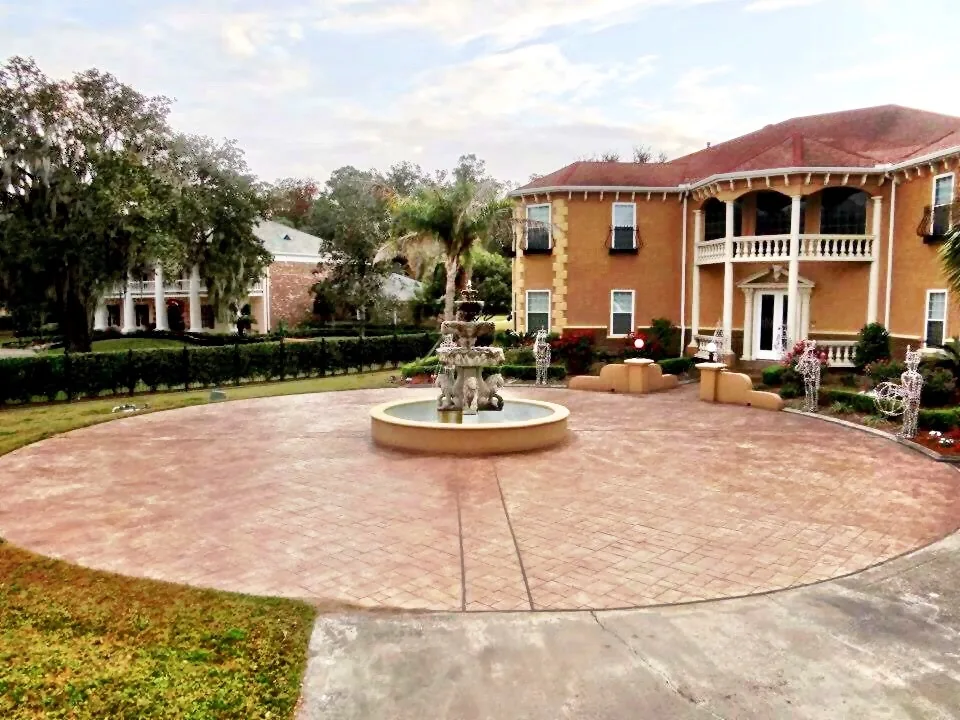
Driveway Coatings
Stain and seal, overlays and stamped overlays for sound driveways that look worn, with a straight answer when the slab needs replacing.
Read the system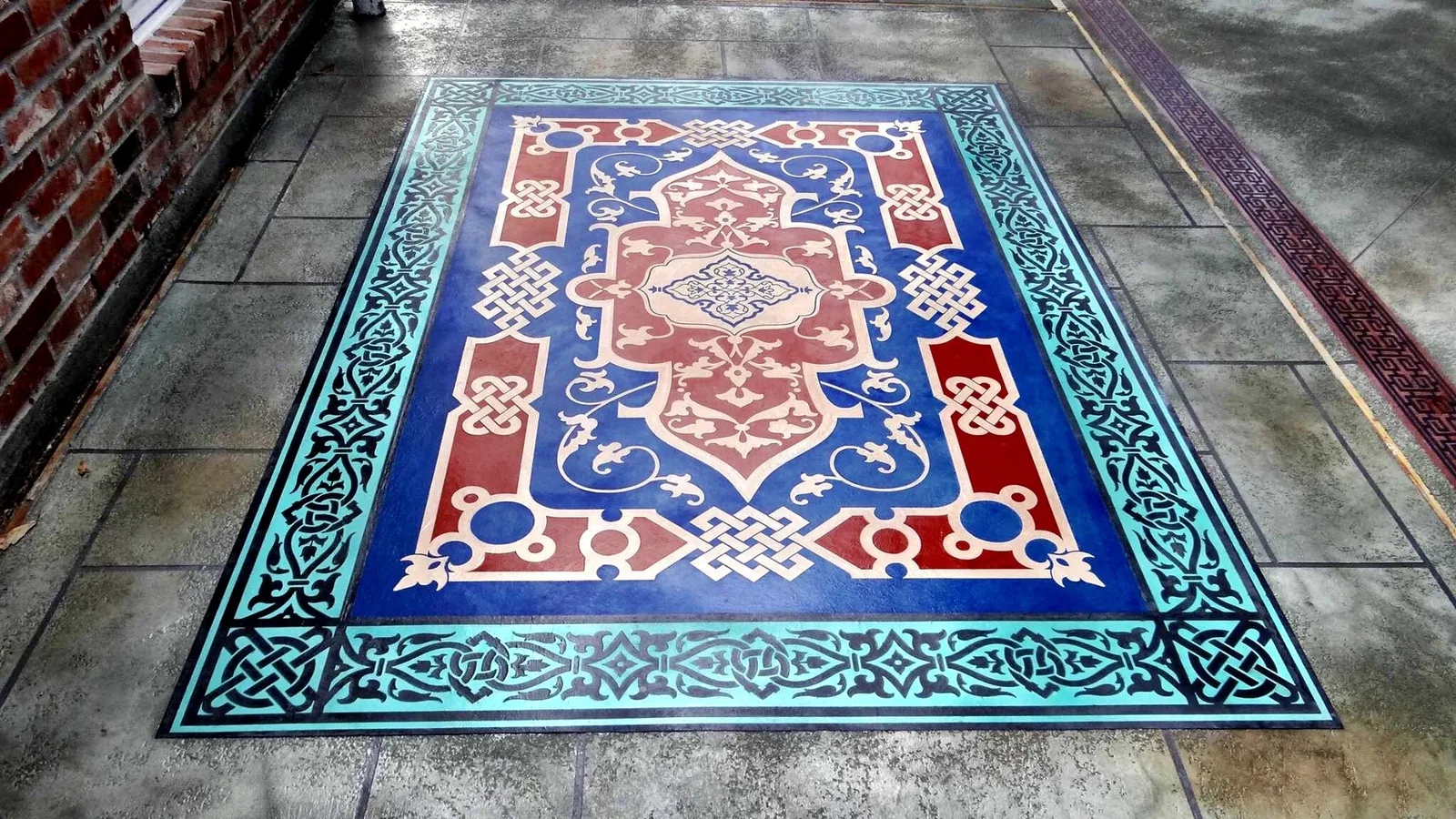
Patio Coatings
Overlays, stamped patterns and stain for covered and open patios and porches, finished with a topcoat that grips in the rain.
Read the system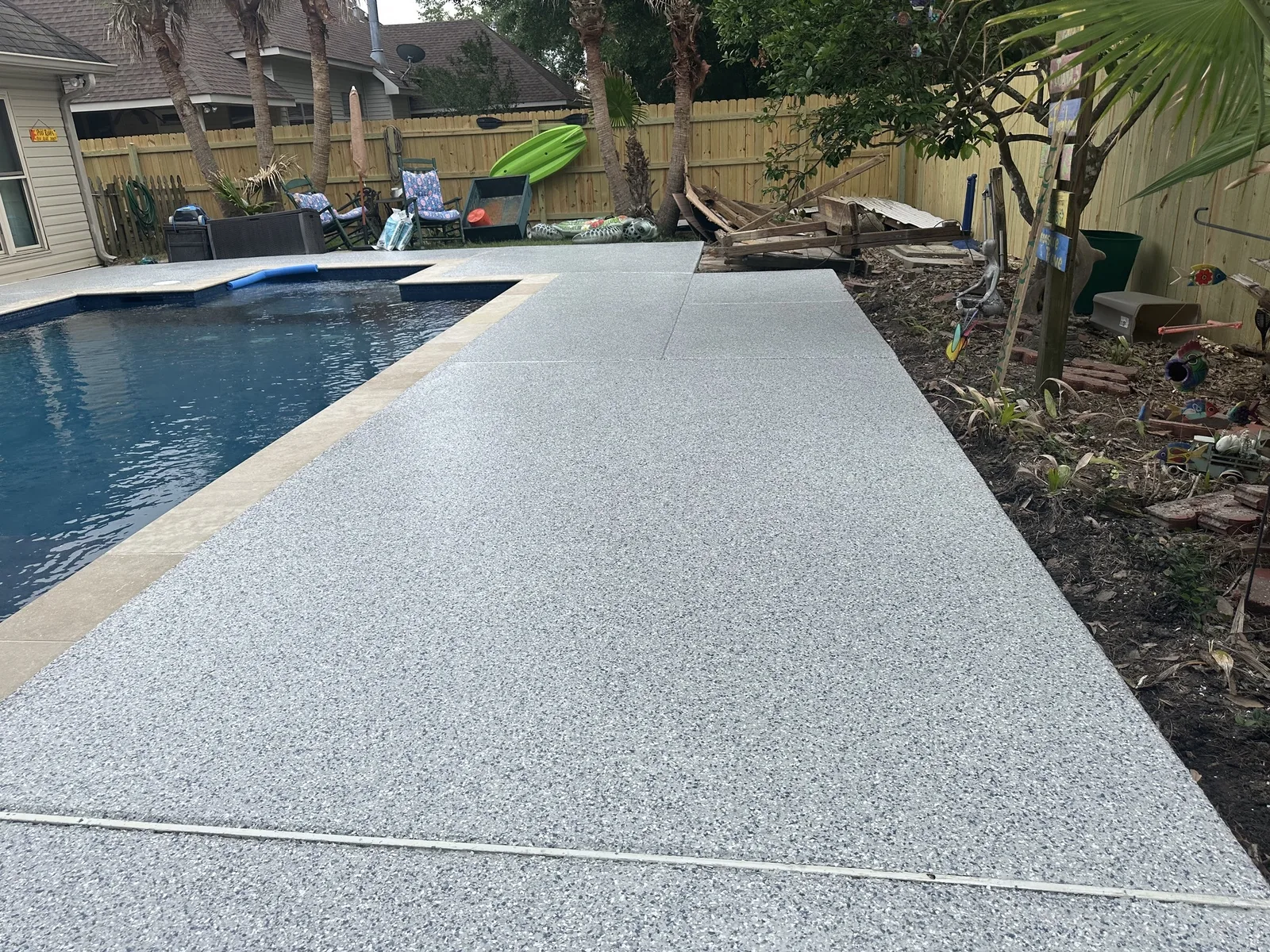
Pool Deck Coatings
Textured overlays and flake decks in light, cooler colors, sealed with grit and built to live with chlorine, salt and wet feet.
Read the systemWhich one is yours
Garage: flake or solid color?
Flake hides dust, tire marks and small chips, and the texture gives you grip when the floor is wet. Solid color looks cleaner in a showroom-style garage but shows every speck. Flake is the easier floor to live with.
Patio: overlay or stain and seal?
If the concrete is sound and you like its surface, stain and seal it with grit in the sealer. If it is cracked, stained or rough, a stamped or troweled overlay gives you a new surface and a pattern to go with it.
Driveway: sealer or coating?
Sealer, almost always. A driveway sits in open sun and rain, and a thick glossy coating gets slick and wears unevenly out there. A penetrating sealer keeps oil and water out without changing the grip, and a stamped overlay is the option if you want a new look.
Pool deck or patio: do they need different finishes?
Usually, yes. A pool deck stays wet and gets bare feet and pool chemicals, so it needs more grip, a light color and a sealer that tolerates chlorine. A covered patio sees less of all that and can carry a smoother, more decorative finish.
Whatever the system, the order holds
Every floor in this family is still a stack, built slab first.
Seal and cure
The wear layer, rolled clear or tinted, is what you walk and drive on. It cures before anyone gets the floor back.
Seed flake or quartz
Flake, quartz or grit goes into the wet body coat for texture and grip. Solid-color floors skip it or take a light grit.
Roll the build
The body coat carries the thickness and the color, pulled to the mils on the spec and back-rolled so it lays flat.
Prime and seal
Primer soaks into the opened concrete and locks the stack to it. Where vapor runs high, a moisture-mitigating primer goes down first.
Grind or shot blast
Diamond grinders or a shot blaster open the surface to the CSP the system calls for, all under vacuum. Cracks and joints get filled here.
Test and map
We check moisture and vapor, mark cracks, spalls and joints, and find out what has soaked into the concrete. On-grade slabs down here sweat, so this step picks the system.
Often paired with
Epoxy Flooring
Solid-color epoxy over a ground slab, built in coats to the thickness the room needs, for commercial floors and homes.
Metallic Epoxy Flooring
Hand-worked metallic pigment in clear epoxy, giving showrooms, restaurants and homes a deep, moving floor no one else will have.
Flake Epoxy Flooring
Vinyl chips broadcast to full coverage in epoxy under a clear topcoat, for floors that see water, boots and spills.
Quartz Epoxy Flooring
Colored quartz aggregate in epoxy, sealed clear, for locker rooms, commercial kitchens, labs and healthcare floors that get washed every day.
Questions about residential work
Not sure? You can book a slab visit, or see the gallery.
Rather ask a person? The office picks up.
(504) 231-6298How long until I can park in my garage?
With most of our garage systems you can walk on it the next day and park on it after a few days, typical in warm weather. Cold snaps and very humid days slow the cure. We tell you the exact wait for your floor before we leave.
Will it peel like the coating on my neighbor’s garage?
Peeling almost always comes from skipped prep or moisture coming up through the slab. We grind the slab, test for moisture and use a primer made for it when we need to. Hot tire pickup on a kit floor is a prep problem.
Is a coated garage floor slippery?
A glossy floor with no texture can be slick when wet. Flake and quartz floors have texture built in, and we can add grit to the topcoat if you hose the garage out often or it slopes to the door.
Can you coat a cracked driveway or patio?
We fill and repair the cracks first, but a crack that is still moving will come back through any coating or overlay. We will tell you which cracks are cosmetic and which ones are the slab settling, before you pay for a new surface.
Do you work on homes outside New Orleans?
Yes. We go about 100 miles out from Harvey, across Southeast Louisiana, the Mississippi Gulf Coast and Pine Belt, southwest Mississippi and Mobile County, Alabama. Dustin sets up a time to come look at the concrete.
Call it in or send the plans
Call with the address and what the floor has to survive. Someone will come look at the slab before anybody talks price.
Send the plans
Bidding a job? Send the plans and the schedule. We price from drawings and walk the slab before we commit to a date.