
Heavy traffic and Wiggins floors that take it
At 87 miles northeast of Harvey, Wiggins is a normal run for a crew hauling grinders and dust collectors. Commercial jobs get scheduled around your shutdown window, and homeowners get a straight answer on what the slab needs.
Wiggins, Stone County, Mississippi.
Homes and businesses here
Housing figures from the US Census.
The median home in Wiggins was built around 1971, by the Census count. A fifty-year-old garage slab has usually earned its cracks. If the control joints were cut shallow or late, the slab cracked where it wanted to.
We fill those cracks to suit the coating plan and treat real joints as joints.
Numbers like these are why we ask what the space is used for before we talk systems.
Hattiesburg anchors the region with the University of Southern Mississippi, its major hospitals and a steady run of medical offices, schools and retail going up around them. Around Stone County, the floor work is mostly this: shop and equipment floors on timber and farm land, garages on newer homes, and school and town buildings in Wiggins. The nearest towns on our list range from Lumberton (typical home around 1975) to Saucier (around 1981); Wiggins lands on the older side.
The rest of the Pine Belt leans on timber, mills, small industry and farming, with older brick downtowns and newer houses spread out along the highways.
Most homes here are stand-alone houses, about 75 in every 100. Neighborhoods of houses carry plenty of slabs that have never been coated, and a bare slab is the easiest kind to start with.
Humidity and the slab
The Pine Belt.
Wiggins is in Stone County, about 87 miles northeast of the shop.
Katrina crossed the Pine Belt in 2005 with hurricane-force wind far inland and knocked down timber across the region, and tornadoes have torn through Hattiesburg and nearby towns since. Up here, storms mean roof leaks, broken windows and water inside buildings more often than surge. A floor that got wet from above needs the same care as one that flooded: old finish off, cracks repaired, moisture tested, then the new system.
Before filling a crack in an older slab, have it checked for movement, since a rigid filler in a crack that still moves will open right back up.
Book a school or campus floor into a break between terms, since the grind, the build and the cure need empty rooms to run without stopping.
For a mill or timber equipment shop, go thick with a troweled or broadcast system, because skidder parts, chain and mud wear out roll-on coatings in a season.
Polish or coating
Garage Floor Coatings
Flake, solid color, metallic or polished concrete for home garages, ground first so hot tires and oil never lift it.
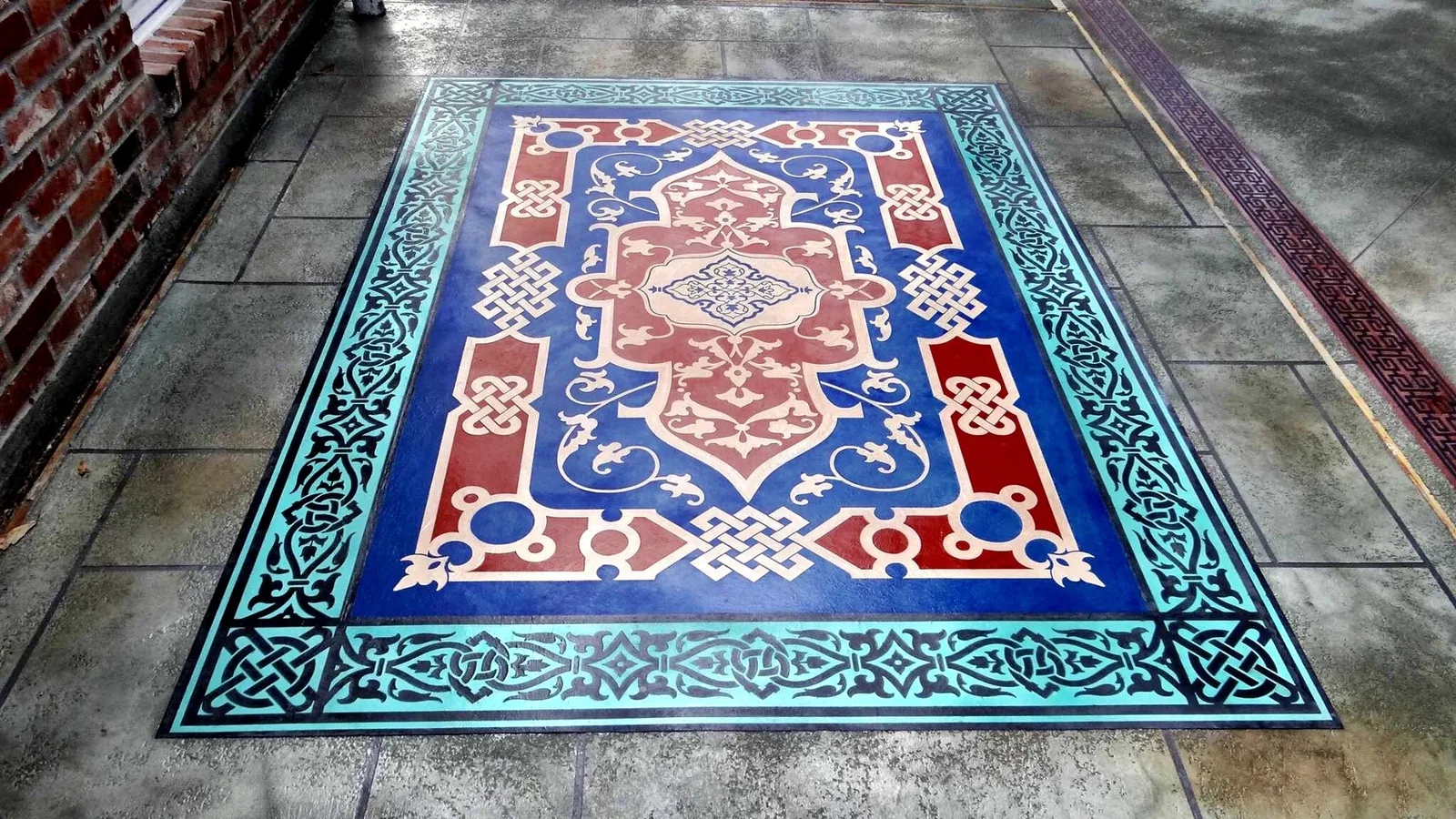
Patio Coatings
Overlays, stamped patterns and stain for covered and open patios and porches, finished with a topcoat that grips in the rain.
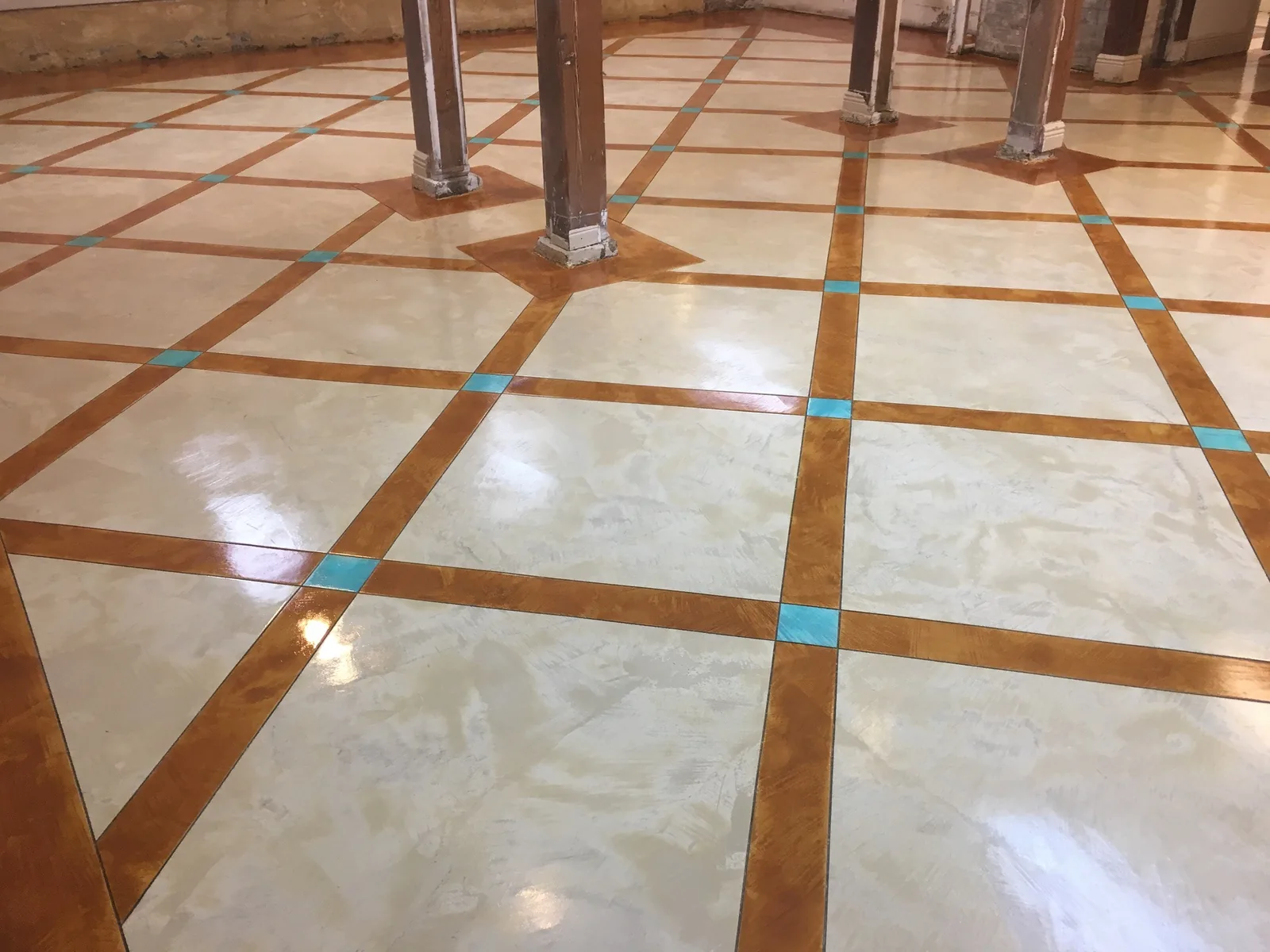
Concrete Staining
Reactive acid stain that gives a slab mottled, variegated color, scored or stenciled if you want a pattern, then sealed.
How any floor here gets built
The same order on every job, whatever the system.
Topcoat or guard, set to the traffic and the shine you want.
The color and the thickness: epoxy, urethane cement, stain or an overlay.
Soaks in and locks the system to the concrete.
Ground or shot blasted until the surface opens up and a coating can bite.
The concrete as we find it. Moisture, old sealer and cracks decide everything above it.
The next towns over
- Bond
3.5 miles away, Stone County
- Saucier
16 miles away, Harrison County
- Benndale
20 miles away, George County
- Lumberton
22 miles away, Lamar County
More in Stone County, on the services page and in the gallery.
Do you come out to Wiggins?
Yes. Wiggins is about 87 miles northeast of our base in Harvey, inside the roughly 100 miles we cover. Someone comes out, looks at the slab and gives you a price after seeing it.
What should I know about a slab from around 1971?
Check whether it is post-tensioned before anyone drills or cuts. Grinding and coating are surface work and safe either way.
Why do cracks keep coming back in Pine Belt slabs?
Often the crack is still moving, from the ground underneath or from the slab itself. A rigid filler cannot follow that movement, so it breaks loose. We check the crack, then choose a semi-rigid or flexible repair and carry it through the coating system.
What floor works in a sawmill shop or timber equipment barn?
A thick troweled epoxy, urethane cement or heavy broadcast system over a ground or shot-blasted slab. Mud, chain, hydraulic oil and steel tracks wear through thin coatings fast. Coarse texture keeps it walkable when it is wet.
Do you put down floors in hospitals and medical offices around Wiggins?
Yes, healthcare is one of the kinds of work we take first. Those floors need easy cleaning, slip resistance and often cove base, and the work has to fit the facility’s infection control rules and hours. Samples and product data are available for submittals.
Do I have to be there for the visit?
It helps. You know where the leaks, old spills and soft spots are, and Dustin can answer questions on the spot. If you cannot make it, a manager or contractor who knows the space works fine.
When can I walk on it?
Light foot traffic is typically fine within a day on most coatings, and full cure takes longer. We give you the timing for your system, because urethane cement, epoxy and polished concrete all behave differently.
Should I clean the slab before you arrive?
Sweep it if you like, but the grinder does the real cleaning. Tell us about oil spots, chemical spills or anything soaked into the concrete so we can plan for it.
After a flood, how soon can a floor be coated?
Not until the slab has dried out and been tested. Flood water leaves salts and silt in the concrete, so we grind deeper and check moisture before committing to a coating. Rushing it is how a new floor fails a year later.
Two ways to start
Five minutes on the phone usually tells us whether it is a grind and seal, a coating or a polish.
Send the plans
Facility managers and GCs: send what you have, even a floor plan sketch, and the dates the space can be shut down.