
Where Roseland floors start: the slab
With Roseland sitting 66 miles northwest of Harvey, a site visit is a normal day for us. Dustin looks at the slab and asks about traffic and timing, then Jacob’s crew takes it from there.
Roseland, Tangipahoa Parish, Louisiana.
The drive from Harvey
Housing figures from the US Census.
Census numbers put the typical home in Roseland at about 1982. Ceramic tile set in thinset became common in the 1980s, and pulling it leaves ridges of mortar stuck to the slab. Those ridges grind down, but they take time.
We usually plan an extra day of prep for a tiled room compared with one that had carpet.
Slabs in Roseland deal with the same heavy rain and long humid summers as the south shore, and on-grade concrete still pulls moisture vapor up from below. Around Tangipahoa Parish, the floor work is mostly this: distribution warehouses, campus buildings, farm sheds and homes still recovering from the 2016 flood, each needing a different floor. Close by, typical homes run from about 1969 in Amite City to 1983 in Montpelier, and Roseland sits on the newer side of that spread.
Up in the Florida Parishes, Roseland sits in Tangipahoa Parish, where pine and hardwood country mixes with fast-growing suburbs, small farm towns and horse pastures.
Stand-alone houses make up the bulk of it, roughly 73%. When nearly every home is a house, the driveway counts as a floor too. Concrete that has cracked or stained out front can be repaired and coated with something built for sun and rain.
That mix decides who calls: owners redoing a garage or patio, landlords between tenants, or a business with a shop or a kitchen.
Flood water and old floors
The Northshore and the Florida Parishes.
Roseland is in Tangipahoa Parish, about 66 miles northwest of the shop.
New construction drives a lot of the floor work north of the lakes. Fresh slabs hold a great deal of water while they cure, and a builder’s schedule often wants flooring down before the concrete is ready. Coatings and glued floors installed over green concrete blister, debond or cloud. We test new slabs the same as old ones, and when the schedule cannot wait, a moisture-tolerant primer or urethane cement lets the work go ahead without gambling the finish.
For an equipment shed or farm shop in the country around Roseland, a broadcast system with coarse aggregate gives traction a smooth coat never will.
Pick a lighter color and a textured finish for a pool deck, so bare feet do not burn or slide when the deck gets wet.
Use a UV-stable urethane topcoat on patios, pool decks and open garages, since plain epoxy yellows once it sits in the sun for a summer.
Choosing a floor for Roseland
Garage Floor Coatings
Flake, solid color, metallic or polished concrete for home garages, ground first so hot tires and oil never lift it.
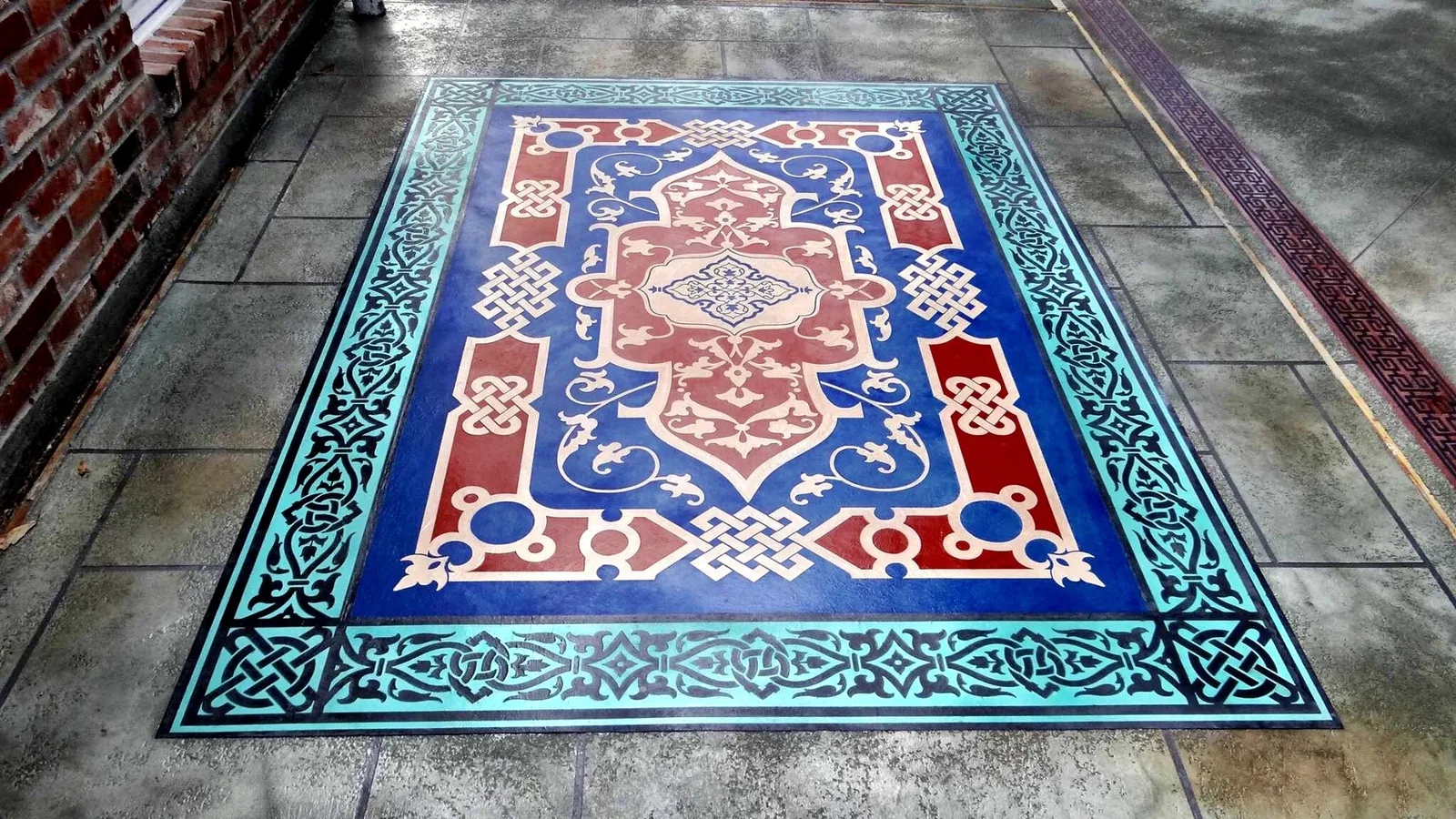
Patio Coatings
Overlays, stamped patterns and stain for covered and open patios and porches, finished with a topcoat that grips in the rain.
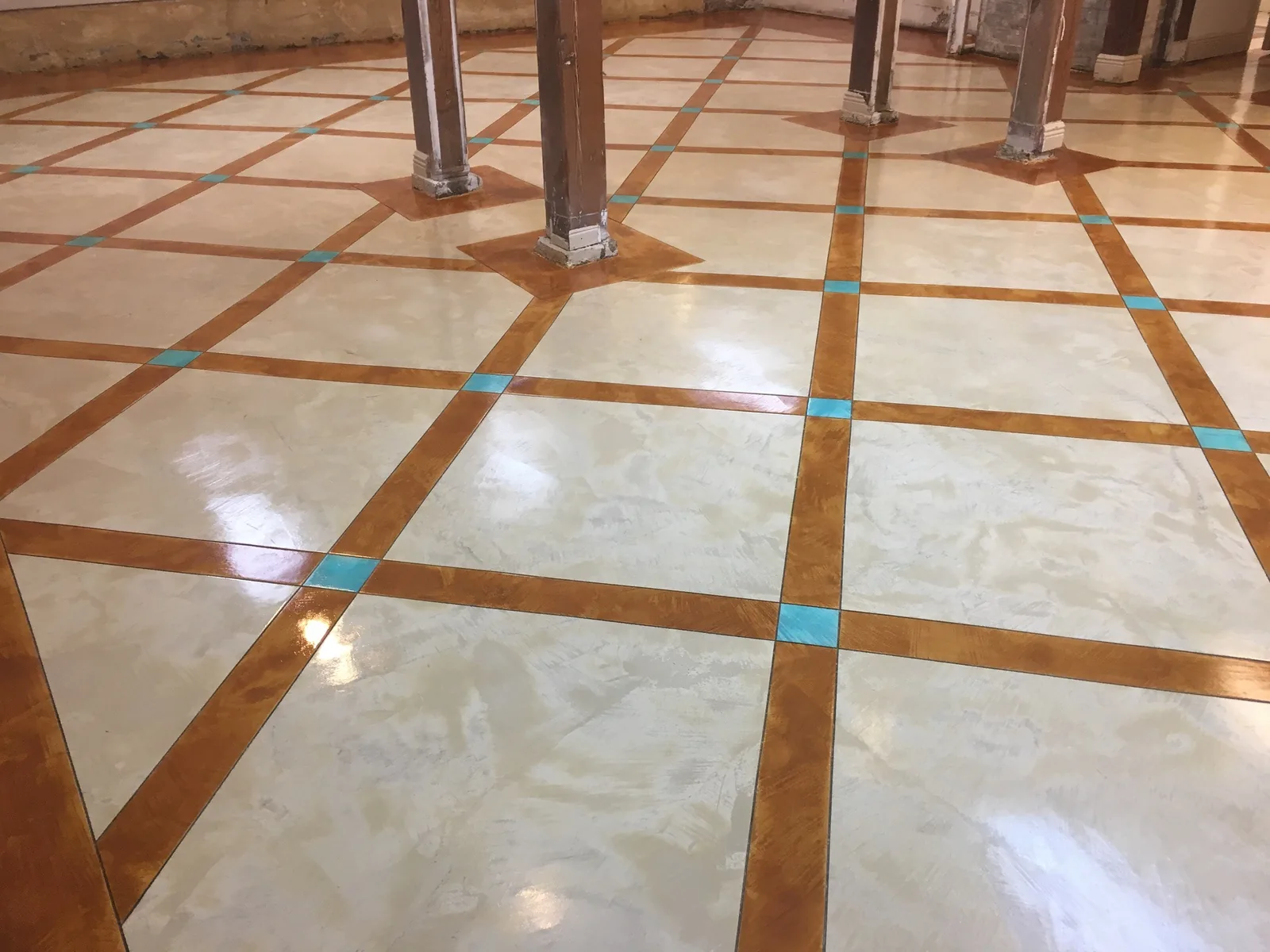
Concrete Staining
Reactive acid stain that gives a slab mottled, variegated color, scored or stenciled if you want a pattern, then sealed.
How any floor here gets built
The same order on every job, whatever the system.
The finish you actually walk on, matched to the use.
Where the system gets its build: resin, cement or a decorative overlay.
Soaks in and locks the system to the concrete.
Ground or shot blasted until the surface opens up and a coating can bite.
Whatever the slab is, it gets read first: moisture, cracks, old coatings, and how level it sits.
The next towns over
- Amite City
2.2 miles away, Tangipahoa Parish
- Tangipahoa
7.7 miles away, Tangipahoa Parish
- Independence
8.8 miles away, Tangipahoa Parish
- Montpelier
10 miles away, St. Helena Parish
More in Tangipahoa Parish, on the services page and in the gallery.
Do you come out to Roseland?
Yes. Roseland is about 66 miles northwest of our base in Harvey, inside the roughly 100 miles we cover. Someone comes out, looks at the slab and gives you a price after seeing it.
What should I know about a slab from around 1982?
Slabs from the 1980s are often dense from power troweling, which polishes well and needs a good grind before any coating. Carpet glue and thinset are the usual leftovers.
What floor works in an equipment shed or farm shop?
Tractors, trailers and dropped tools need a thick system with coarse texture, usually a broadcast epoxy or urethane cement over a ground slab. It cleans up with a hose and keeps its grip when the floor is wet or muddy.
Can an older slab in a farm town be polished?
If the concrete is sound and reasonably flat, yes. Old slabs often show aggregate, patches and stains once ground, and plenty of owners like that look. Badly damaged or uneven floors may need repair or a micro-topping first.
Do you build floors for schools, clinics and new retail?
Yes. Polished concrete, epoxy and slip-resistant coatings all fit those buildings, and we work to the general contractor’s schedule and submittals. Samples and product data are available on request.
Do you take floor jobs on the Northshore and in Roseland?
Yes. St. Tammany, Tangipahoa, Livingston, Washington and St. Helena are all inside the area we cover from Harvey. Contractors can send plans and the schedule, and homeowners can have Dustin come look at the floor.
Which details help you put a quote together?
The size of the area, what the floor has to handle and when you need it back. For commercial work, add the specs, the shutdown window and any submittal requirements. From there we come back with a price.
Can you work around our business hours?
Commercial jobs often run nights, weekends or inside a planned shutdown window. Tell us when the floor has to be back in service and we build the sequence backward from that date.
Does anyone need to be home during the work?
Only for access at the start and a walkthrough at the end, unless you want to watch. Grinding is loud, so pets and kids are better off somewhere else that day.
My slab sweats in the summer. Is that a problem?
It means moisture is reaching the surface, from below, from the air or both. We test to see which, then pick a primer and system that can handle it. Coating a sweating slab without that step is how floors peel.
Call it in or send the plans
Tell us the space, the square footage and what goes on the floor. We will tell you which system fits and when we can start.
Send the plans
Facility managers and GCs: send what you have, even a floor plan sketch, and the dates the space can be shut down.