
Slabs around Marrero, handled from Harvey
Twenty-two years on grinders taught Jacob Lawson one thing about Gulf concrete: it holds water. Floors in Marrero get a moisture check before a primer is chosen, because that call decides whether a coating stays down. It sits in Jefferson Parish, about 2.8 miles west of Harvey.
Marrero, Jefferson Parish, Louisiana.
A look at Marrero
Housing figures from the US Census.
Census numbers put the typical home in Marrero at about 1973. A fifty-year-old garage slab has usually earned its cracks. If the control joints were cut shallow or late, the slab cracked where it wanted to.
We fill those cracks to suit the coating plan and treat real joints as joints.
Numbers like these are why we ask what the space is used for before we talk systems.
Commercial floor work around Marrero runs on tight windows, because a restaurant, a school or a store in this metro rarely gets to close its doors for long. Around Jefferson Parish, the floor work is mostly this: harvey Canal shops, Metairie storefronts, Kenner kitchens and garages on both banks, close enough to start early and stay late.
Floors in Marrero live with the same Gulf air as the rest of the metro: wet heat most of the year and slabs that sweat whenever warm, heavy air rolls in over cool concrete.
Stand-alone houses make up the bulk of it, roughly 80%. Most people here live in houses, which puts carports, back patios and garage floors near the top of the list.
Flood water and old floors
The New Orleans metro.
Marrero is in Jefferson Parish, about 2.8 miles west of the shop.
The building stock runs from century-old commercial buildings with tired, patched slabs to suburban strip centers and new restaurants poured last year. Old slabs usually mean layers of tile mastic, paint and past repairs, plus joints that have moved. New slabs bring the opposite problem: they hold water while they cure, and flooring put down too early fails. Either way, prep decides the floor. Grinding to the right profile, filling joints properly and reading the moisture are most of the job.
For a restaurant or commercial kitchen in Marrero, urethane cement handles hot water, grease and daily washdown far better than a thin epoxy roll coat ever will.
Garage and patio owners should go with a flake or slip-resistant finish, because a glossy floor turns slick fast once humid air or tracked-in rain hits it.
If the building took water in a past storm, plan for full grinding and repair, since old flood residue under a new coating is how floors fail early.
Systems that hold up here
Garage Floor Coatings
Flake, solid color, metallic or polished concrete for home garages, ground first so hot tires and oil never lift it.

Patio Coatings
Overlays, stamped patterns and stain for covered and open patios and porches, finished with a topcoat that grips in the rain.
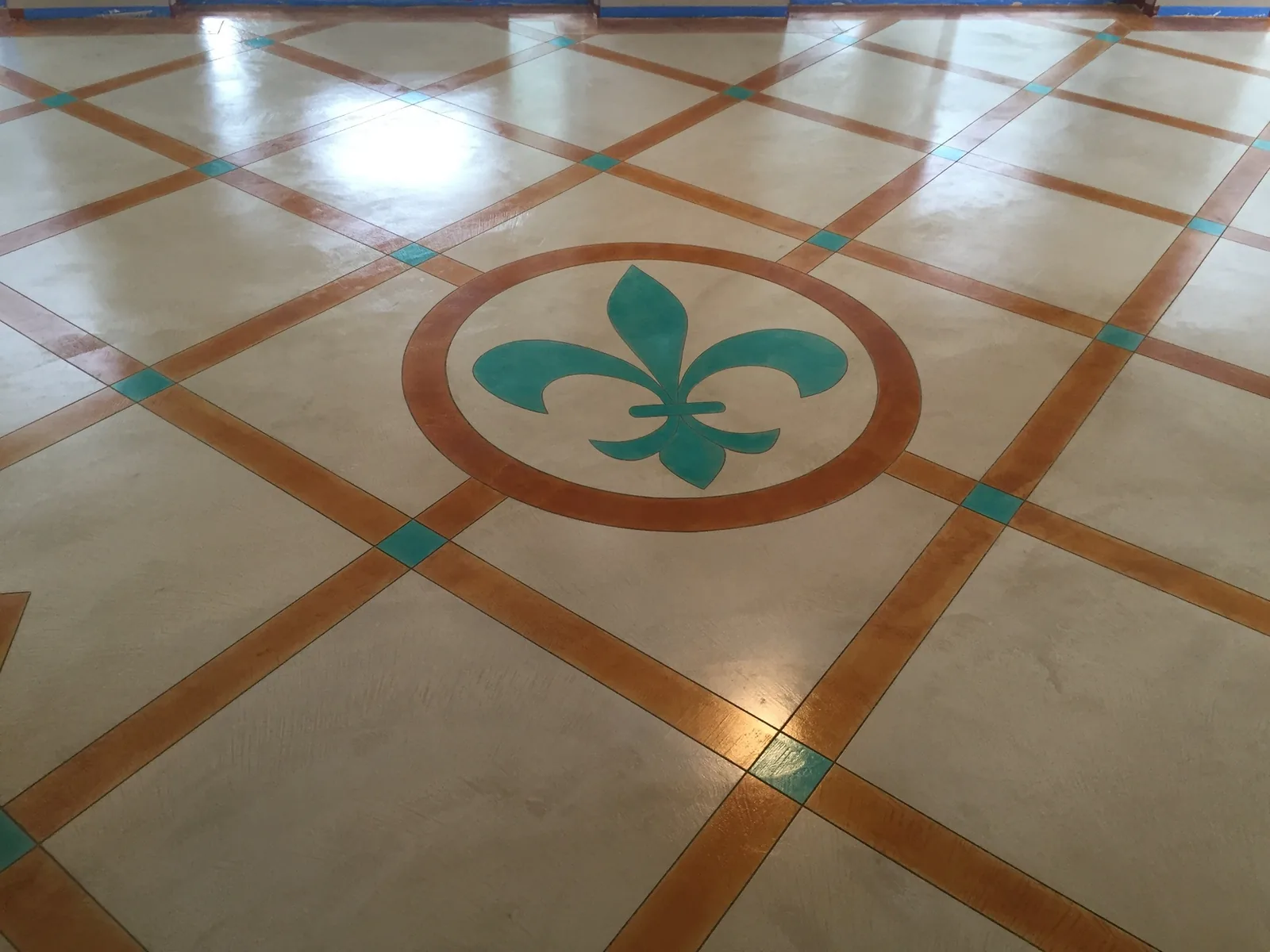
Concrete Staining
Reactive acid stain that gives a slab mottled, variegated color, scored or stenciled if you want a pattern, then sealed.
How any floor here gets built
The same order on every job, whatever the system.
The finish you actually walk on, matched to the use.
Where the system gets its build: resin, cement or a decorative overlay.
Soaks in and locks the system to the concrete.
Ground or shot blasted until the surface opens up and a coating can bite.
Whatever the slab is, it gets read first: moisture, cracks, old coatings, and how level it sits.
The next towns over
- Westwego
2.3 miles away, Jefferson Parish
- Harvey
2.8 miles away, Jefferson Parish
- Estelle
3.3 miles away, Jefferson Parish
- Woodmere
3.9 miles away, Jefferson Parish
More in Jefferson Parish, on the services page and in the gallery.
Do you come out to Marrero?
Yes. Marrero is about 2.8 miles west of our base in Harvey, inside the roughly 100 miles we cover. Someone comes out, looks at the slab and gives you a price after seeing it.
What should I know about a slab from around 1973?
Check whether it is post-tensioned before anyone drills or cuts. Grinding and coating are surface work and safe either way.
What finish suits an old slab in an older building?
Polished or honed concrete often suits an old slab if it is sound, because it shows the character of the concrete instead of covering it. Heavily patched or uneven slabs may need a micro-topping or an overlay first. We look at the floor before we recommend either.
How do you handle moisture coming up through older metro slabs?
We test the slab before we quote a system. When vapor readings are high, we use a moisture-mitigating primer or a urethane cement built for it instead of hoping a standard epoxy holds. That test costs far less than tearing out a failed floor.
Do you take commercial floor work in Marrero?
Yes. The crew is based in Harvey and covers the New Orleans metro, from restaurants and schools to warehouses and plants. A general contractor can send drawings, square footage and the schedule, or Dustin can come out and look at the slab.
Does the humidity change how long a floor takes to cure?
It can. Heat and humidity change cure times for epoxies and urethanes, and some products blush or cloud when the air is wrong. We pick products and time the coats around the conditions on the day, and we tell you when the floor is ready for traffic.
Can you quote from photos or plans instead of a visit?
For commercial jobs, drawings, square footage and a schedule are often enough to price the work, with a look at the slab before we start. For homes, photos help, but we want to see the concrete in person before we commit to a system.
How long does a typical floor take?
A two-car garage usually takes one to two days of work plus cure time. Bigger commercial floors depend on square footage, the system and how much prep the slab needs, and the schedule comes with the quote.
Where do furniture, cars and equipment go?
Everything comes out of the work area, and cars stay out until the coating cures. For a plant or a kitchen, plan where the equipment sits during the job and when it comes back.
My slab sweats in the summer. Is that a problem?
It means moisture is reaching the surface, from below, from the air or both. We test to see which, then pick a primer and system that can handle it. Coating a sweating slab without that step is how floors peel.
Call it in or send the plans
Call with the address and what the floor has to survive. Someone will come look at the slab before anybody talks price.
Send the plans
General contractors: send drawings, square footage, finish schedule and the window you have. Submittals and samples on request.