
Urethane cement where Franklin kitchens run hot
Big city or small, Franklin deals with the same concrete trouble as the rest of the Gulf South: vapor coming up from below and old adhesive sitting on top. Our crew has spent 22 years grinding through it. It sits in St. Mary Parish, about 87 miles west of Harvey.
Franklin, St. Mary Parish, Louisiana.
Who lives and works in Franklin
Housing figures from the US Census.
The median home in Franklin was built around 1964, by the Census count. Your Franklin house from the 1960s probably sits on a slab that finished its settling long ago. Settled concrete is easier to plan around than new.
Cracks that stopped moving years ago can be filled and coated with real confidence.
Franklin is in St. Mary Parish, Atchafalaya and Bayou Teche country, where the basin swamp, the sugarcane fields and the boat yards all sit within a short drive of each other. Around St. Mary Parish, the floor work is mostly this: fabrication shops, marine yards and oilfield service buildings in salt air and storm country, plus homes along the bayous.
Floors around Franklin live with basin water close by, long humid summers and Gulf storms that come up through the marsh, so moisture is a question on every slab.
Most homes here are stand-alone houses, about 77 in every 100. Mostly detached housing points toward residential coatings: garage epoxy, patio overlays, pool deck finishes and the occasional polished interior slab.
That mix decides who calls: owners redoing a garage or patio, landlords between tenants, or a business with a shop or a kitchen.
When the slab stays damp
The Atchafalaya and Bayou Teche country.
Franklin is in St. Mary Parish, about 87 miles west of the shop.
Sugar mills run hard through grinding season in the fall, and the mills, equipment barns and cane farm shops around them want rough, washable floors with real traction. Storm water has reached buildings across the lower parishes more than once. Older slabs in the Teche towns usually carry decades of paint, tile and patching too, and all of it comes off before a new floor is worth putting down.
For a yard or fab shop, size the floor to the heaviest thing that gets dropped or dragged across it, because thin coatings fail fast under steel and slag.
Moisture test every on-grade slab near the basin before choosing a system, since water sitting close underneath will push a standard primer off the concrete.
Mill and cane farm shop floors should get a coarse broadcast texture, because field mud and wet boots turn a smooth coating into a hazard within a day.
Which coating for which room
Garage Floor Coatings
Flake, solid color, metallic or polished concrete for home garages, ground first so hot tires and oil never lift it.
Patio Coatings
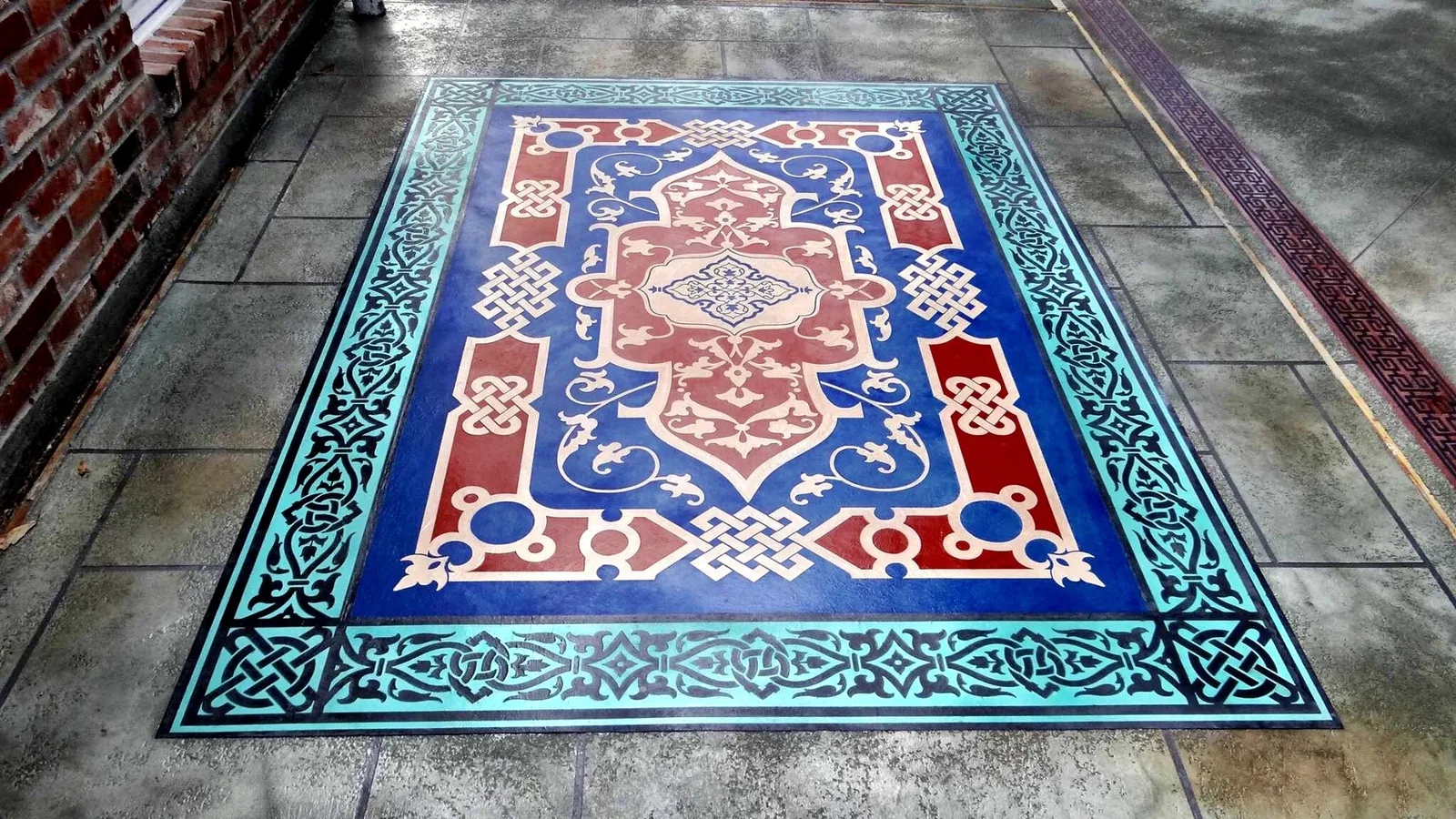
Overlays, stamped patterns and stain for covered and open patios and porches, finished with a topcoat that grips in the rain.
Concrete Restoration
Spall, crack and joint repair, patching, re-leveling and coating removal that puts damaged or flooded slabs back to work.
How any floor here gets built
The same order on every job, whatever the system.
The finish you actually walk on, matched to the use.
Where the system gets its build: resin, cement or a decorative overlay.
Soaks in and locks the system to the concrete.
Ground or shot blasted until the surface opens up and a coating can bite.
Whatever the slab is, it gets read first: moisture, cracks, old coatings, and how level it sits.
The next towns over
- Baldwin
4.7 miles away, St. Mary Parish
- Centerville
5.4 miles away, St. Mary Parish
- Charenton
6 miles away, St. Mary Parish
- Patterson
14 miles away, St. Mary Parish
More in St. Mary Parish, on the services page and in the gallery.
Do you come out to Franklin?
Yes. Franklin is about 87 miles west of our base in Harvey, inside the roughly 100 miles we cover. Someone comes out, looks at the slab and gives you a price after seeing it.
What should I know about a slab from around 1964?
Look for plumbing patches, tack strip holes and glue under any carpet or tile. Each one adds prep time, and Dustin can tell you how much once he sees the floor.
How thick should a floor be in a boat yard or pipe shop?
Thick enough for what lands on it. Troweled epoxy and urethane cement go down far heavier than a roll coat, and a heavy broadcast build adds grip and wear. We set the build over a shot-blasted slab once we know the loads.
What floor does a crawfish or seafood processing room need?
Urethane cement, run up the walls as cove base and finished with a texture that grips under water. Those rooms get hot water and harsh cleaners every shift, and urethane cement handles both. We check the drains and the slope before the build so water actually leaves the room.
Can an old storefront in a Teche town get a polished floor?
We find out after the grind. If the concrete under the tile and glue is sound, a honed or polished finish shows its age, patches included. Where it is broken up or badly out of level, we repair it or put down a micro-topping instead.
How long does a typical floor take?
A two-car garage usually takes one to two days of work plus cure time. Bigger commercial floors depend on square footage, the system and how much prep the slab needs, and the schedule comes with the quote.
Is there anything to do for a commercial floor before you start?
Send the submittal requirements and any site safety rules early. Have equipment moved, drains and doorways marked and the area closed to other trades while we work.
Does hurricane season change the schedule?
Indoor work goes on as normal. Outdoor jobs and anything with a long cure get planned around the forecast, and if a storm is coming we would rather move the date than rush a coating.
Start with the slab
Tell us the space, the square footage and what goes on the floor. We will tell you which system fits and when we can start.
Send the plans
General contractors: send drawings, square footage, finish schedule and the window you have. Submittals and samples on request.