
Getting Centerville slabs ready for a coating
Older buildings and new subdivisions sit side by side in a lot of Gulf towns, so a slab in Centerville can be anything from clean and bare to coated three times over. We sort that out first. It sits in St. Mary Parish, about 82 miles west of Harvey.
Centerville, St. Mary Parish, Louisiana.
The drive from Harvey
Housing figures from the US Census.
Census numbers put the typical home in Centerville at about 1987. Garages from the eighties often have a clear sealer someone rolled on years ago. It is hard to see, but water beads on it, and a primer would too.
A grind takes it off, and a cleaner alone does not.
That mix decides who calls: owners redoing a garage or patio, landlords between tenants, or a business with a shop or a kitchen.
Floors around Centerville live with basin water close by, long humid summers and Gulf storms that come up through the marsh, so moisture is a question on every slab. Around St. Mary Parish, the floor work is mostly this: fabrication shops, marine yards and oilfield service buildings in salt air and storm country, plus homes along the bayous.
Morgan City and the towns along the lower Atchafalaya build and service boats, barges and offshore equipment, so shop and yard floors here take steel, oil and heavy wheels.
Most homes here are stand-alone houses, about 93 in every 100. Single-family homes dominate, so most floor work starts in a garage or out back. Commercial floors in a place like this tend to be shops, restaurants and small offices.
Water coming up from below
The Atchafalaya and Bayou Teche country.
Centerville is in St. Mary Parish, about 82 miles west of the shop.
Sugar mills run hard through grinding season in the fall, and the mills, equipment barns and cane farm shops around them want rough, washable floors with real traction. Storm water has reached buildings across the lower parishes more than once. Older slabs in the Teche towns usually carry decades of paint, tile and patching too, and all of it comes off before a new floor is worth putting down.
For a yard or fab shop, size the floor to the heaviest thing that gets dropped or dragged across it, because thin coatings fail fast under steel and slag.
Moisture test every on-grade slab near the basin before choosing a system, since water sitting close underneath will push a standard primer off the concrete.
Mill and cane farm shop floors should get a coarse broadcast texture, because field mud and wet boots turn a smooth coating into a hazard within a day.
Floors that fit Centerville
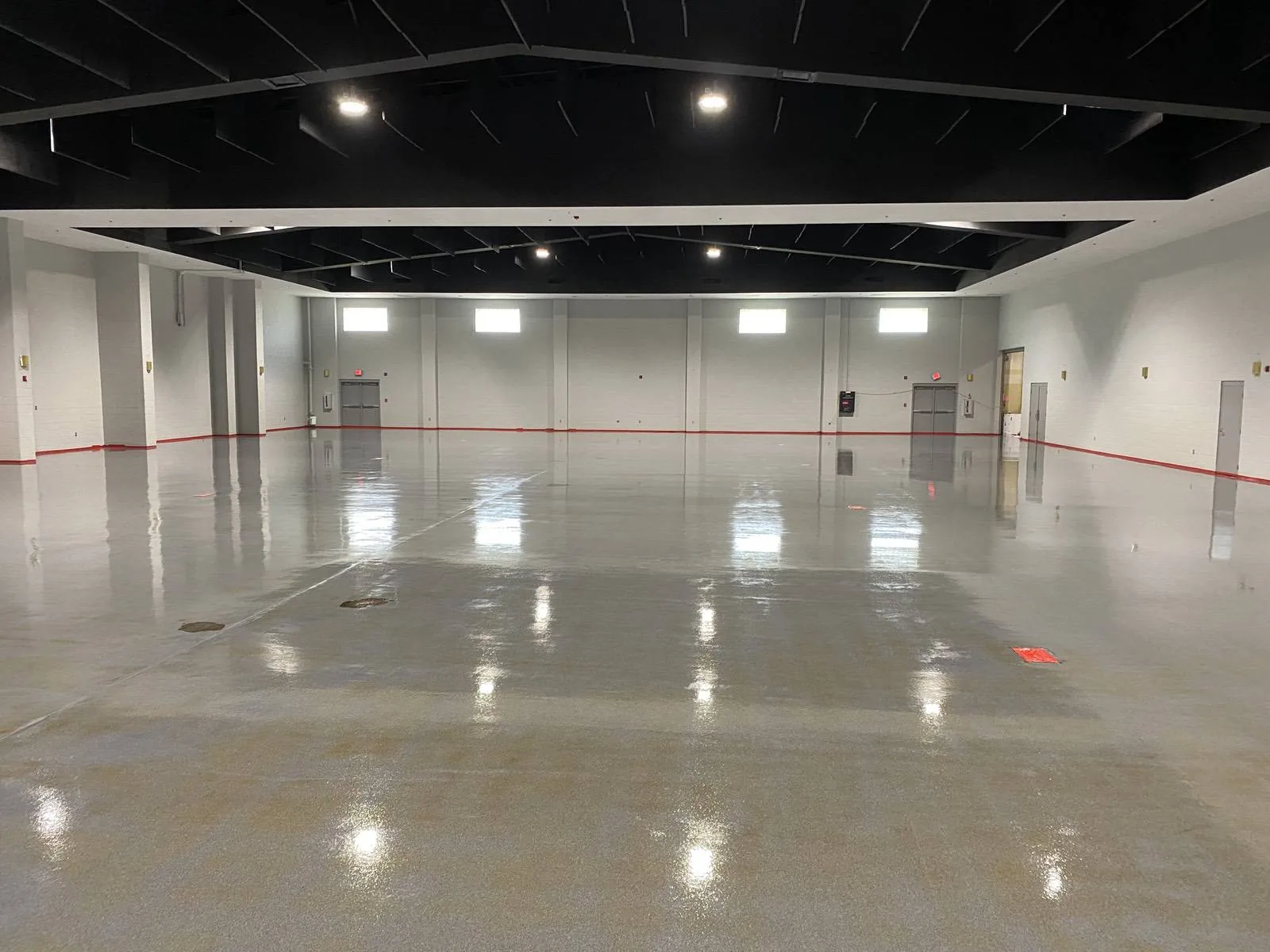
Industrial Flooring
Plants, process areas, shops and support buildings along the river and coast, zoned by use and installed around shutdown windows.
Garage Floor Coatings
Flake, solid color, metallic or polished concrete for home garages, ground first so hot tires and oil never lift it.

Patio Coatings
Overlays, stamped patterns and stain for covered and open patios and porches, finished with a topcoat that grips in the rain.
How any floor here gets built
The same order on every job, whatever the system.
The finish you actually walk on, matched to the use.
Where the system gets its build: resin, cement or a decorative overlay.
Soaks in and locks the system to the concrete.
Ground or shot blasted until the surface opens up and a coating can bite.
Whatever the slab is, it gets read first: moisture, cracks, old coatings, and how level it sits.
The next towns over
- Franklin
5.4 miles away, St. Mary Parish
- Patterson
8.3 miles away, St. Mary Parish
- Baldwin
9.7 miles away, St. Mary Parish
- Charenton
10 miles away, St. Mary Parish
More in St. Mary Parish, on the services page and in the gallery.
Do you come out to Centerville?
Yes. Centerville is about 82 miles west of our base in Harvey, inside the roughly 100 miles we cover. Someone comes out, looks at the slab and gives you a price after seeing it.
What should I know about a slab from around 1987?
Slabs from the 1980s are often dense from power troweling, which polishes well and needs a good grind before any coating. Carpet glue and thinset are the usual leftovers.
Why do coatings lift on slabs near the Atchafalaya Basin?
Moisture coming up from below is the usual reason, and poor surface prep is the other. Vapor pushes on a coating until the bond lets go. We grind the slab, test it and match the primer to the readings.
How thick should a floor be in a boat yard or pipe shop?
Thick enough for what lands on it. Troweled epoxy and urethane cement go down far heavier than a roll coat, and a heavy broadcast build adds grip and wear. We set the build over a shot-blasted slab once we know the loads.
Can you coat floors at a sugar mill or a cane farm shop?
Yes. Those floors see mud, heavy equipment and hard washdown, so they need a textured, chemical-resistant system over a properly ground slab. We plan around grinding season so the floor is not torn up when the mill needs the room.
Which details help you put a quote together?
The size of the area, what the floor has to handle and when you need it back. For commercial work, add the specs, the shutdown window and any submittal requirements. From there we come back with a price.
Will the whole floor be out of service at once?
Not always. Larger floors can be done in sections so part of the building stays open, with the order planned around traffic. It takes longer overall, and nobody has to shut down completely.
Where do furniture, cars and equipment go?
Everything comes out of the work area, and cars stay out until the coating cures. For a plant or a kitchen, plan where the equipment sits during the job and when it comes back.
My slab sweats in the summer. Is that a problem?
It means moisture is reaching the surface, from below, from the air or both. We test to see which, then pick a primer and system that can handle it. Coating a sweating slab without that step is how floors peel.
Call it in or send the plans
Tell us the space, the square footage and what goes on the floor. We will tell you which system fits and when we can start.
Send the plans
Facility managers and GCs: send what you have, even a floor plan sketch, and the dates the space can be shut down.