
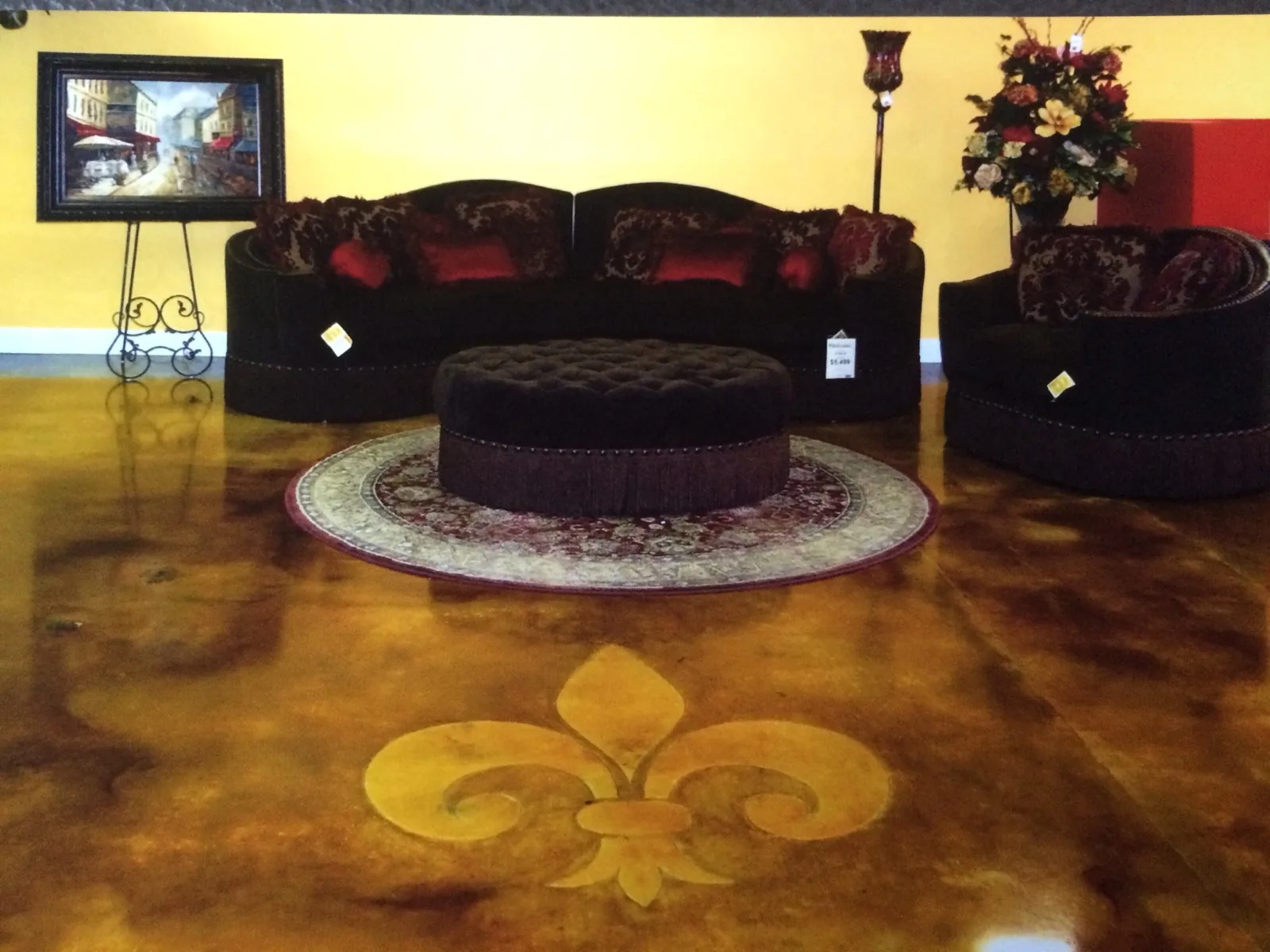
Retail floors finished between closing and opening
Customers see the floor before they see the stock. We polish, stain or pour metallic epoxy in stores, showrooms and restaurants, working nights and between tenants so the doors open on time.
22 years in businessCommercial5.0 on Google from 36 reviews
What it is
A store floor works two jobs at once. It has to look right in every photo a customer takes and on every walk-through the brand rep does, and it has to survive carts, pallet jacks on delivery morning, dragged fixtures and a mop bucket every night. Restaurants add grease, hot water and chairs scraping through every service.
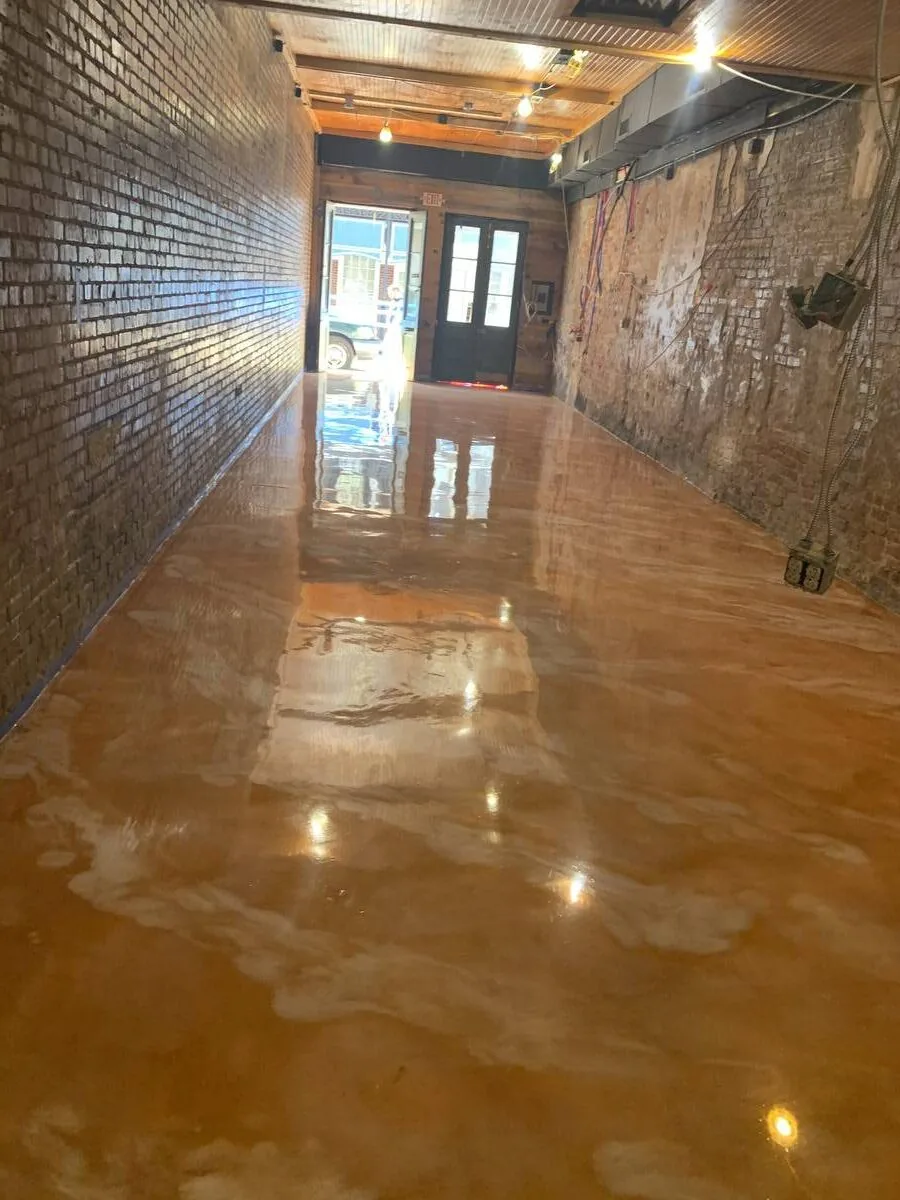
We put three finishes in retail space. Polished concrete is the workhorse for big-box aisles and grocery, hard and bright under store lights. Stained concrete puts color into the slab itself, which suits a boutique or a dining room. Metallic epoxy is the showpiece, a poured floor with depth and swirl for an entry, a bar front or a showroom where the floor is part of the pitch. Which one fits depends on the slab as much as the brand. An old slab full of patches shows through a stain, and a metallic needs a flat, sound base to look right.
Scheduling is where retail gets hard. Stores open at nine, a tenant moves out Friday and the next one wants keys Monday, and a restaurant can only give up so many nights. We plan around the clock you have, grind on dust collectors so the merchandise stays clean, and phase the floor in sections when the doors have to stay open. On a tenant build-out the floor has to land between the other trades and the fixture install, and the opening date does not move, so we work to it. Hotels run on the same clock, and we have done two projects for Hilton Worldwide.
Part of our commercial work. See all of it.
Start with the concrete.
What goes down, from the surface you walk on to the slab under it.
We will not pour a metallic in a store that reopens tomorrow, because a rushed cure shows up as marks under the first rack that rolls across it.
Guard or topcoat
A polished floor gets densifier and a stain guard, and metallic gets a clear urethane topcoat that takes the carts.
Color or pour
Stain or dye goes into the ground slab, or metallic epoxy pours over primer and a base coat.
Grind to the look
The grind sets the look, from cream to salt-and-pepper to exposed stone, and under metallic it opens a profile for primer.
Strip and repair
We grind off adhesives and fill holes and cracks, matching patch color as close as we can where the concrete will show.
Slab as found
Often a store floor with carpet glue, tile mastic, patches and fixture holes from the last tenant.
Where it belongs
Big-box and grocery
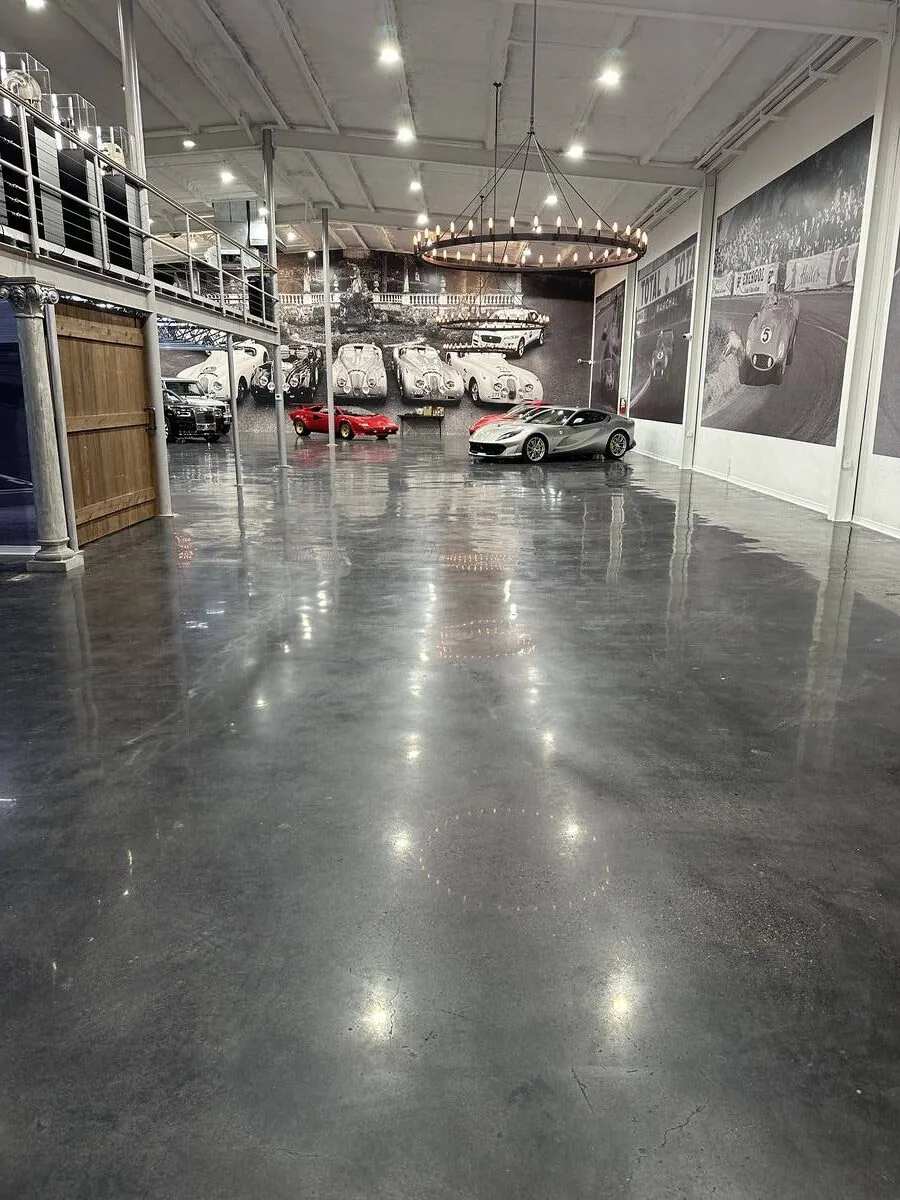
Polished concrete across the sales floor, bright under the lights and scrubbed nightly with no wax to strip.
Boutiques and salons
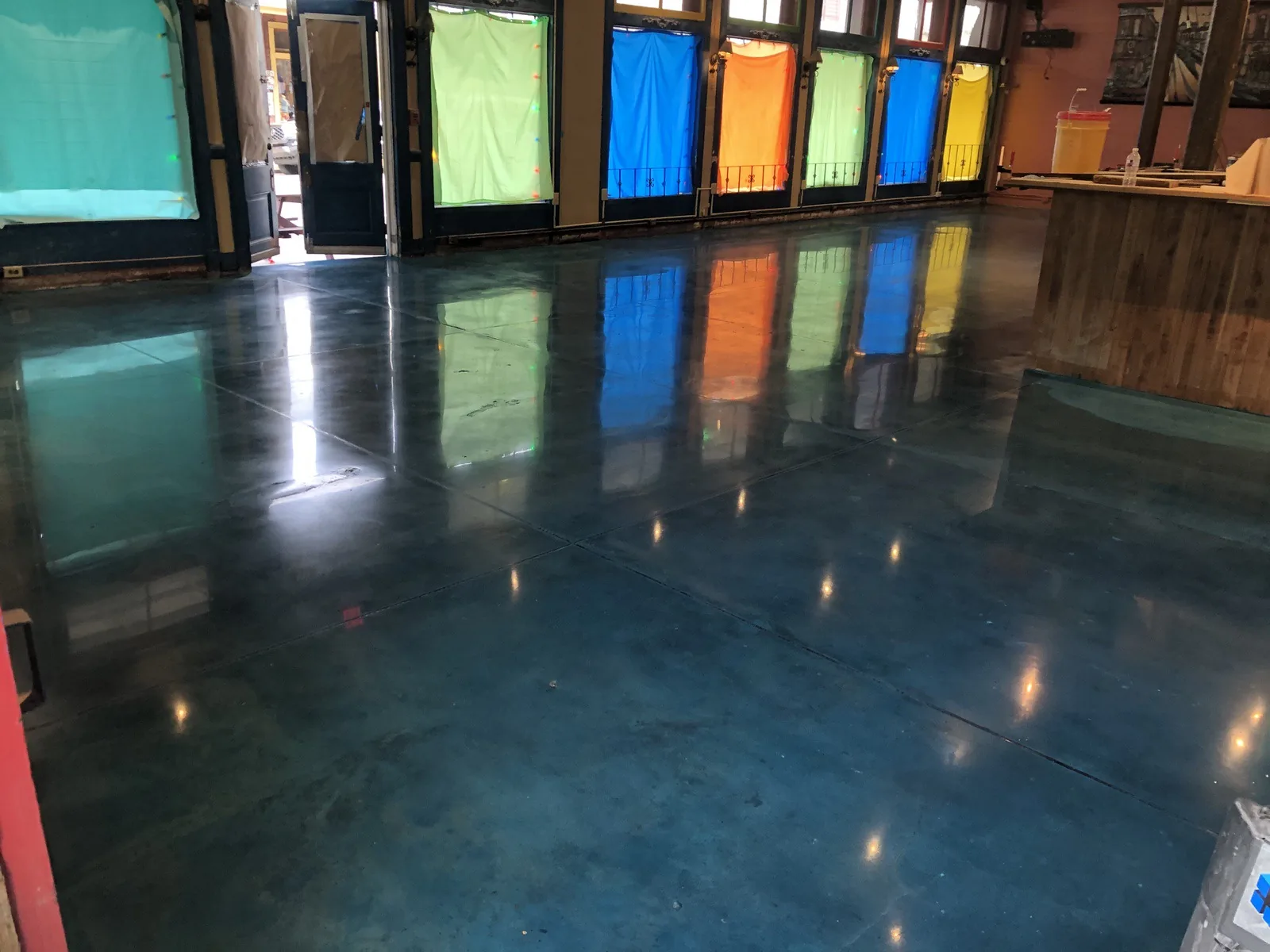
Stained or dyed concrete gives a small shop warm, uneven color, and no two slabs take it alike.
Showrooms
Metallic epoxy under cars, furniture or boats makes the floor part of the display, and the urethane topcoat handles tire traffic.
Restaurants and bars
Polished or stained concrete in the dining room, and a slip-resistant finish behind the bar where spills hit the floor all night.
How the crew runs it
Five steps, in order.
Look and sample
Dustin walks the space, and for stain or metallic we make a sample so the color is signed off before day one.
Set the hours
We build the schedule around your opening date, the landlord’s work hours and the nights you can close.
Protect and grind
Fixtures and stock get covered, we wall off the work zone with plastic, and the grinders run on dust collectors.
Color and finish
Stain, dye or the metallic pour goes down area by area without stopping mid-floor, so there are no lap marks. The guard or topcoat follows.
Clean and open
We clean up before the morning crew arrives and walk the floor with the manager before the doors open.
For the GC or the facility
- Night, weekend and between-tenant work is normal for us, and we schedule to your opening date.
- Color samples and product submittals on request, signed off before we start.
- Polished and stained floors usually take foot traffic once the guard dries; metallic typically needs a few days before fixtures roll in.
- Put the floor ahead of the fixture install when you can, or tell us early what stays.
Gulf South conditions
Retail floors in the Gulf South fight humidity at the front door. Every time the doors open, wet air meets a slab cooled by the air conditioning, and the entry can sweat enough to get slick. We keep polished entries at a lower sheen, push for real walk-off mats and add a fine grit to metallic topcoats at the doors.
Storms are the other problem. After a flood or a roof leak, a store wants its floor back fast, and the slab may still be wet. Polished concrete handles a damp slab better than a coating, so for a quick reopening we lean that way and test moisture before any metallic goes down. Older storefronts in New Orleans often have patched, uneven slabs, and we grind those flat before promising a look.
Look at the finish.
“Extraordinary Flooring completed 2 projects for me while I was managing projects for Hilton Worldwide. They were professional, coordinated their work with all operational activities, analytical and proactive when responding to difficult situations.”
Keith Faust, Google review5.0 on Google from 36 reviews
Living with it
Dust-mop daily and damp-mop or auto-scrub with a pH-neutral cleaner. Keep walk-off mats at every door, since tracked-in sand dulls a retail floor first. Skip vinegar, bleach and acid cleaners on stained concrete, and put felt pads under fixtures that move. A dull metallic topcoat can be recoated without redoing the color.
Next to this one
See finished floorsQuestions about retail flooring
See finished jobs in the gallery, or write to the office.
Which finish suits our store?
Polished concrete fits heavy traffic and low upkeep. Stain fits a store that wants color with a natural look, and metallic epoxy fits a space where the floor is part of the display. Your slab narrows it further, so we look before we recommend.
Can you work after we close?
Yes, and plenty of retail work runs that way. We set up after close and clean up before your staff comes in, or we take the space between tenants. The work zone is sealed with plastic and the grinders run on dust collectors.
Will the old tile glue lines show?
Sometimes, and we say so up front. Old adhesive and patches can leave ghost marks in a polished or stained slab, and some owners like that character. If you need a uniform look over a rough slab, metallic epoxy covers it.
Is polished concrete slippery for customers?
Clean and dry, a polished floor walks fine for most stores. Water and grease are the risk, so we hold entries and food areas to a lower sheen and add a slip-resistant guard where spills are common. Good mats at the doors matter as much as the finish.
Do you work on hotels and restaurants too?
Yes. We have done two projects for Hilton Worldwide, and restaurants and commercial kitchens are core work for us. The schedule works the same as retail: the floor gets done around the hours the business keeps.
How do we get a price on our space?
Send the floor plan and your opening date, or have Dustin come look at the slab. For stain or metallic we will want a sample, since color on your own concrete is the only proof that counts. The quote lays out the prep and the hours we will work.
Let’s look at your floor.
Call with the address and what the floor has to survive. Someone will come look at the slab before anybody talks price.
Bidding a job? Send the plans and the schedule. We price from drawings and walk the slab before we commit to a date.