
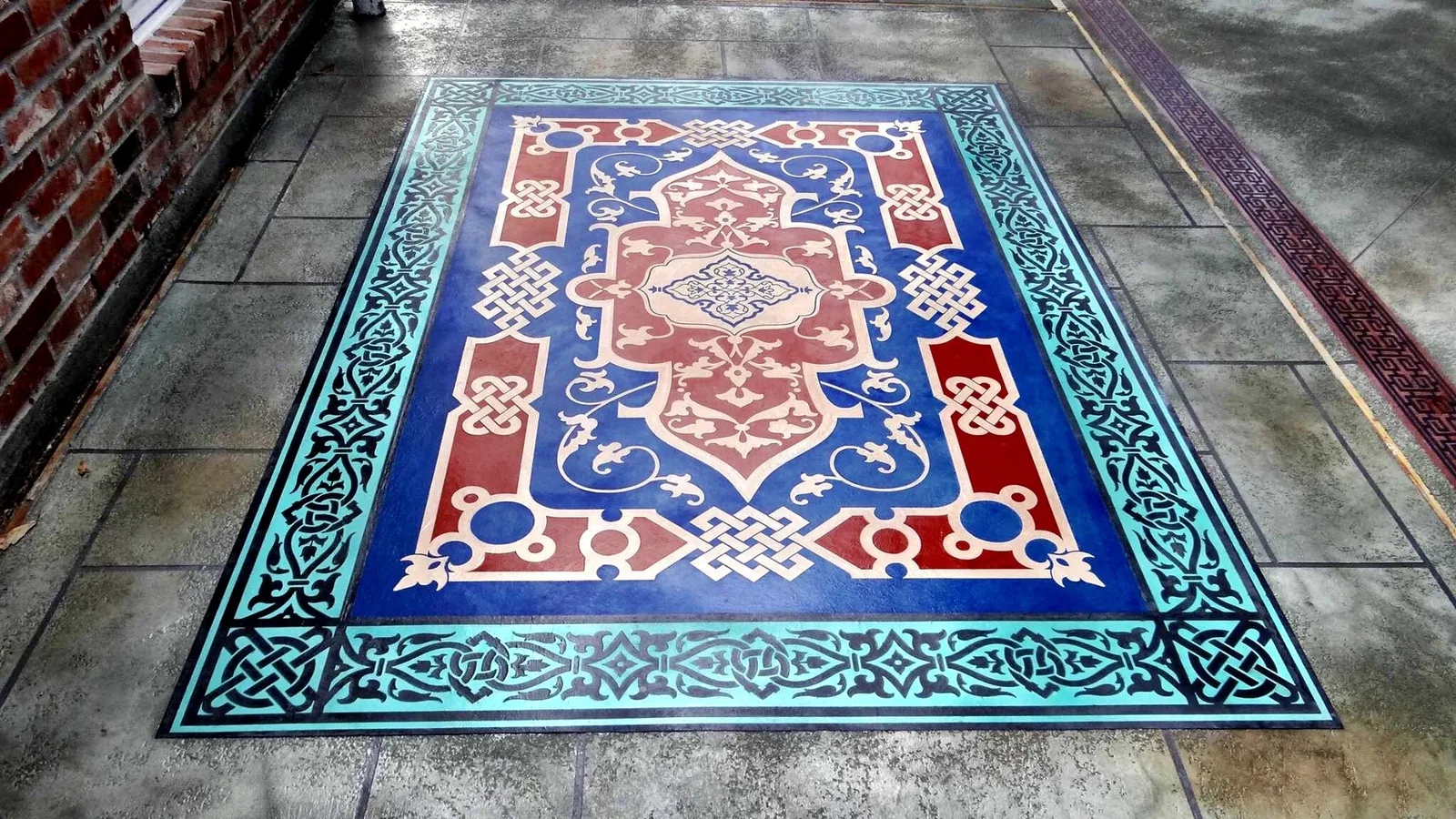
Patio floors that read like stone and grip when wet
Most patios we see are a plain gray slab off the back door with a few cracks and some mildew. A stamped overlay or a stain and seal turns that slab into a floor you want to sit on.
22 years in businessResidential5.0 on Google from 36 reviews
What it is
A patio is two different jobs depending on whether it has a roof. A covered patio or porch stays out of direct sun, so it can carry richer colors and a satin sheen. An open patio bakes all afternoon and takes every rain, so it needs a lighter color, a UV-stable sealer and more grip. We price and build them differently, and when a slab runs from under the roof out into the yard, we plan where the finish changes, usually at the drip line.
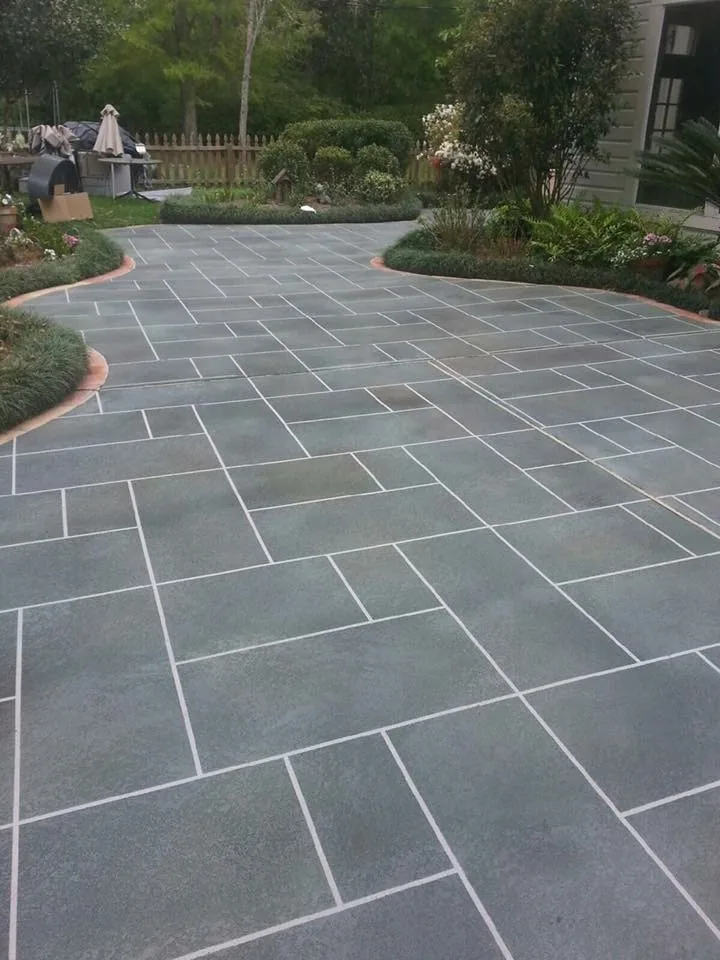
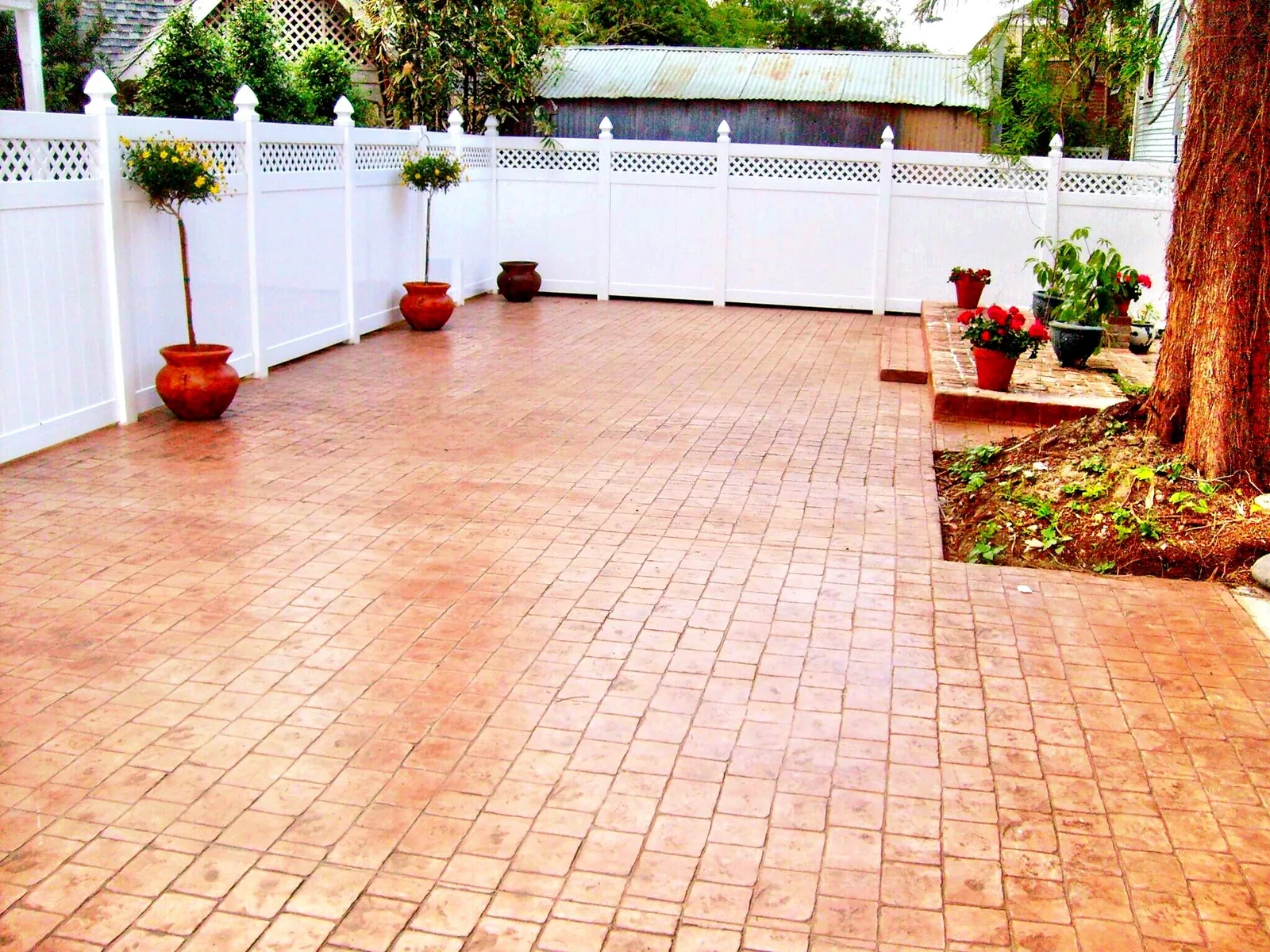
For the surface itself, we stay on the decorative side. A stamped overlay lays a thin polymer cement layer over the old slab and presses a pattern into it: flagstone, slate, brick, wood plank. A smooth or knockdown overlay gives a clean, even texture without a pattern. Stain and seal keeps the slab you have and adds color, which suits a sound patio whose only problem is that it looks dull. Every one of them gets a topcoat with fine grit mixed in, because a smooth sealed patio after a summer shower is slick.
A patio uses the same overlays we put on driveways, but nobody parks on it, so we can go with bigger stone patterns. A pool deck is the closer cousin: both see bare feet, but the deck adds chlorine or salt water and needs the coolest colors we offer. On a patio, you have the most freedom to pick a look. Porches get the same treatment, with one catch: the overlay has to stop clean at the threshold and the steps, so we plan the edges before we mix anything.
Part of our residential work. See all of it.
Start with the concrete.
What goes down, from the surface you walk on to the slab under it.
A dark stamped patio in full Louisiana sun gets hot enough to burn bare feet, so if your slab is open we will talk you into a lighter color.
Grit sealer
The finish you walk on, a UV-stable sealer with fine grit so bare feet and wet shoes keep their footing.
Overlay and pattern
The polymer cement layer, troweled out and stamped or textured, then colored with release powder or stain.
Bond coat
A primer or slurry coat that locks the new overlay to the old concrete.
Wash and grind
Mildew is killed and washed off, then the surface is ground so the overlay or stain can soak in and bond.
Existing patio slab
Often an older broom finish with mildew, hairline cracks and a low corner where rain sits.
Where it belongs
Covered back patio
Stained concrete or a smooth overlay in a deeper color, since the roof keeps the sun from fading or heating it.
Open patio by the yard
A stamped flagstone or slate overlay in a light tone, sealed with grit for summer storms.
Front porch and steps
An overlay that wraps the steps with clean edges, so the entry looks finished from the street.
Outdoor kitchen
A sealed overlay with a tougher topcoat around the grill, where grease and marinade drip.
How the crew runs it
Five steps, in order.
Pick the pattern
Dustin brings pattern and color samples out to the patio so you see them next to your house in real daylight.
Prep the slab
We kill mildew, wash, grind and fix cracks, and mask the walls, doors and columns so nothing gets splashed.
Lay and stamp
The overlay goes down in sections, and the stamps go in while the material is at the right set, which is why we watch the heat closely.
Color and detail
Release color and stain go on, and grout lines or edges get hand tooled where a stamp cannot reach.
Seal with grit
The topcoat goes on last with grit in it. Patio furniture comes back after the sealer cures, typically a couple of days.
For the GC or the facility
- Remodelers: tell us if a screen enclosure or new posts are going in, since we want the overlay down before or neatly around them.
- Pattern and color samples on request, plus a sample board if the owner is torn between two.
- Typical patio jobs run a few days start to finish, with weather setting the real calendar.
Gulf South conditions
Patios around here live with mildew. Shade, heat and humidity grow it on bare concrete fast, and it makes a slab slick and gray. A sealed overlay gives mildew far less to hold onto, and what does grow rinses off instead of soaking in. Porches near the lake and the coast also catch salt air, which dulls an unsealed surface.
Summer afternoon storms are the other problem. A patio with a smooth sealer is a skating rink in the rain, which is why grit in the topcoat is standard on our patios. Overlay work also has a narrow window in the heat: the material sets fast on a hot slab, so on open patios we start early in the morning and keep the slab cool and damp ahead of the trowel.
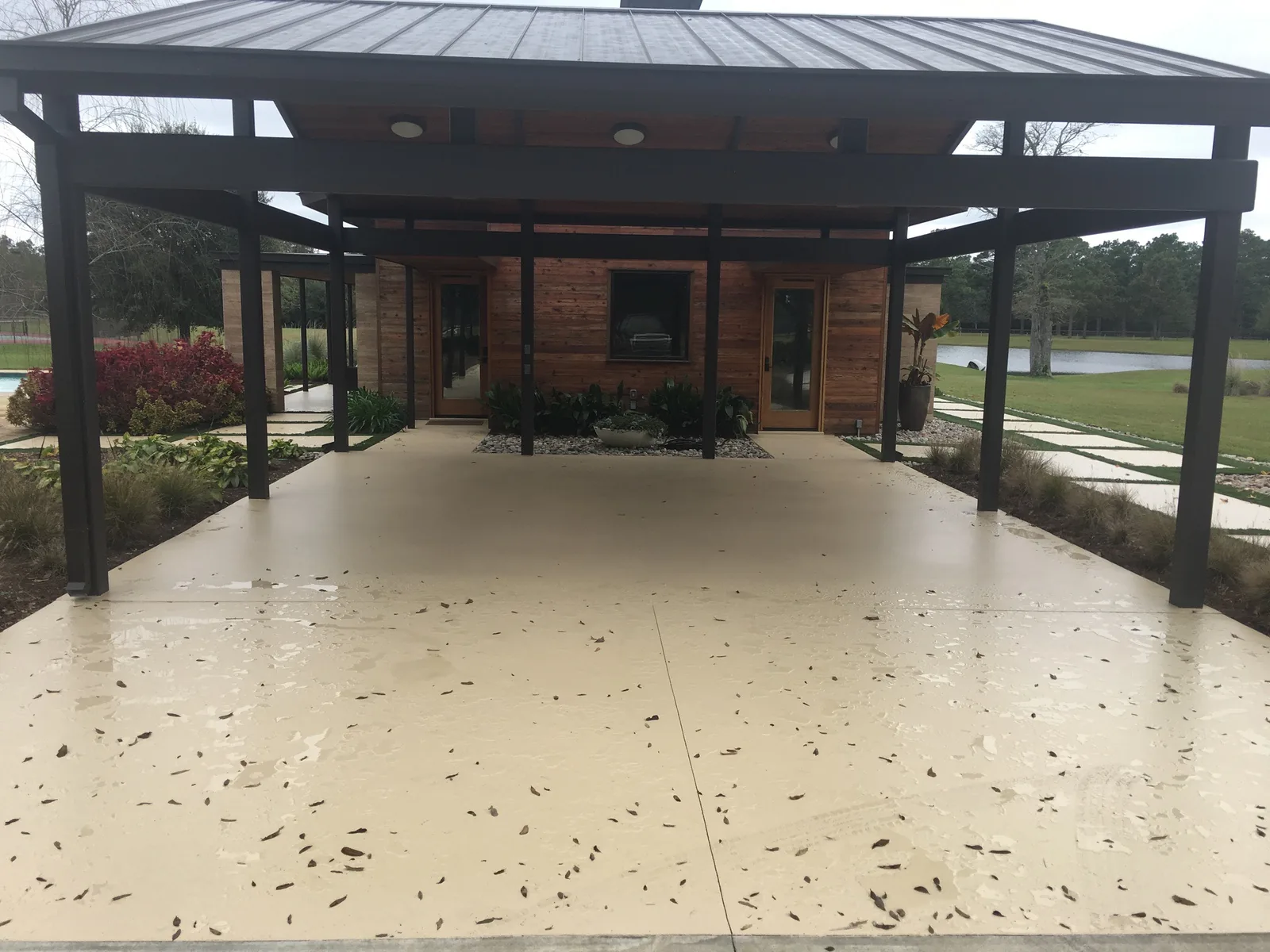
Look at the finish.
“Had Extraordinary Flooring do my garage floor and they killed it. Super easy to work with, showed up when they said they would, and got everything done quickly.”
Trevor Garcia, Google review5.0 on Google from 36 reviews
Living with it
Sweep leaves off before they stain, and rinse the patio with a hose and a mild cleaner. Hit mildew with a patio-safe cleaner as soon as it shows. Use rubber feet on metal chairs, and keep the grill on a mat. Plan on resealing open patios every few years; covered ones last longer.
Next to this one
See finished floorsQuestions about patio coatings
See finished jobs in the gallery, or write to the office.
Can you overlay a patio that has cracks?
Yes, if the slab is stable. We chase and fill the cracks first and carry any working joints up through the overlay. If a section has sunk or heaved, it needs concrete work before we cover it.
What stamp patterns can I pick from?
Flagstone, slate, ashlar stone, brick and wood plank are the common ones. Bigger stone patterns suit bigger patios. Dustin brings samples so you can lay them next to your house before you decide.
Is a stamped patio slippery when wet?
Smooth sealer on a stamp can be. We mix fine grit into the topcoat on every patio, and the texture of the stamp itself helps. On a porch where people come in from the rain, we can add more grit at the door.
Can the patio match my pool deck or driveway?
It can share the color and pattern so the outdoor spaces read as one. The products underneath change for each surface, since a driveway takes cars and a pool deck takes chlorine, but the look carries through.
How do I get rid of the mildew on my old patio first?
Leave it to us. Killing and washing off mildew is part of our prep, and the slab gets ground afterward so nothing is left under the new surface.
How long does a patio job take?
A typical patio runs a few days: prep, overlay or stain, then sealer. Heat and rain set the real schedule, and we would rather wait out a storm than lay an overlay into one.
Let’s look at your floor.
Call with the address and what the floor has to survive. Someone will come look at the slab before anybody talks price.
Bidding a job? Send the plans and the schedule. We price from drawings and walk the slab before we commit to a date.