
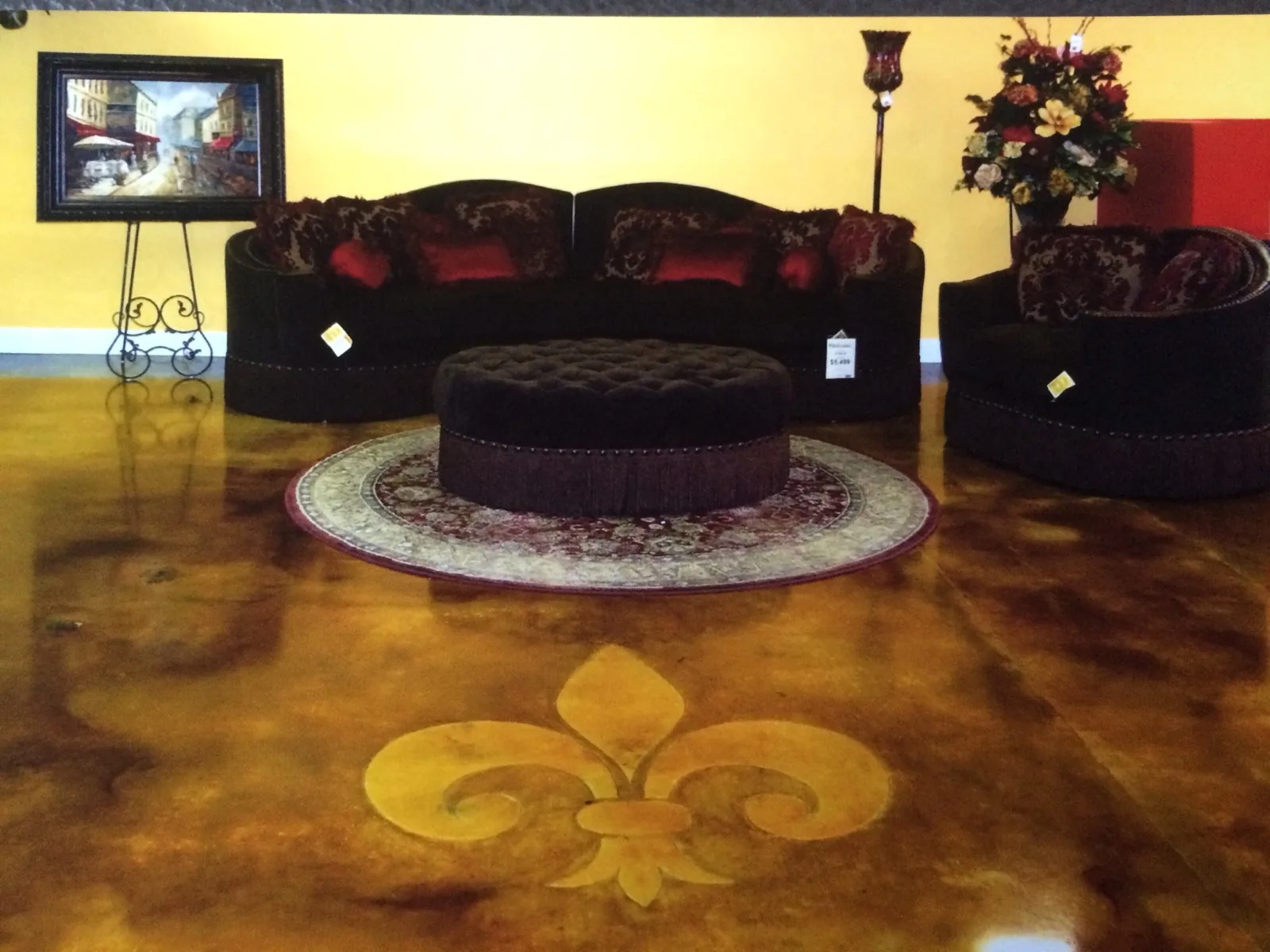
Acid-stained concrete with color that comes from the slab
Reactive acid stain soaks into the slab and reacts with the lime in it, so every floor comes out mottled and a little different. We stain, neutralize, rinse and seal it so the color stays.
22 years in businessDecorative5.0 on Google from 36 reviews
What it is
Acid stain is a solution of metallic salts in a mild acid. It soaks into the concrete and reacts with the lime in the cured slab, so the color becomes part of the surface itself. No two slabs have the same lime content, trowel history or patching, and the result is mottled and variegated: browns, tans, amber, some greens and blue-greens. That movement is the look people are after, and no coating fakes it well. It also hides scuffs and traffic wear better than a solid color.
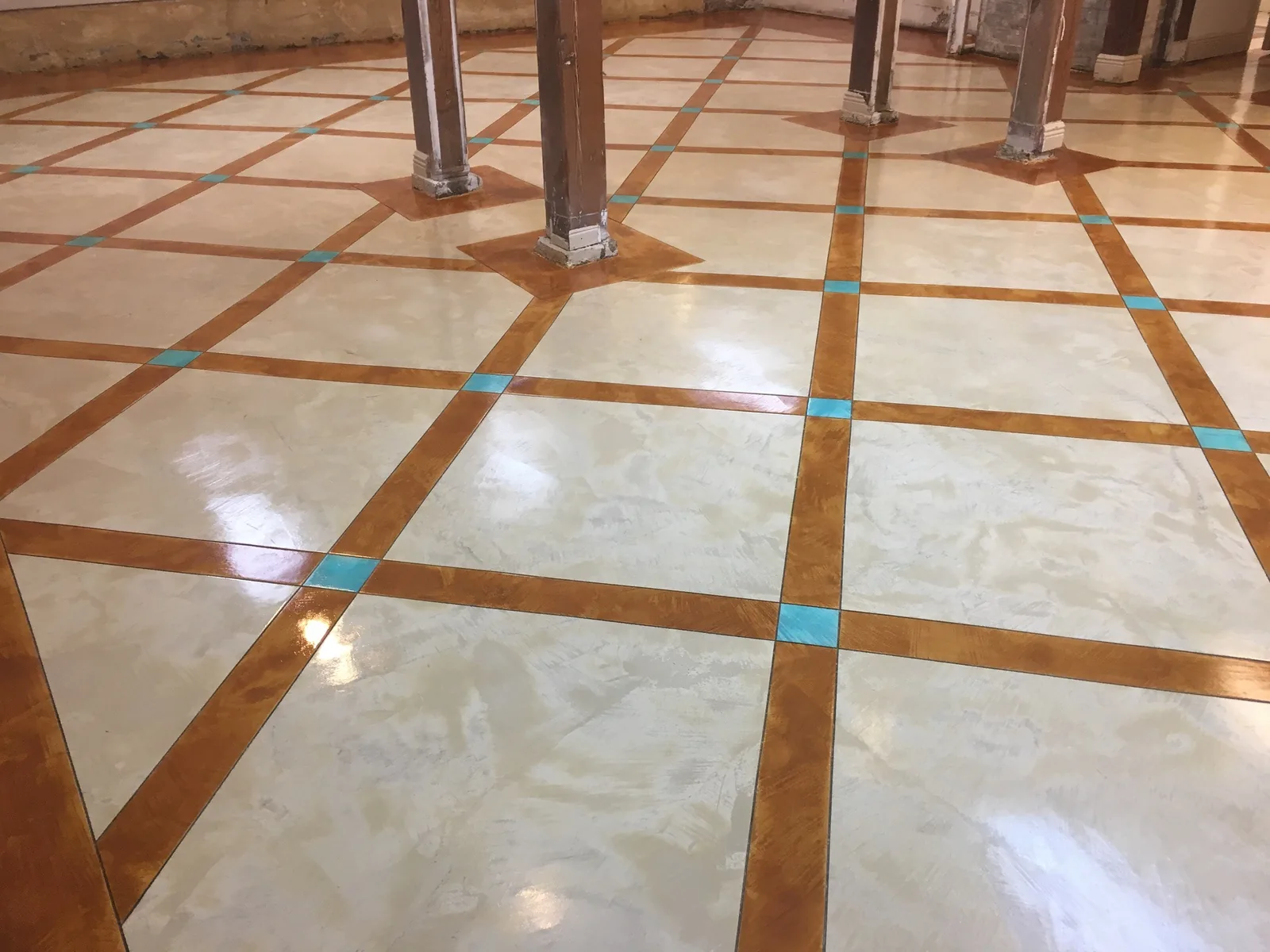
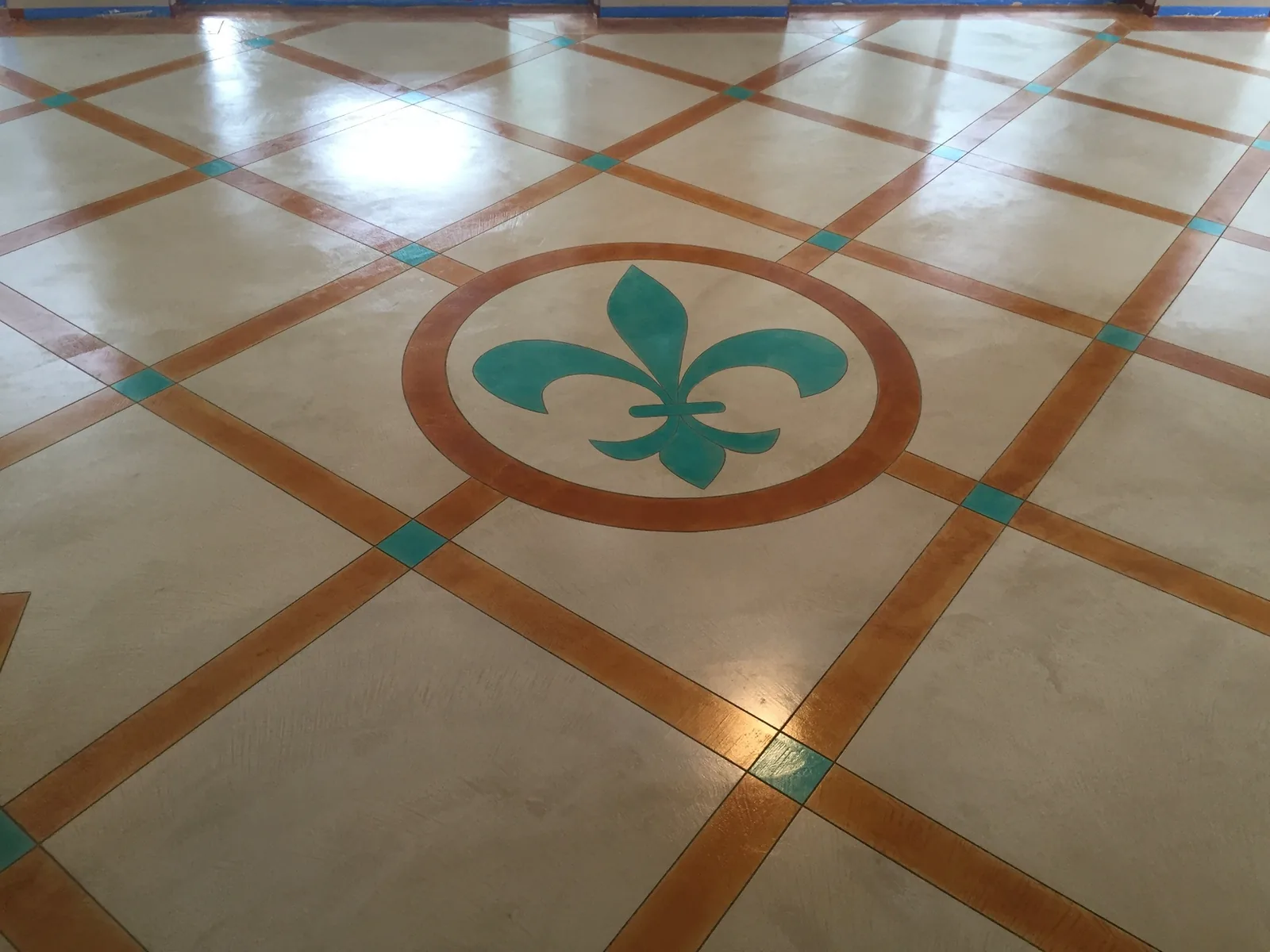
This is old work for the crew. Acid staining was one of the first concrete trades Jacob got pulled into after tile and wood, and it is still a big part of what we do on restaurant and retail floors, lobbies, and homes where the owner wants to live on the slab. Scored patterns are a common request: a grid or diamond saw-cut into the concrete so the color reads like large tile. So is the fleur-de-lis, stenciled or cut in at an entry or in the center of a room.
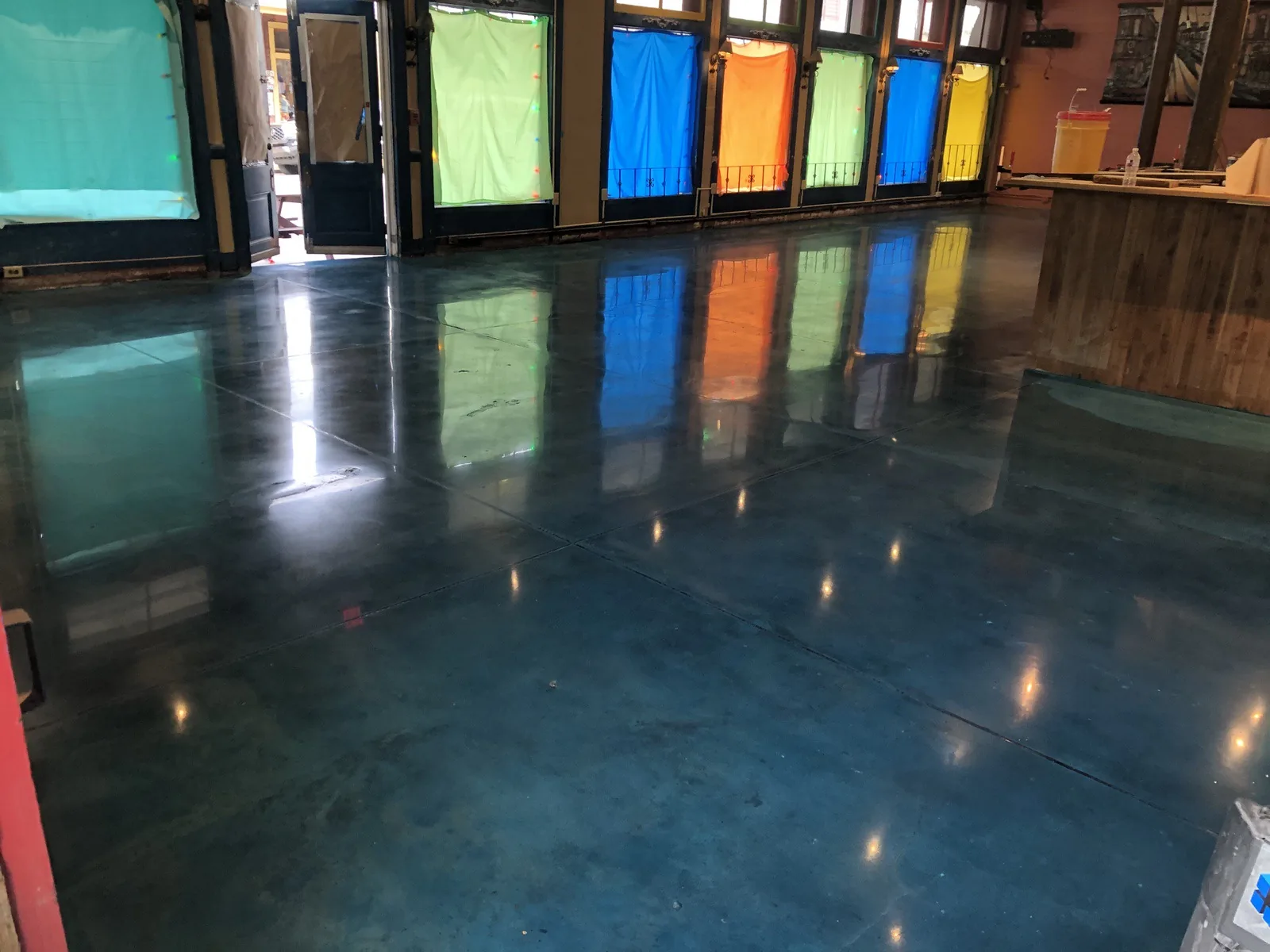
Staining gets confused with dyeing all the time, and the two behave differently. Stain reacts, so the color varies across the floor and stays in an earthy range. Dye does not react at all. It is a fine colorant in water or solvent that colors the slab evenly, in almost any shade including black. If you want movement that looks like old leather or marble, that is stain. If you want one consistent color across a polished floor, that is a dye job, and some floors get both.
Part of our decorative work. See all of it.
Start with the concrete.
What goes down, from the surface you walk on to the slab under it.
We will not promise a color match to a photo from somebody else’s floor, because your slab decides the final color and we would rather show you a test spot than sell you a picture.
Sealer and wear coat
A penetrating or film sealer, plus a wax or guard on interior floors, which is the part you actually walk on.
Reactive acid stain
One or two coats sprayed and brushed in, left to react until the color develops, then neutralized and rinsed clean.
Score lines or stencil
A saw-cut grid, border or fleur-de-lis layout goes in here if the floor carries a pattern.
Open, clean surface
Coatings and residue come off, then the slab is cleaned or lightly ground so the stain reaches bare concrete.
Cured slab as found
Concrete cured typically a month or more, with any sealer, paint, glue or curing compound noted, since stain will not take through them.
Where it belongs
Restaurants and shops
Warm, varied color on the slab you already have, which suits dining rooms, bars and retail floors with a lot of foot traffic.
Lobbies and entries
A scored grid or a fleur-de-lis at the door gives an entry a finished look with no grout lines to scrub.
Homes on a slab
Living rooms, kitchens and enclosed porches where the owner wants the concrete itself to be the finished floor.
Covered patios
Exterior slabs under a roof, sealed with a breathable, UV-stable sealer so the finish does not yellow.
How the crew runs it
Five steps, in order.
Test a spot
Every slab takes stain its own way, so we test a hidden corner and you see the real color before we touch the floor.
Prep and mask
Walls and fixtures get masked, old coatings come off, and the slab is cleaned or lightly ground.
Cut the pattern
Score lines and stencils go down before any color, laid out from the entry or the center of the room.
Stain and neutralize
Stain goes on and reacts, then we neutralize and rinse until no residue is left to break the sealer bond.
Seal and guard
Once the slab is dry it gets its sealer, and interior floors get a sacrificial wax or guard that takes the scuffs.
For the GC or the facility
- Stain needs a cured slab, typically about a month after the pour, so give us the pour date early.
- Protect the slab during framing. Drywall mud, paint drips and glue all show through stain.
- Sample panels and product data on request, best done on the actual slab.
- A typical floor runs a few days from prep to seal, with foot traffic back once the sealer cures.
Gulf South conditions
Humidity matters more to stain than people expect. The reaction needs some moisture, but residue left on a slab that never fully dries will haze under the sealer, and a film sealer over a damp on-grade floor can blush white. Here that means more rinse water, more drying time and a moisture check before the seal coat goes on. In July that can add a day.
The stain itself handles sun well. The sealer is what suffers, so exterior and sun-struck slabs get a breathable, UV-stable product and a resealing schedule. Older slabs in New Orleans and the river towns usually carry patches and old tile adhesive, and stain shows every one of them. We point those out before any color goes down. A flooded slab has to dry out and be cleaned well before it will take stain evenly.
Look at the finish.
“The craftsmanship and attention to detail really show. They were professional, punctual, and kept the work area clean throughout the project.”
Hang Pham, Google review5.0 on Google from 36 reviews
Living with it
Dust mop often and damp mop with a neutral pH cleaner. On interior floors the wax or guard coat is what wears, so recoat it when the traffic lanes go dull. The stain under it holds as long as the sealer does. Keep vinegar, bleach and acidic cleaners off it.
Next to this one
See finished floorsQuestions about concrete staining
See finished jobs in the gallery, or write to the office.
Will my floor look like the sample photos?
Close, never identical. Acid stain reacts with your slab, so its lime content, finish and patches all change the result. That is why we test on your floor before we stain the whole thing.
Can you acid stain an old slab?
Often, if the surface can be opened up and cleaned. Old sealer, paint, tile adhesive and heavy patching block or change the stain, so they come off or become part of the look. We mark where they will show up before you commit.
Can you do a fleur-de-lis or another pattern?
Yes. Fleur-de-lis medallions, borders, compass points and scored grids all go in before the stain, with a stencil, saw cuts or both. Bring a drawing or a photo and we will lay it out on the slab with you.
Is acid-stained concrete slippery?
The stain adds no slickness, but a glossy sealer can be slick when wet. Inside, we use a guard coat with decent wet grip. On patios and near pools we add grit to the sealer.
What colors can acid stain make?
Earth tones: browns, tans, terra cotta, amber, and some greens and blue-greens. It cannot make black or bright colors. For those a dye is the right tool, and the two can share one floor.
How long does a stained floor last?
The color is in the concrete, so it lasts as long as the surface does. What wears is the sealer and wax on top. Keep those maintained and recoated on schedule and the stain underneath stays put for the life of the slab.
Let’s look at your floor.
Call with the address and what the floor has to survive. Someone will come look at the slab before anybody talks price.
Bidding a job? Send the plans and the schedule. We price from drawings and walk the slab before we commit to a date.